Loading...
B. P. Koirala vs Turgut Ozal
Turgut Ozal leads by 2.1 pts · 2 figures compared
…
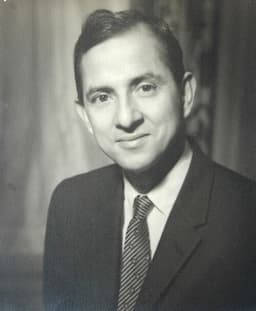
B. P. Koirala
Politician · Modern
56.0Total

Turgut Ozal
Politician · Modern
58.1Total
Basic Information
Born
1914
1927
Died
1982
—
Era
Modern
Modern
Nationality
Nepal
Turkey
Occupation
Politician
Politician
Civilization
Indian
Middle Eastern
Score Comparison
Military (10%)
27.4
43.7
Political (20%)
62.7
78.0
Influence (20%)
58.0
56.7
Legacy (20%)
49.2
52.0
Leadership (15%)
74.0
72.0
Strategy (15%)
60.0
40.6
TOTAL
56.0
58.1
B. P. Koirala — Complete Timeline
1959 AD
Election as First Democratically Elected Prime MinisterPolitical Action
B.P. Koirala led the Nepali Congress to victory in Nepal's first general election. He became the first democratically elected prime minister, forming a government that introduced land reforms and social welfare programs.
ElectionDemocracyNepal
Impact: nationalprogressive
1960 AD
Imprisonment after 1960 CoupPolitical Action◆ Major
King Mahendra arrested B.P. Koirala and his cabinet during the royal coup. Koirala was imprisoned for eight years, enduring harsh conditions. His detention symbolized the suppression of democracy under the Panchayat system.
ImprisonmentAuthoritarianismDemocracy
Impact: nationaltragic
1968 AD
Exile and Leadership of Democratic MovementPolitical Action
After his release, B.P. Koirala went into exile in India. He continued to lead the democratic opposition against the Panchayat regime, organizing protests and advocating for multiparty democracy until his death.
ExileOppositionDemocracy
Impact: nationalconstructive
Turgut Ozal — Complete Timeline
1979 AD
Appointed as Undersecretary to the Prime MinisterPolitical Action
Turgut Ozal was appointed as undersecretary to Prime Minister Suleyman Demirel, overseeing economic affairs. He played a key role in implementing the January 24 economic reforms.
Economic ReformsUndersecretaryDemirel
Impact: nationalconstructive
1980 AD
Implemented the January 24 Economic ReformsReform
Ozal designed and implemented a comprehensive economic stabilization and liberalization program. The reforms included devaluation, export promotion, and deregulation, shifting Turkey from import-substitution to a market-oriented economy.
Economic LiberalizationMarket ReformsStabilization
Impact: nationalconstructive
Appointed as Deputy Prime MinisterPolitical Action◆ Major
After the 1980 military coup, Ozal was appointed Deputy Prime Minister in charge of economic affairs by the military government. He continued implementing his economic reforms.
Military GovernmentDeputy Prime MinisterEconomic Policy
Impact: nationalconstructive
1983 AD
Founded the Motherland Party and Became Prime MinisterPolitical Action◆ Major
Ozal founded the Motherland Party (ANAP) and led it to victory in the 1983 general election. He became Prime Minister of Turkey, serving until 1989.
Motherland PartyPrime MinisterElection Victory
Impact: nationalconstructive
1987 AD
Applied for European Community MembershipPolitical Action◆ Major
Ozal's government formally applied for full membership in the European Community (EC). The application marked a major step in Turkey's European integration efforts, though accession negotiations did not begin until decades later.
European CommunityMembership ApplicationEuropean Integration
Impact: nationalconstructive
1989 AD
Elected President of TurkeyPolitical Action◆ Major
Ozal was elected as the 8th President of Turkey by the Grand National Assembly. He served until his death in 1993, continuing to influence economic and foreign policy.
PresidencyHead of StateEconomic Policy
Impact: nationalconstructive
Expert Analysis
Origins
B. P. Koirala was born in 1914 in Varanasi, India, into a politically active family. His father, Krishna Prasad Koirala, was a reformer. B. P. studied law in Calcutta and later practiced in Darjeeling. He was influenced by Indian independence leaders and socialist ideas, joining the Nepali National Congress in 1947.
Turgut Ozal was born in 1927 in Malatya, Turkey, to a middle-class family. He studied electrical engineering at Istanbul Technical University and later earned a master's in economics. Ozal worked as a bureaucrat in the State Planning Organization and later at the World Bank, gaining expertise in economic policy.
Rise to Power
Koirala rose through the Nepali Congress, leading protests against the Rana autocracy. He was a key figure in the 1951 revolution that ended Rana rule. In 1959, his party won the first general election, and he became prime minister. However, King Mahendra dismissed his government in 1960, arresting Koirala and his cabinet.
Ozal's rise came after the 1980 military coup. He was appointed Deputy Prime Minister for economic affairs, implementing the January 24 Reforms. In 1983, he founded the Motherland Party (ANAP) and won the general election, becoming prime minister. He served until 1989, when he was elected president.
Leadership & Governance
Koirala's leadership focused on democratic governance. He introduced land reforms and sought to reduce inequality. However, his tenure was short (18 months) and he was unable to implement lasting changes. His governance style was confrontational with the monarchy, leading to his downfall.
Ozal was a pragmatic reformer. He liberalized the economy, privatized state enterprises, and promoted exports. His policies led to rapid growth in the 1980s, with GDP growth averaging 6.8%. He also applied for European Community membership. Ozal's leadership was decisive, but he was criticized for authoritarian tendencies and corruption.
Triumph & Tragedy
Koirala's triumph was becoming the first democratically elected prime minister of Nepal, a milestone in the country's history. His tragedy was the royal coup and his subsequent imprisonment for eight years. He never regained power, though he continued to advocate for democracy from exile.
Ozal's triumph was transforming Turkey's economy from state-controlled to market-oriented. His policies doubled per capita income. His tragedy was the failure to secure EU membership and the persistence of economic imbalances, such as high inflation and debt. He also faced criticism for his handling of the Kurdish conflict.
Character & Destiny
Koirala was idealistic and principled, often prioritizing democracy over pragmatism. His stubbornness alienated the monarchy and led to his downfall. Historians note his integrity but also his lack of political flexibility.
Ozal was pragmatic and visionary, willing to work with the military to achieve economic reforms. He was adept at navigating political constraints. However, his centralization of power and nepotism were flaws. His death in 1993 left his reforms incomplete.
Legacy
Koirala's legacy is as a democratic icon in Nepal. He inspired subsequent movements that restored democracy in 1990. His scores: Political 62.7, Legacy 49.2. The Nepali Congress remains a major party.
Ozal's legacy is as the architect of modern Turkey's economy. His reforms set the stage for continued growth. His scores: Political 78.0, Legacy 52.0. ANAP declined after his death, but his policies influenced all later governments.
Conclusion
Turgut Ozal had greater impact. His economic transformations reshaped Turkey, with lasting effects on growth and EU integration. Koirala's democratic struggle was significant but less transformative. Ozal's total score of 58.1 exceeds Koirala's 56.0, reflecting his broader influence.
Rankings
🥇
Turgut OzalLeader
Mil: 43.7Pol: 78.0Inf: 56.7
58.1
🥈
B. P. Koirala
Mil: 27.4Pol: 62.7Inf: 58.0
56.0
+2.1 behind
How This Comparison Works
Algorithm
Each figure is scored on 6 dimensions (0—100 scale) based on structured historical data: Military (10%), Political (20%), Influence (20%), Legacy (20%), Leadership (15%), Strategy (15%). The weighted total produces the final ranking.
Data Sources
Scores are computed from structured sub-indicators in the database. Scale factors adjust for era (Ancient ×0.85, Modern ×1.0) and civilization size (Eastern ×1.05, Other ×0.80) to account for differences in population and military scale.
Maximum 3 Figures
Comparisons are limited to 2—3 figures to ensure readability and statistical meaningfulness.
Error Margins
±5 points per dimension — Sub-scores are derived from historical records with inherent uncertainty. Two figures within 5 points on a dimension should be considered roughly equivalent in that area.
Total Score Accuracy
±3 points overall — The weighted combination of 6 dimensions produces a total score with approximately ±3 points of uncertainty. Differences of less than 3 points are not statistically significant— the figures are effectively tied.
Known Limitations
- Historical records are incomplete and uneven across civilizations
- Figures from oral-tradition societies may be underrepresented
- Occupation labels can misclassify multi-role figures
- Scores measure capability and impact, not moral character
- Quantitative scoring is a comparison tool, not absolute truth
Capability Radar
Military (10%) — Battles & Warfare
Battles
46
21
Win Rate
48
25
Expansion
50
28
Political (20%) — Governance & Reform
Reform
60
85
Diplomacy
55
70
Economy
40
90
Influence (20%) — Cultural & Global Reach
Cultural
45
55
Global
35
60
Legacy (20%) — Historical Impact
Historical
55
70
Longevity
40
55
Leadership (15%) — Power & Stability
Tenure
55
65
Stability
35
60
Strategy (15%) — Tactics & Innovation
Strategy
51
28
Tactics
56
32
Reform
59
35
Similar Comparisons
Comments & Discussion
No comments yet. Be the first to share your thoughts!