Loading...
This comparison has not been analyzed yet.
One-time AI generation (~1 minute). Scores and timeline are already available below.
Ashina Qutlugh vs Romanos I Lekapenos
Ashina Qutlugh leads by 9.6 pts · 2 figures compared
…

Ashina Qutlugh
Emperor · Medieval
59.6Total
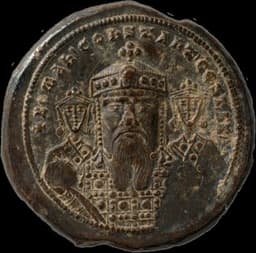
Romanos I Lekapenos
Emperor · Medieval
50.0Total
Basic Information
Born
650
870
Died
692
948
Era
Medieval
Medieval
Nationality
Second Turkic Khaganate
Byzantine Empire
Occupation
Emperor
Emperor
Civilization
Eastern
Western
Score Comparison
Military (10%)
78.0
30.0
Political (20%)
60.0
68.0
Influence (20%)
56.7
52.5
Legacy (20%)
55.0
46.7
Leadership (15%)
53.2
40.0
Strategy (15%)
69.1
60.0
TOTAL
59.6
50.0
Ashina Qutlugh — Complete Timeline
682 AD
Rebellion against Tang dominationWar
Ashina Qutlugh led a revolt against the Tang dynasty's control over the Eastern Turkic Khaganate. He gathered Turkic tribes and launched attacks on Tang garrisons, initiating the restoration of Turkic independence.
RevoltIndependenceTang Dynasty
Impact: regional
Proclamation as Ilterish QaghanPolitical Action◆ Major
Ashina Qutlugh proclaimed himself Ilterish Qaghan, founding the Second Turkic Khaganate. This title asserted his authority over the Turkic tribes and marked the formal re-establishment of the khaganate.
FoundationKhaganateLeadership
Impact: regionalconstructive
683 AD
Campaigns against the Tang dynastyWar◆ Major
Ilterish Qaghan conducted a series of military campaigns against Tang China, raiding border prefectures and defeating Tang forces. These campaigns secured the khaganate's borders and extracted tribute from Tang.
Military CampaignTang DynastyBorder Conflict
Impact: regional
685 AD
Unification of Turkic tribesPolitical Action◆ Major
Ilterish Qaghan unified the fragmented Turkic tribes under his rule, incorporating the Tiele, Sir-Tardush, and other groups into the khaganate. This consolidation created a stable base for the Second Turkic Khaganate.
UnificationTribal PoliticsState Building
Impact: regionalconstructive
692 AD
Death and successionPolitical Action
Ilterish Qaghan died in 692, succeeded by his brother Qapaghan Qaghan. His death ended the founding phase of the Second Turkic Khaganate, but his legacy continued through the Orkhon inscriptions.
SuccessionDeathLegacy
Impact: regional
Romanos I Lekapenos — Complete Timeline
920 AD
Military Campaigns against the Arabs (920s-940s)War◆ Major
Romanos I led successful campaigns against the Abbasid Caliphate, recapturing several fortresses in eastern Anatolia. His general John Kourkouas achieved notable victories, including the capture of Melitene in 934.
Byzantine-Arab WarsMilitary Campaign
Impact: regional
Accession as Co-Emperor (920)Political Action◆ Major
Romanos I Lekapenos, a naval admiral, was appointed co-emperor by the young Constantine VII. He gradually sidelined Constantine and became the de facto ruler. His rise marked the beginning of the Lekapenos dynasty's dominance.
AccessionCo-Emperor
Impact: regional
927 AD
Peace Treaty with Bulgaria (927)Political Action◆ Major
Romanos I negotiated a peace treaty with Tsar Peter I of Bulgaria, ending decades of war. The treaty included a marriage alliance between Peter and Romanos' granddaughter Maria. This brought stability to the Balkan frontier.
TreatyDiplomacyByzantine-Bulgarian Relations
Impact: regionalconstructive
944 AD
Overthrow and Exile (944)Political Action◆ Major
Romanos I was overthrown by his own sons Stephen and Constantine, who forced him to become a monk. He was exiled to the island of Prote and died in 948. His sons were soon overthrown by Constantine VII.
CoupExile
Impact: regionaltragic
This comparison has not been analyzed yet.
One-time AI generation (~1 minute). Scores and timeline are already available below.
Rankings
🥇
Ashina QutlughLeader
Mil: 78.0Pol: 60.0Inf: 56.7
59.6
🥈
Romanos I Lekapenos
Mil: 30.0Pol: 68.0Inf: 52.5
50.0
+9.6 behind
How This Comparison Works
Algorithm
Each figure is scored on 6 dimensions (0—100 scale) based on structured historical data: Military (10%), Political (20%), Influence (20%), Legacy (20%), Leadership (15%), Strategy (15%). The weighted total produces the final ranking.
Data Sources
Scores are computed from structured sub-indicators in the database. Scale factors adjust for era (Ancient ×0.85, Modern ×1.0) and civilization size (Eastern ×1.05, Other ×0.80) to account for differences in population and military scale.
Maximum 3 Figures
Comparisons are limited to 2—3 figures to ensure readability and statistical meaningfulness.
Error Margins
±5 points per dimension — Sub-scores are derived from historical records with inherent uncertainty. Two figures within 5 points on a dimension should be considered roughly equivalent in that area.
Total Score Accuracy
±3 points overall — The weighted combination of 6 dimensions produces a total score with approximately ±3 points of uncertainty. Differences of less than 3 points are not statistically significant— the figures are effectively tied.
Known Limitations
- Historical records are incomplete and uneven across civilizations
- Figures from oral-tradition societies may be underrepresented
- Occupation labels can misclassify multi-role figures
- Scores measure capability and impact, not moral character
- Quantitative scoring is a comparison tool, not absolute truth
Capability Radar
Military (10%) — Battles & Warfare
Battles
75
45
Win Rate
80
50
Expansion
80
35
Political (20%) — Governance & Reform
Reform
75
55
Diplomacy
70
65
Economy
65
50
Influence (20%) — Cultural & Global Reach
Cultural
65
30
Global
60
25
Legacy (20%) — Historical Impact
Historical
75
45
Longevity
70
35
Leadership (15%) — Power & Stability
Tenure
60
60
Stability
60
55
Strategy (15%) — Tactics & Innovation
Strategy
75
55
Tactics
70
40
Reform
85
30
Similar Comparisons
Comments & Discussion
No comments yet. Be the first to share your thoughts!