Loading...
Romanos I Lekapenos vs Tokhtamysh
Tokhtamysh leads by 10.8 pts · 2 figures compared
…
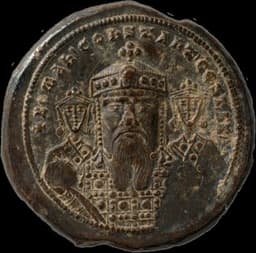
Romanos I Lekapenos
Emperor · Medieval
50.0Total
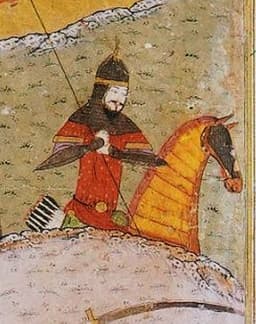
Tokhtamysh
Emperor · Medieval
60.8Total
Basic Information
Born
870
1342
Died
948
1406
Era
Medieval
Medieval
Nationality
Byzantine Empire
Golden Horde
Occupation
Emperor
Emperor
Civilization
Western
Eastern
Score Comparison
Military (10%)
30.0
74.7
Political (20%)
68.0
68.0
Influence (20%)
52.5
61.0
Legacy (20%)
46.7
49.2
Leadership (15%)
40.0
65.0
Strategy (15%)
60.0
58.0
TOTAL
50.0
60.8
Romanos I Lekapenos — Complete Timeline
920 AD
Military Campaigns against the Arabs (920s-940s)War◆ Major
Romanos I led successful campaigns against the Abbasid Caliphate, recapturing several fortresses in eastern Anatolia. His general John Kourkouas achieved notable victories, including the capture of Melitene in 934.
Byzantine-Arab WarsMilitary Campaign
Impact: regional
Accession as Co-Emperor (920)Political Action◆ Major
Romanos I Lekapenos, a naval admiral, was appointed co-emperor by the young Constantine VII. He gradually sidelined Constantine and became the de facto ruler. His rise marked the beginning of the Lekapenos dynasty's dominance.
AccessionCo-Emperor
Impact: regional
927 AD
Peace Treaty with Bulgaria (927)Political Action◆ Major
Romanos I negotiated a peace treaty with Tsar Peter I of Bulgaria, ending decades of war. The treaty included a marriage alliance between Peter and Romanos' granddaughter Maria. This brought stability to the Balkan frontier.
TreatyDiplomacyByzantine-Bulgarian Relations
Impact: regionalconstructive
944 AD
Overthrow and Exile (944)Political Action◆ Major
Romanos I was overthrown by his own sons Stephen and Constantine, who forced him to become a monk. He was exiled to the island of Prote and died in 948. His sons were soon overthrown by Constantine VII.
CoupExile
Impact: regionaltragic
Tokhtamysh — Complete Timeline
1380 AD
Reunification of the Golden HordePolitical Action◆ Major
Tokhtamysh, with the support of Timur, defeated the rebellious general Mamai and reunified the Golden Horde under his rule. He restored the Horde's authority over the Russian principalities, ending a period of fragmentation.
Golden HordeMamaiReunification
Impact: regionalconstructive
1382 AD
Sack of MoscowWar◆ Major
Tokhtamysh led a campaign against the Grand Duchy of Moscow. He besieged and captured Moscow, burning the city and massacring its inhabitants. The victory reasserted Mongol dominance over the Russian principalities.
MoscowRussiaSack
Impact: regionaldestructive
1387 AD
War with TimurWar◆ Major
Tokhtamysh invaded Timur's territory in Transoxiana, starting a war between the two Mongol rulers. Timur retaliated by invading the Golden Horde, defeating Tokhtamysh at the Battle of the Kondurcha River in 1391.
TimurTransoxianaKondurcha
Impact: regional
1395 AD
Battle of the Terek RiverWar
Timur decisively defeated Tokhtamysh at the Battle of the Terek River. The victory destroyed Tokhtamysh's army and led to the sack of Sarai, the capital of the Golden Horde. Tokhtamysh fled and never regained power.
TimurTerek RiverSarai
Impact: regionaltragic
1406 AD
Death in ExilePolitical Action
After his defeat by Timur, Tokhtamysh fled to the Grand Duchy of Lithuania. He was killed in a skirmish with a rival Mongol faction near Tyumen. His death marked the end of the last attempt to reunite the Golden Horde.
ExileLithuaniaTyumen
Impact: regionaltragic
Expert Analysis
Origins
Romanos I Lekapenos was born around 870 into an Armenian peasant family. His father was a military officer, and Romanos entered the Byzantine navy, rising through the ranks due to his competence. He became a naval commander under Emperor Alexander and later under the young Constantine VII. His humble origins contrasted with the Macedonian dynasty's imperial lineage.
Tokhtamysh was a descendant of Genghis Khan through the line of Jochi, born in the mid-14th century. His father was a powerful Mongol noble, but Tokhtamysh's early life was marked by the internal fragmentation of the Golden Horde. He sought refuge with Timur, the Central Asian conqueror, who supported his claim to the Horde's throne.
Rise to Power
Romanos I rose to power through political maneuvering. In 920, as a respected admiral, he was appointed co-emperor to the young Constantine VII. He gradually sidelined Constantine, marrying his daughter Helena to Constantine and eventually becoming the de facto ruler. By 924, he had consolidated control, ruling as senior emperor while Constantine was marginalized.
Tokhtamysh's rise was enabled by Timur. In 1378, with Timur's military support, Tokhtamysh defeated the rebellious general Mamai at the Battle of the Kalka River. He then reunified the Golden Horde, restoring its authority over the Russian principalities. His victory over Mamai marked his ascension as the undisputed Khan.
Leadership & Governance
Romanos I governed as a pragmatic administrator. He focused on stabilizing the empire after decades of war. He negotiated a 30-year peace with Bulgaria in 927, marrying his granddaughter to Tsar Peter I. He also reformed the tax system and reduced corruption. His military score of 30.0 reflects his reliance on generals like John Kourkouas, who achieved victories against the Arabs, recapturing Melitene in 934. Romanos's political score of 68.0 indicates his skill in court politics, though his leadership score of 40.0 suggests he was not a commanding figure.
Tokhtamysh led with military aggression. His military score of 74.7 reflects his battlefield successes. He sacked Moscow in 1382, burning the city and reasserting Mongol dominance. He also fought campaigns against the Timurids. His political score of 68.0 matches Romanos, but his leadership score of 65.0 shows a more decisive ruler. However, his governance was less stable; his war with Timur (1385-1395) led to his defeat at the Terek River in 1395, after which the Horde fragmented.
Triumph & Tragedy
Romanos I's greatest triumph was the peace with Bulgaria, which ended a costly war and secured the empire's northern frontier. He also oversaw military successes in the East, such as the capture of Melitene. His tragedy was his downfall orchestrated by his own sons. In 944, Stephen and Constantine overthrew him, forcing him into monastic exile on the island of Prote, where he died in 948. His political achievements were undone by familial betrayal.
Tokhtamysh's triumph was reunifying the Golden Horde and humbling Moscow. His sack of Moscow in 1382 demonstrated his power. His tragedy was his hubris in challenging Timur. After initial successes, Timur devastated the Horde, sacking Sarai and destroying Tokhtamysh's army. Tokhtamysh fled to Lithuania, where he was killed in a skirmish in 1406. His legacy score of 49.2 reflects his brief unification.
Character & Destiny
Romanos I was shrewd and patient, but his reliance on family backfired. He trusted his sons, who betrayed him. His character was more that of a bureaucrat than a warrior, and his destiny was to be a caretaker emperor who stabilized the empire but failed to secure his dynasty.
Tokhtamysh was ambitious and bold, but his overconfidence led to his downfall. He underestimated Timur's power, leading to catastrophic defeat. His character was that of a traditional Mongol conqueror, but his destiny was to be a footnote to Timur's rise.
Legacy
Romanos I is remembered as a competent but overshadowed emperor. His peace with Bulgaria lasted until the 960s, and his administrative reforms had lasting effects. However, his dynasty did not survive; the Macedonian dynasty continued after his fall. His influence score of 52.5 indicates moderate impact.
Tokhtamysh's legacy is mixed. He briefly reunited the Horde, but his defeat ended the Horde's power. The sack of Moscow cemented Russian resentment, and his war with Timur weakened the Horde permanently. His legacy score of 49.2 reflects his fleeting success.
Conclusion
Tokhtamysh had a higher total score (60.8 vs 50.0), driven by his military and leadership. His impact was more dramatic but shorter-lived. Romanos I's governance was more stable but less transformative. Taking a stance, Tokhtamysh's reunification of the Horde and sack of Moscow had greater immediate consequences, but Romanos's peace with Bulgaria and administrative reforms had longer-term benefits for Byzantium. Thus, while Tokhtamysh was a more dynamic figure, Romanos I's impact was more enduring in its region. However, by the metrics, Tokhtamysh edges ahead.
Rankings
🥇
TokhtamyshLeader
Mil: 74.7Pol: 68.0Inf: 61.0
60.8
🥈
Romanos I Lekapenos
Mil: 30.0Pol: 68.0Inf: 52.5
50.0
+10.8 behind
How This Comparison Works
Algorithm
Each figure is scored on 6 dimensions (0—100 scale) based on structured historical data: Military (10%), Political (20%), Influence (20%), Legacy (20%), Leadership (15%), Strategy (15%). The weighted total produces the final ranking.
Data Sources
Scores are computed from structured sub-indicators in the database. Scale factors adjust for era (Ancient ×0.85, Modern ×1.0) and civilization size (Eastern ×1.05, Other ×0.80) to account for differences in population and military scale.
Maximum 3 Figures
Comparisons are limited to 2—3 figures to ensure readability and statistical meaningfulness.
Error Margins
±5 points per dimension — Sub-scores are derived from historical records with inherent uncertainty. Two figures within 5 points on a dimension should be considered roughly equivalent in that area.
Total Score Accuracy
±3 points overall — The weighted combination of 6 dimensions produces a total score with approximately ±3 points of uncertainty. Differences of less than 3 points are not statistically significant— the figures are effectively tied.
Known Limitations
- Historical records are incomplete and uneven across civilizations
- Figures from oral-tradition societies may be underrepresented
- Occupation labels can misclassify multi-role figures
- Scores measure capability and impact, not moral character
- Quantitative scoring is a comparison tool, not absolute truth
Capability Radar
Military (10%) — Battles & Warfare
Battles
45
75
Win Rate
50
70
Expansion
35
75
Political (20%) — Governance & Reform
Reform
55
55
Diplomacy
65
65
Economy
50
55
Influence (20%) — Cultural & Global Reach
Cultural
30
45
Global
25
50
Legacy (20%) — Historical Impact
Historical
45
55
Longevity
35
40
Leadership (15%) — Power & Stability
Tenure
60
60
Stability
55
40
Strategy (15%) — Tactics & Innovation
Strategy
55
70
Tactics
40
65
Reform
30
60
Similar Comparisons
Comments & Discussion
No comments yet. Be the first to share your thoughts!