Loading...
Asif Ali Zardari vs Simon Vratsian
Simon Vratsian leads by 2.8 pts · 2 figures compared
…
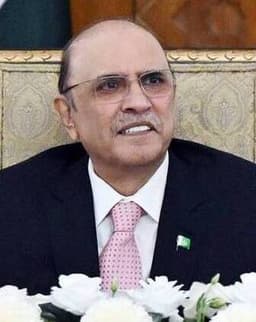
Asif Ali Zardari
Politician · Modern
49.2Total

Simon Vratsian
Politician · Modern
52.0Total
Basic Information
Born
1955
1882
Died
—
1969
Era
Modern
Modern
Nationality
Pakistan
Armenia
Occupation
Politician
Politician
Civilization
Indian
Western
Score Comparison
Military (10%)
47.5
47.2
Political (20%)
37.9
61.3
Influence (20%)
51.0
51.8
Legacy (20%)
41.7
45.0
Leadership (15%)
64.0
64.5
Strategy (15%)
60.0
42.4
TOTAL
49.2
52.0
Asif Ali Zardari — Complete Timeline
1987 AD
Married Benazir BhuttoPolitical Action
Asif Ali Zardari married Benazir Bhutto, the former Prime Minister of Pakistan. The marriage was politically significant, uniting two influential political families.
MarriageBenazir BhuttoPolitical Alliance
Impact: nationalconstructive
1996 AD
Imprisoned on Corruption ChargesPolitical Action◆ Major
Zardari was arrested and imprisoned on corruption charges following the dismissal of Benazir Bhutto's government. He spent over eight years in prison, earning the nickname 'Mr. 10 Percent' for alleged kickbacks.
ImprisonmentCorruptionPolitical Persecution
Impact: nationaldestructive
2007 AD
Assassination of Benazir BhuttoPolitical Action
Benazir Bhutto was assassinated in a suicide attack after a political rally in Rawalpindi. Zardari became the co-chairman of the Pakistan Peoples Party (PPP) following her death.
AssassinationBenazir BhuttoPPP
Impact: nationaltragic
2008 AD
Elected President of PakistanPolitical Action◆ Major
Zardari was elected as the 11th President of Pakistan by the electoral college. He served from 2008 to 2013, during a period of political instability and conflict with the judiciary.
PresidencyPPPHead of State
Impact: nationalconstructive
2010 AD
Repealed the 17th Constitutional AmendmentReform
Zardari signed the 18th Constitutional Amendment, which repealed the 17th Amendment and devolved powers from the presidency to the prime minister and provinces. This restored parliamentary democracy.
Constitutional AmendmentDevolutionParliamentary Democracy
Impact: nationalconstructive
2013 AD
End of Presidential TermPolitical Action
Zardari's presidential term ended, and he was succeeded by Mamnoon Hussain. He returned to a role in the PPP leadership, focusing on party politics.
Presidential TermSuccessionPPP
Impact: national
Simon Vratsian — Complete Timeline
1920 AD
Appointment as last Prime Minister of the First RepublicPolitical Action
Vratsian became the last Prime Minister of the First Republic of Armenia on November 23, 1920, during the final weeks of independence. He led the government during the Turkish-Armenian War and the subsequent Soviet invasion.
GovernmentEnd of IndependenceWar
Impact: nationaldestructive
1921 AD
Declaration of the February UprisingPolitical Action◆ Major
Vratsian led the February Uprising against Soviet rule in Armenia in February 1921, briefly re-establishing an independent government in Yerevan. The rebellion was crushed by the Red Army in April 1921, forcing Vratsian into exile.
UprisingAnti-SovietExile
Impact: nationalconstructive
Leadership of the Armenian Revolutionary Federation in exilePolitical Action◆ Major
After the failure of the February Uprising, Vratsian became a leading figure of the Armenian Revolutionary Federation (Dashnak) in the diaspora, organizing political activities and humanitarian aid for Armenian refugees.
DiasporaPolitical LeadershipRefugee Aid
Impact: regionalconstructive
1969 AD
Death in exile in the United StatesOther
Vratsian died in Los Angeles on May 21, 1969, after decades of exile. He remained active in Armenian diaspora politics and wrote extensively on Armenian history.
ExileDeathDiaspora
tragic
Expert Analysis
Origins
Asif Ali Zardari was born on July 26, 1955, in Karachi, Pakistan, into a landowning family from Sindh. His father, Hakim Ali Zardari, was a politician and businessman. Zardari studied at the Cadet College Petaro and later at the London School of Economics, though he did not complete a degree. His early life was marked by wealth and privilege, but he lacked a strong political background before marrying Benazir Bhutto.
Simon Vratsian was born in 1882 in the village of Nor Nakhichevan, then part of the Russian Empire (now Rostov-on-Don, Russia). He was educated at the Gevorgian Seminary in Etchmiadzin and later at universities in Moscow and St. Petersburg. Vratsian became active in the Armenian Revolutionary Federation (Dashnak) during his student years, which shaped his lifelong commitment to Armenian nationalism.
Rise to Power
Zardari's rise was largely tied to his marriage to Benazir Bhutto in 1987. After her assassination in 2007, Zardari became co-chairman of the Pakistan Peoples Party (PPP). He leveraged his wife's legacy and political network to secure the presidency in 2008, winning 481 out of 702 electoral college votes. Key allies included the PPP and coalition partners, while opponents included the Pakistan Muslim League-Nawaz and the military establishment.
Vratsian rose through the Dashnak party ranks. He served as a member of the Armenian National Council and later as Minister of Agriculture in the First Republic. On November 23, 1920, he became Prime Minister, just weeks before the Soviet invasion. His rise was a product of his dedication to the Dashnak cause and his role in the brief independence period.
Leadership & Governance
Zardari's presidency (2008-2013) was marked by the 18th Constitutional Amendment, which devolved powers from the presidency to Parliament and the Prime Minister. He also signed the National Reconciliation Ordinance, granting immunity to politicians involved in corruption cases. However, his leadership was criticized for inaction during crises like the 2010 floods and energy shortages. Zardari scored 64.0 in Leadership and 60.0 in Strategy.
Vratsian led the First Republic during its final days. He attempted to negotiate with the Bolsheviks and organized resistance, but his government was forced into exile. He later led the February Uprising in 1921, briefly reclaiming Yerevan. His governance was focused on survival and national unity. Vratsian scored 64.5 in Leadership and 42.4 in Strategy, reflecting his tactical limitations.
Triumph & Tragedy
Zardari's greatest success was the 18th Amendment, which strengthened democratic institutions. He also oversaw the passage of the Benazir Income Support Program. His greatest failure was the pervasive corruption allegations; he was imprisoned for years before becoming president. His tenure saw rising terrorism and economic decline.
Vratsian's triumph was leading the February Uprising, which temporarily restored Armenian independence. His tragedy was the inevitable Soviet takeover; he spent decades in exile, never returning to Armenia. He died in Los Angeles in 1969.
Character & Destiny
Zardari was pragmatic and resilient, surviving imprisonment and political attacks. His character was often described as cunning and opportunistic. His destiny was shaped by his wife's assassination, which propelled him to power.
Vratsian was idealistic and dedicated to Armenian nationalism. His character was steadfast but inflexible, which contributed to his failure to adapt to Soviet dominance. His destiny was exile, becoming a symbol of lost independence.
Legacy
Zardari's legacy is mixed: he is credited with democratic reforms but remembered for corruption. The 18th Amendment remains a cornerstone of Pakistan's constitution. He scored 41.7 in Legacy.
Vratsian's legacy is that of a nationalist martyr. He is revered in the Armenian diaspora for his efforts to preserve Armenian statehood. His writings document the First Republic's history. He scored 45.0 in Legacy.
Conclusion
Simon Vratsian had a greater impact in terms of historical significance, scoring 52.0 overall versus Zardari's 49.2. While Zardari's political maneuvers affected millions, Vratsian's leadership during Armenia's brief independence and his role in the February Uprising represent a pivotal moment in Armenian history. Vratsian's legacy endures as a symbol of national resilience, whereas Zardari's is tainted by corruption and instability. Thus, Vratsian's impact, though on a smaller scale, was more profound and enduring.
Rankings
🥇
Simon VratsianLeader
Mil: 47.2Pol: 61.3Inf: 51.8
52.0
🥈
Asif Ali Zardari
Mil: 47.5Pol: 37.9Inf: 51.0
49.2
+2.8 behind
How This Comparison Works
Algorithm
Each figure is scored on 6 dimensions (0—100 scale) based on structured historical data: Military (10%), Political (20%), Influence (20%), Legacy (20%), Leadership (15%), Strategy (15%). The weighted total produces the final ranking.
Data Sources
Scores are computed from structured sub-indicators in the database. Scale factors adjust for era (Ancient ×0.85, Modern ×1.0) and civilization size (Eastern ×1.05, Other ×0.80) to account for differences in population and military scale.
Maximum 3 Figures
Comparisons are limited to 2—3 figures to ensure readability and statistical meaningfulness.
Error Margins
±5 points per dimension — Sub-scores are derived from historical records with inherent uncertainty. Two figures within 5 points on a dimension should be considered roughly equivalent in that area.
Total Score Accuracy
±3 points overall — The weighted combination of 6 dimensions produces a total score with approximately ±3 points of uncertainty. Differences of less than 3 points are not statistically significant— the figures are effectively tied.
Known Limitations
- Historical records are incomplete and uneven across civilizations
- Figures from oral-tradition societies may be underrepresented
- Occupation labels can misclassify multi-role figures
- Scores measure capability and impact, not moral character
- Quantitative scoring is a comparison tool, not absolute truth
Capability Radar
Military (10%) — Battles & Warfare
Battles
42
31
Win Rate
45
33
Expansion
51
36
Political (20%) — Governance & Reform
Reform
25
40
Diplomacy
40
35
Economy
20
25
Influence (20%) — Cultural & Global Reach
Cultural
20
30
Global
25
20
Legacy (20%) — Historical Impact
Historical
30
40
Longevity
20
30
Leadership (15%) — Power & Stability
Tenure
60
30
Stability
15
20
Strategy (15%) — Tactics & Innovation
Strategy
54
37
Tactics
57
40
Reform
61
46
Similar Comparisons
Comments & Discussion
No comments yet. Be the first to share your thoughts!