Loading...
Askar Akayev vs Julius Caesar
Julius Caesar leads by 39.3 pts · 2 figures compared
…
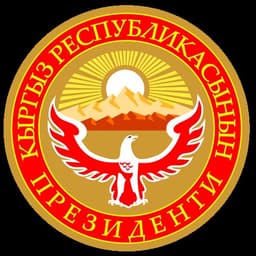
Askar Akayev
Politician · Modern
43.5Total

Julius Caesar
General · Ancient
82.8Total
Basic Information
Born
1944
-100
Died
—
-44
Era
Modern
Ancient
Nationality
Kyrgyzstan
Roman Republic
Occupation
Politician
General
Civilization
Eastern
Western
Score Comparison
Military (10%)
17.5
88.0
Political (20%)
43.7
78.0
Influence (20%)
49.4
85.0
Legacy (20%)
40.0
82.0
Leadership (15%)
64.0
80.0
Strategy (15%)
32.5
85.0
TOTAL
43.5
82.8
Askar Akayev — Complete Timeline
1991 AD
Elected First President of KyrgyzstanPolitical Action◆ Major
Askar Akayev was elected as the first president of independent Kyrgyzstan after the dissolution of the Soviet Union. He was initially seen as a reformer, promoting democratic reforms and market economics. His early presidency was marked by openness and relative political freedom.
IndependenceDemocratic ReformPost-Soviet Transition
Impact: nationalconstructive
1993 AD
Introduced Democratic ReformsReform◆ Major
Akayev oversaw the adoption of a new constitution that established a parliamentary system with a strong presidency. He implemented economic liberalization, including privatization and land reform. Kyrgyzstan became known as an 'island of democracy' in Central Asia during this period.
Constitutional ReformEconomic LiberalizationDemocracy
Impact: nationalconstructive
2005 AD
Overthrown in the Tulip RevolutionPolitical Action◆ Major
Following disputed parliamentary elections in February 2005, mass protests erupted across Kyrgyzstan. The protests, known as the Tulip Revolution, forced Akayev to flee the country and resign. He was succeeded by Kurmanbek Bakiyev. The revolution was part of the Color Revolution wave in post-Soviet states.
RevolutionRegime ChangeColor Revolution
Impact: nationaldestructive
Exiled to RussiaPolitical Action
After being overthrown, Akayev fled to Russia where he was granted asylum. He settled in Moscow and worked as a professor at Moscow State University. His exile marked the end of his political career, and he remained in Russia for the rest of his life.
ExilePolitical AsylumPost-Presidency
Impact: nationaltragic
Julius Caesar — Complete Timeline
58 BC
Gallic WarsWar◆ Major
Caesar, as proconsul of Gaul, launched a series of campaigns that conquered all of Gaul (modern France, Belgium, and parts of Switzerland). He fought numerous battles, including against the Helvetii, the Belgae, and the Gallic chieftain Vercingetorix. The wars brought immense wealth and a loyal army to Caesar.
Gallic WarsConquestRoman Expansion
Impact: regional
49 BC
Crossing the RubiconPolitical Action◆ Major
Caesar led Legio XIII across the Rubicon River into Italy, defying the Roman Senate's order to disband his army. This act triggered a civil war against Pompey and the Optimates, ultimately leading to Caesar's dictatorship and the end of the Roman Republic.
Roman Civil WarEnd of RepublicPower Struggle
Impact: global
48 BC
Battle of PharsalusWar◆ Major
Caesar's outnumbered army defeated the larger forces of Pompey the Great at Pharsalus in Greece. Caesar's tactical use of a reserve line to counter Pompey's cavalry charge proved decisive. Pompey fled to Egypt, where he was assassinated, leaving Caesar as the undisputed master of the Roman world.
Roman Civil WarBattleDecisive Victory
Impact: regional
44 BC
Appointment as Dictator for LifePolitical Action◆ Major
The Roman Senate appointed Caesar dictator perpetuo (dictator for life), granting him unprecedented personal power. This move concentrated military, legislative, and judicial authority in one person, effectively ending the Roman Republic's traditional system of checks and balances and alarming many senators.
DictatorshipEnd of RepublicPower Consolidation
Impact: regionaldestructive
Assassination on the Ides of MarchPolitical Action◆ Major
A group of Roman senators, led by Marcus Junius Brutus and Gaius Cassius Longinus, stabbed Caesar to death at a meeting of the Senate in the Theatre of Pompey. The assassination was intended to restore the Republic, but instead triggered another civil war that led to the rise of the Roman Empire.
AssassinationRoman PoliticsEnd of Republic
Impact: globaldestructive
Expert Analysis
askar-akayev-vs-julius-caesar
# The Dictator and the Democrat: Two Paths from Republic to Ruin
On a March morning in 44 BCE, the most powerful man in the Roman world lay bleeding at the foot of a statue of his great rival, Pompey. Sixty senators had surrounded him, each with a dagger. Two thousand years later, on an April evening in 2005, another leader who had once promised his people freedom packed a suitcase in Bishkek and boarded a plane for Moscow, his revolution crumbling behind him. Both men—Julius Caesar and Askar Akayev—rose from humble beginnings to lead their nations through times of transformation. Both ended their political lives in exile or death, betrayed by the very systems they had helped create. Why did one leave behind an empire that shaped the world for millennia, while the other left only a footnote in the story of a small Central Asian republic?
Origins
Gaius Julius Caesar was born into the Roman patrician class in 100 BCE, but his family was neither wealthy nor politically powerful. His aunt had married Gaius Marius, the great populist general, and his own father died when Caesar was only sixteen. The young Roman grew up in a Republic torn between the optimates—the aristocratic faction that defended the Senate's power—and the populares, who championed the common people. Caesar learned early that survival meant navigating violence and ambition: at nineteen, he defied the dictator Sulla's order to divorce his wife, and spent years in exile or on the run.
Askar Akayev was born in 1944 in the village of Kyzyl-Bayrak, in what was then the Soviet Republic of Kyrgyzstan. His family were collective farmers; his father died in World War II. Akayev grew up in a one-room mud house, studied physics at university in Leningrad, and became a professor—a man of science in a system that worshipped ideology. When the Soviet Union collapsed in 1991, he emerged not from the military or the Communist Party's inner circle, but from the academy, promising something his people had never known: democracy.
Rise to Power
Caesar's ascent was a masterpiece of calculated risk. He climbed the traditional Roman ladder of offices—quaestor, aedile, praetor—but he did so by borrowing enormous sums of money to stage lavish games and bribe voters. By 59 BCE, he had formed the First Triumvirate with Pompey and Crassus, securing election as consul. Then came the prize: a five-year command in Gaul. Over the next eight years, Caesar conquered what is now France and Belgium, fought the first Roman invasion of Britain, and built an army that would be loyal to him alone. His own Commentaries on the Gallic Wars, written in a clear, propulsive Latin, turned military slaughter into literature.
Akayev's rise was gentler. In 1991, as the Soviet Union dissolved, Kyrgyzstan's Communist leadership was discredited. Akayev, then president of the Kyrgyz Academy of Sciences, was seen as a clean, intellectual alternative. He was elected the first president of independent Kyrgyzstan with overwhelming popular support. Unlike Caesar, he did not march across borders with legions; he walked into the White House in Bishkek carrying textbooks. His mandate was to build a nation from scratch.
Leadership & Governance
Caesar governed as he fought: with speed, ruthlessness, and an eye for the dramatic. As dictator, he reformed the calendar (giving us the Julian calendar), launched massive public works, extended Roman citizenship to provincials, and began land reforms that broke the power of the old aristocracy. But he also centralized authority in his own hands, packed the Senate with his supporters, and accepted the title "dictator for life" in 44 BCE. His military genius was unmatched—at Alesia in 52 BCE, he besieged a Gallic fortress while simultaneously constructing defenses against a massive relief army, winning both battles at once.
Akayev tried a different path. In 1993, he introduced a new constitution that created a parliamentary system with a strong presidency. He encouraged independent media, allowed opposition parties, and pursued market reforms. But democracy in Kyrgyzstan was a fragile plant in thin soil. As corruption grew and his family amassed wealth, Akayev began to tighten control. By 2005, the man who had been elected as a reformer was rigging parliamentary elections to keep his family in power. His governance score of 60.3—middling by any measure—reflected a leader who could not choose between his ideals and his interests.
Triumph & Tragedy
Caesar's greatest triumph was his conquest of Gaul, which doubled the size of Roman territory and made him the richest man in the Republic. His most devastating failure was his own assassination. On the Ides of March, 44 BCE, he was stabbed twenty-three times by senators he had pardoned and promoted. His tragedy was that he could not see that the Republic he had saved from civil war could not survive his own ambition.
Akayev's triumph was more modest: he led Kyrgyzstan through its first decade of independence without civil war, unlike its neighbors Tajikistan and Afghanistan. His tragedy came in March 2005, when the Tulip Revolution—mass protests against fraudulent elections—swept him from power. He fled to Russia, where he returned to teaching mathematics. The man who had once been called "the father of Kyrgyz democracy" died in exile, not by the sword but by the slow erosion of his own promises.
Character & Destiny
Caesar was driven by an insatiable need for glory. He once said, "I would rather be first in a little Iberian village than second in Rome." His arrogance, his refusal to disband his army, and his contempt for the Senate's traditions made his assassination almost inevitable. Yet that same ambition gave him the will to reshape the world.
Akayev was a different sort of man: cautious, intellectual, torn between his liberal ideals and his family's greed. He wanted to be both a democrat and a strongman, a reformer and a patron. His tragedy was not that he was too ambitious, but that he was not ambitious enough—he could not see that half-measures in politics, like half-truths in physics, collapse under scrutiny.
Legacy
Caesar's legacy is the Roman Empire itself. His adopted heir Octavian became Augustus, the first emperor. The title "Caesar" became synonymous with imperial power, surviving in the German "Kaiser" and the Russian "Tsar." His military campaigns are still studied at West Point, his Latin is still read in schools. His legacy score of 82.0 reflects a man whose name became history.
Akayev's legacy is more ambiguous. He gave Kyrgyzstan its first taste of independence and democracy, but he also taught a bitter lesson: that leaders who promise freedom can become the architects of their own downfall. His legacy score of 56.0 places him among the forgotten. Today, Kyrgyzstan is neither a dictatorship nor a democracy—it is a place that remembers what Akayev tried to build, and what he failed to protect.
Conclusion
The distance between Rome and Bishkek is more than four thousand miles and two thousand years. Yet both men faced the same question: how do you lead a people from old certainties into an uncertain future? Caesar answered with iron and ambition, and built an empire that lasted five hundred years. Akayev answered with hesitation and half-reforms, and built a democracy that lasted fourteen. In the end, the difference was not in their circumstances but in their souls. Caesar understood that to change the world, you must first be willing to die for it. Akayev understood that to keep power, you must sometimes be willing to lose it. One became a legend; the other became a lesson.
Rankings
🥇
Julius CaesarLeader
Mil: 88.0Pol: 78.0Inf: 85.0
82.8
🥈
Askar Akayev
Mil: 17.5Pol: 43.7Inf: 49.4
43.5
+39.3 behind
How This Comparison Works
Algorithm
Each figure is scored on 6 dimensions (0—100 scale) based on structured historical data: Military (10%), Political (20%), Influence (20%), Legacy (20%), Leadership (15%), Strategy (15%). The weighted total produces the final ranking.
Data Sources
Scores are computed from structured sub-indicators in the database. Scale factors adjust for era (Ancient ×0.85, Modern ×1.0) and civilization size (Eastern ×1.05, Other ×0.80) to account for differences in population and military scale.
Maximum 3 Figures
Comparisons are limited to 2—3 figures to ensure readability and statistical meaningfulness.
Error Margins
±5 points per dimension — Sub-scores are derived from historical records with inherent uncertainty. Two figures within 5 points on a dimension should be considered roughly equivalent in that area.
Total Score Accuracy
±3 points overall — The weighted combination of 6 dimensions produces a total score with approximately ±3 points of uncertainty. Differences of less than 3 points are not statistically significant— the figures are effectively tied.
Known Limitations
- Historical records are incomplete and uneven across civilizations
- Figures from oral-tradition societies may be underrepresented
- Occupation labels can misclassify multi-role figures
- Scores measure capability and impact, not moral character
- Quantitative scoring is a comparison tool, not absolute truth
Capability Radar
Military (10%) — Battles & Warfare
Battles
12
95
Win Rate
17
92
Expansion
19
97
Political (20%) — Governance & Reform
Reform
40
90
Diplomacy
35
85
Economy
30
82
Influence (20%) — Cultural & Global Reach
Cultural
20
88
Global
15
94
Legacy (20%) — Historical Impact
Historical
25
95
Longevity
15
96
Leadership (15%) — Power & Stability
Tenure
55
75
Stability
20
60
Strategy (15%) — Tactics & Innovation
Strategy
24
94
Tactics
25
96
Reform
30
88
Similar Comparisons
Comments & Discussion
No comments yet. Be the first to share your thoughts!