Loading...
Askia Muhammad vs King John
Askia Muhammad leads by 21.5 pts · 2 figures compared
…
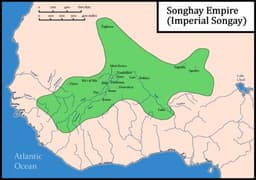
Askia Muhammad
Emperor · Medieval
71.2Total
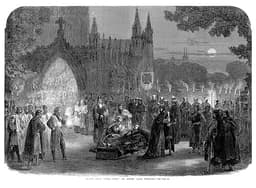
King John
Emperor · Medieval
49.7Total
Basic Information
Born
1443
1166
Died
1538
1216
Era
Medieval
Medieval
Nationality
Songhai Empire
England
Occupation
Emperor
Emperor
Civilization
Other
Western
Score Comparison
Military (10%)
78.0
50.0
Political (20%)
70.3
42.3
Influence (20%)
82.0
60.0
Legacy (20%)
55.0
52.0
Leadership (15%)
78.0
45.0
Strategy (15%)
69.1
35.7
TOTAL
71.2
49.7
Askia Muhammad — Complete Timeline
1493 AD
Coup against Sonni BaruPolitical Action
Askia Muhammad overthrew Sonni Baru, the son of Sonni Ali, in a coup. Muhammad, a general under Sonni Ali, seized power after Baru refused to embrace Islam more fully, establishing the Askia dynasty.
CoupAskia DynastyIslam
Impact: regional
1496 AD
Pilgrimage to MeccaCultural◆ Major
Askia Muhammad made a pilgrimage to Mecca, traveling with a large retinue and distributing gold. He was appointed Caliph of the Sudan by the Abbasid caliph, enhancing his religious and political legitimacy.
PilgrimageMeccaCaliph
Impact: regionalconstructive
1498 AD
Administrative ReformsReform◆ Major
Askia Muhammad reorganized the Songhai Empire into provinces governed by appointed officials. He standardized weights, measures, and currency, and established a professional bureaucracy, improving tax collection and governance.
AdministrationBureaucracyTaxation
Impact: regionalconstructive
1500 AD
Promotion of Islamic ScholarshipCultural◆ Major
Askia Muhammad patronized Islamic scholars and built mosques and schools in Timbuktu, Gao, and Djenn
ScholarshipTimbuktuIslam
Impact: regionalconstructive
1512 AD
Conquest of the Hausa StatesWar◆ Major
Askia Muhammad led a military campaign against the Hausa city-states, including Kano and Katsina. He conquered them and imposed tribute, extending Songhai control over the Hausa region and securing trade routes.
ConquestHausa StatesTrade Routes
Impact: regional
King John — Complete Timeline
1204 AD
Loss of NormandyWar◆ Major
King Philip II of France conquered Normandy from King John. John's failure to defend the duchy resulted in the loss of the ancestral lands of the English crown in France. This shifted the focus of English kings toward consolidating power in Britain.
Territorial LossFranceAngevin Empire
Impact: regionaldestructive
1208 AD
Interdict on EnglandPolitical Action◆ Major
Pope Innocent III placed England under interdict after John refused to accept Stephen Langton as Archbishop of Canterbury. Church services were suspended across the kingdom. John retaliated by confiscating church property, deepening the conflict with the papacy.
PapacyChurch-State ConflictInterdict
Impact: nationaldestructive
1215 AD
First Barons' WarWar◆ Major
Rebellious barons, angered by John's refusal to abide by Magna Carta, invited Prince Louis of France to claim the English throne. John fought a series of campaigns across England. The war continued after John's death in 1216, ending with the Treaty of Lambeth in 1217.
Civil WarRebellionFrance
Impact: nationaldestructive
Signing of Magna CartaPolitical Action
King John sealed Magna Carta at Runnymede after negotiations with rebellious barons. The charter limited royal authority, established due process, and guaranteed certain legal rights. It became a foundational document for constitutional law in England and later globally.
ConstitutionRightsRebellion
Impact: globalconstructive
Expert Analysis
Origins
Askia Muhammad, born as Muhammad Ture around 1443 in the Songhai Empire (present-day Niger), was of Soninke origin. His early life is obscure, but he rose as a military commander under Sonni Ali, the founder of the Songhai Empire. King John, born in 1166 in Oxford, England, was the youngest son of Henry II and Eleanor of Aquitaine. He received education in governance and military tactics but was overshadowed by his older brothers, Henry the Young King and Richard the Lionheart. John's upbringing was marked by family conflicts and a lack of inheritance, which shaped his later insecurities.
Rise to Power
Askia Muhammad seized power in 1493 by overthrowing Sonni Baru, Sonni Ali's son, in a coup. Baru had refused to embrace Islam, alienating Muslim merchants and scholars. Muhammad, a devout Muslim, consolidated support among the Islamic elite. He then embarked on a pilgrimage to Mecca in 1496-1498, gaining recognition as the Caliph of the Sudan by the Abbasid caliph. This legitimacy boosted his authority. King John became king in 1199 after Richard I's death, but he faced immediate challenges. He lost the Duchy of Normandy to Philip II of France in 1204, which weakened his baronial support. John's conflict with Pope Innocent III over the appointment of Stephen Langton as Archbishop led to an interdict on England in 1208, further eroding his power.
Leadership & Governance
Askia Muhammad reorganized the Songhai Empire into provinces with appointed governors, standardizing weights, measures, and currency. He promoted Islamic scholarship, building mosques and schools in Timbuktu, Gao, and Djenné, and attracting scholars from North Africa. His administrative reforms scored 70.3 in political leadership. In contrast, King John's governance was marked by arbitrary taxation and confiscation of lands, leading to baronial rebellion. His military score of 50.0 reflects his failures, such as the loss of Normandy and the disastrous 1214 campaign. John's leadership scored 45.0, while Askia Muhammad's leadership scored 78.0, indicating a stark difference in effectiveness.
Triumph & Tragedy
Askia Muhammad's greatest triumphs include the conquest of the Hausa states (Kano, Katsina) and the expansion of Songhai to its largest extent. He also established a centralized administration that endured for decades. However, his later years saw a decline; he was blinded and deposed by his son Musa in 1528, a tragic end. King John's triumph was the Magna Carta in 1215, which limited royal power and established legal principles. Yet, he immediately violated its terms, leading to the First Barons' War. John's death in 1216 during the war left a legacy of mistrust. His military defeats and political failures outweigh his single achievement.
Character & Destiny
Askia Muhammad was devout, pragmatic, and ambitious. His religious devotion drove his reforms and expansion, but his reliance on Islam alienated traditionalists, contributing to his downfall. King John was known for his cruelty, duplicity, and incompetence. His inability to build trust led to constant conflict. Historians often rank John as one of England's worst kings, while Askia Muhammad is celebrated as a visionary ruler. Askia Muhammad's influence score of 82.0 reflects his lasting impact on West African culture, while John's influence score of 60.0 is tied to the Magna Carta's symbolic power.
Legacy
Askia Muhammad's legacy is the golden age of the Songhai Empire, with Timbuktu becoming a center of learning. His administrative systems influenced later West African states. The Magna Carta, though often violated, became a cornerstone of English constitutional law and inspired later documents like the US Constitution. However, John's personal legacy is negative, while Askia Muhammad's is positive. Askia Muhammad's total score of 71.2 far exceeds John's 49.7, reflecting his greater effectiveness.
Conclusion
Askia Muhammad had a greater impact than King John. While John's Magna Carta was historically significant, it was a reactive document forced by rebellion, not a proactive vision. Askia Muhammad built an empire through military conquest (78.0), political organization (70.3), and cultural patronage (82.0). His reforms created lasting institutions, whereas John's reign was a series of failures. The 21.5-point score gap underscores this. Askia Muhammad's legacy is one of construction, while John's is one of constraint. Therefore, Askia Muhammad stands as the more impactful ruler.
Rankings
🥇
Askia MuhammadLeader
Mil: 78.0Pol: 70.3Inf: 82.0
71.2
🥈
King John
Mil: 50.0Pol: 42.3Inf: 60.0
49.7
+21.5 behind
How This Comparison Works
Algorithm
Each figure is scored on 6 dimensions (0—100 scale) based on structured historical data: Military (10%), Political (20%), Influence (20%), Legacy (20%), Leadership (15%), Strategy (15%). The weighted total produces the final ranking.
Data Sources
Scores are computed from structured sub-indicators in the database. Scale factors adjust for era (Ancient ×0.85, Modern ×1.0) and civilization size (Eastern ×1.05, Other ×0.80) to account for differences in population and military scale.
Maximum 3 Figures
Comparisons are limited to 2—3 figures to ensure readability and statistical meaningfulness.
Error Margins
±5 points per dimension — Sub-scores are derived from historical records with inherent uncertainty. Two figures within 5 points on a dimension should be considered roughly equivalent in that area.
Total Score Accuracy
±3 points overall — The weighted combination of 6 dimensions produces a total score with approximately ±3 points of uncertainty. Differences of less than 3 points are not statistically significant— the figures are effectively tied.
Known Limitations
- Historical records are incomplete and uneven across civilizations
- Figures from oral-tradition societies may be underrepresented
- Occupation labels can misclassify multi-role figures
- Scores measure capability and impact, not moral character
- Quantitative scoring is a comparison tool, not absolute truth
Capability Radar
Military (10%) — Battles & Warfare
Battles
75
25
Win Rate
80
20
Expansion
80
10
Political (20%) — Governance & Reform
Reform
90
60
Diplomacy
80
30
Economy
85
25
Influence (20%) — Cultural & Global Reach
Cultural
70
45
Global
60
55
Legacy (20%) — Historical Impact
Historical
75
70
Longevity
65
65
Leadership (15%) — Power & Stability
Tenure
85
40
Stability
80
15
Strategy (15%) — Tactics & Innovation
Strategy
75
20
Tactics
70
15
Reform
85
10
Similar Comparisons
Comments & Discussion
No comments yet. Be the first to share your thoughts!