Loading...
King John vs King Uijong of Goryeo
King John leads by 11.9 pts · 2 figures compared
…
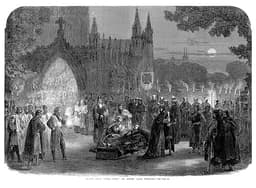
King John
Emperor · Medieval
49.7Total
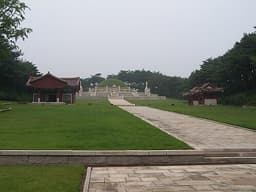
King Uijong of Goryeo
Emperor · Medieval
37.8Total
Basic Information
Born
1166
1127
Died
1216
1173
Era
Medieval
Medieval
Nationality
England
Korea
Occupation
Emperor
Emperor
Civilization
Western
Eastern
Score Comparison
Military (10%)
50.0
20.0
Political (20%)
42.3
26.4
Influence (20%)
60.0
47.1
Legacy (20%)
52.0
37.5
Leadership (15%)
45.0
41.5
Strategy (15%)
35.7
45.0
TOTAL
49.7
37.8
King John — Complete Timeline
1204 AD
Loss of NormandyWar◆ Major
King Philip II of France conquered Normandy from King John. John's failure to defend the duchy resulted in the loss of the ancestral lands of the English crown in France. This shifted the focus of English kings toward consolidating power in Britain.
Territorial LossFranceAngevin Empire
Impact: regionaldestructive
1208 AD
Interdict on EnglandPolitical Action◆ Major
Pope Innocent III placed England under interdict after John refused to accept Stephen Langton as Archbishop of Canterbury. Church services were suspended across the kingdom. John retaliated by confiscating church property, deepening the conflict with the papacy.
PapacyChurch-State ConflictInterdict
Impact: nationaldestructive
1215 AD
First Barons' WarWar◆ Major
Rebellious barons, angered by John's refusal to abide by Magna Carta, invited Prince Louis of France to claim the English throne. John fought a series of campaigns across England. The war continued after John's death in 1216, ending with the Treaty of Lambeth in 1217.
Civil WarRebellionFrance
Impact: nationaldestructive
Signing of Magna CartaPolitical Action
King John sealed Magna Carta at Runnymede after negotiations with rebellious barons. The charter limited royal authority, established due process, and guaranteed certain legal rights. It became a foundational document for constitutional law in England and later globally.
ConstitutionRightsRebellion
Impact: globalconstructive
King Uijong of Goryeo — Complete Timeline
1150 AD
Reign of ExtravaganceOther
King Uijong's reign before the coup was characterized by lavish spending on palaces, gardens, and entertainment. He neglected state affairs and surrounded himself with pleasure-seeking courtiers. This extravagance alienated the military and contributed to the coup.
ExtravaganceNeglectCoup Cause
Impact: nationaldestructive
1170 AD
Military Coup of Jeong Jung-buPolitical Action
General Jeong Jung-bu led a military coup against King Uijong's civil-dominated government. The king was deposed and exiled to Geojedo. Many civil officials were killed. This coup ended the civil bureaucracy's supremacy and began a century of military rule in Goryeo.
CoupMilitary RuleJeong Jung-bu
Impact: nationaldestructive
Destruction of Buddhist TemplesCultural
Following the coup, the military regime targeted Buddhist institutions that had been closely tied to the civil bureaucracy. Several temples were destroyed or looted, and monks were persecuted. This marked a decline in state patronage of Buddhism.
BuddhismPersecutionTemple Destruction
Impact: nationaldestructive
1173 AD
Exile and Assassination of King UijongPolitical Action◆ Major
After being deposed, King Uijong was exiled to Geojedo Island. In 1173, fearing a restoration attempt, the military regime sent assassins who killed the former king. His death solidified the military's control and eliminated a potential rallying point for loyalists.
ExileAssassinationMilitary Regime
Impact: nationaltragic
Expert Analysis
Origins
King John of England (1166–1216) was the youngest son of Henry II and Eleanor of Aquitaine. He received minimal land inheritance, earning the nickname 'John Lackland.' His early education focused on military and administrative skills, but he lacked the prestige of his older brothers. In contrast, King Uijong of Goryeo (1127–1173) was born into a royal dynasty that had ruled Korea for centuries. He ascended the throne in 1146 at age 19, inheriting a centralized bureaucracy heavily influenced by civil officials. Uijong was educated in Confucian classics and Buddhist teachings, typical for Goryeo monarchs. While John's early life was marked by family conflict and territorial disputes, Uijong grew up in a relatively stable court, albeit with growing tensions between civil and military factions.
Rise to Power
John became King of England in 1199 after the death of his brother Richard the Lionheart, despite rival claims from his nephew Arthur of Brittany. His reign began with the loss of Normandy in 1204 to King Philip II of France, scoring a military score of 50.0 in comparison to Uijong's 20.0, but John's political score of 42.3 reflects his failure to maintain continental holdings. Uijong's rise was smoother; he became king upon his father's death in 1146. However, his reign was marked by a shift toward civil government, alienating military officers. By 1170, General Jeong Jung-bu led a coup, deposing Uijong and installing his brother. John faced the First Barons' War (1215–1217) after barons rebelled against his rule, while Uijong was exiled and assassinated in 1173.
Leadership & Governance
John's leadership style was autocratic and suspicious. He imposed heavy taxes to fund wars, earning baronial resentment. His governance score of 42.3 is below average, as he alienated both the church and nobility. The Interdict on England (1208–1213) by Pope Innocent III paralyzed religious life, showing his poor diplomatic skills. Uijong's leadership score of 41.5 reflects his neglect of state affairs. He focused on lavish palaces and gardens, spending extravagantly while ignoring military needs. His civil officials dominated, leading to a coup that destroyed Buddhist temples and purged civilian ministers. Both leaders failed to balance power, but John's Magna Carta (1215) was a turning point that established due process, limiting royal authority. Uijong left no such reform; his reign ended in chaos.
Triumph & Tragedy
John's greatest triumph was the Magna Carta, which limited royal power and influenced constitutional law. However, he quickly repudiated it, triggering the First Barons' War. His score of 60.0 in influence reflects the charter's lasting impact. His greatest tragedy was the loss of Normandy, which reduced English territory and prestige. Uijong's triumphs are minimal; his reign saw cultural patronage of Buddhist art, but his extravagance led to fiscal strain. His tragedy is clear: deposed and assassinated by his own generals. Uijong's influence score of 47.1 is lower than John's, as his legacy is one of failed governance. John's legacy score of 52.0 surpasses Uijong's 37.5, primarily due to Magna Carta.
Character & Destiny
John was cunning but untrustworthy, earning the reputation of a tyrant. His strategic score of 35.7 is low, as he made poor military decisions. His character led to isolation and rebellion. Uijong was cultured but weak, relying on civil officials. His strategic score of 45.0 shows some ability, but he failed to anticipate the military coup. Historical assessments view John as a flawed king whose actions inadvertently advanced constitutionalism. Uijong is seen as a victim of structural tensions between civil and military factions. Both were deposed in different ways: John died during war, Uijong by assassination.
Legacy
John's legacy is defined by Magna Carta, which inspired later documents like the English Bill of Rights and the U.S. Constitution. His score of 52.0 in legacy reflects this enduring impact. Uijong's legacy is limited; he is remembered as the king whose incompetence triggered military rule in Goryeo, leading to decades of instability. His total score of 37.8 contrasts with John's 49.7. While John's failures were immediate, his long-term influence is greater. Uijong's reign serves as a cautionary tale but lacks transformative legal contributions.
Conclusion
King John had greater impact than King Uijong, despite his lower total score of 49.7 compared to Uijong's 37.8. John's Magna Carta fundamentally changed governance by establishing legal limits on royal power, influencing centuries of political thought. Uijong's reign ended in a coup that did not produce lasting institutional change. While both were ineffective leaders, John's unintended legacy of constitutionalism secures his historical significance. Uijong's legacy is largely negative, marking the decline of Goryeo's civil government.
Rankings
🥇
King JohnLeader
Mil: 50.0Pol: 42.3Inf: 60.0
49.7
🥈
King Uijong of Goryeo
Mil: 20.0Pol: 26.4Inf: 47.1
37.8
+11.9 behind
How This Comparison Works
Algorithm
Each figure is scored on 6 dimensions (0—100 scale) based on structured historical data: Military (10%), Political (20%), Influence (20%), Legacy (20%), Leadership (15%), Strategy (15%). The weighted total produces the final ranking.
Data Sources
Scores are computed from structured sub-indicators in the database. Scale factors adjust for era (Ancient ×0.85, Modern ×1.0) and civilization size (Eastern ×1.05, Other ×0.80) to account for differences in population and military scale.
Maximum 3 Figures
Comparisons are limited to 2—3 figures to ensure readability and statistical meaningfulness.
Error Margins
±5 points per dimension — Sub-scores are derived from historical records with inherent uncertainty. Two figures within 5 points on a dimension should be considered roughly equivalent in that area.
Total Score Accuracy
±3 points overall — The weighted combination of 6 dimensions produces a total score with approximately ±3 points of uncertainty. Differences of less than 3 points are not statistically significant— the figures are effectively tied.
Known Limitations
- Historical records are incomplete and uneven across civilizations
- Figures from oral-tradition societies may be underrepresented
- Occupation labels can misclassify multi-role figures
- Scores measure capability and impact, not moral character
- Quantitative scoring is a comparison tool, not absolute truth
Capability Radar
Military (10%) — Battles & Warfare
Battles
25
5
Win Rate
20
5
Expansion
10
5
Political (20%) — Governance & Reform
Reform
60
20
Diplomacy
30
20
Economy
25
20
Influence (20%) — Cultural & Global Reach
Cultural
45
15
Global
55
5
Legacy (20%) — Historical Impact
Historical
70
20
Longevity
65
15
Leadership (15%) — Power & Stability
Tenure
40
40
Stability
15
10
Strategy (15%) — Tactics & Innovation
Strategy
20
5
Tactics
15
5
Reform
10
5
Similar Comparisons
Comments & Discussion
No comments yet. Be the first to share your thoughts!