Loading...
Atahualpa vs Louis the German
Louis the German leads by 4.1 pts · 2 figures compared
…
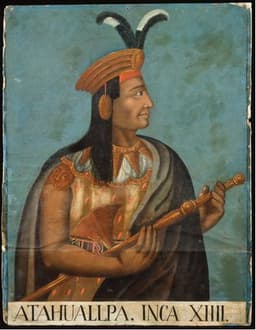
Atahualpa
Emperor · Medieval
44.5Total
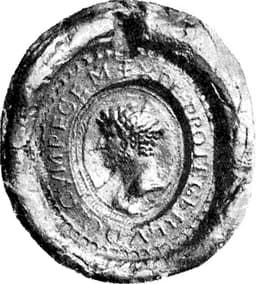
Louis the German
Emperor · Medieval
48.6Total
Basic Information
Born
1502
806
Died
1533
876
Era
Medieval
Medieval
Nationality
Inca Empire
East Francia
Occupation
Emperor
Emperor
Civilization
Other
Western
Score Comparison
Military (10%)
46.7
30.0
Political (20%)
27.9
54.7
Influence (20%)
57.2
54.1
Legacy (20%)
46.7
47.5
Leadership (15%)
39.0
40.0
Strategy (15%)
38.3
60.0
TOTAL
44.5
48.6
Atahualpa — Complete Timeline
1532 AD
Victory in the Inca Civil WarWar◆ Major
Atahualpa defeated his brother Hu
Civil WarSuccessionInca Empire
Impact: regionaldestructive
Capture at CajamarcaWar
Francisco Pizarro ambushed Atahualpa at Cajamarca, capturing the Inca emperor after a surprise attack. Spanish forces killed thousands of unarmed Inca attendants while Atahualpa was taken prisoner, marking the beginning of Spanish conquest.
Spanish ConquestAmbushPizarro
Impact: globaltragic
1533 AD
Ransom Room PaymentPolitical Action◆ Major
Atahualpa offered to fill a room with gold and silver in exchange for his release. Over several months, the Inca delivered approximately 6 tons of gold and 12 tons of silver, the largest ransom in history, but Pizarro executed him anyway.
RansomGoldSpanish Greed
Impact: regionaltragic
Execution by GarrotePolitical Action
Pizarro ordered Atahualpa's execution by garrote after a mock trial accused him of treason, idolatry, and ordering Hu
ExecutionSpanish ConquestEnd of Empire
Impact: globaltragic
Louis the German — Complete Timeline
841 AD
Battle of Fontenoy (841)War◆ Major
Louis the German allied with Charles the Bald to defeat their brother Lothair I at the Battle of Fontenoy. This battle was a decisive conflict in the Carolingian civil war that followed the death of Louis the Pious. The victory led to the Treaty of Verdun.
Civil WarBattleCarolingian
Impact: regional
842 AD
Oaths of Strasbourg (842)Political Action◆ Major
Louis the German and Charles the Bald swore mutual allegiance against Lothair I at Strasbourg. The oaths were recorded in both Old High German and Old French, providing early evidence of the linguistic divergence between German and French. This alliance solidified their partnership.
AllianceOathLinguistic Record
Impact: regionalconstructive
843 AD
Treaty of Verdun (843)Political Action
Louis the German, along with his brothers Lothair I and Charles the Bald, signed the Treaty of Verdun, dividing the Carolingian Empire into three kingdoms. Louis received East Francia, comprising roughly modern Germany, laying the foundation for a distinct German kingdom.
TreatyDivision of EmpireEast Francia
Impact: global
844 AD
Campaigns against the SlavsWar◆ Major
Louis the German led multiple campaigns against Slavic tribes along his eastern borders, including the Obotrites, Sorbs, and Bohemians. These campaigns expanded East Frankish influence and secured the frontier, but faced mixed success and frequent rebellions.
ExpansionSlavic WarsFrontier
Impact: regional
876 AD
Death of Louis the GermanOther
Louis the German died on August 28, 876, at Frankfurt. His kingdom of East Francia was divided among his three sons: Carloman, Louis the Younger, and Charles the Fat. His death led to further fragmentation of the Carolingian realm.
DeathSuccessionDivision
Impact: regional
Expert Analysis
Origins
Atahualpa was born around 1500 in Cusco, the son of Inca Emperor Huayna Capac. He was raised in the royal court and educated in Inca statecraft, religion, and military tactics. His early life was marked by the stability of a vast empire, but after his father's death in 1525, a civil war erupted between Atahualpa and his half-brother Huáscar. Atahualpa, based in Quito, controlled the northern part of the empire, while Huáscar ruled from Cusco. The conflict would shape Atahualpa's rise and ultimate downfall.
Louis the German was born in 806 in Aquitaine, the third son of Louis the Pious, son of Charlemagne. As a grandson of Charlemagne, he was part of a Carolingian dynasty that dominated Europe. His early education likely included Latin, military training, and Christian doctrine. The division of the Carolingian Empire among his father's sons was a constant theme, as Louis the Pious's attempts to secure a unified succession led to rebellions and wars. Louis the German, from a young age, was involved in these conflicts, learning diplomacy and warfare.
Rise to Power
Atahualpa's rise to power came through the Inca Civil War (1529–1532). After Huayna Capac's death, Atahualpa and Huáscar vied for control. Atahualpa, with support from northern generals like Quisquis and Chalcuchimac, won decisive victories. The Battle of Quipaipan in 1532 saw Huáscar captured, and Atahualpa consolidated control over the empire. He was en route to Cusco for his coronation when Francisco Pizarro arrived in the Andes. Atahualpa's supreme authority was unquestioned among the Inca, but his reliance on a centralized command made him vulnerable to Spanish deception.
Louis the German rose to prominence through the Carolingian civil wars. In 833, he joined his brothers in rebelling against their father, but later switched sides. After Louis the Pious's death in 840, Lothair I claimed supremacy, leading to the Battle of Fontenoy in 841, where Louis the German allied with Charles the Bald to defeat Lothair. The Oaths of Strasbourg in 842 solidified their alliance, and the Treaty of Verdun in 843 divided the empire into three kingdoms: West Francia (Charles), Middle Francia (Lothair), and East Francia (Louis). Louis became the first king of East Francia, a realm that would evolve into Germany.
Leadership & Governance
Atahualpa ruled the Inca Empire with absolute authority, claiming divine descent from the sun god Inti. He governed through a centralized bureaucracy, with local administrators and a system of roads and storehouses. He implemented conscription for labor (mita) and maintained a state-controlled economy. However, his leadership was undermined by his lack of knowledge of Spanish tactics and his failure to adapt quickly. At Cajamarca in 1532, he underestimated Pizarro's small force, leading to his capture. His governance score of 27.9 reflects his inability to manage external threats.
Louis the German governed East Francia through a feudal system, relying on counts and bishops to administer territories. He was a pragmatic ruler, often negotiating with his brothers and managing rebellions. He promoted Christianity and expanded monasteries, strengthening the Church's role. His military campaigns against Slavs and Vikings were defensive, but he also faced internal revolts from his sons. His political score of 54.7 indicates a more stable and adaptive governance style than Atahualpa's.
Triumph & Tragedy
Atahualpa's greatest triumph was winning the Inca Civil War, unifying the empire under his rule. He commanded an army of tens of thousands and secured control over a vast territory. His greatest tragedy was his capture and execution by Pizarro. Despite paying a ransom of 6 tons of gold and 12 tons of silver, he was killed by garrote in 1533. His death triggered the collapse of the Inca state and Spanish domination of South America. His total score of 44.5 reflects a mix of military success and catastrophic failure.
Louis the German's triumph was the creation of East Francia through the Treaty of Verdun, which laid the foundation for modern Germany. He successfully defended his kingdom against Slavic and Viking incursions, maintaining stability. His tragedy was the division of his kingdom after his death in 876, leading to further fragmentation. He also faced rebellions from his sons, mirroring his father's troubles. His total score of 48.6 is slightly higher due to his lasting political impact.
Character & Destiny
Atahualpa was confident and decisive, but also naive about Spanish motives. He believed that Pizarro's promises of release were genuine and that his ransom would ensure his freedom. His pride led him to underestimate the Spanish, and his execution was a direct result of his misplaced trust. Historical assessments note his cruelty in the civil war but also his shrewdness in consolidating power. His character shaped a destiny of tragic downfall.
Louis the German was pragmatic and resilient, often choosing diplomacy over conflict. He was a capable administrator and military leader, but his reign was marked by constant negotiation with his brothers and sons. He died in 876, having secured East Francia's independence. His character ensured a stable, if unremarkable, legacy. Historians view him as a key figure in the formation of Germany.
Legacy
Atahualpa's legacy is that of the last Inca emperor, a symbol of indigenous resistance and Spanish conquest. His story is remembered in Andean folklore and historical narratives. However, his political and military systems were dismantled by the Spanish, leaving no enduring institutions. His influence score of 57.2 reflects his symbolic importance.
Louis the German's legacy is more tangible: East Francia evolved into the Holy Roman Empire and later Germany. The Treaty of Verdun established a political division that shaped European history. His promotion of Christianity and Germanic languages (via the Oaths of Strasbourg) had lasting cultural impact. His legacy score of 47.5 is moderate but structurally significant.
Conclusion
Louis the German had greater impact than Atahualpa, as his governance laid the foundation for a nation that lasted centuries, while Atahualpa's empire was extinguished. Despite Atahualpa's higher military score (46.7 vs 30.0), Louis's political score (54.7 vs 27.9) and total score (48.6 vs 44.5) show a more effective ruler. Louis's East Francia directly influenced modern Germany, whereas Atahualpa's legacy is primarily cautionary. The 4.1 point gap in total scores supports this conclusion: Louis the German's structural contributions outweigh Atahualpa's tragic narrative.
Rankings
🥇
Louis the GermanLeader
Mil: 30.0Pol: 54.7Inf: 54.1
48.6
🥈
Atahualpa
Mil: 46.7Pol: 27.9Inf: 57.2
44.5
+4.1 behind
How This Comparison Works
Algorithm
Each figure is scored on 6 dimensions (0—100 scale) based on structured historical data: Military (10%), Political (20%), Influence (20%), Legacy (20%), Leadership (15%), Strategy (15%). The weighted total produces the final ranking.
Data Sources
Scores are computed from structured sub-indicators in the database. Scale factors adjust for era (Ancient ×0.85, Modern ×1.0) and civilization size (Eastern ×1.05, Other ×0.80) to account for differences in population and military scale.
Maximum 3 Figures
Comparisons are limited to 2—3 figures to ensure readability and statistical meaningfulness.
Error Margins
±5 points per dimension — Sub-scores are derived from historical records with inherent uncertainty. Two figures within 5 points on a dimension should be considered roughly equivalent in that area.
Total Score Accuracy
±3 points overall — The weighted combination of 6 dimensions produces a total score with approximately ±3 points of uncertainty. Differences of less than 3 points are not statistically significant— the figures are effectively tied.
Known Limitations
- Historical records are incomplete and uneven across civilizations
- Figures from oral-tradition societies may be underrepresented
- Occupation labels can misclassify multi-role figures
- Scores measure capability and impact, not moral character
- Quantitative scoring is a comparison tool, not absolute truth
Capability Radar
Military (10%) — Battles & Warfare
Battles
40
45
Win Rate
35
50
Expansion
20
35
Political (20%) — Governance & Reform
Reform
10
40
Diplomacy
20
55
Economy
15
45
Influence (20%) — Cultural & Global Reach
Cultural
40
35
Global
35
30
Legacy (20%) — Historical Impact
Historical
50
45
Longevity
30
40
Leadership (15%) — Power & Stability
Tenure
15
65
Stability
10
50
Strategy (15%) — Tactics & Innovation
Strategy
25
45
Tactics
30
40
Reform
10
30
Similar Comparisons
Comments & Discussion
No comments yet. Be the first to share your thoughts!