Loading...
Atahualpa vs Wenceslaus I of Bohemia
Wenceslaus I of Bohemia leads by 12.2 pts · 2 figures compared
…
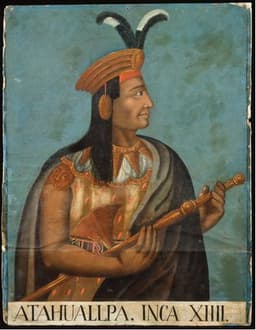
Atahualpa
Emperor · Medieval
44.5Total
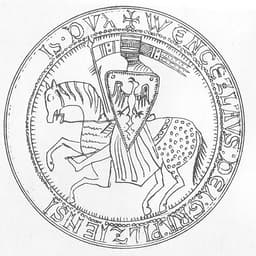
Wenceslaus I of Bohemia
Emperor · Medieval
56.7Total
Basic Information
Born
1502
907
Died
1533
935
Era
Medieval
Medieval
Nationality
Inca Empire
Bohemia
Occupation
Emperor
Emperor
Civilization
Other
Western
Score Comparison
Military (10%)
46.7
50.0
Political (20%)
27.9
40.8
Influence (20%)
57.2
68.0
Legacy (20%)
46.7
65.0
Leadership (15%)
39.0
62.2
Strategy (15%)
38.3
30.3
TOTAL
44.5
56.7
Atahualpa — Complete Timeline
1532 AD
Victory in the Inca Civil WarWar◆ Major
Atahualpa defeated his brother Hu
Civil WarSuccessionInca Empire
Impact: regionaldestructive
Capture at CajamarcaWar
Francisco Pizarro ambushed Atahualpa at Cajamarca, capturing the Inca emperor after a surprise attack. Spanish forces killed thousands of unarmed Inca attendants while Atahualpa was taken prisoner, marking the beginning of Spanish conquest.
Spanish ConquestAmbushPizarro
Impact: globaltragic
1533 AD
Ransom Room PaymentPolitical Action◆ Major
Atahualpa offered to fill a room with gold and silver in exchange for his release. Over several months, the Inca delivered approximately 6 tons of gold and 12 tons of silver, the largest ransom in history, but Pizarro executed him anyway.
RansomGoldSpanish Greed
Impact: regionaltragic
Execution by GarrotePolitical Action
Pizarro ordered Atahualpa's execution by garrote after a mock trial accused him of treason, idolatry, and ordering Hu
ExecutionSpanish ConquestEnd of Empire
Impact: globaltragic
Wenceslaus I of Bohemia — Complete Timeline
921 AD
Conversion to ChristianityCultural◆ Major
Wenceslaus I was raised and educated as a Christian by his grandmother, Saint Ludmila. He promoted Christianity in Bohemia, building churches and supporting missionaries, which strengthened the Christian identity of the Czech state.
ChristianizationReligious ReformCultural Change
Impact: nationalconstructive
929 AD
Submission to Henry the FowlerPolitical Action◆ Major
Wenceslaus I accepted the overlordship of King Henry I of East Francia to avoid invasion. This act secured peace for Bohemia but made it a tributary state of the Holy Roman Empire, a status that lasted for centuries.
TributeHoly Roman EmpireDiplomacy
Impact: regional
935 AD
Assassination of Wenceslaus IPolitical Action
Wenceslaus I was murdered by his brother Boleslaus I and other conspirators at the gates of a church in Star
AssassinationMartyrdomDynastic Conflict
Impact: nationaltragic
Expert Analysis
Origins
Atahualpa was born around 1500, the son of Inca Emperor Huayna Capac and a Quito princess. He grew up in the northern part of the Inca Empire, likely in Quito, and was raised in the Inca nobility, trained in warfare and governance. His father's death around 1525 triggered a succession crisis between Atahualpa and his half-brother Huáscar. Atahualpa's early life was marked by the complex politics of the Inca Empire, where he commanded a strong base in the north.
Wenceslaus I was born around 907 in Prague, Bohemia, into the Přemyslid dynasty. He was raised as a Christian by his grandmother, Saint Ludmila, who was murdered in 921 by his pagan mother Drahomíra. Wenceslaus's early life was shaped by political intrigue and religious conflict. He received a Christian education and was deeply influenced by Ludmila's piety. His father, Vratislaus I, died in 921, leaving Wenceslaus as a minor under his mother's regency.
Rise to Power
Atahualpa rose to power through military victory in the Inca Civil War (1529-1532). After his father's death, Huáscar controlled the southern capital Cusco, while Atahualpa ruled the north from Quito. The war culminated in the Battle of Quipaipan (1532), where Atahualpa's forces defeated Huáscar's army. Atahualpa captured Huáscar and consolidated control over the entire Inca Empire. His rise was swift and brutal, marked by the execution of Huáscar and his supporters.
Wenceslaus I assumed full power around 925 after his mother's regency ended. He faced challenges from pagan nobles and neighboring German rulers. To secure peace, he accepted the overlordship of King Henry I of East Francia in 929, agreeing to pay tribute. This submission avoided invasion but made Bohemia a tributary state. Wenceslaus focused on consolidating internal rule and promoting Christianity, building churches like St. Vitus Cathedral in Prague.
Leadership & Governance
Atahualpa's leadership was centralized and autocratic. He ruled the Inca Empire as a divine emperor, with absolute authority over life and death. His governance relied on a system of provincial governors and the mita labor system. Atahualpa's response to the Spanish arrival was cautious but ultimately ineffective. He underestimated the threat, allowing Pizarro to ambush him at Cajamarca. His leadership score is 39.0, reflecting his inability to adapt to the Spanish threat.
Wenceslaus I governed as a Christian king, balancing between pagan traditions and Christian reforms. He promoted the spread of Christianity, supported the church, and built religious infrastructure. His submission to Henry the Fowler was a pragmatic decision to protect Bohemia. Wenceslaus's leadership score is 62.2, indicating more effective governance and diplomacy. He maintained stability and fostered religious development, though his reign was cut short by assassination.
Triumph & Tragedy
Atahualpa's greatest triumph was winning the Inca Civil War and unifying the empire under his rule. He demonstrated military skill in defeating Huáscar. However, his greatest tragedy was his capture and execution by the Spanish. He was ambushed at Cajamarca on November 16, 1532, where Spanish forces killed thousands of unarmed Inca. He offered a ransom room filled with gold and silver (about 6 tons of gold and 12 tons of silver), but Pizarro executed him anyway by garrote on July 26, 1533. His death marked the end of the Inca Empire.
Wenceslaus's triumph was his successful promotion of Christianity in Bohemia and the relative peace he secured through tribute. His legacy as a saint and martyr is his enduring achievement. His tragedy was his assassination by his brother Boleslaus I on September 28, 935, at the gates of a church in Stará Boleslav. This murder, driven by political and religious tensions, cut short his reign. However, his death elevated him to sainthood, ensuring his lasting influence.
Character & Destiny
Atahualpa was decisive and ruthless, as shown by his execution of Huáscar. He was also naïve about the Spanish, believing in his own divinity and failing to recognize the threat. His character led to his downfall: he walked into Pizarro's trap and underestimated European weaponry and tactics. His political score of 27.9 reflects poor judgment in dealing with the Spanish.
Wenceslaus was devout and diplomatic, prioritizing peace and Christianity. His character was shaped by his grandmother's martyrdom and his own faith. He chose submission over war, which preserved Bohemia but led to resentment from pagan nobles. His assassination was a result of political intrigue, but his piety earned him sainthood. His leadership score of 62.2 reflects his effective, though cautious, rule.
Legacy
Atahualpa's legacy is as the last Inca emperor, symbolizing the fall of the Inca Empire to Spanish conquest. His story is a tragic example of indigenous resistance and European colonization. He scored 46.7 in legacy, remembered primarily through historical accounts of his capture and death. The Inca Empire's collapse paved the way for Spanish colonization of South America.
Wenceslaus I's legacy is vastly different: he is revered as a saint, the patron saint of the Czech Republic. His feast day is celebrated on September 28, and he is the subject of the Christmas carol "Good King Wenceslas." He scored 65.0 in legacy, reflecting his enduring religious and cultural impact. His promotion of Christianity and his martyrdom shaped Czech identity and history.
Conclusion
Wenceslaus I of Bohemia had a greater historical impact than Atahualpa, based on total scores: Wenceslaus 56.7 vs Atahualpa 44.5. Wenceslaus's legacy as a saint and national symbol has lasted over a millennium, while Atahualpa's legacy is primarily as a defeated ruler. Wenceslaus's political and leadership scores (40.8 and 62.2) far exceed Atahualpa's (27.9 and 39.0), reflecting more effective governance. Atahualpa's military and strategy scores (46.7 and 38.3) are slightly lower than Wenceslaus's (50.0 and 30.3), but Wenceslaus's influence (68.0) and legacy (65.0) dominate. While Atahualpa's story is compelling, Wenceslaus's enduring religious and cultural influence makes him more significant in the long term.
Rankings
🥇
Wenceslaus I of BohemiaLeader
Mil: 50.0Pol: 40.8Inf: 68.0
56.7
🥈
Atahualpa
Mil: 46.7Pol: 27.9Inf: 57.2
44.5
+12.2 behind
How This Comparison Works
Algorithm
Each figure is scored on 6 dimensions (0—100 scale) based on structured historical data: Military (10%), Political (20%), Influence (20%), Legacy (20%), Leadership (15%), Strategy (15%). The weighted total produces the final ranking.
Data Sources
Scores are computed from structured sub-indicators in the database. Scale factors adjust for era (Ancient ×0.85, Modern ×1.0) and civilization size (Eastern ×1.05, Other ×0.80) to account for differences in population and military scale.
Maximum 3 Figures
Comparisons are limited to 2—3 figures to ensure readability and statistical meaningfulness.
Error Margins
±5 points per dimension — Sub-scores are derived from historical records with inherent uncertainty. Two figures within 5 points on a dimension should be considered roughly equivalent in that area.
Total Score Accuracy
±3 points overall — The weighted combination of 6 dimensions produces a total score with approximately ±3 points of uncertainty. Differences of less than 3 points are not statistically significant— the figures are effectively tied.
Known Limitations
- Historical records are incomplete and uneven across civilizations
- Figures from oral-tradition societies may be underrepresented
- Occupation labels can misclassify multi-role figures
- Scores measure capability and impact, not moral character
- Quantitative scoring is a comparison tool, not absolute truth
Capability Radar
Military (10%) — Battles & Warfare
Battles
40
15
Win Rate
35
20
Expansion
20
10
Political (20%) — Governance & Reform
Reform
10
35
Diplomacy
20
40
Economy
15
35
Influence (20%) — Cultural & Global Reach
Cultural
40
75
Global
35
70
Legacy (20%) — Historical Impact
Historical
50
80
Longevity
30
85
Leadership (15%) — Power & Stability
Tenure
15
40
Stability
10
40
Strategy (15%) — Tactics & Innovation
Strategy
25
15
Tactics
30
15
Reform
10
10
Similar Comparisons
Comments & Discussion
No comments yet. Be the first to share your thoughts!