Loading...
This comparison has not been analyzed yet.
One-time AI generation (~1 minute). Scores and timeline are already available below.
Ati George Sokomanu vs Malik Feroz Khan Noon
Malik Feroz Khan Noon leads by 4.1 pts · 2 figures compared
…
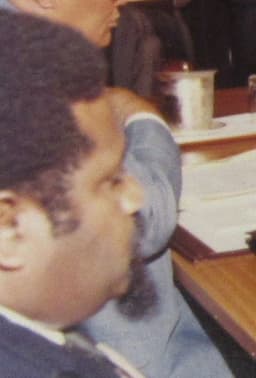
Ati George Sokomanu
Politician · Modern
35.9Total

Malik Feroz Khan Noon
Politician · Modern
40.0Total
Basic Information
Born
1937
1893
Died
—
1970
Era
Modern
Modern
Nationality
Vanuatu
Pakistan
Occupation
Politician
Politician
Civilization
Other
Indian
Score Comparison
Military (10%)
34.1
37.9
Political (20%)
25.0
27.9
Influence (20%)
45.5
45.5
Legacy (20%)
34.2
35.8
Leadership (15%)
31.2
38.1
Strategy (15%)
41.5
60.0
TOTAL
35.9
40.0
Ati George Sokomanu — Complete Timeline
1980 AD
Election as First President of VanuatuPolitical Action
Ati George Sokomanu was elected as the first President of Vanuatu following the country's independence from joint French-British colonial rule in 1980. He served from 1980 to 1984, symbolizing the new nation's sovereignty.
IndependencePresidencyVanuatu
Impact: nationalconstructive
1984 AD
Deposition from PresidencyPolitical Action◆ Major
Sokomanu was deposed from the presidency in 1984 after a political crisis. He was removed by the electoral college amid tensions between the government and opposition. He was later reinstated briefly but eventually left office.
DepositionPolitical CrisisVanuatu
Impact: nationaldestructive
Re-election as PresidentPolitical Action◆ Major
Following his deposition, Sokomanu was re-elected as president later in 1984, serving until 1989. His second term aimed to restore stability after the political turmoil.
PresidencyRe-electionVanuatu
Impact: national
1989 AD
End of Second PresidencyPolitical Action
Sokomanu's second term ended in 1989. He was succeeded by Fred Timakata. His legacy as the first president was marked by both the founding of the republic and political instability.
PresidencyTransitionVanuatu
Impact: national
Malik Feroz Khan Noon — Complete Timeline
1956 AD
Served as Foreign MinisterPolitical Action
Noon served as Pakistan's Foreign Minister, where he advocated for closer ties with the United States and the West. His foreign policy aligned with Pakistan's Cold War alliances.
Foreign MinisterCold WarUS Alliance
Impact: nationalconstructive
1957 AD
Appointed Prime Minister of PakistanPolitical Action◆ Major
Malik Feroz Khan Noon became the seventh Prime Minister of Pakistan. His tenure was marked by efforts to stabilize the government and address economic issues, but he faced opposition from political rivals.
Prime MinisterStabilizationEconomic Issues
Impact: national
1958 AD
Ousted by Martial LawPolitical Action◆ Major
Noon's government was overthrown by General Ayub Khan's martial law, ending Pakistan's first parliamentary era. He was the last Prime Minister before the military takeover, which lasted for over a decade.
Martial LawAyub KhanMilitary Coup
Impact: nationaltragic
This comparison has not been analyzed yet.
One-time AI generation (~1 minute). Scores and timeline are already available below.
Rankings
🥇
Malik Feroz Khan NoonLeader
Mil: 37.9Pol: 27.9Inf: 45.5
40.0
🥈
Ati George Sokomanu
Mil: 34.1Pol: 25.0Inf: 45.5
35.9
+4.1 behind
How This Comparison Works
Algorithm
Each figure is scored on 6 dimensions (0—100 scale) based on structured historical data: Military (10%), Political (20%), Influence (20%), Legacy (20%), Leadership (15%), Strategy (15%). The weighted total produces the final ranking.
Data Sources
Scores are computed from structured sub-indicators in the database. Scale factors adjust for era (Ancient ×0.85, Modern ×1.0) and civilization size (Eastern ×1.05, Other ×0.80) to account for differences in population and military scale.
Maximum 3 Figures
Comparisons are limited to 2—3 figures to ensure readability and statistical meaningfulness.
Error Margins
±5 points per dimension — Sub-scores are derived from historical records with inherent uncertainty. Two figures within 5 points on a dimension should be considered roughly equivalent in that area.
Total Score Accuracy
±3 points overall — The weighted combination of 6 dimensions produces a total score with approximately ±3 points of uncertainty. Differences of less than 3 points are not statistically significant— the figures are effectively tied.
Known Limitations
- Historical records are incomplete and uneven across civilizations
- Figures from oral-tradition societies may be underrepresented
- Occupation labels can misclassify multi-role figures
- Scores measure capability and impact, not moral character
- Quantitative scoring is a comparison tool, not absolute truth
Capability Radar
Military (10%) — Battles & Warfare
Battles
20
44
Win Rate
27
45
Expansion
25
52
Political (20%) — Governance & Reform
Reform
10
15
Diplomacy
20
25
Economy
10
10
Influence (20%) — Cultural & Global Reach
Cultural
5
5
Global
5
5
Legacy (20%) — Historical Impact
Historical
10
10
Longevity
5
5
Leadership (15%) — Power & Stability
Tenure
10
20
Stability
5
5
Strategy (15%) — Tactics & Innovation
Strategy
33
54
Tactics
36
53
Reform
34
61
Similar Comparisons
Comments & Discussion
No comments yet. Be the first to share your thoughts!