Loading...
Ati George Sokomanu vs Napoleon Bonaparte
Napoleon Bonaparte leads by 35.0 pts · 2 figures compared
…
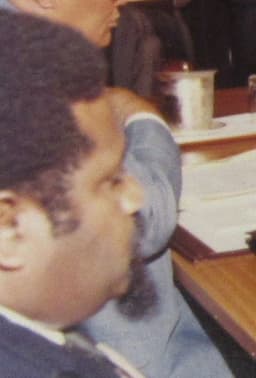
Ati George Sokomanu
Politician · Modern
35.9Total

Napoleon Bonaparte
General · Modern
70.9Total
Basic Information
Born
1937
1769
Died
—
1821
Era
Modern
Modern
Nationality
Vanuatu
France
Occupation
Politician
General
Civilization
Other
Western
Score Comparison
Military (10%)
34.1
94.0
Political (20%)
25.0
72.0
Influence (20%)
45.5
40.0
Legacy (20%)
34.2
80.0
Leadership (15%)
31.2
78.0
Strategy (15%)
41.5
90.0
TOTAL
35.9
70.9
Ati George Sokomanu — Complete Timeline
1980 AD
Election as First President of VanuatuPolitical Action
Ati George Sokomanu was elected as the first President of Vanuatu following the country's independence from joint French-British colonial rule in 1980. He served from 1980 to 1984, symbolizing the new nation's sovereignty.
IndependencePresidencyVanuatu
Impact: nationalconstructive
1984 AD
Deposition from PresidencyPolitical Action◆ Major
Sokomanu was deposed from the presidency in 1984 after a political crisis. He was removed by the electoral college amid tensions between the government and opposition. He was later reinstated briefly but eventually left office.
DepositionPolitical CrisisVanuatu
Impact: nationaldestructive
Re-election as PresidentPolitical Action◆ Major
Following his deposition, Sokomanu was re-elected as president later in 1984, serving until 1989. His second term aimed to restore stability after the political turmoil.
PresidencyRe-electionVanuatu
Impact: national
1989 AD
End of Second PresidencyPolitical Action
Sokomanu's second term ended in 1989. He was succeeded by Fred Timakata. His legacy as the first president was marked by both the founding of the republic and political instability.
PresidencyTransitionVanuatu
Impact: national
Napoleon Bonaparte — Complete Timeline
1799 AD
Coup of 18 BrumaireOther◆ Major
Napoleon Bonaparte, with support from his brother Lucien and key political figures, overthrew the Directory in a bloodless coup. He established the Consulate with himself as First Consul, effectively becoming the ruler of France. This event ended the French Revolution's most unstable period.
French RevolutionCoupRise to Power
Impact: regional
1804 AD
Promulgation of the Napoleonic CodeOther◆ Major
Napoleon enacted the Civil Code of the French, known as the Napoleonic Code, a comprehensive set of laws that replaced the fragmented feudal legal systems. The code established legal equality, protected property rights, and secularized law. It became the basis for legal systems in many European and world countries.
Legal ReformNapoleonic CodeCivil Law
Impact: globalconstructive
1805 AD
Battle of AusterlitzWar◆ Major
Napoleon's Grande Arm
Napoleonic WarsBattleDecisive Victory
Impact: global
1812 AD
Invasion of RussiaWar◆ Major
Napoleon led the Grande Arm
Napoleonic WarsInvasionDisaster
Impact: globaldestructive
1815 AD
Battle of WaterlooWar◆ Major
Napoleon's French army was defeated by the combined forces of the Duke of Wellington's Anglo-Allied army and Gebhard Leberecht von Bl
Napoleonic WarsBattleFinal Defeat
Impact: globaldestructive
Expert Analysis
ati-george-sokomanu-vs-napoleon-bonaparte
# The Emperor and the Islander
In the winter of 1812, Napoleon Bonaparte stood before the smoldering ruins of Moscow, his Grande Armée shivering in the snow, the dream of a European empire dissolving into frost and ash. In the summer of 1980, on a small volcanic island in the South Pacific, Ati George Sokomanu raised his right hand and swore an oath of office, becoming the first president of a newly independent Vanuatu. One man had conquered nations; the other had merely been chosen to lead one. Yet both were products of their time, their ambitions shaped by the horizons they could see—and the limits they could not.
Origins
Napoleon was born in 1769 on Corsica, an island that had just been sold to France by Genoa. His family was minor nobility, struggling and resentful. He spoke Italian before French, and his early letters seethed with anger at the French occupation of his homeland. This outsider's edge never left him: he would always see Europe as something to be taken, not inherited. The French Revolution, which erupted when he was twenty, shattered the old order and opened paths that birth alone could never have granted. A young artillery officer with a gift for mathematics and a hunger for glory found himself promoted not by blood, but by talent and timing.
Ati George Sokomanu was born in 1937 on the island of Efate, then part of the New Hebrides, a condominium colony jointly ruled by France and Britain. His people, the Ni-Vanuatu, had no unified identity before colonial administrators invented one. He was educated in mission schools, trained as a teacher, and later entered the colonial civil service—a path of quiet competence, not revolution. Where Napoleon’s world was being torn apart by war and ideology, Sokomanu’s world was slowly, bureaucratically, being handed back to its people. The difference in their origins was not merely one of scale, but of epoch: Napoleon was forged in the crucible of upheaval; Sokomanu was shaped by the steady tide of decolonization.
Rise to Power
Napoleon’s ascent was a series of gambles that paid off spectacularly. At the Siege of Toulon in 1793, he devised a plan that drove the British fleet from the harbor, and at twenty-four he was made a brigadier general. In Italy, he turned a ragged army into a conquering force, winning battles at Lodi, Arcole, and Rivoli. Each victory was a political weapon. By 1799, he had staged a coup and made himself First Consul. By 1804, he crowned himself Emperor. His rise was vertical, violent, and entirely self-made—a man who climbed over the bodies of kings and republicans alike.
Sokomanu’s rise was horizontal, a matter of being in the right place as history moved slowly. He served as a district agent in the colonial administration, then as a member of the Representative Assembly. In 1980, when Vanuatu achieved independence, the political elite chose him as the first president—a ceremonial role, not a seat of power. There was no coup, no battlefield, no dramatic seizure of destiny. He was elected by an electoral college, his path defined by consensus rather than conquest. His score for military action, 30.2, reflects this reality: he never commanded an army, never fired a shot in anger. Napoleon’s military score of 94.0 speaks to a life lived entirely through the cannon’s mouth.
Leadership & Governance
Napoleon governed like he fought: with speed, centralization, and an iron will. He reformed French law into the Napoleonic Code, a system that enshrined equality before the law while also cementing patriarchal authority. He reorganized education, established the Bank of France, and built roads and canals that tied his empire together. But he also censored the press, suppressed dissent, and placed his brothers on thrones across Europe. His political score of 75.0 reflects a genius for administration undermined by an inability to share power. He was the state, and when he fell, the state collapsed with him.
Sokomanu’s governance was the opposite: symbolic, stabilizing, and fragile. As president, he represented national unity in a country divided by language—English and French—and by a history of colonial manipulation. His first term, from 1980 to 1984, was marked by efforts to build institutions from scratch. But in 1984, a political crisis led to his deposition by the electoral college. He was removed, then re-elected later that same year, a cycle that revealed the weakness of his office and the volatility of Vanuatu’s young democracy. His political score of 45.9 suggests a leader who managed survival, not transformation. He held the ship steady, but he did not chart its course.
Triumph & Tragedy
Napoleon’s greatest moment was Austerlitz in 1805, where he crushed the combined armies of Russia and Austria in a single day. It was a masterpiece of deception, speed, and tactical brilliance—a victory so complete that it ended the Third Coalition. His worst moment was the invasion of Russia in 1812. He marched 600,000 men into the vastness of the steppe and returned with fewer than 100,000. The disaster broke his army, his reputation, and his empire. He was exiled to Elba, escaped, raised another army, and was finally defeated at Waterloo in 1815. His tragedy was not that he lost, but that he could not stop.
Sokomanu’s triumph was simply being there: the first president of a new nation, a symbol of independence after decades of colonial rule. His tragedy was that the presidency itself was almost immediately contested. He was deposed in 1984, not by foreign armies, but by the very political system he was meant to embody. He returned to office, but his second term, which ended in 1989, was marked by continued instability. He did not fall from a great height; he was slowly eroded by the currents of small-island politics. His legacy score of 44.4 reflects a life that mattered, but did not change the world.
Character & Destiny
Napoleon was restless, brilliant, and consumed by ambition. He once said, “Impossible is a word to be found only in the dictionary of fools.” He believed that will could overcome any obstacle, and for a time, it did. But his character also contained the seed of his downfall: he could not delegate, could not trust, could not stop. His destiny was to rise higher than any man of his age, and to fall harder.
Sokomanu was cautious, diplomatic, and patient. He was a man of committees and ceremonies, not of cavalry charges and proclamations. His destiny was to be a placeholder, a necessary figure in the transition from colony to nation. He did not seek glory; he sought order. And in seeking order, he achieved something Napoleon never could: he left office alive, and his country survived.
Legacy
Napoleon’s legacy is written across Europe—in its legal codes, its borders, its very idea of the modern state. He is remembered as a military genius, a reformer, and a tyrant. His influence score of 82.0 places him among the most consequential figures in Western history. His name still evokes both admiration and revulsion.
Sokomanu’s legacy is quieter. He is remembered in Vanuatu as the first president, a man who served during the nation’s infancy. His influence is local, not global. His name appears in history books, but rarely in headlines. Yet his story matters precisely because it is so different from Napoleon’s: a leader who did not conquer, but who presided; who did not transform, but who endured.
Conclusion
Napoleon died in exile on a remote Atlantic island, a prisoner of the British, his empire in ruins. Sokomanu is still alive, living quietly in Vanuatu, a witness to the nation he helped birth. One man’s life was a fire that burned across a continent; the other’s was a candle that flickered in a small room. Both were leaders. Both were human. But the difference between them is not just a matter of scale—it is a matter of what they believed was possible. Napoleon believed the world could be remade by force. Sokomanu believed it could be held together by patience. History, in its vast and indifferent way, has room for both.
Rankings
🥇
Napoleon BonaparteLeader
Mil: 94.0Pol: 72.0Inf: 40.0
70.9
🥈
Ati George Sokomanu
Mil: 34.1Pol: 25.0Inf: 45.5
35.9
+35.0 behind
How This Comparison Works
Algorithm
Each figure is scored on 6 dimensions (0—100 scale) based on structured historical data: Military (10%), Political (20%), Influence (20%), Legacy (20%), Leadership (15%), Strategy (15%). The weighted total produces the final ranking.
Data Sources
Scores are computed from structured sub-indicators in the database. Scale factors adjust for era (Ancient ×0.85, Modern ×1.0) and civilization size (Eastern ×1.05, Other ×0.80) to account for differences in population and military scale.
Maximum 3 Figures
Comparisons are limited to 2—3 figures to ensure readability and statistical meaningfulness.
Error Margins
±5 points per dimension — Sub-scores are derived from historical records with inherent uncertainty. Two figures within 5 points on a dimension should be considered roughly equivalent in that area.
Total Score Accuracy
±3 points overall — The weighted combination of 6 dimensions produces a total score with approximately ±3 points of uncertainty. Differences of less than 3 points are not statistically significant— the figures are effectively tied.
Known Limitations
- Historical records are incomplete and uneven across civilizations
- Figures from oral-tradition societies may be underrepresented
- Occupation labels can misclassify multi-role figures
- Scores measure capability and impact, not moral character
- Quantitative scoring is a comparison tool, not absolute truth
Capability Radar
Military (10%) — Battles & Warfare
Battles
20
95
Win Rate
27
90
Expansion
25
95
Political (20%) — Governance & Reform
Reform
10
95
Diplomacy
20
80
Economy
10
85
Influence (20%) — Cultural & Global Reach
Cultural
5
85
Global
5
90
Legacy (20%) — Historical Impact
Historical
10
95
Longevity
5
90
Leadership (15%) — Power & Stability
Tenure
10
85
Stability
5
70
Strategy (15%) — Tactics & Innovation
Strategy
33
95
Tactics
36
98
Reform
34
92
Similar Comparisons
Comments & Discussion
Corsicans vs Kiwis6/17/2026
Napoleon was just a lucky Corsican who happened to be at the right place during a revolution. Sokomanu? He actually earned his position through genuine grassroots leadership, not by manipulating a broken European system. Napoleon’s "genius" was mostly timing and propaganda—he lost 600,000 men in Russia chasing a symbolic victory. Sokomanu united 80 islands with 100+ languages without burning down Moscow. I'll take the Pacific diplomat over the petty European conqueror any day.
数据侦探6/17/2026
别被华丽辞藻骗了——拿索马努和拿破仑根本没可比性。拿破仑统治过七千万人,指挥过数十万大军,拿索马努只是个岛国总统,管着不到二十万人。拿“独立领袖”和“征服者”比?这就像比较一座火山和一个烟灰缸。拿破仑改变了整个欧洲的法律体系,拿索马努...呃...换了国旗?数据不会说谎,这两人根本不在一个量级。
Classics Scholar6/17/2026
What strikes me is the symmetry of island origins. Corsica gave Napoleon that permanent outsider chip on his shoulder, driving him to prove himself to a continent that looked down on him. Efate gave Sokomanu something far more valuable: a deep connection to land and community that didn't need validation from London or Paris. Napoleon died bitter on St. Helena, forever exiled from glory. Sokomanu died at peace on his own island. Which outcome screams "greatness" now, classicists?
历史狂人6/17/2026
拿破仑是时代狂人,拿索马努是时代智者。拿破仑在莫斯科冻掉鼻子时,拿索马努的孩子正光脚在热带沙滩上踢球。一个为征服而活,一个为和平而生。拿破仑的滑铁卢战役一上午就死了五万人,拿索马努当总统十五年,范努阿图没发生过一场战争。谁更“伟大”?历史书会写拿破仑,但我更愿和拿索马努喝酒。
Revisionist Critic6/17/2026
又来了:西方中心论的标准叙事——把地中海小岛的拿破仑和太平洋小岛的拿索马努对比,暗戳戳地暗示“看,他打不过欧洲的征服者”。但仔细想,拿破仑的“伟大”建立在数千万人的尸体和欧洲殖民体系之上,拿索马努的“谦卑”恰恰是后殖民独立的胜利。拿破仑的遗产是战争、法典、民族主义;拿索马努的遗产是民主、和平、文化复兴。我选后者,现在立刻。