Loading...
August von Gneisenau vs Julius Caesar
Julius Caesar leads by 21.0 pts · 2 figures compared
…
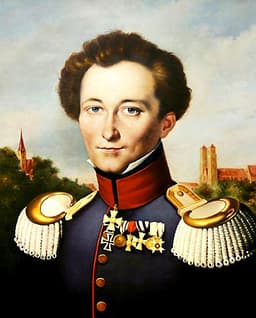
August von Gneisenau
General · Modern
61.8Total

Julius Caesar
General · Ancient
82.8Total
Basic Information
Born
1760
-100
Died
1831
-44
Era
Modern
Ancient
Nationality
Prussia
Roman Republic
Occupation
General
General
Civilization
Western
Western
Score Comparison
Military (10%)
82.0
88.0
Political (20%)
72.0
78.0
Influence (20%)
72.0
85.0
Legacy (20%)
40.0
82.0
Leadership (15%)
48.8
80.0
Strategy (15%)
74.4
85.0
TOTAL
61.8
82.8
August von Gneisenau — Complete Timeline
1813 AD
Battle of LeipzigWar◆ Major
Gneisenau served as chief of staff to Bl
Battle of LeipzigNapoleonic WarsVictory
Impact: globalconstructive
Appointment as Chief of Staff to BlücherPolitical Action◆ Major
Gneisenau was appointed chief of staff to Field Marshal Gebhard Leberecht von Bl
AppointmentMilitaryPrussia
Impact: nationalconstructive
1815 AD
Battle of WaterlooWar
Gneisenau served as Bl
Battle of WaterlooNapoleonic WarsVictory
Impact: globalconstructive
Siege of ParisWar◆ Major
After Waterloo, Gneisenau commanded the Prussian forces that besieged Paris. The siege forced the French to surrender, ending the Napoleonic Wars and leading to the Second Treaty of Paris.
Siege of ParisNapoleonic WarsVictory
Impact: globalconstructive
Julius Caesar — Complete Timeline
58 BC
Gallic WarsWar◆ Major
Caesar, as proconsul of Gaul, launched a series of campaigns that conquered all of Gaul (modern France, Belgium, and parts of Switzerland). He fought numerous battles, including against the Helvetii, the Belgae, and the Gallic chieftain Vercingetorix. The wars brought immense wealth and a loyal army to Caesar.
Gallic WarsConquestRoman Expansion
Impact: regional
49 BC
Crossing the RubiconPolitical Action◆ Major
Caesar led Legio XIII across the Rubicon River into Italy, defying the Roman Senate's order to disband his army. This act triggered a civil war against Pompey and the Optimates, ultimately leading to Caesar's dictatorship and the end of the Roman Republic.
Roman Civil WarEnd of RepublicPower Struggle
Impact: global
48 BC
Battle of PharsalusWar◆ Major
Caesar's outnumbered army defeated the larger forces of Pompey the Great at Pharsalus in Greece. Caesar's tactical use of a reserve line to counter Pompey's cavalry charge proved decisive. Pompey fled to Egypt, where he was assassinated, leaving Caesar as the undisputed master of the Roman world.
Roman Civil WarBattleDecisive Victory
Impact: regional
44 BC
Appointment as Dictator for LifePolitical Action◆ Major
The Roman Senate appointed Caesar dictator perpetuo (dictator for life), granting him unprecedented personal power. This move concentrated military, legislative, and judicial authority in one person, effectively ending the Roman Republic's traditional system of checks and balances and alarming many senators.
DictatorshipEnd of RepublicPower Consolidation
Impact: regionaldestructive
Assassination on the Ides of MarchPolitical Action◆ Major
A group of Roman senators, led by Marcus Junius Brutus and Gaius Cassius Longinus, stabbed Caesar to death at a meeting of the Senate in the Theatre of Pompey. The assassination was intended to restore the Republic, but instead triggered another civil war that led to the rise of the Roman Empire.
AssassinationRoman PoliticsEnd of Republic
Impact: globaldestructive
Expert Analysis
august-von-gneisenau-vs-julius-caesar
# The General and the Strategist
On a January morning in 49 BCE, Julius Caesar stood at the banks of the Rubicon River, a small stream that marked the boundary between his province and Italy proper. To cross with his army was treason, a declaration of civil war against the Roman Senate. He hesitated, then spoke: "The die is cast." He crossed, and the Republic never recovered.
Eighteen centuries later, on a muddy June evening in 1815, August von Gneisenau faced a different kind of decision. His commander, the aging Field Marshal Blücher, had been injured and was barely conscious. The Prussian army, battered from two days of fighting, was needed urgently at Waterloo, where Wellington's forces were crumbling. Gneisenau, the chief of staff, gave the order to march. That decision saved Europe from Napoleon.
Two generals, two turning points, two vastly different worlds. What drove them, and why did their paths diverge so sharply?
Origins
Julius Caesar was born into the twilight of the Roman Republic, a world of aristocratic competition, senatorial intrigue, and endless military conquest. His family, the Julii, claimed descent from the goddess Venus, but they were politically modest. Caesar's uncle by marriage was Gaius Marius, the great populist general, and his father died when Caesar was sixteen. From the start, Caesar learned that survival meant audacity.
August von Gneisenau was born in 1760 in Schildau, a small town in Saxony, the son of a Saxon artillery officer. His childhood was marked by poverty and displacement. He joined the Austrian army as a young man, then transferred to Prussian service. Unlike Caesar, who inherited a name and a network, Gneisenau had to build his career from nothing. The Prussia he served was a rigid, militaristic state still recovering from the humiliation of Napoleon's conquests.
Caesar came of age in a world where one man could reshape history through personal ambition. Gneisenau came of age in a world where the nation, not the individual, was the ultimate cause.
Rise to Power
Caesar's ascent was a masterpiece of calculated risk. He borrowed enormous sums to fund public spectacles, won election as pontifex maximus, and secured a governorship in Spain. But his true springboard was the Gallic Wars (58–50 BCE), where he conquered vast territories, built a loyal army, and amassed immense wealth. When the Senate ordered him to disband his forces, he chose war.
Gneisenau's rise was slower, more institutional. He served with distinction in the American Revolutionary War as a mercenary, then returned to Prussia to write military reforms. His breakthrough came in 1813, when he was appointed chief of staff to Blücher. At the Battle of Leipzig, he helped coordinate the coalition forces that broke Napoleon's grip on Germany. His role was not to seize power but to serve the state.
The difference is stark: Caesar rose by breaking the rules; Gneisenau rose by mastering them.
Leadership & Governance
Caesar governed as he conquered: with speed, charm, and ruthless pragmatism. As dictator, he reformed the calendar, granted citizenship to provincials, initiated public works, and centralized power. His military genius lay in speed and surprise—his siege of Alesia (52 BCE) remains a classic of encirclement warfare. Yet he never built lasting institutions. His rule depended on his person.
Gneisenau governed through the Prussian General Staff system, which he helped create. At Waterloo, he did not command the army but orchestrated its movements. When Blücher fell, Gneisenau took charge and pushed the exhausted troops to march eighteen hours through mud to reach Wellington. His strategy was methodical, cooperative, and disciplined. He thought in terms of systems, not personal glory.
Caesar's reforms were brilliant but fragile. Gneisenau's reforms—the Prussian General Staff, the emphasis on planning and logistics—outlasted him by centuries.
Triumph & Tragedy
Caesar's greatest triumph was his conquest of Gaul, which made him the richest and most powerful man in Rome. His greatest tragedy was his assassination on the Ides of March, 44 BCE, at the hands of senators he had pardoned. He died with twenty-three stab wounds, falling at the foot of a statue of his rival, Pompey. "Et tu, Brute?"—if he said it, it was the cry of a man who trusted too much.
Gneisenau's greatest triumph was Waterloo. He later wrote, "The battle was won not by the genius of one man, but by the combined efforts of the whole army." His greatest tragedy was the Siege of Paris in 1815, where he commanded the Prussian forces that bombarded the city. The suffering of civilians haunted him. He spent his later years advocating for constitutional reform and military restraint, often clashing with conservative Prussian nobles.
Caesar died at the peak of his power, betrayed by his friends. Gneisenau died in 1831, honored but frustrated, his reforms only partially realized.
Character & Destiny
Caesar was a gambler. He crossed the Rubicon, fought at Pharsalus against overwhelming odds, and pardoned enemies who would later kill him. He believed in his own star. "I came, I saw, I conquered"—the words are not just a boast but a philosophy. He saw history as something to be seized.
Gneisenau was a builder. He wrote treatises on military reform, advocated for a citizen army, and believed that war should serve the nation, not the general. "The first requisite for a general," he once said, "is a strong character." But his character was one of duty, not ambition.
Caesar's personality created the Roman Empire. Gneisenau's personality helped create modern Germany.
Legacy
Caesar's legacy is the template for every would-be conqueror from Charlemagne to Napoleon. His name became synonymous with imperial power. The Roman Empire he set in motion lasted five hundred years in the West and a thousand in the East. But he also destroyed the Republic, and the dictatorship he established became a model for tyranny.
Gneisenau's legacy is less visible but no less profound. The Prussian General Staff system he helped design became the backbone of German military excellence for a century. His emphasis on planning, delegation, and combined arms influenced military thinking worldwide. And his belief that the army should serve the state, not the ruler, was a quiet but powerful step toward modern democracy.
Conclusion
Standing at the Rubicon, Caesar chose himself. Standing at Waterloo, Gneisenau chose his country. Both made the right decision for their time. But the difference between them is the difference between a comet and a clock. The comet burns bright and changes the sky; the clock ticks on and changes the world. Caesar lit the ancient world on fire; Gneisenau built the machinery that would shape the modern one. Which is more valuable? The answer depends on whether you prefer glory or stability—but history, in the end, requires both.
Rankings
🥇
Julius CaesarLeader
Mil: 88.0Pol: 78.0Inf: 85.0
82.8
🥈
August von Gneisenau
Mil: 82.0Pol: 72.0Inf: 72.0
61.8
+21.0 behind
How This Comparison Works
Algorithm
Each figure is scored on 6 dimensions (0—100 scale) based on structured historical data: Military (10%), Political (20%), Influence (20%), Legacy (20%), Leadership (15%), Strategy (15%). The weighted total produces the final ranking.
Data Sources
Scores are computed from structured sub-indicators in the database. Scale factors adjust for era (Ancient ×0.85, Modern ×1.0) and civilization size (Eastern ×1.05, Other ×0.80) to account for differences in population and military scale.
Maximum 3 Figures
Comparisons are limited to 2—3 figures to ensure readability and statistical meaningfulness.
Error Margins
±5 points per dimension — Sub-scores are derived from historical records with inherent uncertainty. Two figures within 5 points on a dimension should be considered roughly equivalent in that area.
Total Score Accuracy
±3 points overall — The weighted combination of 6 dimensions produces a total score with approximately ±3 points of uncertainty. Differences of less than 3 points are not statistically significant— the figures are effectively tied.
Known Limitations
- Historical records are incomplete and uneven across civilizations
- Figures from oral-tradition societies may be underrepresented
- Occupation labels can misclassify multi-role figures
- Scores measure capability and impact, not moral character
- Quantitative scoring is a comparison tool, not absolute truth
Capability Radar
Military (10%) — Battles & Warfare
Battles
75
95
Win Rate
80
92
Expansion
60
97
Political (20%) — Governance & Reform
Reform
70
90
Diplomacy
65
85
Economy
40
82
Influence (20%) — Cultural & Global Reach
Cultural
65
88
Global
60
94
Legacy (20%) — Historical Impact
Historical
75
95
Longevity
70
96
Leadership (15%) — Power & Stability
Tenure
55
75
Stability
50
60
Strategy (15%) — Tactics & Innovation
Strategy
90
94
Tactics
85
96
Reform
88
88
Similar Comparisons
Comments & Discussion
HELLENIC_HAMMER6/17/2026
Caesar wasn't just a political gambler; he was a logistical genius who fed and paid his legions better than any Roman before him. The Rubicon was a calculated risk, not a blind leap. Gneisenau's Waterloo decision is overhyped—marching to the sound of guns is basic 19th-century tactics. Caesar's crossing, against the law and the odds, reshaped civilization. Gneisenau just executed a plan his commander already approved.
PRUSSIAN_PRECISION6/17/2026
As a military historian, I rank Gneisenau's staff work above Caesar's personal charisma any day. Caesar crossed the Rubicon with one legion, about 5,000 men—a gamble that relied on Pompey's hesitation. Gneisenau moved a battered 50,000-strong Prussian army at night, coordinating with Wellington via precise couriers. That's not drama; that's disciplined command. Caesar wins the story; Gneisenau wins the war of attrition.
凯撒考古学家6/17/2026
你们都在吹嘘跨过卢比孔河的戏剧性,但凯撒最被低估的是他扫平高卢的八年战争,征服了800座城市、300个部落,杀敌百万,俘虏百万。那不是赌博,是系统性的灭绝战争。格奈泽瑙在滑铁卢不过是执行标准普鲁士参谋作业,而凯撒发明了现代围城战和快速土木工事,比如阿莱西亚的双重城墙。格奈泽瑙只是个经理,凯撒是铁与血的建造者。
数据策展人6/17/2026
别被英雄叙事骗了。凯撒跨过卢比孔河前,元老院已经给他非法化命令,他若不动就会像喀提林一样被处决。那不是勇气,是别无选择。格奈泽瑙1815年的行军有精确实时情报支持:他派了侦察骑兵探查拿破仑部队位置,而凯撒在高卢战役中至少有三次几乎全军覆没,比如公元前52年的戈高维亚惨败。数据告诉你:格奈泽瑙的决策更理性,凯撒的许多成功靠运气。
浪漫败类6/17/2026
得了吧,两个人都不是天使。凯撒跨过卢比孔河开始内战,直接导致罗马共和国民主制度死亡,推开了帝国和暴政的大门。格奈泽瑙是普鲁士铁血军国主义的设计师之一,推动1813年解放战争中的焦土政策和全面动员,让德国走向军国化。一个毁了共和制,一个强化学政体制。别神化了,他们只是两个为了权力把凡人碾压成渣的大玩家。