Loading...
Auguste de Marmont vs Suchinda Kraprayoon
Auguste de Marmont leads by 14.0 pts · 2 figures compared
…
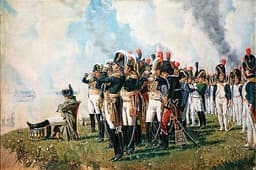
Auguste de Marmont
General · Modern
51.1Total
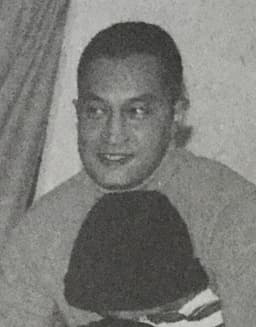
Suchinda Kraprayoon
General · Modern
37.1Total
Basic Information
Born
1774
1933
Died
1852
—
Era
Modern
Modern
Nationality
France
Thailand
Occupation
General
General
Civilization
Western
Eastern
Score Comparison
Military (10%)
60.0
10.2
Political (20%)
39.4
27.9
Influence (20%)
52.5
47.1
Legacy (20%)
46.7
37.5
Leadership (15%)
57.6
45.0
Strategy (15%)
57.5
39.6
TOTAL
51.1
37.1
Auguste de Marmont — Complete Timeline
1809 AD
Battle of WagramWar◆ Major
Marmont commanded the XI Corps at Wagram. His corps held the French left flank against Austrian attacks, and he was promoted to Marshal of the Empire for his performance.
Napoleonic WarsBattlePromotion
Impact: regional
Governor-General of Illyrian ProvincesPolitical Action◆ Major
Marmont was appointed Governor-General of the Illyrian Provinces. He administered the region, implemented French legal and administrative reforms, and improved infrastructure.
GovernorshipIllyriaReforms
Impact: regionalconstructive
1812 AD
Battle of SalamancaWar◆ Major
Marmont commanded the French Army of Portugal at Salamanca. His forces were defeated by Wellington's Anglo-Portuguese army, and Marmont was wounded, leading to a French retreat from Spain.
Peninsular WarBattleDefeatWounded
Impact: regional
1814 AD
Battle of ParisWar◆ Major
Marmont commanded the French VI Corps defending Paris. After a day of fighting, he surrendered the city to the Allies, a decision that contributed to Napoleon's abdication.
Napoleonic WarsBattleSurrender
Impact: global
Defection to the BourbonsPolitical Action◆ Major
Marmont defected to the Bourbon monarchy after the fall of Paris. He led his corps to the Allied lines, a move seen as betrayal by Napoleon and his supporters.
BetrayalBourbon RestorationNapoleonic Era
Impact: nationaldestructive
1852 AD
Exile and DeathPolitical Action
Marmont went into exile after the July Revolution of 1830, refusing to serve Louis-Philippe. He died in Venice, having spent his final years writing memoirs defending his actions.
ExileMemoirsDeath
tragic
Suchinda Kraprayoon — Complete Timeline
1991 AD
Leadership of the 1991 Thai Coup d'ÉtatPolitical Action◆ Major
General Suchinda Kraprayoon led the National Peace Keeping Council in a bloodless coup that overthrew Prime Minister Chatichai Choonhavan. The coup was justified by claims of corruption and political instability, establishing a military junta.
CoupMilitary JuntaPower Seizure
Impact: nationaldestructive
1992 AD
Appointment as Prime MinisterPolitical Action◆ Major
After a general election, Suchinda was appointed Prime Minister despite not being an elected MP. His appointment sparked widespread protests, as it was seen as a continuation of military rule and a violation of democratic principles.
Prime MinisterControversyMilitary Rule
Impact: nationaldestructive
Black May 1992 Uprising and ResignationPolitical Action
Massive pro-democracy protests in Bangkok, led by Chamlong Srimuang, demanded Suchinda's resignation. The military crackdown resulted in dozens of deaths. King Bhumibol intervened, leading to Suchinda's resignation and the restoration of civilian government.
UprisingBlack MayResignation
Impact: nationaltragic
Expert Analysis
Origins
Auguste de Marmont was born in 1774 in Châtillon-sur-Seine, France, into a noble family of minor nobility. His father was an army officer, which facilitated his early entry into the military. Marmont studied at the artillery school of Châlons and became a close friend of Napoleon Bonaparte during the siege of Toulon in 1793. Suchinda Kraprayoon was born in 1933 in Bangkok, Thailand, into a military family. He attended the Royal Thai Army Academy and later studied at the Command and General Staff College. His early career was shaped by the Cold War context and the rise of military influence in Thai politics.
Rise to Power
Marmont rose through the ranks during the French Revolutionary Wars, distinguishing himself in Italy and Egypt. He became a general in 1800 and was a key commander at the Battle of Austerlitz in 1805. His career peaked when he was appointed Governor-General of the Illyrian Provinces in 1809, where he implemented French administrative reforms. Suchinda Kraprayoon rose to prominence as a key figure in the Thai military establishment. He served as commander of the 1st Infantry Division and later as Deputy Commander-in-Chief of the Royal Thai Army. In 1991, he led the National Peace Keeping Council in a bloodless coup that overthrew Prime Minister Chatichai Choonhavan, citing corruption.
Leadership & Governance
Marmont's leadership style was methodical and competent but lacked the inspirational qualities of Napoleon. As Governor-General, he introduced the Napoleonic Code and improved infrastructure in Illyria. However, his command at the Battle of Salamanca in 1812 was criticized for poor reconnaissance, leading to defeat against Wellington. Suchinda Kraprayoon's leadership was authoritarian and short-lived. After the 1991 coup, he appointed a civilian government but retained power behind the scenes. In 1992, he accepted the position of Prime Minister despite not being elected, sparking massive protests. His governance was marked by a violent crackdown on demonstrators in the Black May uprising.
Triumph & Tragedy
Marmont's greatest triumph was his performance at the Battle of Wagram in 1809, where his corps held the French left flank, earning him his marshal's baton. His greatest tragedy was the Battle of Salamanca, where his army was routed and he was wounded. Later, his decision to surrender Paris in 1814 and defect to the Bourbons permanently tarnished his reputation. Suchinda Kraprayoon's triumph was the bloodless 1991 coup, which initially had public support. His tragedy was the Black May 1992 uprising, where the military crackdown killed dozens and forced his resignation. The protests led to democratic reforms and reduced military influence in Thai politics.
Character & Destiny
Marmont was intelligent and ambitious but lacked loyalty. His defection to the Bourbons was seen as betrayal by Napoleon, who said, "Marmont was the only one of my marshals who betrayed me." Suchinda was seen as a traditionalist who believed the military should guide Thailand. His refusal to step down after the election led to his downfall. Historian David K. Wyatt noted that Suchinda's actions set back Thailand's democratic progress. Marmont's scores reflect his mixed legacy: Military 60.0, Political 39.4, Leadership 57.6. Suchinda scores lower: Military 10.2, Political 27.9, Leadership 45.0.
Legacy
Marmont's legacy is as a marshal who betrayed Napoleon. He is remembered in France as a competent but disloyal officer. His reforms in Illyria had lasting impact on the region's legal system. Suchinda's legacy is negative in Thailand, associated with the Black May tragedy. His actions led to constitutional reforms that reduced military power, but he is still seen as a symbol of authoritarianism. Overall, Marmont scored 51.1 total, while Suchinda scored 37.1.
Conclusion
While Marmont's betrayal contributed to Napoleon's fall, his military competence was higher than Suchinda's, who lacked significant military achievements. Marmont's impact on European history, through the fall of Napoleon, outweighs Suchinda's impact on Thailand. Marmont's total score of 51.1 vs Suchinda's 37.1 reflects this. Therefore, Auguste de Marmont had a greater historical impact.
Rankings
🥇
Auguste de MarmontLeader
Mil: 60.0Pol: 39.4Inf: 52.5
51.1
🥈
Suchinda Kraprayoon
Mil: 10.2Pol: 27.9Inf: 47.1
37.1
+14.0 behind
How This Comparison Works
Algorithm
Each figure is scored on 6 dimensions (0—100 scale) based on structured historical data: Military (10%), Political (20%), Influence (20%), Legacy (20%), Leadership (15%), Strategy (15%). The weighted total produces the final ranking.
Data Sources
Scores are computed from structured sub-indicators in the database. Scale factors adjust for era (Ancient ×0.85, Modern ×1.0) and civilization size (Eastern ×1.05, Other ×0.80) to account for differences in population and military scale.
Maximum 3 Figures
Comparisons are limited to 2—3 figures to ensure readability and statistical meaningfulness.
Error Margins
±5 points per dimension — Sub-scores are derived from historical records with inherent uncertainty. Two figures within 5 points on a dimension should be considered roughly equivalent in that area.
Total Score Accuracy
±3 points overall — The weighted combination of 6 dimensions produces a total score with approximately ±3 points of uncertainty. Differences of less than 3 points are not statistically significant— the figures are effectively tied.
Known Limitations
- Historical records are incomplete and uneven across civilizations
- Figures from oral-tradition societies may be underrepresented
- Occupation labels can misclassify multi-role figures
- Scores measure capability and impact, not moral character
- Quantitative scoring is a comparison tool, not absolute truth
Capability Radar
Military (10%) — Battles & Warfare
Battles
65
5
Win Rate
55
5
Expansion
40
5
Political (20%) — Governance & Reform
Reform
20
5
Diplomacy
30
10
Economy
25
5
Influence (20%) — Cultural & Global Reach
Cultural
20
5
Global
25
5
Legacy (20%) — Historical Impact
Historical
40
10
Longevity
30
5
Leadership (15%) — Power & Stability
Tenure
45
10
Stability
15
5
Strategy (15%) — Tactics & Innovation
Strategy
55
10
Tactics
60
10
Reform
30
5
Similar Comparisons
Comments & Discussion
No comments yet. Be the first to share your thoughts!