Loading...
Augustine of Hippo vs Qin Shi Huang
Qin Shi Huang leads by 28.6 pts · 2 figures compared
…

Augustine of Hippo
Philosopher · Ancient
56.6Total
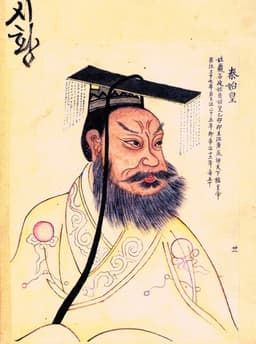
Qin Shi Huang
Emperor · Ancient
85.2Total
Basic Information
Born
354
-259
Died
430
-210
Era
Ancient
Ancient
Nationality
Roman Empire
China
Occupation
Philosopher
Emperor
Civilization
Western
Eastern
Score Comparison
Military (10%)
9.0
80.0
Political (20%)
32.9
90.0
Influence (20%)
80.0
85.0
Legacy (20%)
87.0
90.0
Leadership (15%)
31.8
78.0
Strategy (15%)
42.2
82.0
TOTAL
56.6
85.2
Augustine of Hippo — Complete Timeline
386 AD
Conversion to ChristianityCultural
Augustine of Hippo converted to Christianity in Milan, influenced by Bishop Ambrose and his mother Monica. This conversion, described in his *Confessions*, ended his earlier Manichaean beliefs and set him on a path to becoming a leading Church Father.
ConversionChristianityChurch Father
Impact: globalconstructive
393 AD
Council of HippoCultural◆ Major
Augustine of Hippo participated in the Council of Hippo, which helped define the biblical canon for the Western Church. His influence contributed to the acceptance of certain books and the rejection of others, standardizing Christian scripture.
CouncilBibleCanon
Impact: globalconstructive
398 AD
Confessions PublishedCultural◆ Major
Augustine of Hippo published *Confessions*, an autobiographical work detailing his spiritual journey and conversion. The book explored themes of sin, grace, and divine providence, becoming a foundational text in Western Christian theology and literature.
BookTheologyAutobiography
Impact: globalconstructive
426 AD
City of God PublishedCultural
Augustine of Hippo completed *City of God*, a major theological work written in response to the sack of Rome in 410. It contrasted the earthly city with the heavenly city, shaping Christian views on history, politics, and the relationship between church and state.
BookTheologyPhilosophy of History
Impact: globalconstructive
430 AD
Siege of Hippo RegiusWar◆ Major
Augustine of Hippo died during the Siege of Hippo Regius by the Vandals under King Genseric. The siege marked the decline of Roman North Africa, and Augustine's death occurred as his city was under attack, symbolizing the end of an era.
SiegeVandalsDeath
Impact: regionaltragic
Qin Shi Huang — Complete Timeline
246 BC
Construction of the Mausoleum and Terracotta ArmyOther◆ Major
Qin Shi Huang commissioned a vast mausoleum complex near Xi'an, guarded by thousands of life-sized terracotta soldiers, horses, and chariots. The project employed hundreds of thousands of workers and reflected his obsession with immortality and imperial power.
Impact: global
230 BC
Conquest of the Six Warring StatesWar
From 230 to 221 BCE, Ying Zheng led the Qin state in a series of campaigns that conquered the Han, Zhao, Wei, Chu, Yan, and Qi states. This unified China under a single ruler for the first time, ending the Warring States period.
Impact: global
221 BC
Standardization of Writing, Currency, and MeasurementsReform◆ Major
Qin Shi Huang ordered the standardization of Chinese script, currency, and weights and measures across the unified empire. This facilitated administration, trade, and cultural integration, laying a foundation for future dynasties.
Impact: globalconstructive
Proclamation of the Qin DynastyPolitical Action
After conquering the last independent state, Ying Zheng declared himself Shi Huangdi (First Emperor), founding the Qin Dynasty. He adopted a new title to signify his supreme authority and initiated centralized imperial rule.
Impact: global
214 BC
Initiation of the Great Wall ConstructionOther◆ Major
Qin Shi Huang ordered the connection and extension of existing northern fortifications to create a unified defensive wall against nomadic Xiongnu raids. This project involved massive conscripted labor and became the precursor to the later Great Wall.
Impact: regional
213 BC
Burning of Books and Burying of ScholarsPolitical Action◆ Major
On the advice of Li Si, Qin Shi Huang ordered the burning of historical records and philosophical texts not aligned with Legalist doctrine. He also had 460 Confucian scholars buried alive to suppress dissent and consolidate ideological control.
Impact: nationaldestructive
Expert Analysis
augustine-of-hippo-vs-qin-shi-huang
# The Emperor and the Saint: Two Visions of Order in a Chaotic World
In the year 210 BC, a vast army of terracotta warriors stood silent guard over the tomb of Qin Shi Huang, the First Emperor of China. Six hundred years later, in 430 AD, the city of Hippo Regius burned as Vandal armies swept through North Africa, and within its walls, Augustine of Hippo drew his last breath. One man had unified a civilization through iron and decree; the other had shaped the soul of a faith that would outlast the empire that persecuted it. What drove these two figures—one an emperor, one a philosopher—to leave such different marks on history? The answer lies not just in their achievements, but in the worlds they inherited and the visions they dared to pursue.
Origins
Qin Shi Huang was born Ying Zheng in 259 BC, a prince of the Qin state during the chaotic Warring States period. China was a patchwork of rival kingdoms, each with its own script, currency, and laws—a landscape of constant warfare and shifting alliances. His father was a king, but his mother, Lady Zhao, was a former concubine, and his early years were shadowed by political intrigue and the threat of assassination. This environment forged a boy who saw unity not as an ideal but as a necessity for survival. The Qin state, with its Legalist philosophy emphasizing strict laws and harsh punishments, provided the tools.
Augustine of Hippo was born in 354 AD in Thagaste, a small town in Roman North Africa. His father was a pagan minor official, his mother Monica a devout Christian. Unlike the prince of Qin, Augustine grew up in a world that was already unified—the Roman Empire—but one that was spiritually fractured. Pagan traditions, Christian sects, and philosophical schools competed for allegiance. His education in rhetoric and philosophy exposed him to the works of Cicero and the Manichaean religion, but his restless mind sought a truth that could reconcile reason with faith. Where Qin Shi Huang inherited a world of political chaos, Augustine inherited a world of intellectual and spiritual turmoil.
Rise to Power
Ying Zheng ascended the throne of Qin at age thirteen in 246 BC, but real power lay with regents and his mother’s lover, the eunuch Lao Ai. A coup attempt by Lao Ai in 238 BC forced the young king to act. He crushed the rebellion, executed his mother’s lover, and exiled her—a brutal demonstration of his resolve. From 230 to 221 BC, he unleashed a series of military campaigns that conquered the six remaining warring states: Han, Zhao, Wei, Chu, Yan, and Qi. Each victory was a masterclass in strategy, combining Qin’s disciplined armies with diplomatic cunning and psychological warfare. In 221 BC, he declared himself *Shi Huangdi*—the First Emperor—and founded the Qin Dynasty.
Augustine’s path to influence was slower and more personal. He taught rhetoric in Carthage, Rome, and Milan, but his inner life was a battlefield. He fathered an illegitimate son, joined the Manichaean sect for nine years, and struggled with lust and ambition. His turning point came in 386 AD in a Milan garden, where he heard a child’s voice chanting, “Take up and read.” Opening a Bible, he read Paul’s Epistle to the Romans and converted to Christianity. This was not a conquest of armies but a conquest of the self. Within a decade, he became Bishop of Hippo, a position he held until his death.
Leadership & Governance
Qin Shi Huang ruled as an absolute monarch, wielding power through the Legalist philosophy of his chancellor Li Si. He standardized writing, currency, and measurements across his empire—a feat of administrative genius that bound China together for millennia. He ordered the construction of roads and canals, and in 214 BC, he began connecting northern fortifications into what would become the Great Wall, a defensive barrier against nomadic invaders. But his governance had a dark side: in 213 BC, he ordered the burning of books and the burying of scholars who criticized his rule, seeking to erase history that did not glorify his regime. His rule was efficient, ruthless, and short—the Qin Dynasty collapsed within four years of his death.
Augustine led through the written word and the pulpit. As Bishop of Hippo from 395 AD, he shepherded a community under threat from both theological heresies and barbarian invasions. He participated in the Council of Hippo in 393 AD, which helped define the biblical canon for Western Christianity. His *Confessions*, published in 398 AD, was a revolutionary work—a deeply personal exploration of sin, grace, and the human soul that established the genre of spiritual autobiography. His magnum opus, *City of God*, completed in 426 AD, was a response to the sack of Rome in 410 AD. Where the emperor built walls of stone, Augustine built walls of ideas, arguing that earthly empires rise and fall, but the City of God endures.
Triumph & Tragedy
Qin Shi Huang’s greatest triumph was his mausoleum near Xi’an, guarded by thousands of life-sized terracotta soldiers—a testament to his power and his obsession with immortality. He believed he could conquer death itself, sending expeditions for the elixir of life. His tragedy was that he died in 210 BC, possibly from mercury poisoning from those very elixirs, and his dynasty crumbled soon after. His legacy was preserved not by his successors but by the Han Dynasty, which adopted his centralized model while rejecting his harsh methods.
Augustine’s triumph was his intellectual legacy. *City of God* became a cornerstone of Western thought, shaping medieval ideas of history, politics, and divine providence. His writings on original sin and grace influenced everyone from Thomas Aquinas to Martin Luther. His tragedy was that he died in 430 AD during the Siege of Hippo Regius, watching the Roman world he knew collapse under Vandal attacks. Yet even as the city fell, his ideas were spreading across Europe, carried by monks who copied his manuscripts by candlelight.
Character & Destiny
Qin Shi Huang was driven by a relentless will to control—his environment, his subjects, and even his own mortality. He believed that order could be imposed from above through laws and force. This made him a brilliant conqueror but a brittle ruler; his empire was a machine that required his hand to operate. Augustine was driven by an equally relentless search for truth. He believed that order must be discovered from within, through grace and reason. This made him a patient pastor but a relentless critic of false certainties. One sought to unify the world through power; the other sought to unify the soul through faith.
Legacy
Today, Qin Shi Huang is remembered as the father of China—a figure of awe and ambivalence. His terracotta army draws millions of visitors, and his standardized script remains the basis of Chinese writing. But his book burnings and legalist excesses are cautionary tales about the cost of unity. Augustine is remembered as a Doctor of the Church, a saint whose ideas shaped Christianity and Western philosophy. His *Confessions* and *City of God* are still read, debated, and cherished.
Conclusion
Standing before the terracotta warriors, one feels the weight of an emperor’s ambition—a man who tried to freeze time in clay. Reading Augustine’s *Confessions*, one feels the pulse of a soul in motion—a man who found eternity in the present moment. Qin Shi Huang built an empire that crumbled, but his vision of unity endured. Augustine saw an empire crumble, but his vision of a heavenly city endured. Both understood that human beings long for order, but they disagreed on where that order begins: in the decree of a ruler or in the depths of a contrite heart. Their lives remind us that the greatest legacies are not built with stone or law alone, but with the stories we tell about who we are and who we might become.
Rankings
🥇
Qin Shi HuangLeader
Mil: 80.0Pol: 90.0Inf: 85.0
85.2
🥈
Augustine of Hippo
Mil: 9.0Pol: 32.9Inf: 80.0
56.6
+28.6 behind
How This Comparison Works
Algorithm
Each figure is scored on 6 dimensions (0—100 scale) based on structured historical data: Military (10%), Political (20%), Influence (20%), Legacy (20%), Leadership (15%), Strategy (15%). The weighted total produces the final ranking.
Data Sources
Scores are computed from structured sub-indicators in the database. Scale factors adjust for era (Ancient ×0.85, Modern ×1.0) and civilization size (Eastern ×1.05, Other ×0.80) to account for differences in population and military scale.
Maximum 3 Figures
Comparisons are limited to 2—3 figures to ensure readability and statistical meaningfulness.
Error Margins
±5 points per dimension — Sub-scores are derived from historical records with inherent uncertainty. Two figures within 5 points on a dimension should be considered roughly equivalent in that area.
Total Score Accuracy
±3 points overall — The weighted combination of 6 dimensions produces a total score with approximately ±3 points of uncertainty. Differences of less than 3 points are not statistically significant— the figures are effectively tied.
Known Limitations
- Historical records are incomplete and uneven across civilizations
- Figures from oral-tradition societies may be underrepresented
- Occupation labels can misclassify multi-role figures
- Scores measure capability and impact, not moral character
- Quantitative scoring is a comparison tool, not absolute truth
Capability Radar
Military (10%) — Battles & Warfare
Battles
14
85
Win Rate
20
90
Expansion
22
90
Political (20%) — Governance & Reform
Reform
20
95
Diplomacy
25
75
Economy
10
90
Influence (20%) — Cultural & Global Reach
Cultural
95
95
Global
90
85
Legacy (20%) — Historical Impact
Historical
95
95
Longevity
95
95
Leadership (15%) — Power & Stability
Tenure
30
70
Stability
15
65
Strategy (15%) — Tactics & Innovation
Strategy
22
85
Tactics
26
80
Reform
27
95
Similar Comparisons
Comments & Discussion
Qin Shredder6/17/2026
The Emperor wins on sheer scale. Qin Shi Huang didn’t just conquer—he standardized writing, currency, and axle lengths across six kingdoms. Ate three millennia of regional chaos in one lifetime. Augustine wrote Confessions; Qin built the Great Wall. You tell me which legacy still physically shapes a nation today. The Saint’s niche is theology; the Emperor’s is infrastructure that lasts forever. No contest if you value raw impact over navel-gazing.
数据侦探6/17/2026
数据对比暴露硬伤:秦始皇统一度量和文字,覆盖约2000万人,但每项改革至少花30年消化,期间焚书坑儒导致文献断层。奥古斯丁著作超500万词,直接塑造中世纪神权,影响欧洲10亿灵魂。比人数?秦朝人口不及罗马帝国巅峰的三分之一。比时间?奥古斯丁的思想统治了1200年,秦制只撑了15年。结论:影响力密度,圣徒碾压皇帝。
Legionary Logician6/17/2026
Augustine’s City of God is the real empire. Qin Shi Huang conquered bodies, but Augustine conquered minds for a millennium. While the First Emperor’s dynasty collapsed in three years post-death, Augustine’s synthesis of Neoplatonism and Christian doctrine became the intellectual backbone of Western civilization. Think about it: every medieval university, every crusade, every Reformation debate traces back to Hippo. The terracotta warriors are tourist attractions. Augustine’s arguments still haun
汉简考据狂6/17/2026
说秦朝只有十五年暴政的,是忽略秦制对汉代的隐形霸权。秦始皇创郡县制、建驰道、统一法度,刘邦全盘照抄。奥古斯丁写《上帝之城》时,罗马已病入膏肓,他只是给尸体穿了一套神学寿衣。秦朝制度活了1500年,直到明清还在用,奥古斯丁那套原罪说,欧洲启蒙运动时就烂了。真正的赢家不是思想,是能复制的行政代码。
Two Brick Short6/17/2026
A slave-owning provincial bishop vs. a mass-murdering bronze-age warlord? This is like comparing a marathon runner to a sprinter who tripped at the starting line. Augustine’s legacy is a canon of doubt and grace; Qin’s is a pit of crushed scholars and mercury rivers. The Saint at least wrestled with the problem of evil. The Emperor just buried the evidence. Give me the conflicted philosopher over the guy who named himself “First” and left behind only silence and clay soldiers.