Loading...
Confucius vs Qin Shi Huang
Qin Shi Huang leads by 23.8 pts · 2 figures compared
…
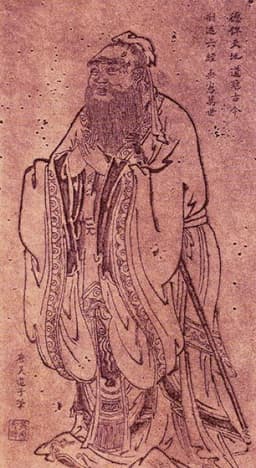
Confucius
Philosopher · Ancient
61.4Total
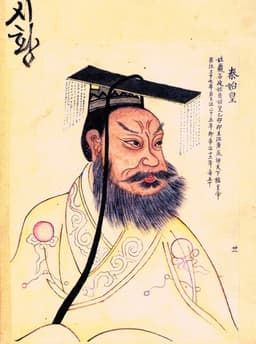
Qin Shi Huang
Emperor · Ancient
85.2Total
Basic Information
Born
-551
-259
Died
-479
-210
Era
Ancient
Ancient
Nationality
China
China
Occupation
Philosopher
Emperor
Civilization
Eastern
Eastern
Score Comparison
Military (10%)
8.7
80.0
Political (20%)
35.1
90.0
Influence (20%)
95.0
85.0
Legacy (20%)
87.0
90.0
Leadership (15%)
35.4
78.0
Strategy (15%)
44.3
82.0
TOTAL
61.4
85.2
Confucius — Complete Timeline
501 BC
Appointment as Minister of Crime in LuPolitical Action
Confucius served as Minister of Crime in the state of Lu, where he implemented reforms to improve public order and justice. His tenure was short-lived due to political opposition, but it demonstrated his practical application of Confucian principles.
GovernmentReformLu
constructive
500 BC
Teaching Career in LuCultural
Confucius traveled through the state of Lu, teaching a group of disciples about ethics, ritual, and governance. He compiled and edited classical texts, including the Five Classics, and developed his philosophy centered on ren (benevolence) and li (ritual propriety).
TeachingPhilosophyConfucianism
Impact: globalconstructive
497 BC
Exile and Travels through Warring StatesPolitical Action◆ Major
After falling out of favor in Lu, Confucius went into voluntary exile, traveling to various states including Wei, Song, and Chen. He sought a ruler who would adopt his teachings, but was largely unsuccessful, spending 14 years wandering.
ExileTravelPhilosophy
Impact: regional
481 BC
Compilation of the Spring and Autumn AnnalsCultural◆ Major
Confucius is traditionally credited with compiling the Spring and Autumn Annals, a historical chronicle of the state of Lu. This work became a foundational text for Confucian historiography, emphasizing moral judgment in historical recording.
HistoriographyClassicsConfucianism
Impact: globalconstructive
479 BC
Death and Posthumous InfluenceCultural
Confucius died in Qufu, Lu, at age 72. His disciples compiled his teachings into the Analects, which later became the core text of Confucianism. Over centuries, his philosophy became the dominant ethical and political system in East Asia.
DeathLegacyConfucianism
Impact: globalconstructive
Qin Shi Huang — Complete Timeline
246 BC
Construction of the Mausoleum and Terracotta ArmyOther◆ Major
Qin Shi Huang commissioned a vast mausoleum complex near Xi'an, guarded by thousands of life-sized terracotta soldiers, horses, and chariots. The project employed hundreds of thousands of workers and reflected his obsession with immortality and imperial power.
Impact: global
230 BC
Conquest of the Six Warring StatesWar
From 230 to 221 BCE, Ying Zheng led the Qin state in a series of campaigns that conquered the Han, Zhao, Wei, Chu, Yan, and Qi states. This unified China under a single ruler for the first time, ending the Warring States period.
Impact: global
221 BC
Standardization of Writing, Currency, and MeasurementsReform◆ Major
Qin Shi Huang ordered the standardization of Chinese script, currency, and weights and measures across the unified empire. This facilitated administration, trade, and cultural integration, laying a foundation for future dynasties.
Impact: globalconstructive
Proclamation of the Qin DynastyPolitical Action
After conquering the last independent state, Ying Zheng declared himself Shi Huangdi (First Emperor), founding the Qin Dynasty. He adopted a new title to signify his supreme authority and initiated centralized imperial rule.
Impact: global
214 BC
Initiation of the Great Wall ConstructionOther◆ Major
Qin Shi Huang ordered the connection and extension of existing northern fortifications to create a unified defensive wall against nomadic Xiongnu raids. This project involved massive conscripted labor and became the precursor to the later Great Wall.
Impact: regional
213 BC
Burning of Books and Burying of ScholarsPolitical Action◆ Major
On the advice of Li Si, Qin Shi Huang ordered the burning of historical records and philosophical texts not aligned with Legalist doctrine. He also had 460 Confucian scholars buried alive to suppress dissent and consolidate ideological control.
Impact: nationaldestructive
Expert Analysis
confucius-vs-qin-shi-huang
The Unifier and the Sage
On a winter morning in 221 BCE, Ying Zheng stood before the last conquered capital of the Warring States, his armies still bearing the dust of a decade-long campaign. He declared himself Shi Huangdi—the First Emperor—and ordered the melting down of captured weapons into twelve colossal bronze statues. Half a continent away, three centuries earlier, a poor scholar named Kong Qiu—known to the West as Confucius—had walked the same lands in tattered robes, rejected by princes, his only army a band of disciples. One man commanded the world; the other could barely command a hearing. Yet both would shape China more profoundly than any sword or scepter. Why did the unifier die reviled, his dynasty crumbling within years, while the wandering teacher, ignored in life, became the soul of a civilization?
Origins
Qin Shi Huang was born into war. His father was king of Qin, a semi-barbarian frontier state hardened by constant conflict. The boy king ascended the throne at thirteen, surrounded by assassins and court intrigues. His era—the late Warring States period—demanded ruthlessness. Confucius, by contrast, was born in 551 BCE into a declining aristocratic family in the small state of Lu. His father died when he was three, and he grew up in poverty, but in a world still haunted by the memory of a unified Zhou dynasty. Where Qin Shi Huang inherited a culture of iron discipline, Confucius inherited a culture of nostalgia—a longing for the lost rituals and moral order of a golden age.
Rise to Power
Qin Shi Huang’s path was a military storm. From 230 to 221 BCE, he unleashed a series of campaigns that crushed six rival kingdoms—Han, Zhao, Wei, Chu, Yan, and Qi. He did not merely conquer; he annihilated. Captured nobles were executed, their palaces razed, their histories rewritten. At twenty-eight, he had no rivals left. Confucius’s rise was a slow, painful climb. In 501 BCE, at age fifty, he finally secured a minor post as Minister of Crime in Lu, where he introduced reforms to reduce theft and corruption. But his success bred envy; after four years, he was forced into exile. For the next thirteen years, he wandered from state to state, offering advice to rulers who listened politely and then ignored him. He never held real power.
Leadership & Governance
Qin Shi Huang governed as he conquered—with absolute control. He standardized writing, currency, and weights and measures across his empire, creating a unified administrative system that would outlast his dynasty. In 214 BCE, he began linking northern fortifications into what would become the Great Wall. But his methods were brutal: the Burning of Books and Burying of Scholars in 213 BCE destroyed countless philosophical texts and buried dissenting intellectuals alive. He believed unity required uniformity, and he enforced it with terror.
Confucius governed through persuasion alone. As a teacher, he argued that a ruler’s legitimacy came from moral virtue, not force. “Lead the people with laws and regulate them with penalties,” he said, “and they will avoid wrongdoing but have no sense of shame. Lead them with virtue and regulate them with ritual, and they will have a sense of shame and moreover set themselves right.” His ideal ruler was a sage-king who governed by example, not decree. In a world of warring states, this seemed naive. Yet his emphasis on merit, education, and filial piety planted seeds that would bloom centuries later.
Triumph & Tragedy
Qin Shi Huang’s greatest triumph was his vision itself: the first unified Chinese empire, stretching from the Yellow Sea to the Tibetan plateau. His greatest tragedy was its fragility. Obsessed with immortality, he consumed mercury elixirs that slowly poisoned him. When he died in 210 BCE, his empire unraveled within three years—revolts, betrayals, and civil war erased his dynasty. His mausoleum, guarded by the Terracotta Army, was a monument to his fear of death.
Confucius’s triumph came after death. In 479 BCE, he died in obscurity, believing he had failed. His disciples compiled his sayings into the *Analects*, and for centuries, his teachings spread quietly. Then, in the Han Dynasty (206 BCE–220 CE), rulers seeking to legitimize their power discovered Confucius. His philosophy—emphasizing hierarchy, harmony, and obedience—became the official state ideology, shaping China’s civil service exams, family structure, and moral code for over two thousand years.
Character & Destiny
Qin Shi Huang was driven by paranoia and grandiosity. He built roads for his armies, palaces for his harem, and a tomb that mirrored the cosmos. His personality demanded total submission, and his destiny was to create a system so rigid it shattered. Confucius was driven by humility and hope. He said, “I am not one who was born in the possession of knowledge; I am one who is fond of antiquity and earnest in seeking it there.” His destiny was to be heard only when it no longer mattered—and then to echo forever.
Legacy
Qin Shi Huang left a unified China—geographically, administratively, and linguistically. The very name “China” may derive from “Qin.” But his legacy is ambiguous: he is remembered as both a founder and a tyrant, the man who built the empire and buried its conscience. Confucius left a moral framework that endured dynasties, revolutions, and modernizations. His descendants numbered in the millions, and his teachings were memorized by every scholar-official for two millennia. But his legacy is also ambiguous: his emphasis on hierarchy and obedience has been blamed for stifling dissent and innovation.
Conclusion
Two men, one land, two visions of order. Qin Shi Huang believed unity came from the sword and the seal; Confucius believed it came from the heart and the ritual. The First Emperor conquered China in a decade; the Sage conquered China over a millennium. One built walls; the other built minds. In the end, both were right—and both were wrong. China needed the First Emperor’s iron to become a state, and Confucius’s wisdom to become a civilization. Their tension, unresolved, still shapes the Middle Kingdom today.
Rankings
🥇
Qin Shi HuangLeader
Mil: 80.0Pol: 90.0Inf: 85.0
85.2
🥈
Confucius
Mil: 8.7Pol: 35.1Inf: 95.0
61.4
+23.8 behind
How This Comparison Works
Algorithm
Each figure is scored on 6 dimensions (0—100 scale) based on structured historical data: Military (10%), Political (20%), Influence (20%), Legacy (20%), Leadership (15%), Strategy (15%). The weighted total produces the final ranking.
Data Sources
Scores are computed from structured sub-indicators in the database. Scale factors adjust for era (Ancient ×0.85, Modern ×1.0) and civilization size (Eastern ×1.05, Other ×0.80) to account for differences in population and military scale.
Maximum 3 Figures
Comparisons are limited to 2—3 figures to ensure readability and statistical meaningfulness.
Error Margins
±5 points per dimension — Sub-scores are derived from historical records with inherent uncertainty. Two figures within 5 points on a dimension should be considered roughly equivalent in that area.
Total Score Accuracy
±3 points overall — The weighted combination of 6 dimensions produces a total score with approximately ±3 points of uncertainty. Differences of less than 3 points are not statistically significant— the figures are effectively tied.
Known Limitations
- Historical records are incomplete and uneven across civilizations
- Figures from oral-tradition societies may be underrepresented
- Occupation labels can misclassify multi-role figures
- Scores measure capability and impact, not moral character
- Quantitative scoring is a comparison tool, not absolute truth
Capability Radar
Military (10%) — Battles & Warfare
Battles
15
85
Win Rate
15
90
Expansion
19
90
Political (20%) — Governance & Reform
Reform
85
95
Diplomacy
70
75
Economy
40
90
Influence (20%) — Cultural & Global Reach
Cultural
95
95
Global
90
85
Legacy (20%) — Historical Impact
Historical
95
95
Longevity
95
95
Leadership (15%) — Power & Stability
Tenure
20
70
Stability
75
65
Strategy (15%) — Tactics & Innovation
Strategy
22
85
Tactics
28
80
Reform
31
95
Similar Comparisons
Comments & Discussion
铁血治史6/17/2026
拿儒家和始皇比?简直离谱。儒家是空谈家,始皇是实干家。你们别忘了,始皇帝统一文字、货币、度量衡,修驰道、设郡县,这些才是统一中国的根基。孔子除了教几个学生、编几本书,还干过啥实际事?说他影响深远?那是因为后世文人为了维护自己饭碗,硬把他捧上了神坛。
SwordAndBrush6/17/2026
This comparison fundamentally misses the point. Qin Shi Huang unified China physically, but Confucius unified it spiritually. The First Emperor's legalist system died with his dynasty, while Confucian ethics survived centuries of dynastic change. Here's the irony: without Confucius's emphasis on merit over birthright, clever commoners like Li Si could never have risen to power in Qin. The emperor needed the sage's ideas more than he ever admitted.
典籍批判者6/17/2026
数据上分析,孔子活着的时候影响力几乎为零。《史记》记载他周游列国,却"斥乎齐,逐乎宋、卫,困于陈、蔡之间",简直是个政治流浪汉。而秦始皇统一了六国,建立了中国历史上第一个中央集权帝国。后世把孔子捧上天,不过是因为汉代统治者需要一套思想工具来维护统治罢了。要是看实际贡献,嬴政甩孔子十条街。
ConfuciusCorp6/17/2026
Both men were empire-builders, just different empires. Qin Shi Huang built a territorial empire that lasted 15 years; Confucius built an ideological empire that lasted 2,000 years. The First Emperor burned books; the Sage became those books. Let's be honest: which legacy would you rather have? An empire that collapses the moment you die, or one that outlasts Rome, Byzantium, and the British Empire combined?