Loading...
Augustus vs Cleopatra VII
Augustus leads by 38.7 pts · 2 figures compared
…

Augustus
Emperor · Ancient
85.9Total
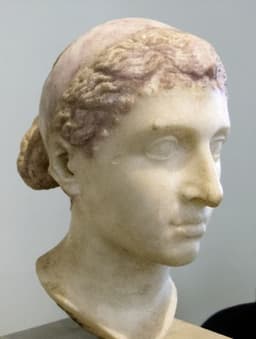
Cleopatra VII
Politician · Ancient
47.2Total
Basic Information
Born
63
-69
Died
—
-30
Era
Ancient
Ancient
Nationality
Roman Empire
Egypt
Occupation
Emperor
Politician
Civilization
Western
Middle Eastern
Score Comparison
Military (10%)
72.0
20.0
Political (20%)
90.0
45.0
Influence (20%)
88.0
40.0
Legacy (20%)
90.0
80.0
Leadership (15%)
88.0
40.0
Strategy (15%)
75.0
25.0
TOTAL
85.9
47.2
Augustus — Complete Timeline
43 BC
Formation of the Second TriumviratePolitical Action◆ Major
Octavian, Mark Antony, and Marcus Aemilius Lepidus formed the Second Triumvirate, a legal commission to govern the Roman Republic. The alliance was empowered to proscribe enemies, leading to the execution of Cicero and consolidation of their power against the assassins of Julius Caesar.
Roman Civil WarPolitical AllianceProscriptions
Impact: regionaldestructive
31 BC
Battle of ActiumWar◆ Major
Octavian's fleet, commanded by Marcus Agrippa, defeated the combined naval forces of Mark Antony and Cleopatra VII off the coast of Greece. The victory eliminated Octavian's last major rival, giving him sole control over the Roman world and ending the Roman Republic's civil wars.
Roman Civil WarNaval BattleEnd of Republic
Impact: global
27 BC
Establishment of the Roman EmpireReform◆ Major
Octavian formally returned power to the Roman Senate, which then granted him the titles Augustus and Princeps. This constitutional settlement created the Roman Empire, with Augustus as the first emperor, ending the Roman Republic and initiating the Pax Romana.
Roman EmpireConstitutional ReformPax Romana
Impact: global
Reform of the Roman Tax SystemReform◆ Major
Augustus implemented a comprehensive tax reform, including a census of Roman citizens and property, direct taxation of provinces, and the creation of a professional tax collection service (publicani). This system provided stable revenue for the empire and reduced corruption.
Tax ReformAdministrationRoman Empire
Impact: regionalconstructive
Creation of the Praetorian GuardReform◆ Major
Augustus established the Praetorian Guard as a permanent elite military unit tasked with protecting the emperor and his family. Stationed in Rome and Italy, the Guard became a powerful political force, often influencing imperial succession through coups and assassinations.
Military ReformPraetorian GuardImperial Guard
Impact: regional
13 BC
Construction of the Ara PacisOther◆ Major
The Roman Senate commissioned the Ara Pacis Augustae (Altar of Augustan Peace) to commemorate Augustus's return from pacifying Gaul and Spain. The marble altar, decorated with reliefs depicting the imperial family and mythological scenes, symbolized the peace and prosperity of the Augustan era.
Building ProjectPropagandaAugustan Art
Impact: regionalconstructive
Cleopatra VII — Complete Timeline
48 BC
Alliance with Julius CaesarPolitical Action◆ Major
Cleopatra allied with Julius Caesar during the Roman civil war. She had herself smuggled into his palace in Alexandria rolled in a carpet. Caesar supported her claim to the throne, defeating her brother Ptolemy XIII and restoring her as co-ruler of Egypt.
Impact: regional
47 BC
Birth of CaesarionPolitical Action◆ Major
Cleopatra gave birth to Ptolemy XV Caesar (Caesarion), claiming he was Julius Caesar's son. This birth strengthened her political position and provided a potential heir to both Egypt and Rome, though Caesar never officially acknowledged him as his heir.
Impact: regional
41 BC
Alliance with Mark AntonyPolitical Action◆ Major
Cleopatra formed a political and romantic alliance with Mark Antony, a Roman triumvir. She provided him with financial and military support for his campaigns in the East. Their relationship produced three children and solidified her control over Egypt.
Impact: regional
31 BC
Battle of ActiumWar
The combined naval forces of Cleopatra and Mark Antony were decisively defeated by Octavian's fleet under Agrippa at Actium in Greece. Cleopatra fled with her ships, and Antony followed, leading to their eventual downfall and Octavian's rise as Augustus.
Impact: globaltragic
30 BC
Death of CleopatraPolitical Action
After Octavian's forces captured Alexandria, Cleopatra died by suicide, traditionally said to be from the bite of an asp. Her death ended the Ptolemaic dynasty and Egypt became a Roman province, marking the end of Hellenistic Egypt's independence.
Impact: globaltragic
Expert Analysis
Augustus vs Cleopatra VII
# The Emperor and the Queen: Two Paths to Power in the Ancient World
On a September morning in 31 BCE, two fleets clashed off the coast of western Greece. The Battle of Actium would decide the fate of the Mediterranean world. Aboard one flagship stood a woman in her late thirties, a queen of ancient lineage, her eyes fixed on the horizon as her ships began to flee. Aboard the opposing fleet, a pale, sickly young man of thirty-two watched the enemy break formation—a man who had never commanded a fleet before, yet who would emerge from these waters as master of Rome. How did two such different figures, born into the same turbulent century, arrive at this single, decisive moment? And why did one build an empire that would last five centuries, while the other became a legend that would last two thousand years?
Origins
Gaius Octavius was born in 63 BCE into a wealthy but undistinguished family from the Italian town of Velletri. His father died when he was four, and he was raised by his mother Atia, the niece of Julius Caesar. He was a frail, bookish child, prone to illness, with a calculating mind that belied his youth. His world was the Roman Republic—a brutal, competitive arena where noblemen clawed for power through military command, political alliances, and the favor of the mob.
Cleopatra VII was born six years earlier, in 69 BCE, into a very different world. She was a Greek Macedonian princess ruling over Egypt, a kingdom that had been governed by her dynasty for nearly three centuries. Her father Ptolemy XII had bankrupted the country to bribe Roman politicians, and her family was notorious for murder, incest, and instability. Cleopatra grew up speaking nine languages, studying philosophy and rhetoric, and learning the art of survival in a court where siblings poisoned each other as a matter of course. Where Octavian inherited a republic in crisis, Cleopatra inherited a kingdom in decay.
Rise to Power
When Julius Caesar was assassinated in 44 BCE, the eighteen-year-old Octavian was studying in Illyria. He learned that Caesar had adopted him as his son and heir. Most of Rome dismissed him as a boy playing at politics. Within a year, he had raised a private army from Caesar's veterans, formed an alliance with Caesar's enemies, and forced the Senate to grant him power. His rise was a masterclass in cold calculation: he used Caesar's name as a shield, his wealth as a sword, and his apparent weakness as a trap.
Cleopatra's path was more direct—and more desperate. In 48 BCE, she was twenty-one years old, exiled from Alexandria by her brother-husband Ptolemy XIII. She had herself smuggled into Julius Caesar's quarters rolled in a carpet. The historian Plutarch records that she was "a woman of irresistible charm," and Caesar, then fifty-two, was captivated. She became his lover, bore his son Caesarion, and with Roman military support, reclaimed her throne. Her power came not from armies but from relationships—she understood that in a world dominated by Rome, a clever queen could bend the wills of Rome's masters.
Leadership & Governance
Augustus—as Octavian was renamed in 27 BCE—governed through illusion. He claimed to have restored the Republic while actually concentrating all power in his own hands. He reformed the tax system, established a professional army and navy, created a postal service, and launched a building program that transformed Rome from brick to marble. His military record was mediocre—he lost battles and relied on his brilliant general Agrippa—but his political genius was absolute. He understood that Romans hated the idea of monarchy but craved stability, so he dressed autocracy in republican robes.
Cleopatra governed through presence. She personally administered her kingdom, controlled the grain trade along the Nile, and maintained Egypt's wealth through careful diplomacy. She was no warrior—her military score is rightly low—but she was a strategist of alliance. Her relationship with Mark Antony produced three children and a vision of a Hellenistic empire that would rival Rome. She minted coins bearing her image, styled herself as the goddess Isis, and built a library and cultural center at Alexandria. Her governance was personal, dynastic, and ultimately fragile—it depended on her ability to charm the right Roman.
Triumph & Tragedy
Augustus's greatest triumph was Actium itself. After defeating Antony and Cleopatra, he annexed Egypt—making it a Roman province—and returned to Rome in 29 BCE to celebrate a three-day triumph. He closed the doors of the Temple of Janus, signaling that Rome was at peace for the first time in a century. He would rule for forty-four years, dying in bed at the age of seventy-five, surrounded by his family. His tragedy was personal: he had no surviving sons, and his daughter Julia was exiled for adultery. The empire he built would outlive him, but his bloodline would not.
Cleopatra's tragedy was Actium. She fled the battle with sixty ships, leaving Antony's fleet to be destroyed. The decision has been debated for two millennia—was it betrayal, panic, or a calculated retreat that failed? The result was the same. She returned to Alexandria and tried to negotiate with Octavian, even attempting to seduce him as she had seduced Caesar. But Octavian was not Caesar. When his forces entered the city in August 30 BCE, she took her own life, reportedly by the bite of an asp. She was thirty-nine. Her son Caesarion was executed. Egypt became a Roman province. The last pharaoh was gone.
Character & Destiny
Augustus was a man of iron self-control. Suetonius records that he rarely laughed, spoke in a low voice, and never made a decision in anger. He cultivated an image of modest simplicity—wearing homespun clothes, living in a modest house, eating plain food—while amassing unprecedented power. His personality was a mask, and the mask never slipped. He understood that in politics, appearance is reality.
Cleopatra was a woman of passionate intelligence. She threw herself into each alliance with total commitment, bearing children, sharing thrones, and risking everything for love and ambition. She was, by all accounts, dazzling company—witty, learned, and magnetic. But her emotions were her weakness. She loved Antony too much to leave him, and too little to save him. Her personality was her weapon and her doom.
Legacy
Augustus left behind an empire that would endure for five hundred years in the West and a thousand in the East. His name became a title—"Augustus"—used by emperors for centuries. He created the Pax Romana, a period of relative peace that lasted two hundred years. His political system—the Principate—became the model for autocratic rule in Europe. Today, his legacy is visible in every imperial monument from the Roman Forum to the Palace of Versailles.
Cleopatra left behind a legend. Her story was told by her enemies—Roman historians who painted her as a seductive, treacherous foreign queen. But that story has survived for two thousand years, inspiring plays by Shakespeare, paintings by Tiepolo, and films starring Elizabeth Taylor. She represents the last gasp of ancient Egypt, the tragic beauty who almost changed the course of history. Her legacy is not political but cultural—she is the most famous woman of the ancient world.
Conclusion
Standing on the promontory at Actium, watching the ships burn, Augustus saw the future: a world of order, law, and Roman peace, stretching from Britain to Mesopotamia. Cleopatra, fleeing south to Alexandria, saw the past: the glittering, doomed world of the Hellenistic kings, where a clever queen could still dream of empire. Both were right. Augustus built the structure that would hold the West together for centuries. Cleopatra became the symbol of everything that structure destroyed. One created history; the other became poetry. In the end, perhaps that is the deepest difference between them: the emperor gave the world an empire, but the queen gave it a story.
Rankings
🥇
AugustusLeader
Mil: 72.0Pol: 90.0Inf: 88.0
85.9
🥈
Cleopatra VII
Mil: 20.0Pol: 45.0Inf: 40.0
47.2
+38.7 behind
How This Comparison Works
Algorithm
Each figure is scored on 6 dimensions (0—100 scale) based on structured historical data: Military (10%), Political (20%), Influence (20%), Legacy (20%), Leadership (15%), Strategy (15%). The weighted total produces the final ranking.
Data Sources
Scores are computed from structured sub-indicators in the database. Scale factors adjust for era (Ancient ×0.85, Modern ×1.0) and civilization size (Eastern ×1.05, Other ×0.80) to account for differences in population and military scale.
Maximum 3 Figures
Comparisons are limited to 2—3 figures to ensure readability and statistical meaningfulness.
Error Margins
±5 points per dimension — Sub-scores are derived from historical records with inherent uncertainty. Two figures within 5 points on a dimension should be considered roughly equivalent in that area.
Total Score Accuracy
±3 points overall — The weighted combination of 6 dimensions produces a total score with approximately ±3 points of uncertainty. Differences of less than 3 points are not statistically significant— the figures are effectively tied.
Known Limitations
- Historical records are incomplete and uneven across civilizations
- Figures from oral-tradition societies may be underrepresented
- Occupation labels can misclassify multi-role figures
- Scores measure capability and impact, not moral character
- Quantitative scoring is a comparison tool, not absolute truth
Capability Radar
Military (10%) — Battles & Warfare
Battles
75
20
Win Rate
80
15
Expansion
85
10
Political (20%) — Governance & Reform
Reform
95
40
Diplomacy
90
85
Economy
85
55
Influence (20%) — Cultural & Global Reach
Cultural
85
80
Global
90
85
Legacy (20%) — Historical Impact
Historical
95
85
Longevity
95
90
Leadership (15%) — Power & Stability
Tenure
95
60
Stability
95
35
Strategy (15%) — Tactics & Innovation
Strategy
85
30
Tactics
70
25
Reform
90
10
Similar Comparisons
Comments & Discussion
Octavian's Propagandist6/16/2026
You want to crown Cleopatra as the 'legend', but Augustus built an actual, functioning empire that held for 500 years. Her legend is built on Shakespeare, not strategy. At Actium, she had a larger fleet, more supplies, and the wind at her back, yet she cut and ran. That’s not defeat by Octavian's admiral Agrippa—that’s panic. Augustus rewrote the tax code, built roads, and pacified Gaul. Cleopatra lost a kingdom in one hour.
海军史盲鉴定员6/16/2026
海军史盲鉴定员:吹Cleopatra的肯定没看过舰队编制。Actium之战她船比屋大维多一倍,但前排全是轻型桨船,后排是重装战船——结果她一跑,阵型直接崩。屋大维的旗舰根本没冲,是她自己先怂的。历史不是言情剧,女王跑路就是跑路,别扯什么"优雅退场"。
Data Skeptic Data6/16/2026
Everyone cites 'Augustus' longevity' like it proves his genius. We've got no reliable census for the early Empire, and half his 'achievements' in the Res Gestae are self-serving propaganda. Meanwhile, Cleopatra ruled Egypt for 22 years as sole queen, kept Rome from annexing it, and her reign saw stable grain production. Augustus spent his first decade in civil wars; she spent hers building libraries. Numbers or not, she ran a kingdom; he ran a slaughterhouse.
纸莎草侦探6/16/2026
纸莎草侦探:文献里写Cleopatra搞贸易、通商路,Alexandria的纸莎草记录里有她签的碑文,而Augustus留下的全是自己的雕像和铜币。她至少保住了埃及的独立性,他直接给人灭国。五百年帝国谈不上"建设",更多是踩在共和国的尸骨上吸血——数据再好,底子也不是他打的。