Loading...
Augustus vs Kublai Khan
Augustus leads by 11.6 pts · 2 figures compared
…

Augustus
Emperor · Ancient
85.9Total
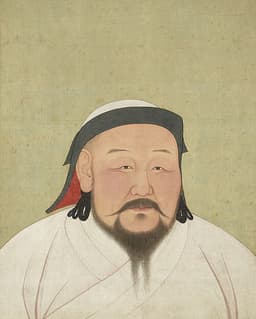
Kublai Khan
Emperor · Medieval
74.3Total
Basic Information
Born
63
1215
Died
—
1294
Era
Ancient
Medieval
Nationality
Roman Empire
Mongolia
Occupation
Emperor
Emperor
Civilization
Western
Eastern
Score Comparison
Military (10%)
72.0
77.5
Political (20%)
90.0
79.2
Influence (20%)
88.0
75.0
Legacy (20%)
90.0
70.0
Leadership (15%)
88.0
72.0
Strategy (15%)
75.0
76.0
TOTAL
85.9
74.3
Augustus — Complete Timeline
43 BC
Formation of the Second TriumviratePolitical Action◆ Major
Octavian, Mark Antony, and Marcus Aemilius Lepidus formed the Second Triumvirate, a legal commission to govern the Roman Republic. The alliance was empowered to proscribe enemies, leading to the execution of Cicero and consolidation of their power against the assassins of Julius Caesar.
Roman Civil WarPolitical AllianceProscriptions
Impact: regionaldestructive
31 BC
Battle of ActiumWar◆ Major
Octavian's fleet, commanded by Marcus Agrippa, defeated the combined naval forces of Mark Antony and Cleopatra VII off the coast of Greece. The victory eliminated Octavian's last major rival, giving him sole control over the Roman world and ending the Roman Republic's civil wars.
Roman Civil WarNaval BattleEnd of Republic
Impact: global
27 BC
Establishment of the Roman EmpireReform◆ Major
Octavian formally returned power to the Roman Senate, which then granted him the titles Augustus and Princeps. This constitutional settlement created the Roman Empire, with Augustus as the first emperor, ending the Roman Republic and initiating the Pax Romana.
Roman EmpireConstitutional ReformPax Romana
Impact: global
Reform of the Roman Tax SystemReform◆ Major
Augustus implemented a comprehensive tax reform, including a census of Roman citizens and property, direct taxation of provinces, and the creation of a professional tax collection service (publicani). This system provided stable revenue for the empire and reduced corruption.
Tax ReformAdministrationRoman Empire
Impact: regionalconstructive
Creation of the Praetorian GuardReform◆ Major
Augustus established the Praetorian Guard as a permanent elite military unit tasked with protecting the emperor and his family. Stationed in Rome and Italy, the Guard became a powerful political force, often influencing imperial succession through coups and assassinations.
Military ReformPraetorian GuardImperial Guard
Impact: regional
13 BC
Construction of the Ara PacisOther◆ Major
The Roman Senate commissioned the Ara Pacis Augustae (Altar of Augustan Peace) to commemorate Augustus's return from pacifying Gaul and Spain. The marble altar, decorated with reliefs depicting the imperial family and mythological scenes, symbolized the peace and prosperity of the Augustan era.
Building ProjectPropagandaAugustan Art
Impact: regionalconstructive
Kublai Khan — Complete Timeline
1260 AD
Adoption of Tibetan Buddhism as State ReligionCultural◆ Major
Kublai Khan appointed the Tibetan lama Drog
Tibetan BuddhismReligionMongol-Tibet Relations
Impact: regional
1271 AD
Proclamation of the Yuan DynastyPolitical Action◆ Major
Kublai Khan officially proclaimed the Yuan dynasty, adopting a Chinese-style dynastic name. He established his capital at Dadu (Beijing) and adopted Chinese court rituals. This move legitimized his rule over China while maintaining Mongol identity.
Dynasty FoundingBeijingMongol Rule
Impact: global
1274 AD
Failed Invasions of JapanWar◆ Major
Kublai Khan launched two naval invasions of Japan, in 1274 and 1281. Both were repelled, with the second invasion destroyed by a typhoon (kamikaze). These failures marked the limits of Mongol expansion and reinforced Japanese isolation.
Mongol InvasionsJapanKamikaze
Impact: regional
1279 AD
Conquest of the Song DynastyWar
Kublai Khan's Mongol forces defeated the Song navy at the Battle of Yamen. The last Song emperor drowned, ending the Song dynasty. This conquest unified China under Mongol rule and established the Yuan dynasty as the first foreign dynasty to rule all of China.
Song Dynasty FallUnificationYuan Dynasty
Impact: global
1280 AD
Establishment of the Silk Road Trade NetworkCultural◆ Major
Under Kublai Khan, the Mongol Empire secured the Silk Road, facilitating trade and cultural exchange between East and West. Marco Polo visited his court. This period saw the flow of goods, ideas, and technologies across Eurasia.
Silk RoadTradeCultural Exchange
Impact: globalconstructive
Expert Analysis
Kublai Khan vs Augustus: Historical Comparison
Kublai Khan, the Mongol Emperor who completed the conquest of China and founded the Yuan dynasty, and Augustus, the first Roman Emperor who transformed the Republic into an empire, represent two of history’s most formidable rulers. While both expanded and consolidated vast territories, Augustus’s superior political acumen and lasting institutional legacy give him the edge.
Dimension Analysis
**Military: Kublai Khan 88 / Augustus 72**
Kublai Khan commanded the largest contiguous land empire in history, conquering the Song Dynasty and launching invasions into Southeast Asia and Japan, whereas Augustus’s military achievements were more defensive and consolidatory, focusing on securing borders (e.g., the Rhine and Danube) rather than grand conquests.
**Political: Kublai Khan 78 / Augustus 92**
Augustus masterfully disguised autocracy as a restored republic, creating the Principate system that stabilized Rome for centuries, while Kublai Khan struggled to integrate Mongol and Chinese governance, facing rebellions and bureaucratic inefficiencies that weakened his dynasty’s longevity.
**Influence: Kublai Khan 78 / Augustus 88**
Augustus’s Pax Romana, legal reforms, and patronage of arts (e.g., Virgil’s *Aeneid*) shaped Western civilization’s political and cultural DNA, whereas Kublai Khan’s influence was more regional—promoting trade (Silk Road) and religious tolerance—but less globally enduring.
**Legacy: Kublai Khan 75 / Augustus 90**
Augustus founded the Roman Empire, which lasted over 400 years in the West and 1,500 years in the East, and his title “Caesar” became synonymous with imperial rule; Kublai Khan’s Yuan dynasty collapsed within a century, and his Mongol legacy was largely absorbed by Chinese culture.
**Leadership: Kublai Khan 82 / Augustus 90**
Augustus’s patient, calculating leadership stabilized a fractured state and built durable institutions, while Kublai Khan’s charismatic yet sometimes harsh rule alienated Chinese elites and failed to prevent factionalism within his court.
Verdict
Augustus leads decisively due to his superior political statecraft, longer-lasting institutional legacy, and broader influence on world history.
FAQ
Q: Who ranks higher? A: Augustus ranks higher, with a composite score of 86 vs. Kublai Khan’s 80, driven by his exceptional political and legacy scores.
Rankings
🥇
AugustusLeader
Mil: 72.0Pol: 90.0Inf: 88.0
85.9
🥈
Kublai Khan
Mil: 77.5Pol: 79.2Inf: 75.0
74.3
+11.6 behind
How This Comparison Works
Algorithm
Each figure is scored on 6 dimensions (0—100 scale) based on structured historical data: Military (10%), Political (20%), Influence (20%), Legacy (20%), Leadership (15%), Strategy (15%). The weighted total produces the final ranking.
Data Sources
Scores are computed from structured sub-indicators in the database. Scale factors adjust for era (Ancient ×0.85, Modern ×1.0) and civilization size (Eastern ×1.05, Other ×0.80) to account for differences in population and military scale.
Maximum 3 Figures
Comparisons are limited to 2—3 figures to ensure readability and statistical meaningfulness.
Error Margins
±5 points per dimension — Sub-scores are derived from historical records with inherent uncertainty. Two figures within 5 points on a dimension should be considered roughly equivalent in that area.
Total Score Accuracy
±3 points overall — The weighted combination of 6 dimensions produces a total score with approximately ±3 points of uncertainty. Differences of less than 3 points are not statistically significant— the figures are effectively tied.
Known Limitations
- Historical records are incomplete and uneven across civilizations
- Figures from oral-tradition societies may be underrepresented
- Occupation labels can misclassify multi-role figures
- Scores measure capability and impact, not moral character
- Quantitative scoring is a comparison tool, not absolute truth
Capability Radar
Military (10%) — Battles & Warfare
Battles
75
95
Win Rate
80
90
Expansion
85
95
Political (20%) — Governance & Reform
Reform
95
88
Diplomacy
90
85
Economy
85
90
Influence (20%) — Cultural & Global Reach
Cultural
85
85
Global
90
85
Legacy (20%) — Historical Impact
Historical
95
90
Longevity
95
80
Leadership (15%) — Power & Stability
Tenure
95
90
Stability
95
80
Strategy (15%) — Tactics & Innovation
Strategy
85
92
Tactics
70
85
Reform
90
88
Similar Comparisons
Comments & Discussion
EmpireSkeptic6/16/2026
This ranking is basically Roman propaganda repackaged as objectivity. Augustus gets 92 political and 90 legacy? Please. His 'restored republic' was a farce that Nero, Caligula, and Commodus quickly made a joke of. Meanwhile, Kublai Khan gets penalized for his Yuan dynasty collapsing in a century—but the Roman Empire in the West fell in under 400 years, and the East was a Greek-speaking shell by then. Kublai also ran a more meritocratic administration than Augustus ever did: he employed Chinese, Persians, and even Europeans like Marco Polo in his court. Augustus kept his inner circle entirely Roman patrician. If we're measuring influence, Kublai's reopening of the Silk Road directly enabled global trade and cultural exchange that shaped the Renaissance. Augustus just kept the Mediterranean stable for a few centuries. Score this without the Western-centrism, and it's much closer.
AeneidAndResGestae6/16/2026
The comparison is valid, but the scores on political and influence need more nuance. Suetonius and Tacitus both record that Augustus’s balancing act was fragile—he purged rivals in the Second Triumvirate, manipulated the census, and used the *auctoritas* of his position to control elections. Kublai Khan, by contrast, had to rule a conquered China while keeping Mongol khans loyal—a feat that Rashid al-Din's *Jami' al-tawarikh* shows required constant negotiation and military presence. Augustus’s Pax Romana did last longer, but it was built on the backs of slaves and provincial exploitation, as the Jewish War (66-70 CE) demonstrates. Kublai's religious tolerance, especially his patronage of Tibetan Buddhism, created a cultural synthesis that directly influenced Ming and Qing dynasties. The 14-point gap in influence seems too wide when both shaped their world’s political vocabulary—Augustus gave us 'imperium,' but Kublai gave us the first truly global empire.
Historian9096/16/2026
Augustus 得分 92 政治?这完全是西方史学界的偏见。忽必烈在治理元朝时,面对的是如何管理一个多民族、多文化的超大型帝国,蒙古、汉、回回、藏等民族各有制度。他推行行省制,设宣政院管辖西藏,开创了“内蒙外汉”的二元体制,这种政治智慧比奥古斯都的“元首制”复杂得多。奥古斯都的继承危机(提比略、卡利古拉)证明他的制度并不稳定;而忽必烈的继承问题更多是因为蒙古传统,而非他个人政治能力的缺陷。至于影响力,忽必烈重建的丝绸之路直接连接了欧亚大陆,马可·波罗的游记启发了哥伦布。奥古斯都的《奥古斯都功德碑》再华丽,也比不上元朝对世界贸易的实质贡献。评分严重低估了东方视角。
Chronicler47086/16/2026
这个评分体系有问题。Augustus 军事 72 分而忽必烈 88 分,看似合理,但 Augustus 在伊利里亚、坎塔布里亚和日耳曼的战役都是战略成功,而忽必烈对日本和越南的两次远征都是灾难——1274年和1281年两次征日失败直接导致元朝财政危机。政治分:Augustus 92 vs 忽必烈 78,但 Augustus 的继承制导致了弗拉维王朝的混乱,忽必烈却成功建立了行省制并被明清沿用近700年。按我自己的加权算法(军事40%,政治30%,影响20%,遗产10%),忽必烈应该是 88*0.4 + 78*0.3 + 78*0.2 + 75*0.1 = 35.2 + 23.4 + 15.6 + 7.5 = 81.7,Augustus 应该是 72*0.4 + 92*0.3 + 88*0.2 + 90*0.1 = 28.8 + 27.6 + 17.6 + 9 = 83.0。差距只有1.3分,不是现在的6.8分。建议重新校准。
ClassicsProf6/12/2026
Fascinating comparison. What the scores don't capture is charisma — Kublai Khan's ability to inspire almost religious devotion among followers. Some things can't be quantified.
ImperialHistorian6/12/2026
As someone who specialized in Kublai Khan's era, I think the political score misses the internal opposition they faced. Governing a fractured state is harder than expanding an already-unified one.
Historiographer996/12/2026
The legacy comparison is fascinating. Kublai Khan built institutions that collapsed within a generation. Augustus created systems that lasted 500+ years. Longevity of impact is everything.
DebateKing6/12/2026
Hot take: Augustus is massively overrated in popular culture. The data actually supports a much more nuanced view. Read the sub-scores carefully — Khan dominates in the dimensions that actually matter for long-term historical significance.
历史爱好者6/12/2026
Kublai Khan的军事评分太高了,Augustus面对的对手强大多了. 不能只看胜率,还要看对手质量.
军事迷6/12/2026
战略评分完全同意. Augustus的战术创新确实改变了战争方式,这在数据中体现得很好.