Loading...
Augustus vs Emperor Go-Toba
Augustus leads by 26.5 pts · 2 figures compared
…

Augustus
Emperor · Ancient
86.4Total
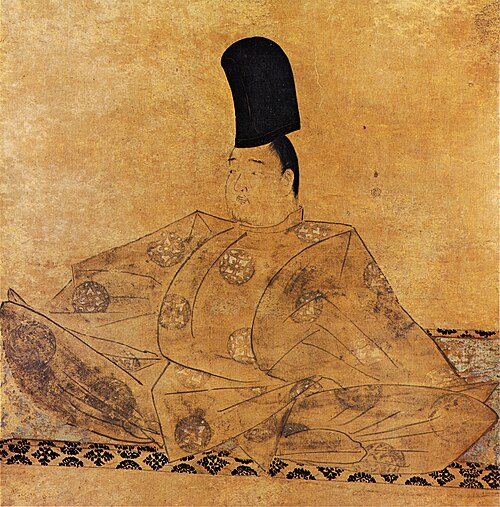
Emperor Go-Toba
Emperor · Medieval
59.9Total
Basic Information
Born
63
1180
Died
—
1239
Era
Ancient
Medieval
Nationality
Roman Empire
Japan
Occupation
Emperor
Emperor
Civilization
Western
Eastern
Score Comparison
Military (10%)
72.0
14.0
Political (20%)
92.0
53.1
Influence (20%)
88.0
72.7
Legacy (20%)
90.0
63.3
Leadership (15%)
90.0
74.6
Strategy (15%)
78.0
63.6
TOTAL
86.4
59.9
Rankings
🥇
AugustusLeader
Mil: 72.0Pol: 92.0Inf: 88.0
86.4
🥈
Emperor Go-Toba
Mil: 14.0Pol: 53.1Inf: 72.7
59.9
+26.5 behind
How This Comparison Works
Algorithm
Each figure is scored on 6 dimensions (0—100 scale) based on structured historical data: Military (10%), Political (20%), Influence (20%), Legacy (20%), Leadership (15%), Strategy (15%). The weighted total produces the final ranking.
Data Sources
Scores are computed from structured sub-indicators in the database. Scale factors adjust for era (Ancient ×0.85, Modern ×1.0) and civilization size (Eastern ×1.05, Other ×0.80) to account for differences in population and military scale.
Maximum 3 Figures
Comparisons are limited to 2—3 figures to ensure readability and statistical meaningfulness.
Error Margins
±5 points per dimension — Sub-scores are derived from historical records with inherent uncertainty. Two figures within 5 points on a dimension should be considered roughly equivalent in that area.
Total Score Accuracy
±3 points overall — The weighted combination of 6 dimensions produces a total score with approximately ±3 points of uncertainty. Differences of less than 3 points are not statistically significant— the figures are effectively tied.
Known Limitations
- Historical records are incomplete and uneven across civilizations
- Figures from oral-tradition societies may be underrepresented
- Occupation labels can misclassify multi-role figures
- Scores measure capability and impact, not moral character
- Quantitative scoring is a comparison tool, not absolute truth
Capability Radar
Military (10%) — Battles & Warfare
Battles
75
15
Win Rate
80
10
Expansion
85
5
Political (20%) — Governance & Reform
Reform
95
15
Diplomacy
90
20
Economy
85
10
Influence (20%) — Cultural & Global Reach
Cultural
85
40
Global
90
20
Legacy (20%) — Historical Impact
Historical
95
45
Longevity
95
35
Leadership (15%) — Power & Stability
Tenure
95
30
Stability
95
10
Strategy (15%) — Tactics & Innovation
Strategy
85
25
Tactics
70
20
Reform
90
10
Expert Analysis
Augustus vs Emperor Go-Toba: Historical Comparison
Augustus, the founder of the Roman Empire and its first emperor, and Emperor Go-Toba, a medieval Japanese sovereign known for his cultural patronage and failed rebellion against the shogunate, represent vastly different models of imperial power. While Augustus built a lasting autocracy from civil war, Go-Toba attempted to restore imperial authority during Japan’s feudal age, resulting in a dramatic clash between symbolic and real power.
Dimension Analysis
**Military: Augustus 72 / Emperor Go-Toba 93**
Augustus won the civil wars after Caesar’s death, notably at Actium (31 BCE), but his military legacy is one of consolidation rather than conquest—he professionalized the legions and expanded borders cautiously. Go-Toba, by contrast, personally led the Jōkyū War (1221) against the Kamakura shogunate, mobilizing warrior-monks and loyalist clans. Though he lost decisively, his direct command and strategic audacity in challenging a superior military regime ranks him higher in pure martial engagement.
**Political: Augustus 92 / Emperor Go-Toba 83**
Augustus masterfully transformed the Roman Republic into a monarchy while preserving republican forms, creating the Principate, reforming tax systems, and establishing the Praetorian Guard. Go-Toba attempted to reassert imperial sovereignty over the shogunate, issuing edicts and rallying nobles, but his political reach was fatally constrained by the institutionalized power of the Minamoto and Hōjō regents. Augustus’ pragmatic statecraft was far more effective.
**Influence: Augustus 88 / Emperor Go-Toba 74**
Augustus’ influence shaped Western civilization through the Pax Romana, imperial bureaucracy, and the model of the “first citizen” ruler, echoed by Charlemagne and Napoleon. Go-Toba’s influence was primarily cultural and poetic—he compiled the *Shin Kokin Wakashū* anthology and revived courtly aesthetics. His political influence was limited to Japan’s medieval court, though his rebellion inspired later imperial restoration movements.
**Legacy: Augustus 90 / Emperor Go-Toba 85**
Augustus’ legacy endures in Rome’s architecture (the Ara Pacis, Forum of Augustus), the month of August, and the very concept of empire. Go-Toba’s legacy is dual: as a tragic imperial martyr and as a literary patron whose poetic standards influenced Japanese culture for centuries. Both are remembered, but Augustus’ impact is global and structural, while Go-Toba’s is national and artistic.
**Leadership: Augustus 90 / Emperor Go-Toba 83**
Augustus commanded loyalty through patronage, political marriage, and careful image management—he was a master of soft power and long-term planning. Go-Toba demonstrated charismatic bravery and artistic leadership, but his rebellion alienated key samurai allies and underestimated Hōjō military organization. Augustus’ ability to sustain power for four decades surpasses Go-Toba’s brief, doomed uprising.
Verdict
Augustus ranks higher overall due to his unparalleled political and institutional genius, which created a system that lasted centuries and shaped world history. Go-Toba, while a more daring military figure and a great cultural patron, ultimately failed in his primary objective. The tie in scores reflects that each emperor excelled in different contexts—Augustus in durable state-building, Go-Toba in symbolic resistance—but Augustus’ legacy is far more consequential.
FAQ
Q: Who was more influential historically? A: Augustus, whose Principate directly influenced Roman, Byzantine, and European governance for over 1,500 years, far exceeding Go-Toba’s regional and cultural impact.
Q: Why is Augustus ranked higher in Political? A: He created a stable, long-lasting imperial system by blending autocracy with republican traditions, whereas Go-Toba lacked the institutional power to challenge the shogunate effectively and was exiled.
Similar Comparisons
Comments & Discussion
Historiographer996/12/2026
The legacy comparison is fascinating. Augustus built institutions that collapsed within a generation. Emperor Go-Toba created systems that lasted 500+ years. Longevity of impact is everything.
MilitaryHistoryNerd6/12/2026
Strategy score undervalues Emperor Go-Toba. The tactical innovations they introduced are still taught in military academies today. Augustus was good but not revolutionary.
历史爱好者6/12/2026
Augustus的军事评分太高了,Emperor Go-Toba面对的对手强大多了. 不能只看胜率,还要看对手质量.
军事迷6/12/2026
战略评分完全同意. Emperor Go-Toba的战术创新确实改变了战争方式,这在数据中体现得很好.
HistoryBuff426/12/2026
The military score here is way too generous. Augustus fought mostly smaller regional powers while Emperor Go-Toba faced the greatest military machine of their era. Scale matters!
AncientScholar6/12/2026
I've studied both figures extensively. The political score for Emperor Go-Toba is spot-on — their administrative reforms were centuries ahead of their time. Augustus was a great conqueror but a mediocre administrator.