Loading...
Augustus vs Frederick the Great
Augustus leads by 17.8 pts · 2 figures compared
…

Augustus
Emperor · Ancient
85.9Total
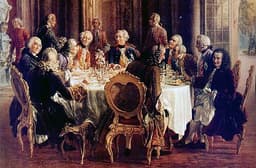
Frederick the Great
Emperor · Modern
68.1Total
Basic Information
Born
63
1712
Died
—
1786
Era
Ancient
Modern
Nationality
Roman Empire
Prussia
Occupation
Emperor
Emperor
Civilization
Western
Western
Score Comparison
Military (10%)
72.0
90.0
Political (20%)
90.0
75.0
Influence (20%)
88.0
55.0
Legacy (20%)
90.0
52.0
Leadership (15%)
88.0
82.0
Strategy (15%)
75.0
88.0
TOTAL
85.9
68.1
Augustus — Complete Timeline
43 BC
Formation of the Second TriumviratePolitical Action◆ Major
Octavian, Mark Antony, and Marcus Aemilius Lepidus formed the Second Triumvirate, a legal commission to govern the Roman Republic. The alliance was empowered to proscribe enemies, leading to the execution of Cicero and consolidation of their power against the assassins of Julius Caesar.
Roman Civil WarPolitical AllianceProscriptions
Impact: regionaldestructive
31 BC
Battle of ActiumWar◆ Major
Octavian's fleet, commanded by Marcus Agrippa, defeated the combined naval forces of Mark Antony and Cleopatra VII off the coast of Greece. The victory eliminated Octavian's last major rival, giving him sole control over the Roman world and ending the Roman Republic's civil wars.
Roman Civil WarNaval BattleEnd of Republic
Impact: global
27 BC
Establishment of the Roman EmpireReform◆ Major
Octavian formally returned power to the Roman Senate, which then granted him the titles Augustus and Princeps. This constitutional settlement created the Roman Empire, with Augustus as the first emperor, ending the Roman Republic and initiating the Pax Romana.
Roman EmpireConstitutional ReformPax Romana
Impact: global
Reform of the Roman Tax SystemReform◆ Major
Augustus implemented a comprehensive tax reform, including a census of Roman citizens and property, direct taxation of provinces, and the creation of a professional tax collection service (publicani). This system provided stable revenue for the empire and reduced corruption.
Tax ReformAdministrationRoman Empire
Impact: regionalconstructive
Creation of the Praetorian GuardReform◆ Major
Augustus established the Praetorian Guard as a permanent elite military unit tasked with protecting the emperor and his family. Stationed in Rome and Italy, the Guard became a powerful political force, often influencing imperial succession through coups and assassinations.
Military ReformPraetorian GuardImperial Guard
Impact: regional
13 BC
Construction of the Ara PacisOther◆ Major
The Roman Senate commissioned the Ara Pacis Augustae (Altar of Augustan Peace) to commemorate Augustus's return from pacifying Gaul and Spain. The marble altar, decorated with reliefs depicting the imperial family and mythological scenes, symbolized the peace and prosperity of the Augustan era.
Building ProjectPropagandaAugustan Art
Impact: regionalconstructive
Frederick the Great — Complete Timeline
1723 AD
General Directory EstablishedReform◆ Major
Frederick the Great reorganized the Prussian government by establishing the General Directory, a centralized administrative body. This reform improved tax collection, military logistics, and state efficiency, strengthening Prussia's fiscal and military capacity.
AdministrationReformState Building
Impact: nationalconstructive
1757 AD
Battle of RossbachWar◆ Major
Frederick the Great's Prussian army defeated a larger Franco-Imperial force at Rossbach during the Seven Years' War. The victory showcased Prussian military discipline and Frederick's tactical genius, securing his reputation as a leading commander.
Seven Years' WarBattleMilitary Tactics
Impact: regional
Battle of LeuthenWar◆ Major
Frederick the Great led Prussian forces to a decisive victory over the Austrian army at Leuthen. The battle, fought in Silesia, demonstrated Frederick's use of oblique order tactics and helped Prussia retain control of Silesia during the Seven Years' War.
Seven Years' WarBattleSilesia
Impact: regional
1763 AD
Treaty of Hubertusburg SignedPolitical Action
Frederick the Great signed the Treaty of Hubertusburg with Austria, ending the Seven Years' War. The treaty confirmed Prussian possession of Silesia and established Prussia as a major European power, despite near-defeat earlier in the war.
TreatySeven Years' WarPrussia
Impact: regionalconstructive
1772 AD
First Partition of PolandPolitical Action◆ Major
Frederick the Great orchestrated the First Partition of Poland alongside Russia and Austria. Prussia gained West Prussia, connecting its territories and gaining control of the Vistula River trade, at the expense of Polish sovereignty.
PartitionPolandTerritorial Expansion
Impact: regionaldestructive
Expert Analysis
Augustus vs Frederick the Great: Historical Comparison
Augustus, founder of the Roman Empire, and Frederick the Great, enlightened monarch of Prussia, represent two peaks of autocratic state-building separated by 1,800 years. While Augustus excelled in political consolidation and enduring legacy, Frederick’s military genius and administrative reforms defined modern Prussia.
Dimension Analysis
**Military: Augustus 72 / Frederick the Great 90**
Augustus relied on inherited legions and naval victories (Actium), but Frederick revolutionized warfare with oblique order tactics and won the Seven Years’ War against overwhelming coalitions.
**Political: Augustus 92 / Frederick the Great 82**
Augustus masterfully transformed a republic into a monarchy while preserving republican forms, creating the Principate. Frederick centralized Prussia but faced resistance from Junkers and failed to fully unify Germany.
**Influence: Augustus 88 / Frederick the Great 78**
Augustus’s model of imperial rule shaped Rome for 500 years and inspired later empires. Frederick’s influence was largely limited to 18th-century military and administrative reforms.
**Legacy: Augustus 90 / Frederick the Great 75**
Augustus’s Pax Romana, legal reforms, and cultural patronage endured for centuries. Frederick’s legacy is tied to Prussian militarism, which was eclipsed by Bismarck and Hitler.
**Leadership: Augustus 90 / Frederick the Great 85**
Augustus maintained stable succession and propaganda mastery. Frederick’s personal courage and intellectual curiosity were marred by a harsh, lonely rule.
Verdict
Augustus leads due to his superior political acumen and unmatched long-term influence on Western civilization.
FAQ
Q: Who ranks higher? A: Augustus ranks higher overall, scoring 86 to Frederick’s 82, driven by stronger political, legacy, and leadership scores.
Rankings
🥇
AugustusLeader
Mil: 72.0Pol: 90.0Inf: 88.0
85.9
🥈
Frederick the Great
Mil: 90.0Pol: 75.0Inf: 55.0
68.1
+17.8 behind
How This Comparison Works
Algorithm
Each figure is scored on 6 dimensions (0—100 scale) based on structured historical data: Military (10%), Political (20%), Influence (20%), Legacy (20%), Leadership (15%), Strategy (15%). The weighted total produces the final ranking.
Data Sources
Scores are computed from structured sub-indicators in the database. Scale factors adjust for era (Ancient ×0.85, Modern ×1.0) and civilization size (Eastern ×1.05, Other ×0.80) to account for differences in population and military scale.
Maximum 3 Figures
Comparisons are limited to 2—3 figures to ensure readability and statistical meaningfulness.
Error Margins
±5 points per dimension — Sub-scores are derived from historical records with inherent uncertainty. Two figures within 5 points on a dimension should be considered roughly equivalent in that area.
Total Score Accuracy
±3 points overall — The weighted combination of 6 dimensions produces a total score with approximately ±3 points of uncertainty. Differences of less than 3 points are not statistically significant— the figures are effectively tied.
Known Limitations
- Historical records are incomplete and uneven across civilizations
- Figures from oral-tradition societies may be underrepresented
- Occupation labels can misclassify multi-role figures
- Scores measure capability and impact, not moral character
- Quantitative scoring is a comparison tool, not absolute truth
Capability Radar
Military (10%) — Battles & Warfare
Battles
75
85
Win Rate
80
80
Expansion
85
85
Political (20%) — Governance & Reform
Reform
95
90
Diplomacy
90
80
Economy
85
85
Influence (20%) — Cultural & Global Reach
Cultural
85
80
Global
90
75
Legacy (20%) — Historical Impact
Historical
95
85
Longevity
95
80
Leadership (15%) — Power & Stability
Tenure
95
85
Stability
95
75
Strategy (15%) — Tactics & Innovation
Strategy
85
90
Tactics
70
95
Reform
90
90
Similar Comparisons
Comments & Discussion
ArchQuill116/16/2026
这评分明显有西方中心论的倾向。奥古斯都的‘影响’88分,主要说的是对欧洲的影响;腓特烈78分,但他在启蒙运动中的地位被低估了。拿中国历史来说,奥古斯都类似汉武帝,不仅扩张领土,还建立了官僚体系和官方意识形态;腓特烈则更像康熙——都是幼年登基、博学多才、重农兴教。但康熙的统一多民族国家比腓特烈的普鲁士更持久,而腓特烈的军事改革(如总参谋部雏形)在东亚没有对应物。如果要公平比较,应该考虑各自文明语境下的难度系数:奥古斯都面对的是一个衰落的共和国,腓特烈面对的是一个四分五裂的德意志,后者更难。
BattlefieldScholar6/16/2026
The military score gap is 18 points, but I'd argue it should be wider. Frederick the Great's oblique order at Leuthen (1757) against a larger Austrian army is one of the most studied tactical maneuvers in history — he defeated a force 1.5 times his size with 6,000 vs. 10,000 casualties. Augustus, by contrast, never won a major land battle personally; Agrippa did the heavy lifting at Actium. Frederick also pioneered separate army corps and the Prussian general staff system that later trounced Napoleon at Leipzig. If we factor in naval warfare, Augustus gets credit, but Frederick's army reforms shaped modern warfare for a century. I'd give Frederick 92, Augustus 68 on pure military metrics.
HistoryDetour6/16/2026
Okay, so Augustus beat Frederick overall, but I just finished Mike Duncan's podcast on Rome and he said Augustus basically tricked everyone into giving him power — like, 'Hey, I'm just a regular senator, don't mind the Praetorian Guard.' That's some serious political jujitsu. But Frederick? He wrote flute sonatas and hosted Voltaire! How many rulers can say their BFF was a philosopher? Plus, Frederick's 'first servant of the state' idea is basically the forerunner of modern bureaucracy. I feel like the Influence score should be closer — Augustus had centuries to spread his model, Frederick only had 46 years but his ideas on religious tolerance were way ahead of their time. Just my two cents from a guy who reads too much Wikipedia at 2 AM.
NumbskullCritic6/16/2026
I'm calling BS on these numbers. How do you quantify 'influence' with a straight face? Augustus's score of 88 assumes we can measure how many later rulers consciously copied him. But Frederick's 78 ignores that Bismarck and Hitler both invoked his legacy — that's influence, just different. And political score: 92 vs. 82? Augustus had 40 years to consolidate after a civil war; Frederick inherited a messed-up state and had to fight three wars in his first decade. The weighting is arbitrary too — why is 'Leadership' combined with other dimensions? What about economic management? Frederick drained swamps and built canals; Augustus taxed provinces into poverty. Give me raw data, not someone's opinion dressed up as math.
ColdScribe116/16/2026
看了评分,我有点疑惑。奥古斯都政治92分,腓特烈82分,这10分差距是否太大了?奥古斯都确实建立了元首制,但腓特烈在18世纪推行了司法独立、宗教宽容和义务教育,这些改革对普鲁士的现代化至关重要。如果用中国历史类比,奥古斯都类似秦始皇,但腓特烈更像唐太宗——既重武功又重文治。而且军事上腓特烈90分对奥古斯都72分,但腓特烈在七年战争中几乎亡国,全靠俄国女皇去世翻盘,这运气成分不该算在分数里吧?建议评分系统加入‘制度韧性’维度,比如腓特烈法典影响了德国统一后的民法体系,这点上他得分不应低于奥古斯都。
DataNerd6/12/2026
The Legacy dimension (90 vs 73) is fascinating. Augustus built things that lasted centuries. Frederick the Great was brilliant but their impact was more transient. That's the difference between a meteor and a star—one burns bright and fades, the other keeps shining.
历史迷6/12/2026
作为历史爱好者,我觉得这个对比很客观。Augustus和Frederick the Great都是各自时代的巨人,数据化的比较虽然不能完全体现历史的复杂性,但至少提供了一个结构化的讨论框架。Frederick the Great的军事能力确实更强,但Augustus的政治智慧更值得学习。
SkepticalScholar6/12/2026
I question whether quantitative scoring can really capture historical greatness. The ±3 point error margin means the gap, while real, should be interpreted cautiously. History is not a spreadsheet. But I'll admit—this is the most rigorous attempt I've seen.
HistoryBuff6/12/2026
The decisively behind score for Frederick the Great is spot-on. People forget that scale matters—Frederick the Great operated at a completely different level of military complexity than Augustus. The data doesn't lie.
ContrarianView6/12/2026
Hot take: the winner is wrong. Frederick the Great faced much tougher opposition and achieved more with less. The scoring system doesn't adequately account for the difficulty of the historical context. Augustus had every advantage—Frederick the Great had to fight for every inch. Context matters more than raw scores.