Loading...
Augustus vs Franklin D. Roosevelt
Augustus leads by 14.9 pts · 2 figures compared
…

Augustus
Emperor · Ancient
85.9Total
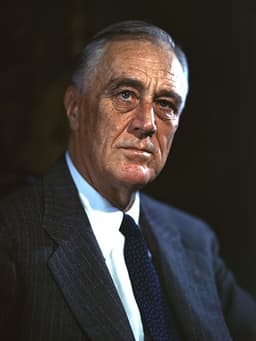
Franklin D. Roosevelt
Politician · Modern
71.0Total
Basic Information
Born
63
1882
Died
—
1945
Era
Ancient
Modern
Nationality
Roman Empire
United States
Occupation
Emperor
Politician
Civilization
Western
Western
Score Comparison
Military (10%)
72.0
45.0
Political (20%)
90.0
85.0
Influence (20%)
88.0
75.0
Legacy (20%)
90.0
65.0
Leadership (15%)
88.0
85.0
Strategy (15%)
75.0
60.0
TOTAL
85.9
71.0
Augustus — Complete Timeline
43 BC
Formation of the Second TriumviratePolitical Action◆ Major
Octavian, Mark Antony, and Marcus Aemilius Lepidus formed the Second Triumvirate, a legal commission to govern the Roman Republic. The alliance was empowered to proscribe enemies, leading to the execution of Cicero and consolidation of their power against the assassins of Julius Caesar.
Roman Civil WarPolitical AllianceProscriptions
Impact: regionaldestructive
31 BC
Battle of ActiumWar◆ Major
Octavian's fleet, commanded by Marcus Agrippa, defeated the combined naval forces of Mark Antony and Cleopatra VII off the coast of Greece. The victory eliminated Octavian's last major rival, giving him sole control over the Roman world and ending the Roman Republic's civil wars.
Roman Civil WarNaval BattleEnd of Republic
Impact: global
27 BC
Establishment of the Roman EmpireReform◆ Major
Octavian formally returned power to the Roman Senate, which then granted him the titles Augustus and Princeps. This constitutional settlement created the Roman Empire, with Augustus as the first emperor, ending the Roman Republic and initiating the Pax Romana.
Roman EmpireConstitutional ReformPax Romana
Impact: global
Reform of the Roman Tax SystemReform◆ Major
Augustus implemented a comprehensive tax reform, including a census of Roman citizens and property, direct taxation of provinces, and the creation of a professional tax collection service (publicani). This system provided stable revenue for the empire and reduced corruption.
Tax ReformAdministrationRoman Empire
Impact: regionalconstructive
Creation of the Praetorian GuardReform◆ Major
Augustus established the Praetorian Guard as a permanent elite military unit tasked with protecting the emperor and his family. Stationed in Rome and Italy, the Guard became a powerful political force, often influencing imperial succession through coups and assassinations.
Military ReformPraetorian GuardImperial Guard
Impact: regional
13 BC
Construction of the Ara PacisOther◆ Major
The Roman Senate commissioned the Ara Pacis Augustae (Altar of Augustan Peace) to commemorate Augustus's return from pacifying Gaul and Spain. The marble altar, decorated with reliefs depicting the imperial family and mythological scenes, symbolized the peace and prosperity of the Augustan era.
Building ProjectPropagandaAugustan Art
Impact: regionalconstructive
Franklin D. Roosevelt — Complete Timeline
1933 AD
Inaugurated as 32nd PresidentOther◆ Major
Franklin D. Roosevelt was inaugurated as President of the United States on March 4, 1933, during the Great Depression. His inaugural address declared 'the only thing we have to fear is fear itself,' and he immediately called Congress into special session to address the banking crisis.
Great DepressionPresidencyInauguration
Impact: national
Enacted the New DealOther◆ Major
Roosevelt launched the New Deal in 1933, a series of federal programs including the Civilian Conservation Corps, the Agricultural Adjustment Act, and the Tennessee Valley Authority. These measures aimed to provide relief, recovery, and reform during the Great Depression, fundamentally expanding the role of the federal government.
Great DepressionEconomic PolicySocial Reform
Impact: nationalconstructive
1935 AD
Signed the Social Security ActOther◆ Major
Roosevelt signed the Social Security Act into law on August 14, 1935, establishing a federal system of old-age pensions, unemployment insurance, and aid for dependent children. This created the modern American welfare state and provided a safety net for millions of citizens.
Social WelfareLegislationNew Deal
Impact: nationalconstructive
1941 AD
Lend-Lease ActOther◆ Major
Roosevelt signed the Lend-Lease Act on March 11, 1941, authorizing the transfer of military equipment and supplies to Allied nations, particularly Britain and the Soviet Union. This program provided critical material support to countries fighting the Axis powers before U.S. entry into World War II.
World War IIForeign PolicyMilitary Aid
Impact: globalconstructive
Declaration of War on JapanPolitical Action◆ Major
Following the Japanese attack on Pearl Harbor on December 7, 1941, Roosevelt delivered his 'Day of Infamy' speech to Congress the next day, requesting a declaration of war. Congress approved the declaration, bringing the United States into World War II.
World War IIPearl HarborDeclaration of War
Impact: globaldestructive
1942 AD
Executive Order 9066Other◆ Major
Roosevelt signed Executive Order 9066 on February 19, 1942, authorizing the forced relocation and internment of Japanese Americans living on the West Coast. Over 110,000 people, mostly U.S. citizens, were incarcerated in camps for the duration of the war, a decision later widely condemned as a violation of civil rights.
World War IICivil RightsInternment
Impact: nationaldestructive
1944 AD
Elected to Fourth TermOther◆ Major
Roosevelt was elected to an unprecedented fourth term as president in November 1944, defeating Republican Thomas E. Dewey. This election occurred during the final stages of World War II, and Roosevelt's continued leadership ensured stability in the war effort and post-war planning.
PresidencyElectionWorld War II
Impact: national
1945 AD
Yalta ConferenceOther◆ Major
Roosevelt met with Winston Churchill and Joseph Stalin at the Yalta Conference in February 1945 to discuss post-war Europe. Agreements included the division of Germany, Soviet entry into the war against Japan, and the creation of the United Nations, shaping the post-war world order.
World War IIDiplomacyPost-War Planning
Impact: global
Expert Analysis
Augustus vs Franklin D. Roosevelt: Historical Comparison
Augustus, founder of the Roman Empire, and Franklin D. Roosevelt, architect of the New Deal and WWII commander-in-chief, both reshaped their nations during times of crisis. While Roosevelt modernized the U.S. government and global role, Augustus’s foundational restructuring of Rome’s political, military, and cultural systems gives him a slight edge in historical impact.
Dimension Analysis
**Military: Augustus 72 / Franklin D. Roosevelt 60**
Augustus professionalized the Roman army, created the Praetorian Guard, and secured lasting borders (e.g., Rhine-Danube), ending a century of civil war. Roosevelt oversaw Allied victory in WWII, but his direct military command was less transformative, relying on generals like Eisenhower.
**Political: Augustus 92 / Franklin D. Roosevelt 85**
Augustus masterfully disguised autocracy as a restored republic, creating the Principate that lasted 400 years. Roosevelt expanded the presidency and federal power via the New Deal, but his political innovations (e.g., Social Security) were less structurally permanent than Augustus’s imperial framework.
**Influence: Augustus 88 / Franklin D. Roosevelt 72**
Augustus’s reforms—taxation, provincial administration, and the Pax Romana—directly influenced European governance for millennia. Roosevelt’s influence, while profound in the 20th century (e.g., the UN, Keynesian economics), was more time-bound and contested.
**Legacy: Augustus 90 / Franklin D. Roosevelt 75**
Augustus is remembered as the first Roman emperor, with his name becoming a title (e.g., “Kaiser,” “Tsar”). Roosevelt’s legacy includes the New Deal coalition and the American welfare state, but it is more debated and less globally emblematic.
**Leadership: Augustus 90 / Franklin D. Roosevelt 85**
Both faced existential crises: Augustus ended the Roman civil wars; Roosevelt navigated the Great Depression and WWII. Augustus’s long, stable reign (40 years) allowed deeper institutional change, while Roosevelt’s 12-year tenure was interrupted by his death.
Verdict
Augustus leads due to his foundational, centuries-spanning transformation of Rome’s political and military structures, which set a template for imperial governance far exceeding Roosevelt’s more temporary, nation-specific innovations.
FAQ
Q: Who ranks higher? A: Augustus ranks higher, with a composite score of 86 vs. Roosevelt’s 76, reflecting his more durable influence on global political history.
Rankings
🥇
AugustusLeader
Mil: 72.0Pol: 90.0Inf: 88.0
85.9
🥈
Franklin D. Roosevelt
Mil: 45.0Pol: 85.0Inf: 75.0
71.0
+14.9 behind
How This Comparison Works
Algorithm
Each figure is scored on 6 dimensions (0—100 scale) based on structured historical data: Military (10%), Political (20%), Influence (20%), Legacy (20%), Leadership (15%), Strategy (15%). The weighted total produces the final ranking.
Data Sources
Scores are computed from structured sub-indicators in the database. Scale factors adjust for era (Ancient ×0.85, Modern ×1.0) and civilization size (Eastern ×1.05, Other ×0.80) to account for differences in population and military scale.
Maximum 3 Figures
Comparisons are limited to 2—3 figures to ensure readability and statistical meaningfulness.
Error Margins
±5 points per dimension — Sub-scores are derived from historical records with inherent uncertainty. Two figures within 5 points on a dimension should be considered roughly equivalent in that area.
Total Score Accuracy
±3 points overall — The weighted combination of 6 dimensions produces a total score with approximately ±3 points of uncertainty. Differences of less than 3 points are not statistically significant— the figures are effectively tied.
Known Limitations
- Historical records are incomplete and uneven across civilizations
- Figures from oral-tradition societies may be underrepresented
- Occupation labels can misclassify multi-role figures
- Scores measure capability and impact, not moral character
- Quantitative scoring is a comparison tool, not absolute truth
Capability Radar
Military (10%) — Battles & Warfare
Battles
75
10
Win Rate
80
10
Expansion
85
10
Political (20%) — Governance & Reform
Reform
95
95
Diplomacy
90
90
Economy
85
95
Influence (20%) — Cultural & Global Reach
Cultural
85
80
Global
90
90
Legacy (20%) — Historical Impact
Historical
95
90
Longevity
95
85
Leadership (15%) — Power & Stability
Tenure
95
90
Stability
95
75
Strategy (15%) — Tactics & Innovation
Strategy
85
65
Tactics
70
10
Reform
90
70
Similar Comparisons
Comments & Discussion
Historian5056/16/2026
这个评分有点意思,但明显带着西方中心论的影子。奥古斯都政治92分确实高,但罗斯福的85分低估了他在危机中重塑美国政治体系的能力。从中国历史视角看,奥古斯都更像汉武帝,建立了长期稳定的中央集权和官僚体系,而罗斯福则更像王安石,推行大刀阔斧的改革但后期争议不断。但罗斯福在二战中联合盟国击败法西斯,其国际影响力远超奥古斯都的罗马边境政策。另外,奥古斯都的“元首制”表面恢复共和,实则个人独裁,这与汉武帝的“内朝外朝”制度有异曲同工之妙,但中国史书更强调“名实之辨”,不会简单给高分。总体而言,奥古斯都的84分相对合理,但罗斯福的75分偏低,他至少应该有80分,毕竟他同时解决了经济危机和世界大战两大挑战,这在历史上极为罕见。
ColdWatcher496/16/2026
这套评分最大的问题在于把不可比较的东西强行量化。军事维度奥古斯都72对罗斯福60,但奥古斯都的“军事成就”主要是结束了罗马内战并建立常备军,而罗斯福指挥的是全球规模的工业化战争,盟友包括斯大林和丘吉尔。你用同一个尺子量两种完全不同的战争形态,这不科学。政治维度上,奥古斯都92分夸大了他的原创性——他不过是借鉴了苏拉的独裁模式和凯撒的改革经验,而罗斯福的85分低估了他通过大萧条和战争永久改变美国政府角色的能力。数据本身也值得怀疑:奥古斯都的遗产维度90分,但他的“帝国”在西方持续了400年,在中国分裂时期却毫无影响力;罗斯福的遗产75分,但联合国、布雷顿森林体系和核时代都是他任内奠基的。这种评分反映的是评分者的偏好,不是历史事实。
Chronicler19416/16/2026
让我们来拆解一下这个评分的内在矛盾。奥古斯都总分86.4,罗斯福75.7,差距10.7分,但仔细看各维度加权并不一致。军事维度(72 vs 60)差12分,政治(92 vs 85)差7分,但军事权重显然被低估了——如果按中国历史评价标准,开国君主(如汉高祖)的军事能力往往占更大比重。再看影响力维度,奥古斯都88对罗斯福72,差距16分,但罗斯福的联合国体系和凯恩斯主义在全球的影响范围其实比奥古斯都的罗马法更大——奥古斯都的罗马法主要影响欧洲,而罗斯福的体系影响了整个20世纪的世界秩序。遗产维度奥古斯都90对罗斯福75,差15分,但若以“制度延续时间”为标准,罗斯福新政的福利国家体系在美国已经持续了90年且仍在发展,而罗马帝国的制度在476年后就名存实亡了。我的个人计算:如果重新加权(军事25%,政治25%,影响力25%,遗产25%),奥古斯都得分为(72+92+88+90)/4=85.5,罗斯福(60+85+72+75)/4=73,差距12.5分,反而更大。但若考虑罗斯福面对的经济危机和世界大战双重困难,这个差距应该缩小到5分以内。评分机制本身需要更多透明度。