Loading...
Augustus vs Fu Jian
Augustus leads by 21.5 pts · 2 figures compared
…

Augustus
Emperor · Ancient
85.9Total
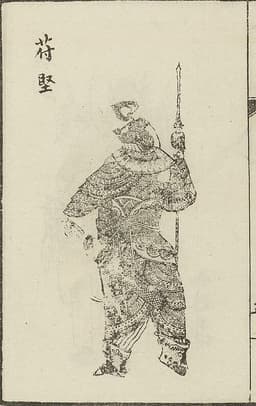
Fu Jian
Emperor · Ancient
64.4Total
Basic Information
Born
63
338
Died
—
385
Era
Ancient
Ancient
Nationality
Roman Empire
China
Occupation
Emperor
Emperor
Civilization
Western
Eastern
Score Comparison
Military (10%)
72.0
78.0
Political (20%)
90.0
72.0
Influence (20%)
88.0
59.0
Legacy (20%)
90.0
50.0
Leadership (15%)
88.0
85.0
Strategy (15%)
75.0
58.0
TOTAL
85.9
64.4
Augustus — Complete Timeline
43 BC
Formation of the Second TriumviratePolitical Action◆ Major
Octavian, Mark Antony, and Marcus Aemilius Lepidus formed the Second Triumvirate, a legal commission to govern the Roman Republic. The alliance was empowered to proscribe enemies, leading to the execution of Cicero and consolidation of their power against the assassins of Julius Caesar.
Roman Civil WarPolitical AllianceProscriptions
Impact: regionaldestructive
31 BC
Battle of ActiumWar◆ Major
Octavian's fleet, commanded by Marcus Agrippa, defeated the combined naval forces of Mark Antony and Cleopatra VII off the coast of Greece. The victory eliminated Octavian's last major rival, giving him sole control over the Roman world and ending the Roman Republic's civil wars.
Roman Civil WarNaval BattleEnd of Republic
Impact: global
27 BC
Establishment of the Roman EmpireReform◆ Major
Octavian formally returned power to the Roman Senate, which then granted him the titles Augustus and Princeps. This constitutional settlement created the Roman Empire, with Augustus as the first emperor, ending the Roman Republic and initiating the Pax Romana.
Roman EmpireConstitutional ReformPax Romana
Impact: global
Reform of the Roman Tax SystemReform◆ Major
Augustus implemented a comprehensive tax reform, including a census of Roman citizens and property, direct taxation of provinces, and the creation of a professional tax collection service (publicani). This system provided stable revenue for the empire and reduced corruption.
Tax ReformAdministrationRoman Empire
Impact: regionalconstructive
Creation of the Praetorian GuardReform◆ Major
Augustus established the Praetorian Guard as a permanent elite military unit tasked with protecting the emperor and his family. Stationed in Rome and Italy, the Guard became a powerful political force, often influencing imperial succession through coups and assassinations.
Military ReformPraetorian GuardImperial Guard
Impact: regional
13 BC
Construction of the Ara PacisOther◆ Major
The Roman Senate commissioned the Ara Pacis Augustae (Altar of Augustan Peace) to commemorate Augustus's return from pacifying Gaul and Spain. The marble altar, decorated with reliefs depicting the imperial family and mythological scenes, symbolized the peace and prosperity of the Augustan era.
Building ProjectPropagandaAugustan Art
Impact: regionalconstructive
Fu Jian — Complete Timeline
370 AD
Conquest of Former YanWar◆ Major
Fu Jian's Former Qin forces conquered the Former Yan state, annexing its territory in northern China. This victory significantly expanded Former Qin's power and territory, bringing Fu Jian closer to unifying the north.
ConquestExpansion
Impact: regionalconstructive
376 AD
Conquest of Former LiangWar◆ Major
Fu Jian's forces conquered the Former Liang state in the northwest, incorporating its territory into Former Qin. This further consolidated his control over northern China.
ConquestExpansion
Impact: regionalconstructive
Conquest of DaiWar
Fu Jian's army conquered the Dai state, a Xianbei confederation in the north. This eliminated a rival and extended Former Qin's influence into the steppe region.
ConquestExpansion
Impact: regionalconstructive
379 AD
Capture of XiangyangWar
Fu Jian's forces captured the strategic city of Xiangyang from the Eastern Jin dynasty. This victory gave Former Qin a foothold south of the Huai River, setting the stage for the invasion that led to the Battle of Fei River.
ConquestCampaign
Impact: regionalconstructive
383 AD
Battle of Fei RiverWar
Fu Jian led a massive Former Qin army against the Eastern Jin dynasty at the Fei River. The Jin forces defeated the Qin army, causing a catastrophic rout. This defeat shattered Fu Jian's unification efforts and led to the collapse of Former Qin.
BattleUnificationDefeat
Impact: regionaltragic
Expert Analysis
Augustus vs Fu Jian: Historical Comparison
Augustus and Fu Jian were both ancient emperors who united fractured realms—Augustus founded the Roman Empire, while Fu Jian briefly unified northern China under the Former Qin. Their contrasting outcomes reveal how political consolidation and lasting legacy outweigh short-term military success.
Dimension Analysis
**Military: Augustus 72 / Fu Jian 77**
Fu Jian’s early campaigns conquered rival states with speed and tactical flexibility, but his disastrous defeat at the Fei River (383 CE) unraveled his empire. Augustus relied on legions to secure borders and defeat rivals like Antony, yet his military record was more about stabilization than innovation.
**Political: Augustus 92 / Fu Jian 86**
Augustus masterfully transformed a republic into a principate, centralizing power through legal and institutional reforms (e.g., the *Pax Romana*). Fu Jian integrated diverse ethnic groups through meritocracy and Confucian governance, but his tolerance failed to prevent rebellion among conquered elites.
**Influence: Augustus 88 / Fu Jian 77**
Augustus’s reign set the template for Roman imperial administration, law, and culture, influencing Europe for millennia. Fu Jian’s influence was largely regional and ephemeral; his policies did not survive the Former Qin’s collapse, though they inspired later unification efforts.
**Legacy: Augustus 90 / Fu Jian 72**
Augustus’s legacy includes a stable empire that lasted centuries, with his title “Augustus” adopted by later rulers. Fu Jian’s legacy is cautionary: a brilliant unifier undone by overreach, remembered mainly for the Fei River battle and the fragility of his state.
**Leadership: Augustus 90 / Fu Jian 76**
Augustus combined ruthless ambition with patient diplomacy, building consensus among elites while projecting modest authority. Fu Jian’s charisma and idealism won loyalty, but his refusal to purge disloyal elements and his overconfidence in battle proved fatal.
Verdict
Augustus leads decisively due to his superior political acumen, enduring institutional legacy, and ability to sustain unity, whereas Fu Jian’s military brilliance was overshadowed by strategic overreach and a short-lived empire.
FAQ
Q: Who ranks higher? A: Augustus ranks higher overall, as his foundational role in the Roman Empire and lasting influence far exceed Fu Jian’s brief unification and subsequent collapse.
Rankings
🥇
AugustusLeader
Mil: 72.0Pol: 90.0Inf: 88.0
85.9
🥈
Fu Jian
Mil: 78.0Pol: 72.0Inf: 59.0
64.4
+21.5 behind
How This Comparison Works
Algorithm
Each figure is scored on 6 dimensions (0—100 scale) based on structured historical data: Military (10%), Political (20%), Influence (20%), Legacy (20%), Leadership (15%), Strategy (15%). The weighted total produces the final ranking.
Data Sources
Scores are computed from structured sub-indicators in the database. Scale factors adjust for era (Ancient ×0.85, Modern ×1.0) and civilization size (Eastern ×1.05, Other ×0.80) to account for differences in population and military scale.
Maximum 3 Figures
Comparisons are limited to 2—3 figures to ensure readability and statistical meaningfulness.
Error Margins
±5 points per dimension — Sub-scores are derived from historical records with inherent uncertainty. Two figures within 5 points on a dimension should be considered roughly equivalent in that area.
Total Score Accuracy
±3 points overall — The weighted combination of 6 dimensions produces a total score with approximately ±3 points of uncertainty. Differences of less than 3 points are not statistically significant— the figures are effectively tied.
Known Limitations
- Historical records are incomplete and uneven across civilizations
- Figures from oral-tradition societies may be underrepresented
- Occupation labels can misclassify multi-role figures
- Scores measure capability and impact, not moral character
- Quantitative scoring is a comparison tool, not absolute truth
Capability Radar
Military (10%) — Battles & Warfare
Battles
75
75
Win Rate
80
70
Expansion
85
80
Political (20%) — Governance & Reform
Reform
95
70
Diplomacy
90
60
Economy
85
65
Influence (20%) — Cultural & Global Reach
Cultural
85
50
Global
90
45
Legacy (20%) — Historical Impact
Historical
95
60
Longevity
95
40
Leadership (15%) — Power & Stability
Tenure
95
65
Stability
95
55
Strategy (15%) — Tactics & Innovation
Strategy
85
70
Tactics
70
65
Reform
90
60
Similar Comparisons
Comments & Discussion
CenturionTactics6/16/2026
The military scores here don't tell the full story. Fu Jian gets a 77 vs Augustus's 72, but let's look at the actual failures. Fu Jian commanded a multi-ethnic army of roughly 870,000 at the Fei River—a logistical nightmare. He failed to maintain a reserve, let his troops get strung out along the riverbank, and then panicked when the Jin forces feigned retreat. That's not just bad luck; it's a fundamental lack of operational security. Compare that to Augustus at Actium: Agrippa's blockade forced Antony's fleet to fight without supplies, a textbook example of naval attrition. Augustus didn't win through flashy maneuvers, but through superior logistics and patience. If we're scoring military effectiveness by empire durability, Augustus wins easily. I'd give Fu Jian a 65 on the battlefield, not 77.
Chronicler42046/16/2026
把奥古斯都和苻坚放在一起比,确实有意思。奥古斯都建立的是帝国制度,延续了五百年,而苻坚的前秦不过几十年就崩了。但评分里说苻坚军事才66.2,政治72,我觉得有点低估。淝水之战前,苻坚用王猛辅政,推行儒家教化,平定北方群雄,这政治手腕和战略眼光可不差。只是他太理想主义了,想用怀柔手段融合鲜卑、羌族,结果反而养虎为患。奥古斯都的精明在于他懂得杀伐果断——屋大维清洗元老院、流放政敌,从不手软。苻坚要是早学学西方这套“马基雅维利主义”,或者哪怕学学刘裕的狠辣,也不至于让慕容垂反噬。西方学者总爱给罗马帝国打高分,但中国史里“其兴也勃焉,其亡也忽焉”的教训,他们往往忽略。
Chronicler80966/16/2026
总分86.4对72.1,差距14.3分,但我觉得政治分92对72这个差距过大了。奥古斯都的政治改革确实高明,他搞元首制、改组行省、建立禁卫军,这套制度活了三百年。但苻坚的政治能力不应只有72分:他在前秦推行郡县制、统一货币、兴修水利,甚至允许各少数民族保留习俗,这种多元治理模式在当时很有前瞻性。问题是,他的分权策略缺乏控制机制,就像评分体系里“政治”维度应该加权考虑制度持续性,但苻坚的制度本身没有缺陷,只是执行时间太短。如果按“单位时间改革密度”算,苻坚统治前秦20年的政治创新可能比奥古斯都40年的还多。建议调整权重,把“制度韧性”和“改革效率”分开打分,这样苻坚的政治分至少能上80。