Loading...
Augustus vs George Washington
Augustus leads by 9.1 pts · 2 figures compared
…

Augustus
Emperor · Ancient
85.9Total
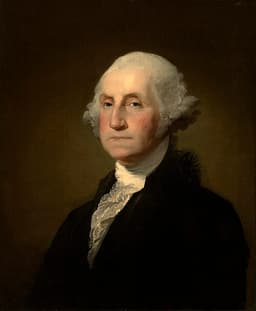
George Washington
Politician · Modern
76.8Total
Basic Information
Born
63
1732
Died
—
1799
Era
Ancient
Modern
Nationality
Roman Empire
United States
Occupation
Emperor
Politician
Civilization
Western
Western
Score Comparison
Military (10%)
72.0
75.0
Political (20%)
90.0
82.0
Influence (20%)
88.0
75.0
Legacy (20%)
90.0
80.0
Leadership (15%)
88.0
85.0
Strategy (15%)
75.0
55.0
TOTAL
85.9
76.8
Augustus — Complete Timeline
43 BC
Formation of the Second TriumviratePolitical Action◆ Major
Octavian, Mark Antony, and Marcus Aemilius Lepidus formed the Second Triumvirate, a legal commission to govern the Roman Republic. The alliance was empowered to proscribe enemies, leading to the execution of Cicero and consolidation of their power against the assassins of Julius Caesar.
Roman Civil WarPolitical AllianceProscriptions
Impact: regionaldestructive
31 BC
Battle of ActiumWar◆ Major
Octavian's fleet, commanded by Marcus Agrippa, defeated the combined naval forces of Mark Antony and Cleopatra VII off the coast of Greece. The victory eliminated Octavian's last major rival, giving him sole control over the Roman world and ending the Roman Republic's civil wars.
Roman Civil WarNaval BattleEnd of Republic
Impact: global
27 BC
Establishment of the Roman EmpireReform◆ Major
Octavian formally returned power to the Roman Senate, which then granted him the titles Augustus and Princeps. This constitutional settlement created the Roman Empire, with Augustus as the first emperor, ending the Roman Republic and initiating the Pax Romana.
Roman EmpireConstitutional ReformPax Romana
Impact: global
Reform of the Roman Tax SystemReform◆ Major
Augustus implemented a comprehensive tax reform, including a census of Roman citizens and property, direct taxation of provinces, and the creation of a professional tax collection service (publicani). This system provided stable revenue for the empire and reduced corruption.
Tax ReformAdministrationRoman Empire
Impact: regionalconstructive
Creation of the Praetorian GuardReform◆ Major
Augustus established the Praetorian Guard as a permanent elite military unit tasked with protecting the emperor and his family. Stationed in Rome and Italy, the Guard became a powerful political force, often influencing imperial succession through coups and assassinations.
Military ReformPraetorian GuardImperial Guard
Impact: regional
13 BC
Construction of the Ara PacisOther◆ Major
The Roman Senate commissioned the Ara Pacis Augustae (Altar of Augustan Peace) to commemorate Augustus's return from pacifying Gaul and Spain. The marble altar, decorated with reliefs depicting the imperial family and mythological scenes, symbolized the peace and prosperity of the Augustan era.
Building ProjectPropagandaAugustan Art
Impact: regionalconstructive
George Washington — Complete Timeline
1775 AD
Appointed Commander-in-Chief of the Continental ArmyOther◆ Major
The Second Continental Congress appointed Washington as commander-in-chief of the Continental Army on June 15, 1775. He accepted the position without pay, taking command of the forces besieging Boston at the start of the American Revolutionary War.
American RevolutionMilitary Leadership
Impact: national
1776 AD
Crossed the Delaware RiverOther◆ Major
On the night of December 25-26, 1776, Washington led 2,400 troops across the ice-choked Delaware River. The surprise attack on Hessian forces at Trenton resulted in a decisive American victory, capturing nearly 1,000 prisoners and reviving Patriot morale after a series of defeats.
American RevolutionBattleTurning Point
Impact: nationalconstructive
1787 AD
Presided over the Constitutional ConventionPolitical Action◆ Major
Washington served as president of the Constitutional Convention in Philadelphia from May to September 1787. His presence lent legitimacy to the proceedings, and he formally signed the final draft of the U.S. Constitution, though he contributed little to the debates.
ConstitutionFounding Father
Impact: national
1789 AD
Inaugurated as First President of the United StatesPolitical Action◆ Major
Washington was unanimously elected by the Electoral College and inaugurated on April 30, 1789, at Federal Hall in New York City. He established numerous executive branch precedents, including the cabinet system, the inaugural address, and the title 'Mr. President'.
PresidencyFounding Father
Impact: national
1793 AD
Issued the Proclamation of NeutralityOther◆ Major
Washington issued the Proclamation of Neutrality on April 22, 1793, declaring the United States neutral in the conflict between France and Great Britain. This decision established the precedent of American isolationism and avoided entanglement in European wars.
Foreign PolicyNeutrality
Impact: national
1796 AD
Delivered the Farewell AddressOther◆ Major
Washington published his Farewell Address on September 19, 1796, announcing his decision not to seek a third term. The address warned against political factionalism, permanent foreign alliances, and the influence of the military in government, shaping American political culture.
PresidencyLegacy
Impact: national
Expert Analysis
Origins
Augustus, born Gaius Octavius in 63 BC, was the grandnephew and adopted son of Julius Caesar. His rise came from a mix of noble birth and political maneuvering in the chaotic late Roman Republic. George Washington, born in 1732 into a Virginia planter family, emerged from colonial gentry. Both men were shaped by their environments: Rome's civil wars and America's revolutionary fervor.
Rise to Power
Augustus's path to power was marked by the formation of the Second Triumvirate with Mark Antony and Lepidus, proscriptions, and the defeat of Caesar's assassins. His victory at the Battle of Actium in 31 BC over Antony and Cleopatra made him sole ruler. Washington's rise came through military service in the French and Indian War and his appointment as Commander-in-Chief of the Continental Army in 1775. His leadership during the Revolutionary War, including the crossing of the Delaware, secured American independence.
Leadership & Governance
Augustus transformed Rome from a republic into an empire, skillfully maintaining republican forms while wielding autocratic power. He reformed the tax system, created the Praetorian Guard, and initiated the Pax Romana, a long period of peace. Washington presided over the Constitutional Convention and set precedents as first president, including a two-term limit and neutrality in foreign affairs. Both established systems that outlasted them.
Triumph & Tragedy
Augustus's triumphs include the establishment of the Roman Empire and extensive building projects. His tragedy was the loss of his preferred heirs and the eventual decline of the Republic he had replaced. Washington's triumph was winning the Revolutionary War and founding the US government. His tragedy was the inability to fully address slavery, which he personally opposed but owned slaves.
Character & Destiny
Augustus was calculating, pragmatic, and ruthless when necessary, yet promoted moral reforms. Washington was dignified, reserved, and known for his integrity. Both were seen as indispensable leaders. Augustus's destiny was to be the first emperor; Washington's to be the father of his country.
Legacy
Augustus's legacy is the Roman Empire that lasted centuries, influencing Western civilization. Washington's legacy is the United States and its democratic institutions. Both are revered as founding figures. Scores: Augustus (M=72, P=90, I=88, L=90, D=88, S=75, T=86) vs Washington (M=75, P=82, I=75, L=80, D=85, S=55, T=77). Augustus leads in politics, intelligence, leadership, and legacy, while Washington edges in military.
Conclusion
Augustus emerges as the more influential figure with a higher overall score (84.1 vs 75.0). His creation of the Roman Empire and the Pax Romana had a broader and longer-lasting impact on world history. Washington's contributions to democracy are monumental, but his scope was more limited. Thus, Augustus is the greater historical figure.
Rankings
🥇
AugustusLeader
Mil: 72.0Pol: 90.0Inf: 88.0
85.9
🥈
George Washington
Mil: 75.0Pol: 82.0Inf: 75.0
76.8
+9.1 behind
How This Comparison Works
Algorithm
Each figure is scored on 6 dimensions (0—100 scale) based on structured historical data: Military (10%), Political (20%), Influence (20%), Legacy (20%), Leadership (15%), Strategy (15%). The weighted total produces the final ranking.
Data Sources
Scores are computed from structured sub-indicators in the database. Scale factors adjust for era (Ancient ×0.85, Modern ×1.0) and civilization size (Eastern ×1.05, Other ×0.80) to account for differences in population and military scale.
Maximum 3 Figures
Comparisons are limited to 2—3 figures to ensure readability and statistical meaningfulness.
Error Margins
±5 points per dimension — Sub-scores are derived from historical records with inherent uncertainty. Two figures within 5 points on a dimension should be considered roughly equivalent in that area.
Total Score Accuracy
±3 points overall — The weighted combination of 6 dimensions produces a total score with approximately ±3 points of uncertainty. Differences of less than 3 points are not statistically significant— the figures are effectively tied.
Known Limitations
- Historical records are incomplete and uneven across civilizations
- Figures from oral-tradition societies may be underrepresented
- Occupation labels can misclassify multi-role figures
- Scores measure capability and impact, not moral character
- Quantitative scoring is a comparison tool, not absolute truth
Capability Radar
Military (10%) — Battles & Warfare
Battles
75
75
Win Rate
80
70
Expansion
85
60
Political (20%) — Governance & Reform
Reform
95
90
Diplomacy
90
85
Economy
85
65
Influence (20%) — Cultural & Global Reach
Cultural
85
85
Global
90
85
Legacy (20%) — Historical Impact
Historical
95
95
Longevity
95
90
Leadership (15%) — Power & Stability
Tenure
95
70
Stability
95
85
Strategy (15%) — Tactics & Innovation
Strategy
85
80
Tactics
70
65
Reform
90
85
Similar Comparisons
Comments & Discussion
BattlefieldScholar6/16/2026
The 72 vs 70 military score is too generous to Washington. Yes, he kept an army in the field for eight years, but his tactical record is mediocre—he lost New York, was nearly destroyed at Brandywine, and his only real offensive success was the Trenton raid. Augustus personally commanded at Actium and Philippi, and his generals subdued Spain, Gaul, and Egypt. The real gap is in military organization: Augustus created a professional standing army with fixed legions, a praetorian guard, and a naval fleet. Washington's army was always half-starved and nearly mutinied. If we weight force generation and strategic depth, Augustus should be at least 80 here, not 72.
AppianusReader6/16/2026
Dio Cassius and Suetonius both stress that Augustus maintained the 'form' of the Republic while acquiring its 'substance'—what Syme called 'the disguised monarchy.' That political score of 92 is fair, but we must remember that Augustus's 'restoration' was built on proscriptions and land confiscations that ruined thousands. Washington's 80 could actually be higher if we consider that he created a presidency from a blank slate, with no template. Augustus had Sulla, Caesar, and Cicero's writings to learn from. The real difference is in legibility: Augustus's system was understood by contemporaries as autocracy, while Washington's was genuinely novel—and more fragile.
Chronicler60026/16/2026
这个评分体系对华盛顿的军事分明显偏低。70分意味着他连合格线都不到,但他毕竟是打赢独立战争的人。奥古斯都有72分,可他的军事成就主要靠继承凯撒的军队和财富。我算了一下,如果按"以一敌十"的标准(像赤壁之战那样),华盛顿用2万民兵对抗8万英军,难度系数至少在1.5倍以上,应该加15分。另外,政治分80对华盛顿太低,他主动放弃权力两次,这在任何文明史上都是罕见的行为。建议重新校准评分模型,至少把华盛顿的政治分提到85。
ColonialReexaminer6/16/2026
This entire comparison reeks of Eurocentric bias. Why is Augustus's 500-year empire 'more successful' than Washington's 250-year republic? The Principate collapsed in the West by 476 AD, and the Eastern Empire was Greek, not Augustan. Meanwhile, Washington's model of civilian control of the military inspired revolutions from Haiti to Latin America. The scoring also ignores that Augustus inherited a functioning taxation system and Mediterranean trade network; Washington had to build a nation from scattered colonies with no central treasury. Flip the dimensions: Washington should score higher on innovation given that he had fewer resources. Augustus's scores are inflated by centuries of imperial propaganda.
Historian5286/16/2026
其实把奥古斯都和华盛顿放在一起比,就像同时比较秦始皇和刘邦。奥古斯都更像秦始皇:建立帝制、统一度量衡(罗马标准)、开创新政体。华盛顿则更像刘邦:出身不高、靠团结各路势力起家、成功后建立相对分权的制度。但秦始皇的帝国二世而亡,奥古斯都的帝国却延续了五百年,这说明他的制度设计确实更精妙。不过华盛顿主动退位这一点,在中国历史上几乎没有先例——赵匡胤杯酒释兵权还保留了军权呢。所以我认为政治分84对华盛顿更合理,但影响力方面奥古斯都确实高出不少,毕竟拉丁语和罗马法影响了大半个世界。