Loading...
Augustus vs Ibn Tumart
Augustus leads by 30.3 pts · 2 figures compared
…

Augustus
Emperor · Ancient
85.9Total
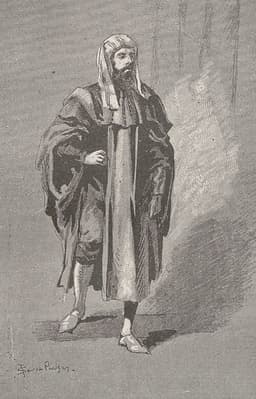
Ibn Tumart
Emperor · Medieval
55.6Total
Basic Information
Born
63
1080
Died
—
1130
Era
Ancient
Medieval
Nationality
Roman Empire
Almohad Caliphate
Occupation
Emperor
Emperor
Civilization
Western
Middle Eastern
Score Comparison
Military (10%)
72.0
55.0
Political (20%)
90.0
61.3
Influence (20%)
88.0
58.3
Legacy (20%)
90.0
56.0
Leadership (15%)
88.0
47.3
Strategy (15%)
75.0
52.5
TOTAL
85.9
55.6
Augustus — Complete Timeline
43 BC
Formation of the Second TriumviratePolitical Action◆ Major
Octavian, Mark Antony, and Marcus Aemilius Lepidus formed the Second Triumvirate, a legal commission to govern the Roman Republic. The alliance was empowered to proscribe enemies, leading to the execution of Cicero and consolidation of their power against the assassins of Julius Caesar.
Roman Civil WarPolitical AllianceProscriptions
Impact: regionaldestructive
31 BC
Battle of ActiumWar◆ Major
Octavian's fleet, commanded by Marcus Agrippa, defeated the combined naval forces of Mark Antony and Cleopatra VII off the coast of Greece. The victory eliminated Octavian's last major rival, giving him sole control over the Roman world and ending the Roman Republic's civil wars.
Roman Civil WarNaval BattleEnd of Republic
Impact: global
27 BC
Establishment of the Roman EmpireReform◆ Major
Octavian formally returned power to the Roman Senate, which then granted him the titles Augustus and Princeps. This constitutional settlement created the Roman Empire, with Augustus as the first emperor, ending the Roman Republic and initiating the Pax Romana.
Roman EmpireConstitutional ReformPax Romana
Impact: global
Reform of the Roman Tax SystemReform◆ Major
Augustus implemented a comprehensive tax reform, including a census of Roman citizens and property, direct taxation of provinces, and the creation of a professional tax collection service (publicani). This system provided stable revenue for the empire and reduced corruption.
Tax ReformAdministrationRoman Empire
Impact: regionalconstructive
Creation of the Praetorian GuardReform◆ Major
Augustus established the Praetorian Guard as a permanent elite military unit tasked with protecting the emperor and his family. Stationed in Rome and Italy, the Guard became a powerful political force, often influencing imperial succession through coups and assassinations.
Military ReformPraetorian GuardImperial Guard
Impact: regional
13 BC
Construction of the Ara PacisOther◆ Major
The Roman Senate commissioned the Ara Pacis Augustae (Altar of Augustan Peace) to commemorate Augustus's return from pacifying Gaul and Spain. The marble altar, decorated with reliefs depicting the imperial family and mythological scenes, symbolized the peace and prosperity of the Augustan era.
Building ProjectPropagandaAugustan Art
Impact: regionalconstructive
Ibn Tumart — Complete Timeline
1121 AD
Proclamation as MahdiCultural
Ibn Tumart proclaimed himself the Mahdi, the guided one, after returning from the East. He began preaching a strict reformist message, condemning the Almoravids for their perceived religious laxity and calling for a return to the Quran and Sunnah.
Impact: regional
Establishment of the Almohad MovementPolitical Action◆ Major
Ibn Tumart founded the Almohad movement (al-Muwahhidun) in the Atlas Mountains of Morocco. He organized his followers into a disciplined religious and military community, rejecting the Almoravid interpretation of Islam and advocating for tawhid (strict monotheism).
Impact: regionalconstructive
1125 AD
Compilation of the Almohad DoctrineCultural
Ibn Tumart compiled his teachings into a book titled 'A'azz ma Yutlab' (The Most Precious of What is Sought). This work outlined the Almohad doctrine, emphasizing the unity of God and rejecting anthropomorphism, and became the foundation of the movement's ideology.
Impact: regionalconstructive
1130 AD
Battle of al-BuhayraWar◆ Major
Ibn Tumart's Almohad forces were defeated by the Almoravids at the Battle of al-Buhayra near Marrakech. This setback prevented the Almohads from capturing the Almoravid capital and forced them to retreat to the mountains.
Impact: regional
Death of Ibn TumartOther◆ Major
Ibn Tumart died shortly after the Battle of al-Buhayra, possibly from wounds or illness. His death was kept secret by his successor Abd al-Mu'min, who continued the Almohad movement and eventually overthrew the Almoravids.
Impact: regionaltragic
Expert Analysis
Augustus vs Ibn Tumart
### The Founder and the Fanatic
In the year 1121, high in the Atlas Mountains of Morocco, a Berber preacher named Ibn Tumart proclaimed himself the Mahdi—the guided one sent to restore pure faith. Across the Mediterranean, twelve centuries earlier, a pale, sickly teenager named Gaius Octavius had learned that his great-uncle, Julius Caesar, had been stabbed to death in the Senate. Both men inherited worlds in crisis. One would build an empire that defined the West for two millennia; the other would ignite a movement that burned bright and then vanished into the desert sands. What separated them was not merely time or place, but the profound difference between a master of politics and a slave to certainty.
### Origins
Octavius was born into the chaos of the late Roman Republic, a world of civil wars, proscriptions, and the murder of democracy. His father died when he was four, and he was raised by his mother, Atia, and his stepfather, a former consul. He was frail, superstitious, and prone to illness—hardly the image of a conqueror. But he was also ruthlessly pragmatic, trained by the finest tutors in rhetoric and law, and, crucially, he was Caesar’s grandnephew and adopted son. His inheritance was a name, a claim, and a legacy of violence.
Ibn Tumart was born in 1080 in the Anti-Atlas region of Morocco, into a Berber tribe. His world was one of religious ferment and political decay. The Almoravid dynasty, which ruled North Africa and Spain, had grown lax in its faith, corrupt in its governance, and vulnerable to Christian advances. Tumart was a man of intense, unyielding piety. He traveled to Baghdad to study, where he absorbed the radical teachings of al-Ghazali and the strict monotheism of the Ash’ari school. He returned not as a scholar but as a prophet, convinced that he alone understood God’s will.
### Rise to Power
Octavius’s path to power was a masterclass in patience and deception. He was only eighteen when Caesar died, and the Senate, the generals, and the mob all dismissed him as a boy. He allied with Mark Antony and Lepidus to form the Second Triumvirate, then coolly orchestrated the proscription of his enemies, including the great orator Cicero. He defeated Sextus Pompeius at sea, outmaneuvered Lepidus, and finally turned on Antony. The Battle of Actium in 31 BC was not a glorious charge but a grinding naval engagement that Octavius won through superior logistics and the betrayal of Antony’s Egyptian queen, Cleopatra. He then walked into Alexandria and waited for Antony to fall on his sword. Octavius never fought in the front lines; he fought in the Senate, the treasury, and the law courts.
Ibn Tumart’s rise was the opposite: a flash of fire, not a slow burn. After his proclamation as Mahdi in 1121, he retreated to the Atlas Mountains, where he gathered the Masmuda Berbers. He preached a doctrine of absolute monotheism—tawhid—and condemned the Almoravids as heretics for their anthropomorphic views of God. He organized his followers into a rigid hierarchy: the Council of Fifty, the Assembly of the People, and a cadre of devoted students known as the “Ten.” His authority was divine, not political. He did not negotiate; he commanded. In 1125, he compiled his teachings into a book, *A’azz ma Yutlab* (“The Most Precious of What is Sought”), which became the constitution of his movement. He was not building a state; he was building a church with a sword.
### Leadership & Governance
Augustus—the title the Senate granted Octavius in 27 BC—governed through illusion. He restored the Republic in name while holding all power himself. He reformed the tax system, created a professional standing army, established the Praetorian Guard, and built roads, aqueducts, and temples. He censored literature and art to promote traditional Roman values, but he did so with a light hand. His motto was *festina lente*—make haste slowly. He ruled for forty-one years, and by his death, the Roman world had known two decades of peace.
Ibn Tumart governed through terror and zeal. He ordered his followers to destroy wine shops, musical instruments, and even the tombs of saints. He demanded absolute obedience, punishing dissent with death. His military strategy was equally rigid: he attacked the Almoravids head-on, believing God would grant victory to the righteous. At the Battle of al-Buhayra in 1130, his forces were crushed outside Marrakech. He died shortly after, possibly from wounds or illness. His followers kept his death secret for three years, lest the movement collapse.
### Triumph & Tragedy
Augustus’s greatest triumph was not a battle but an idea: the Pax Romana. He closed the Temple of Janus, symbolizing peace, and boasted that he had found Rome a city of brick and left it a city of marble. His tragedy was personal. His only child, Julia, was exiled for adultery. His chosen heirs died young. He was forced to adopt his stepson Tiberius, a man he did not trust. He died in AD 14, in his seventy-sixth year, surrounded by a family he had failed to secure.
Ibn Tumart’s triumph was ideological. He inspired a movement that, under his successor Abd al-Mu’min, would conquer North Africa and Spain, founding the Almohad Caliphate. His tragedy was that he never saw it. He died a defeated rebel, his body hidden in a cave, his dream unrealized. His movement would later become as corrupt as the Almoravids it replaced.
### Character & Destiny
Augustus was a master of ambiguity. He was cold, calculating, and capable of great cruelty—he once boasted of pardoning his enemies, then had them killed. But he also knew when to forgive, when to wait, and when to appear humble. He understood that power required consent, not just force. His destiny was to build an empire that lasted.
Ibn Tumart was a man of absolute clarity. He saw the world in black and white: the faithful and the infidel, the pure and the polluted. He could not compromise because he believed he spoke for God. His destiny was to ignite a fire that would consume him. His scores reflect this: military 40.2, political 63.7, legacy 67.4. He was a poor general, a mediocre politician, but a powerful influence.
### Legacy
Augustus’s legacy is the Roman Empire itself—the language, law, architecture, and administrative structure that shaped Europe for a thousand years. His name became a title: Caesar. His reforms created the framework for the Pax Romana, which lasted two centuries. He is remembered as the first emperor, the founder of an age.
Ibn Tumart’s legacy is the Almohad Caliphate, which lasted until 1269. His strict monotheism influenced Islamic theology, and his movement left a mark on North African architecture and culture. But his name is little known outside the Islamic world. He is remembered as a heretic by some, a saint by others.
### Conclusion
Standing on the Palatine Hill, Augustus could survey a city of marble, a world at peace, and an empire that would outlast him. Ibn Tumart, dying in a cave in the Atlas Mountains, saw only defeat. Yet both were founders. One built a house of stone; the other, a house of faith. The difference is not that one was good and the other evil, but that one understood the world as it was, and the other, as he believed it should be. History, it seems, rewards those who can bend with the wind—and burns those who try to stop it.
Rankings
🥇
AugustusLeader
Mil: 72.0Pol: 90.0Inf: 88.0
85.9
🥈
Ibn Tumart
Mil: 55.0Pol: 61.3Inf: 58.3
55.6
+30.3 behind
How This Comparison Works
Algorithm
Each figure is scored on 6 dimensions (0—100 scale) based on structured historical data: Military (10%), Political (20%), Influence (20%), Legacy (20%), Leadership (15%), Strategy (15%). The weighted total produces the final ranking.
Data Sources
Scores are computed from structured sub-indicators in the database. Scale factors adjust for era (Ancient ×0.85, Modern ×1.0) and civilization size (Eastern ×1.05, Other ×0.80) to account for differences in population and military scale.
Maximum 3 Figures
Comparisons are limited to 2—3 figures to ensure readability and statistical meaningfulness.
Error Margins
±5 points per dimension — Sub-scores are derived from historical records with inherent uncertainty. Two figures within 5 points on a dimension should be considered roughly equivalent in that area.
Total Score Accuracy
±3 points overall — The weighted combination of 6 dimensions produces a total score with approximately ±3 points of uncertainty. Differences of less than 3 points are not statistically significant— the figures are effectively tied.
Known Limitations
- Historical records are incomplete and uneven across civilizations
- Figures from oral-tradition societies may be underrepresented
- Occupation labels can misclassify multi-role figures
- Scores measure capability and impact, not moral character
- Quantitative scoring is a comparison tool, not absolute truth
Capability Radar
Military (10%) — Battles & Warfare
Battles
75
30
Win Rate
80
35
Expansion
85
40
Political (20%) — Governance & Reform
Reform
95
80
Diplomacy
90
30
Economy
85
20
Influence (20%) — Cultural & Global Reach
Cultural
85
60
Global
90
50
Legacy (20%) — Historical Impact
Historical
95
65
Longevity
95
55
Leadership (15%) — Power & Stability
Tenure
95
25
Stability
95
20
Strategy (15%) — Tactics & Innovation
Strategy
85
45
Tactics
70
40
Reform
90
70
Similar Comparisons
Comments & Discussion
AugustusPrime6/16/2026
Calling Ibn Tumart a "slave to certainty" is too kind — he was a slave to his own ego. Augustus understood that empire requires ambiguity, compromise, and the slow accumulation of loyalty. Ibn Tumart's certainty may have lit a fire, but fires either consume everything or burn out. Rome's fire, under Augustus, became a hearth. North Africa's, under the Mahdi, became ashes within a century. That's the difference between a statesman and a fanatic.
沙漠判官6/16/2026
分析太美化宗教狂热了。伊本·图马尔特自称马赫迪,用暴力推行教法,烧毁书籍,处决异见者,这哪是宗教复兴?分明是一场恐怖统治。奥古斯都就算打压政敌,至少还给罗马带来了两百年的和平与稳定。一个建立了制度,一个只留下了废墟和传说。拿他们比,简直是侮辱政治学。