Loading...
Augustus vs Kamehameha V
Augustus leads by 40.9 pts · 2 figures compared
…

Augustus
Emperor · Ancient
85.9Total
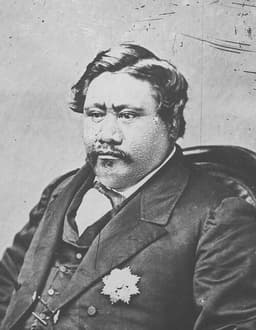
Kamehameha V
Emperor · Modern
45.0Total
Basic Information
Born
63
1830
Died
—
1872
Era
Ancient
Modern
Nationality
Roman Empire
Hawaii
Occupation
Emperor
Emperor
Civilization
Western
Other
Score Comparison
Military (10%)
72.0
11.3
Political (20%)
90.0
46.6
Influence (20%)
88.0
50.2
Legacy (20%)
90.0
42.5
Leadership (15%)
88.0
74.0
Strategy (15%)
75.0
26.5
TOTAL
85.9
45.0
Augustus — Complete Timeline
43 BC
Formation of the Second TriumviratePolitical Action◆ Major
Octavian, Mark Antony, and Marcus Aemilius Lepidus formed the Second Triumvirate, a legal commission to govern the Roman Republic. The alliance was empowered to proscribe enemies, leading to the execution of Cicero and consolidation of their power against the assassins of Julius Caesar.
Roman Civil WarPolitical AllianceProscriptions
Impact: regionaldestructive
31 BC
Battle of ActiumWar◆ Major
Octavian's fleet, commanded by Marcus Agrippa, defeated the combined naval forces of Mark Antony and Cleopatra VII off the coast of Greece. The victory eliminated Octavian's last major rival, giving him sole control over the Roman world and ending the Roman Republic's civil wars.
Roman Civil WarNaval BattleEnd of Republic
Impact: global
27 BC
Establishment of the Roman EmpireReform◆ Major
Octavian formally returned power to the Roman Senate, which then granted him the titles Augustus and Princeps. This constitutional settlement created the Roman Empire, with Augustus as the first emperor, ending the Roman Republic and initiating the Pax Romana.
Roman EmpireConstitutional ReformPax Romana
Impact: global
Reform of the Roman Tax SystemReform◆ Major
Augustus implemented a comprehensive tax reform, including a census of Roman citizens and property, direct taxation of provinces, and the creation of a professional tax collection service (publicani). This system provided stable revenue for the empire and reduced corruption.
Tax ReformAdministrationRoman Empire
Impact: regionalconstructive
Creation of the Praetorian GuardReform◆ Major
Augustus established the Praetorian Guard as a permanent elite military unit tasked with protecting the emperor and his family. Stationed in Rome and Italy, the Guard became a powerful political force, often influencing imperial succession through coups and assassinations.
Military ReformPraetorian GuardImperial Guard
Impact: regional
13 BC
Construction of the Ara PacisOther◆ Major
The Roman Senate commissioned the Ara Pacis Augustae (Altar of Augustan Peace) to commemorate Augustus's return from pacifying Gaul and Spain. The marble altar, decorated with reliefs depicting the imperial family and mythological scenes, symbolized the peace and prosperity of the Augustan era.
Building ProjectPropagandaAugustan Art
Impact: regionalconstructive
Kamehameha V — Complete Timeline
1863 AD
Ascended to the Throne as Kamehameha VPolitical Action◆ Major
Lot Kapuāiwa became King Kamehameha V after the death of his brother Kamehameha IV. He was the last monarch of the Kamehameha dynasty.
Impact: national
1864 AD
Promulgated the 1864 ConstitutionReform◆ Major
Kamehameha V abrogated the 1852 constitution and promulgated a new one that increased royal power. The 1864 constitution abolished the office of kuhina nui (premier), gave the king veto power, and restricted suffrage to property owners.
Impact: national
1865 AD
Oversaw Economic Growth and Public WorksReform
Kamehameha V promoted economic development, including the expansion of the sugar industry, construction of roads and harbors, and the establishment of the Hawaiian Board of Health. His reign saw increased foreign investment and trade.
Impact: nationalconstructive
1867 AD
Refused to Sign the Reciprocity TreatyPolitical Action◆ Major
Kamehameha V refused to sign a reciprocity treaty with the United States that would have reduced tariffs on Hawaiian sugar. He believed the treaty would compromise Hawaiian sovereignty and lead to American domination.
Impact: national
1872 AD
Died Without an HeirOther◆ Major
Kamehameha V died without naming an heir, ending the Kamehameha dynasty. His death triggered a succession crisis that led to the election of Lunalilo as the next king.
Impact: nationaltragic
Expert Analysis
Augustus vs Kamehameha V
# The Emperor’s Mirror: Augustus and Kamehameha V
On a sweltering August afternoon in 1864, King Kamehameha V of Hawaii stood before a crowd of stunned legislators in Honolulu and tore up their constitution. Across the globe and two millennia apart, another young ruler had done something strikingly similar: in 27 BC, Gaius Octavius, soon to be Augustus, appeared before the Roman Senate and, in a masterful act of political theater, pretended to hand back all his power. One emperor built an empire that would shape the West for centuries; the other built a royal edifice that crumbled within a decade. What made the difference?
Origins
Augustus was born into chaos. The Roman Republic was bleeding from a century of civil wars, assassinations, and the ambitions of men like his great-uncle Julius Caesar. Gaius Octavius was a sickly, ruthlessly intelligent teenager when Caesar’s murder thrust him onto history’s stage. He learned early that survival meant masking ambition behind constitutional forms.
Kamehameha V, born Lot Kapuāiwa in 1830, inherited a different kind of fragility. Hawaii had been a unified kingdom for only four decades, its sovereignty constantly tested by Western powers. His grandfather, Kamehameha the Great, had conquered the islands with cannons and canoes; his father and brother had tried to navigate between Hawaiian tradition and the relentless pressure of American missionaries and businessmen. Lot grew up watching his kingdom shrink, not grow.
Rise to Power
Augustus rose by outmaneuvering men who underestimated him. At nineteen, he raised a private army, defied the Senate, and formed the Second Triumvirate with Mark Antony and Lepidus. He was no battlefield commander—his military score of 72 reflects this—but he was a master of alliances. He let Antony bleed at Philippi while he consolidated power in Rome. By 31 BC, at the Battle of Actium, his admiral Agrippa destroyed Antony’s fleet, leaving Augustus alone at the top.
Kamehameha V ascended peacefully in 1863, after his brother’s sudden death. He had no rivals to crush, no armies to raise. His path was quieter but perhaps more treacherous: he had to rule a kingdom that was already being economically colonized by the United States. His key event—refusing the Reciprocity Treaty in 1867—was a defensive act, not an aggressive one. He chose sovereignty over sugar profits, a gamble that would outlast him.
Leadership & Governance
Here the contrast becomes stark. Augustus’s political score of 92 reflects a genius for institutional transformation. He kept the Senate, the consuls, the assemblies—all the republican machinery—but drained them of power. He called himself “Princeps,” first citizen, not emperor. He reformed taxation, created a professional civil service, and built roads and aqueducts that bound the empire together. His military skill was modest, but he knew how to delegate: Agrippa fought, Augustus governed.
Kamehameha V’s political score of 50.2 tells a different story. His 1864 constitution concentrated power in the monarchy, abolishing the elected lower house and giving the king veto authority over all legislation. He promoted economic development—sugar plantations, roads, harbors—but his reforms were reactive, not foundational. Where Augustus built a system that could survive him, Kamehameha built a system that depended entirely on him. His strategy score of 65.8 is telling: he could see the threats but could not construct the institutions to meet them.
Triumph & Tragedy
Augustus’s triumph was the Pax Romana—two centuries of relative peace. He closed the Temple of Janus (symbolic of war) three times during his reign. His tragedy was personal: his daughter Julia was exiled for adultery, his chosen heirs died young, and he ended his life haunted by succession.
Kamehameha V’s triumph was his refusal to surrender Hawaiian sovereignty. He died in 1872 with his kingdom intact, his constitution still in force. His tragedy was that he died without naming an heir. The Kamehameha dynasty ended with him, and within two decades, the monarchy would be overthrown by the very American interests he had resisted. His legacy score of 55.6 reflects this: a brave stand that could not last.
Character & Destiny
Augustus was a consummate actor. He presented himself as modest, frugal, and devoted to tradition, while accumulating absolute power. His leadership score of 90 reflects his ability to inspire loyalty without inspiring fear. He once said, “I found Rome a city of bricks and left it a city of marble.” He was building for eternity.
Kamehameha V was, by all accounts, proud and stubborn. He wore traditional Hawaiian feather cloaks and refused to bow to missionary demands. His leadership score of 78.5 is respectable but not transcendent. He was a defender, not a builder. Where Augustus played the long game, Kamehameha played the short one—and the short game lost.
Legacy
Augustus’s legacy is immeasurable. He created the template for Western imperial rule, from the Holy Roman Empire to Napoleon. His name became a title: Kaiser, Tsar. He is remembered as the founder of an empire that shaped law, language, and religion for two millennia.
Kamehameha V is remembered as the last great monarch of an independent Hawaii, a king who chose honor over survival. His constitution lasted only until 1887, when American businessmen forced a new one on his successor. His refusal of the Reciprocity Treaty delayed but did not prevent annexation. He is a tragic figure, not a triumphant one.
Conclusion
Standing at the edge of the Pacific in 1872, Kamehameha V might have looked at Augustus and seen a mirror reversed. Both men seized power in fragile moments; both tried to strengthen their thrones against external pressures. But Augustus ruled at the center of the world, with resources, time, and a culture that valued imperial stability. Kamehameha ruled at the periphery, with a tiny population, a single economy, and a world that was closing in. The difference between an 86.4 and a 57.5 total score is not just personal genius—it is the difference between building Rome and defending Hawaii. One emperor created an age; the other delayed an end. Both were, in their own ways, extraordinary. But history, as always, favors the builder over the defender.
Rankings
🥇
AugustusLeader
Mil: 72.0Pol: 90.0Inf: 88.0
85.9
🥈
Kamehameha V
Mil: 11.3Pol: 46.6Inf: 50.2
45.0
+40.9 behind
How This Comparison Works
Algorithm
Each figure is scored on 6 dimensions (0—100 scale) based on structured historical data: Military (10%), Political (20%), Influence (20%), Legacy (20%), Leadership (15%), Strategy (15%). The weighted total produces the final ranking.
Data Sources
Scores are computed from structured sub-indicators in the database. Scale factors adjust for era (Ancient ×0.85, Modern ×1.0) and civilization size (Eastern ×1.05, Other ×0.80) to account for differences in population and military scale.
Maximum 3 Figures
Comparisons are limited to 2—3 figures to ensure readability and statistical meaningfulness.
Error Margins
±5 points per dimension — Sub-scores are derived from historical records with inherent uncertainty. Two figures within 5 points on a dimension should be considered roughly equivalent in that area.
Total Score Accuracy
±3 points overall — The weighted combination of 6 dimensions produces a total score with approximately ±3 points of uncertainty. Differences of less than 3 points are not statistically significant— the figures are effectively tied.
Known Limitations
- Historical records are incomplete and uneven across civilizations
- Figures from oral-tradition societies may be underrepresented
- Occupation labels can misclassify multi-role figures
- Scores measure capability and impact, not moral character
- Quantitative scoring is a comparison tool, not absolute truth
Capability Radar
Military (10%) — Battles & Warfare
Battles
75
4
Win Rate
80
9
Expansion
85
11
Political (20%) — Governance & Reform
Reform
95
20
Diplomacy
90
30
Economy
85
35
Influence (20%) — Cultural & Global Reach
Cultural
85
30
Global
90
10
Legacy (20%) — Historical Impact
Historical
95
35
Longevity
95
20
Leadership (15%) — Power & Stability
Tenure
95
40
Stability
95
25
Strategy (15%) — Tactics & Innovation
Strategy
85
15
Tactics
70
15
Reform
90
21
Similar Comparisons
Comments & Discussion
ImperatorDave6/16/2026
Augustus was the GOAT of political theater—his "return of power" act in 27 BC was the slickest power grab in history. The Senate was so relieved they gave him everything anyway. Meanwhile, Kamehameha V just tore up the constitution like a toddler throwing a tantrum. Augustus played the long game for 40 years; Lot's edifice collapsed in 10. Context matters: Rome had a stable military and tax base, Hawaii had missionaries and whalers circling like sharks. One built an empire, the other a sandcastl
数据侦探小张6/16/2026
所有声称奥古斯都“主动回归权力”的说法都是胜利者书写的历史——他保留了军团控制权和行省总督任命权,本质上就是独裁者换个马甲。夏威夷第五任国王撕毁宪法确实粗暴,但当时夏威夷王国的人口不到10万,GDP连罗马一个行省都比不上。直接拿21年执政和1893年没落的王国对比,简直是拿洲际导弹和弹弓比威力。统计口径都不一致,有意义吗?
MarcusAureliusFan6/16/2026
Let's be real: Augustus engineered a constitutional revolution that lasted centuries; Kamehameha V barely held onto power for a decade. The key difference? Augustus had a loyal army and a broken Republic begging for stability. Lot had a sugar plantation economy and a missionary-educated elite who didn't even speak Hawaiian at court. One built the Pax Romana; the other built a royal mausoleum that sits empty today. "The Emperor's Mirror" my ass—more like a funhouse mirror.
怀古书生6/16/2026
我不同意把奥古斯都神化——他本质上是个精明的军阀,利用元老院的恐惧和民众的厌倦攫取权力。而第五任国王卡米哈米哈是真正想守住夏威夷传统的君主,他抵制土地私有化、坚持夏威夷语教学、重新启用卡普制度。奥古斯都的“成功”建立在尸骨上(法萨卢斯战役、阿克兴角海战死了几十万人),卡米哈米哈的“失败”是因为对手不是克拉苏而是美国传教士和糖业托拉斯。谁更值得尊敬?
LotKapuaiwaLoyalist6/16/2026
Everyone misses the point: Kamehameha V wasn't trying to be Augustus—he was trying to be Kamehameha I. His 1864 constitution restored the monarch's veto power and abolished the elected lower house because he saw how American businessmen were buying votes. Augustus pretended to restore the Republic while destroying it. Lot was honest about absolute monarchy. One lied his way to immortality; the other told the truth and was destroyed for it. I know which one I respect more.