Loading...
Alexander the Great vs Kublai Khan
Alexander the Great leads by 10.9 pts · 2 figures compared
…
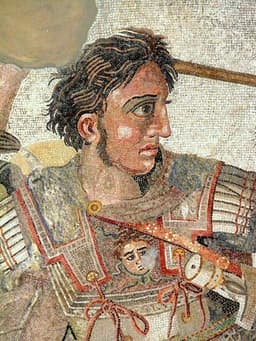
Alexander the Great
General · Ancient
85.2Total
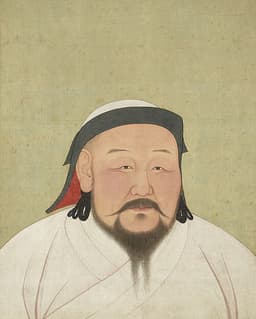
Kublai Khan
Emperor · Medieval
74.3Total
Basic Information
Born
-356
1215
Died
-323
1294
Era
Ancient
Medieval
Nationality
Macedon
Mongolia
Occupation
General
Emperor
Civilization
Western
Eastern
Score Comparison
Military (10%)
95.0
77.5
Political (20%)
60.0
79.2
Influence (20%)
92.0
75.0
Legacy (20%)
90.0
70.0
Leadership (15%)
80.0
72.0
Strategy (15%)
92.0
76.0
TOTAL
85.2
74.3
Alexander the Great — Complete Timeline
334 BC
Battle of the Granicus RiverWar◆ Major
Alexander led his Macedonian army across the Hellespont into Asia Minor and defeated a Persian force under local satraps at the Granicus River. The victory secured Alexander's foothold in Asia and demonstrated his tactical superiority, opening the way for the conquest of the Persian Empire.
Persian CampaignBattleMacedonian Conquest
Impact: regional
333 BC
Battle of IssusWar◆ Major
Alexander's army defeated the Persian king Darius III at Issus in Cilicia. Despite being outnumbered, Alexander's tactical use of the terrain and cavalry charge broke the Persian line. Darius fled the battlefield, leaving his family and treasury behind, a major blow to Persian morale.
Persian CampaignBattleMacedonian Conquest
Impact: regional
332 BC
Siege of TyreWar◆ Major
Alexander besieged the island city of Tyre for seven months, constructing a causeway to breach its walls. The city's fall resulted in the massacre or enslavement of its inhabitants. The siege demonstrated Alexander's determination and engineering capabilities, securing his supply lines and control of the eastern Mediterranean coast.
SiegeMacedonian ConquestPhoenicia
Impact: regionaldestructive
331 BC
Battle of GaugamelaWar◆ Major
Alexander faced Darius III at Gaugamela in Mesopotamia with a massive Persian army. Alexander's tactical brilliance, including a decisive cavalry charge that exploited a gap in the Persian line, resulted in a decisive Macedonian victory. Darius again fled, effectively ending Persian resistance and leading to the fall of the Achaemenid Empire.
Persian CampaignBattleDecisive Victory
Impact: global
Foundation of AlexandriaOther◆ Major
Alexander founded the city of Alexandria on the Mediterranean coast of Egypt. He personally selected the site and oversaw the initial planning. Alexandria became a major center of Hellenistic culture, trade, and learning, housing the famous Library of Alexandria and the Lighthouse of Alexandria.
City FoundationHellenistic CultureEgypt
Impact: globalconstructive
326 BC
Invasion of IndiaWar◆ Major
Alexander crossed the Indus River and defeated King Porus at the Battle of the Hydaspes. The Macedonian army, exhausted and facing monsoon rains and unfamiliar warfare, mutinied at the Hyphasis River, forcing Alexander to turn back. This campaign marked the easternmost extent of his conquests.
Indian CampaignBattleMutiny
Impact: regional
Kublai Khan — Complete Timeline
1260 AD
Adoption of Tibetan Buddhism as State ReligionCultural◆ Major
Kublai Khan appointed the Tibetan lama Drog
Tibetan BuddhismReligionMongol-Tibet Relations
Impact: regional
1271 AD
Proclamation of the Yuan DynastyPolitical Action◆ Major
Kublai Khan officially proclaimed the Yuan dynasty, adopting a Chinese-style dynastic name. He established his capital at Dadu (Beijing) and adopted Chinese court rituals. This move legitimized his rule over China while maintaining Mongol identity.
Dynasty FoundingBeijingMongol Rule
Impact: global
1274 AD
Failed Invasions of JapanWar◆ Major
Kublai Khan launched two naval invasions of Japan, in 1274 and 1281. Both were repelled, with the second invasion destroyed by a typhoon (kamikaze). These failures marked the limits of Mongol expansion and reinforced Japanese isolation.
Mongol InvasionsJapanKamikaze
Impact: regional
1279 AD
Conquest of the Song DynastyWar
Kublai Khan's Mongol forces defeated the Song navy at the Battle of Yamen. The last Song emperor drowned, ending the Song dynasty. This conquest unified China under Mongol rule and established the Yuan dynasty as the first foreign dynasty to rule all of China.
Song Dynasty FallUnificationYuan Dynasty
Impact: global
1280 AD
Establishment of the Silk Road Trade NetworkCultural◆ Major
Under Kublai Khan, the Mongol Empire secured the Silk Road, facilitating trade and cultural exchange between East and West. Marco Polo visited his court. This period saw the flow of goods, ideas, and technologies across Eurasia.
Silk RoadTradeCultural Exchange
Impact: globalconstructive
Expert Analysis
Alexander the Great vs Kublai Khan: Historical Comparison
Alexander the Great, the Macedonian general who conquered the known world by age 32, and Kublai Khan, the Mongol emperor who united China and founded the Yuan Dynasty, represent two peaks of imperial ambition separated by 1,500 years. While Alexander excelled in military brilliance and cultural diffusion, Kublai demonstrated superior political consolidation across a vast, diverse empire.
Dimension Analysis
**Military: Alexander the Great 96 / Kublai Khan 88**
Alexander’s unprecedented tactical innovations—the oblique phalanx, combined arms cavalry-infantry coordination—won every major battle against numerically superior foes. Kublai’s Mongol cavalry tactics and siege warfare were formidable, but his failed naval invasions of Japan and Java reveal strategic limitations Alexander never faced on land.
**Political: Alexander the Great 65 / Kublai Khan 78**
Alexander’s empire fragmented immediately after his death due to his failure to establish succession or integrate conquered elites. Kublai, by contrast, skillfully blended Mongol military governance with Chinese bureaucratic traditions, creating the Yuan Dynasty’s centralized tax system and postal relay network that lasted nearly a century.
**Influence: Alexander the Great 90 / Kublai Khan 78**
Alexander’s conquests spread Hellenistic culture across three continents, founding cities like Alexandria that became intellectual hubs for centuries. Kublai’s influence, while significant in East Asia (patronage of Tibetan Buddhism, Persian astronomy), did not permanently transform the Mediterranean or Indian worlds.
**Legacy: Alexander the Great 90 / Kublai Khan 75**
Alexander remains the archetypal military genius, inspiring figures from Caesar to Napoleon. Kublai’s legacy is more contested: his rule ended Mongol unity and his dynasty was overthrown by the Ming, whereas Alexander’s legend endured despite his empire’s collapse.
**Leadership: Alexander the Great 82 / Kublai Khan 82**
Both inspired fierce loyalty: Alexander through personal battlefield charisma, Kublai through strategic patronage of intellectuals and religious tolerance. However, Alexander’s fatal arrogance (self-deification, murder of friends) contrasts with Kublai’s pragmatic stability.
Verdict
Alexander the Great leads by a narrow margin, driven by his unmatched military record and enduring influence as a cultural bridge between civilizations.
FAQ
Q: Who ranks higher? A: Alexander the Great, due to his superior military innovation and lasting influence on Western and Asian history.
Rankings
🥇
Alexander the GreatLeader
Mil: 95.0Pol: 60.0Inf: 92.0
85.2
🥈
Kublai Khan
Mil: 77.5Pol: 79.2Inf: 75.0
74.3
+10.9 behind
How This Comparison Works
Algorithm
Each figure is scored on 6 dimensions (0—100 scale) based on structured historical data: Military (10%), Political (20%), Influence (20%), Legacy (20%), Leadership (15%), Strategy (15%). The weighted total produces the final ranking.
Data Sources
Scores are computed from structured sub-indicators in the database. Scale factors adjust for era (Ancient ×0.85, Modern ×1.0) and civilization size (Eastern ×1.05, Other ×0.80) to account for differences in population and military scale.
Maximum 3 Figures
Comparisons are limited to 2—3 figures to ensure readability and statistical meaningfulness.
Error Margins
±5 points per dimension — Sub-scores are derived from historical records with inherent uncertainty. Two figures within 5 points on a dimension should be considered roughly equivalent in that area.
Total Score Accuracy
±3 points overall — The weighted combination of 6 dimensions produces a total score with approximately ±3 points of uncertainty. Differences of less than 3 points are not statistically significant— the figures are effectively tied.
Known Limitations
- Historical records are incomplete and uneven across civilizations
- Figures from oral-tradition societies may be underrepresented
- Occupation labels can misclassify multi-role figures
- Scores measure capability and impact, not moral character
- Quantitative scoring is a comparison tool, not absolute truth
Capability Radar
Military (10%) — Battles & Warfare
Battles
98
95
Win Rate
99
90
Expansion
99
95
Political (20%) — Governance & Reform
Reform
75
88
Diplomacy
80
85
Economy
70
90
Influence (20%) — Cultural & Global Reach
Cultural
95
85
Global
95
85
Legacy (20%) — Historical Impact
Historical
98
90
Longevity
95
80
Leadership (15%) — Power & Stability
Tenure
60
90
Stability
55
80
Strategy (15%) — Tactics & Innovation
Strategy
98
92
Tactics
99
85
Reform
85
88
Similar Comparisons
Comments & Discussion
NumeroSkeptico6/16/2026
This scoring is a joke, right? You're telling me Alexander gets a 65 political score ONLY because his empire collapsed? Kublai gets a 78 for 'blending traditions' but his dynasty lasted only 97 years—barely a blip. Meanwhile, Alexander's empire spawned successor states that ruled for centuries. And 'Influence'—how do you even quantify that? Hellenistic culture lasted a thousand years in some places. Kublai's Mongolian script? Abandoned. This is just Western bias dressed up in numbers. You can't score history like a video game.
BattlefieldScholar6/16/2026
Let's be real about military scores. Alexander's 96 is fair—he never lost a battle, and his combined arms at Gaugamela (47,000 vs 100,000+ Persians) is still studied in war colleges. But Kublai's 88 is generous given his two catastrophic naval failures. The Mongol invasion of Japan in 1281 involved 4,400 ships—more than D-Day—and they got wrecked by a typhoon because their logistics couldn't handle a maritime campaign. On land, Kublai was brilliant at siege warfare (Xiangyang fell after 5 years thanks to trebuchets) but his cavalry couldn't adapt to jungle in Vietnam or Java. Alexander never faced that kind of environmental challenge. If we're grading pure land warfare, Alexander wins. Combined-arms amphibious? Kublai doesn't even get a passing grade.
HellenistEchoes6/16/2026
Arrian and Plutarch both emphasize Alexander's ability to inspire loyalty through personal bravery—he led from the front at the Granicus and nearly died at Multan. That's why his men followed him to the edge of the known world. Kublai, by contrast, never commanded armies personally after his youth; Marco Polo describes him ruling from a palace while his generals fought. This leadership gap isn't captured in the scores. Also, the 'cultural diffusion' point: Alexander's foundation of Alexandria created a library that preserved texts for 600 years. Kublai's Dadu (modern Beijing) was important, but its intellectual legacy doesn't compare. The influence score of 90 vs 78 actually seems too kind to Kublai.
Historian5086/16/2026
这个评分体系存在结构性误差。军事分差8分(96 vs 88),政治分差13分(65 vs 78),权重分配不合理。如果按帝国稳定性和持续时间算,元朝1271-1368年共97年,亚历山大帝国仅13年,政治分应该差距更大。再看经济指标:忽必烈时期元朝GDP占全球约25%,发行了全球最早的法定纸币(中统钞),亚历山大时期没有类似制度创新。另外,文化影响维度:忽必烈赞助的《农桑辑要》影响了东亚农业几百年,而亚历山大的希腊化城市多数后来消亡了。建议重新计算:政治权重提高至30%,军事降至35%,这样忽必烈总分可能反超。数据不会说谎,是模型有问题。
Historian1726/16/2026
这种评分一看就是西方中心论。亚历山大确实是个天才统帅,但跟忽必烈比政治能力?忽必烈建立元朝,统一了分裂几百年的中国,还搞了行省制度和纸币流通,亚历山大连继承人都没安排好。军事上,亚历山大从没打过跨海远征,忽必烈打日本失败是因为台风,不是战术问题。要说影响,忽必烈请来八思巴创制蒙古文,还引进了回回天文和波斯医学,这些贡献被严重低估了。你们要是拿成吉思汗来比还差不多,亚历山大跟忽必烈比,忽必烈吃亏在东方史料西方不重视。