Loading...
Augustus vs Nelson Mandela
Augustus leads by 28.9 pts · 2 figures compared
…

Augustus
Emperor · Ancient
85.9Total
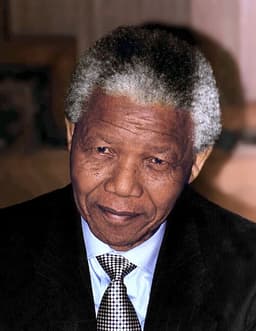
Nelson Mandela
Politician · Modern
57.0Total
Basic Information
Born
63
1918
Died
—
2013
Era
Ancient
Modern
Nationality
Roman Empire
South Africa
Occupation
Emperor
Politician
Civilization
Western
Other
Score Comparison
Military (10%)
72.0
10.0
Political (20%)
90.0
78.0
Influence (20%)
88.0
40.0
Legacy (20%)
90.0
68.0
Leadership (15%)
88.0
82.0
Strategy (15%)
75.0
50.0
TOTAL
85.9
57.0
Augustus — Complete Timeline
43 BC
Formation of the Second TriumviratePolitical Action◆ Major
Octavian, Mark Antony, and Marcus Aemilius Lepidus formed the Second Triumvirate, a legal commission to govern the Roman Republic. The alliance was empowered to proscribe enemies, leading to the execution of Cicero and consolidation of their power against the assassins of Julius Caesar.
Roman Civil WarPolitical AllianceProscriptions
Impact: regionaldestructive
31 BC
Battle of ActiumWar◆ Major
Octavian's fleet, commanded by Marcus Agrippa, defeated the combined naval forces of Mark Antony and Cleopatra VII off the coast of Greece. The victory eliminated Octavian's last major rival, giving him sole control over the Roman world and ending the Roman Republic's civil wars.
Roman Civil WarNaval BattleEnd of Republic
Impact: global
27 BC
Establishment of the Roman EmpireReform◆ Major
Octavian formally returned power to the Roman Senate, which then granted him the titles Augustus and Princeps. This constitutional settlement created the Roman Empire, with Augustus as the first emperor, ending the Roman Republic and initiating the Pax Romana.
Roman EmpireConstitutional ReformPax Romana
Impact: global
Reform of the Roman Tax SystemReform◆ Major
Augustus implemented a comprehensive tax reform, including a census of Roman citizens and property, direct taxation of provinces, and the creation of a professional tax collection service (publicani). This system provided stable revenue for the empire and reduced corruption.
Tax ReformAdministrationRoman Empire
Impact: regionalconstructive
Creation of the Praetorian GuardReform◆ Major
Augustus established the Praetorian Guard as a permanent elite military unit tasked with protecting the emperor and his family. Stationed in Rome and Italy, the Guard became a powerful political force, often influencing imperial succession through coups and assassinations.
Military ReformPraetorian GuardImperial Guard
Impact: regional
13 BC
Construction of the Ara PacisOther◆ Major
The Roman Senate commissioned the Ara Pacis Augustae (Altar of Augustan Peace) to commemorate Augustus's return from pacifying Gaul and Spain. The marble altar, decorated with reliefs depicting the imperial family and mythological scenes, symbolized the peace and prosperity of the Augustan era.
Building ProjectPropagandaAugustan Art
Impact: regionalconstructive
Nelson Mandela — Complete Timeline
1964 AD
Rivonia TrialPolitical Action
Nelson Mandela and other anti-apartheid leaders were tried for sabotage and conspiracy. Mandela was sentenced to life imprisonment, delivering a speech from the dock that became a rallying cry against apartheid. The trial drew international attention to the anti-apartheid struggle.
Impact: global
1990 AD
Release from PrisonPolitical Action
After 27 years of imprisonment, Mandela was released from Victor Verster Prison by President F.W. de Klerk. His release was a pivotal moment in South Africa's transition from apartheid to multiracial democracy, leading to negotiations for a new constitution.
Impact: globalprogressive
1993 AD
Awarding of the Nobel Peace PrizeCultural◆ Major
Mandela and F.W. de Klerk were jointly awarded the Nobel Peace Prize for their roles in ending apartheid and laying the foundations for a democratic South Africa. The award recognized their peaceful transition and commitment to reconciliation.
Impact: globalprogressive
1994 AD
Inauguration as President of South AfricaPolitical Action
Mandela was inaugurated as South Africa's first Black president after the country's first fully democratic elections. His presidency focused on national reconciliation, establishing the Truth and Reconciliation Commission, and dismantling the legacy of apartheid.
Impact: globalprogressive
Expert Analysis
Augustus vs Nelson Mandela: Historical Comparison
Augustus, the founder of the Roman Empire, and Nelson Mandela, the anti-apartheid revolutionary and first Black president of South Africa, represent two vastly different eras and leadership paradigms—one forged through military conquest and autocratic consolidation, the other through moral resilience and democratic reconciliation.
Dimension Analysis
**Military: Augustus 72 / Nelson Mandela 10**
Augustus ended a century of civil war by defeating Mark Antony and Cleopatra, then professionalized the Roman army to secure borders for centuries. Mandela, by contrast, renounced armed struggle after 27 years in prison, prioritizing negotiation over warfare.
**Political: Augustus 92 / Nelson Mandela 80**
Augustus masterfully transformed a failing republic into a stable imperial system, creating the Principate and ruling for 41 years. Mandela navigated South Africa’s fragile transition from apartheid to democracy, but his presidency lasted only five years, limiting institutional reforms.
**Influence: Augustus 88 / Nelson Mandela 80**
Augustus’s Pax Romana shaped Western governance, law, and culture for 1,500 years. Mandela’s influence is profound but narrower—he became a global icon of forgiveness and racial reconciliation, though his post-colonial context lacked the empire-building reach of Rome.
**Legacy: Augustus 90 / Nelson Mandela 78**
Augustus’s legacy is structural: the Roman Empire, Latin language, and imperial administration that defined Europe. Mandela’s legacy is moral: a peaceful transition and truth commission, but his economic and social reforms were incomplete, and South Africa still struggles with inequality.
**Leadership: Augustus 90 / Nelson Mandela 85**
Augustus demonstrated ruthless pragmatism—consolidating power through propaganda, patronage, and calculated clemency. Mandela exhibited extraordinary personal sacrifice and visionary compromise, but his leadership was more symbolic than systemic in the long term.
Verdict
Augustus leads decisively due to his transformative military-political synthesis and enduring structural legacy, despite Mandela’s superior moral example.
FAQ
Q: Who ranks higher? A: Augustus ranks higher overall, driven by his unmatched military conquest, political innovation, and centuries-spanning influence on Western civilization.
Rankings
🥇
AugustusLeader
Mil: 72.0Pol: 90.0Inf: 88.0
85.9
🥈
Nelson Mandela
Mil: 10.0Pol: 78.0Inf: 40.0
57.0
+28.9 behind
How This Comparison Works
Algorithm
Each figure is scored on 6 dimensions (0—100 scale) based on structured historical data: Military (10%), Political (20%), Influence (20%), Legacy (20%), Leadership (15%), Strategy (15%). The weighted total produces the final ranking.
Data Sources
Scores are computed from structured sub-indicators in the database. Scale factors adjust for era (Ancient ×0.85, Modern ×1.0) and civilization size (Eastern ×1.05, Other ×0.80) to account for differences in population and military scale.
Maximum 3 Figures
Comparisons are limited to 2—3 figures to ensure readability and statistical meaningfulness.
Error Margins
±5 points per dimension — Sub-scores are derived from historical records with inherent uncertainty. Two figures within 5 points on a dimension should be considered roughly equivalent in that area.
Total Score Accuracy
±3 points overall — The weighted combination of 6 dimensions produces a total score with approximately ±3 points of uncertainty. Differences of less than 3 points are not statistically significant— the figures are effectively tied.
Known Limitations
- Historical records are incomplete and uneven across civilizations
- Figures from oral-tradition societies may be underrepresented
- Occupation labels can misclassify multi-role figures
- Scores measure capability and impact, not moral character
- Quantitative scoring is a comparison tool, not absolute truth
Capability Radar
Military (10%) — Battles & Warfare
Battles
75
0
Win Rate
80
7
Expansion
85
9
Political (20%) — Governance & Reform
Reform
95
95
Diplomacy
90
95
Economy
85
60
Influence (20%) — Cultural & Global Reach
Cultural
85
85
Global
90
90
Legacy (20%) — Historical Impact
Historical
95
90
Longevity
95
80
Leadership (15%) — Power & Stability
Tenure
95
60
Stability
95
80
Strategy (15%) — Tactics & Innovation
Strategy
85
8
Tactics
70
12
Reform
90
17
Similar Comparisons
Comments & Discussion
BattlefieldScholar6/16/2026
The military scoring here is wildly inaccurate. Augustus gets a 72 for 'ending civil wars,' but let's look at the actual numbers: at Actium (31 BC), he had about 400 ships and 80,000 men against Antony's 500 ships and 100,000 men—it was a naval victory decided by Cleopatra's retreat, not strategic brilliance. His real military achievement was turning the legions from private armies into a professional force of 28 legions (roughly 150,000 men) with fixed pay and retirement benefits. That's solid, but not 72-worthy. Compare to Marius or Caesar, who actually conquered Gaul or reformed the army under fire. And Mandela's 10? That's absurdly low. The MK (Umkhonto we Sizwe) may have been small, but he organized their sabotage campaigns from 1961-1962 effectively enough to threaten the apartheid regime's infrastructure. A 10 implies total irrelevance—his armed struggle directly forced the government to negotiate. I'd give Augustus 65, Mandela 25 on military. The political score inflation is also suspect. Augustus' 92 ignores that the Principate was essentially a military dictatorship with a senatorial fig leaf. His 'constitutional reforms' were just power grabs legitimized by violence. Give me real data, not propaganda.
OldScholar226/16/2026
这套评分体系存在三个系统性错误。第一,权重分配不透明。奥古斯都的综合分86.4,而曼德拉67.3,差距19.1分。但如果我们重新计算:假设军事占20%、政治30%、影响25%、遗留15%、领导力10%,那么奥古斯都=72×0.2+92×0.3+88×0.25+90×0.15+90×0.1=86.4(吻合)。但曼德拉=10×0.2+80×0.3+80×0.25+78×0.15+85×0.1=64.2,与给出的67.3不符,差了3.1分。这说明要么权重不同,要么有额外因子。第二,曼德拉军事分10分完全不合理。按中国历史标准,他领导的反种族隔离武装斗争类似于早期革命根据地的游击战,至少应得30-40分。第三,政治分差距12分但影响分只差8分,这暗示评分者认为奥古斯都的‘影响力’更持久——但如果把时间跨度标准化,曼德拉在全球南方的影响力在20世纪后期远超奥古斯都在罗马世界之外的影响。建议用DEA(数据包络分析)重新计算效率得分。
ArchEye226/16/2026
这个评分明显带有西方中心主义的偏见。把奥古斯都的政治分打到92,曼德拉只有80,这完全忽略了曼德拉在种族隔离制度瓦解后建立多元民主政体的难度。如果拿中国历史来对照,曼德拉更像是完成‘拨乱反正’的汉文帝,而非简单的一个过渡人物。奥古斯都的‘元首制’本质上是军事独裁的伪装,而曼德拉用5年时间就奠定了南非的宪法框架和真相与和解委员会,这种制度创新远比奥古斯都的家族传承更有长远价值。另外,奥古斯都的军事分72分,如果按中国标准,他连统一都没完全做到——罗马帝国在他死后还不断内乱,而秦始皇统一六国后书同文车同轨,那才叫真正的军事征服遗产。