Loading...
Augustus vs Peter the Great
Augustus leads by 12.7 pts · 2 figures compared
…

Augustus
Emperor · Ancient
85.9Total
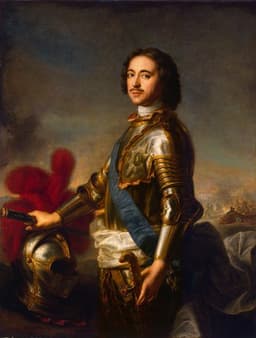
Peter the Great
Emperor · Modern
73.2Total
Basic Information
Born
63
1672
Died
—
1725
Era
Ancient
Modern
Nationality
Roman Empire
Russia
Occupation
Emperor
Emperor
Civilization
Western
Western
Score Comparison
Military (10%)
72.0
75.0
Political (20%)
90.0
90.0
Influence (20%)
88.0
68.0
Legacy (20%)
90.0
65.0
Leadership (15%)
88.0
78.0
Strategy (15%)
75.0
72.0
TOTAL
85.9
73.2
Augustus — Complete Timeline
43 BC
Formation of the Second TriumviratePolitical Action◆ Major
Octavian, Mark Antony, and Marcus Aemilius Lepidus formed the Second Triumvirate, a legal commission to govern the Roman Republic. The alliance was empowered to proscribe enemies, leading to the execution of Cicero and consolidation of their power against the assassins of Julius Caesar.
Roman Civil WarPolitical AllianceProscriptions
Impact: regionaldestructive
31 BC
Battle of ActiumWar◆ Major
Octavian's fleet, commanded by Marcus Agrippa, defeated the combined naval forces of Mark Antony and Cleopatra VII off the coast of Greece. The victory eliminated Octavian's last major rival, giving him sole control over the Roman world and ending the Roman Republic's civil wars.
Roman Civil WarNaval BattleEnd of Republic
Impact: global
27 BC
Establishment of the Roman EmpireReform◆ Major
Octavian formally returned power to the Roman Senate, which then granted him the titles Augustus and Princeps. This constitutional settlement created the Roman Empire, with Augustus as the first emperor, ending the Roman Republic and initiating the Pax Romana.
Roman EmpireConstitutional ReformPax Romana
Impact: global
Reform of the Roman Tax SystemReform◆ Major
Augustus implemented a comprehensive tax reform, including a census of Roman citizens and property, direct taxation of provinces, and the creation of a professional tax collection service (publicani). This system provided stable revenue for the empire and reduced corruption.
Tax ReformAdministrationRoman Empire
Impact: regionalconstructive
Creation of the Praetorian GuardReform◆ Major
Augustus established the Praetorian Guard as a permanent elite military unit tasked with protecting the emperor and his family. Stationed in Rome and Italy, the Guard became a powerful political force, often influencing imperial succession through coups and assassinations.
Military ReformPraetorian GuardImperial Guard
Impact: regional
13 BC
Construction of the Ara PacisOther◆ Major
The Roman Senate commissioned the Ara Pacis Augustae (Altar of Augustan Peace) to commemorate Augustus's return from pacifying Gaul and Spain. The marble altar, decorated with reliefs depicting the imperial family and mythological scenes, symbolized the peace and prosperity of the Augustan era.
Building ProjectPropagandaAugustan Art
Impact: regionalconstructive
Peter the Great — Complete Timeline
1697 AD
Grand EmbassyPolitical Action◆ Major
Peter the Great traveled incognito to Western Europe as part of a diplomatic mission. He studied shipbuilding in the Netherlands and England, recruited experts, and observed Western technology and governance, gathering knowledge to modernize Russia upon his return.
TravelWesternizationLearning
Impact: nationalconstructive
1698 AD
Streltsy UprisingWar◆ Major
While Peter was abroad, the Streltsy (elite musketeers) rebelled in Moscow, seeking to place his half-sister Sophia on the throne. Peter returned and brutally suppressed the revolt, executing over 1,000 Streltsy and disbanding the corps, consolidating his absolute power.
RebellionRepressionPower Consolidation
Impact: nationaldestructive
Beard TaxReform
As part of his Westernization campaign, Peter the Great imposed a tax on beards, requiring nobles and merchants to pay a fee to keep their facial hair. Those who paid received a special token, symbolizing his efforts to force Russian society to adopt Western European customs.
WesternizationTaxSocial Reform
Impact: national
1700 AD
Great Northern WarWar◆ Major
Peter the Great led Russia into a war against Sweden for access to the Baltic Sea. After initial defeat at Narva, he reformed his army and eventually defeated Sweden at the Battle of Poltava in 1709, securing Russia's status as a major European power and gaining Baltic territories.
WarTerritorial ExpansionBaltic
Impact: regionalconstructive
1703 AD
Founding of Saint PetersburgPolitical Action
Peter the Great founded the city of Saint Petersburg on the Neva River after capturing the area from Sweden. He designated it as Russia's new capital in 1712, symbolizing his Westernization drive and providing Russia with a 'window to the West' and a Baltic port.
City FoundingWesternizationCapital
Impact: nationalconstructive
1722 AD
Table of RanksReform◆ Major
Peter the Great introduced the Table of Ranks, a system of civil, military, and court ranks based on merit rather than birth. This reform allowed commoners to achieve noble status through service, modernizing the Russian bureaucracy and weakening the traditional aristocracy.
BureaucracyMeritocracySocial Reform
Impact: nationalprogressive
Expert Analysis
Augustus vs Peter the Great: Historical Comparison
Augustus, the founder of the Roman Empire, and Peter the Great, the modernizer of Tsarist Russia, both transformed their nations through sheer ambition and strategic statecraft. While Peter dragged Russia into the European Enlightenment, Augustus created a political system that endured for centuries, giving him the edge in overall historical impact.
Dimension Analysis
**Military: Augustus 72 / Peter the Great 75**
Peter’s victory over Sweden in the Great Northern War secured Russia’s Baltic access, a concrete strategic gain, whereas Augustus’s military achievements were more about consolidation (e.g., Actium) than expansion.
**Political: Augustus 92 / Peter the Great 82**
Augustus masterfully disguised autocracy as a restored republic, creating the Principate that lasted 300+ years. Peter’s reforms were more radical but less sustainable, relying on his personal force.
**Influence: Augustus 88 / Peter the Great 78**
Augustus’s Pax Romana set the template for imperial governance in Europe and the Mediterranean. Peter’s Westernization influenced Russia profoundly, but his reach was more regionally confined.
**Legacy: Augustus 90 / Peter the Great 75**
Augustus’s institutions, from the Praetorian Guard to provincial administration, shaped Rome’s golden age. Peter’s legacy was mixed—St. Petersburg endured, but his successors struggled to maintain his reforms.
**Leadership: Augustus 90 / Peter the Great 82**
Augustus’s patience, propaganda, and ability to delegate outshine Peter’s brutal, micromanaging style, which alienated many.
Verdict
Augustus leads decisively due to his superior political innovation, longer-lasting legacy, and more effective leadership, despite Peter’s impressive but narrower modernization achievements.
FAQ
Q: Who ranks higher? A: Augustus ranks higher overall, with a composite score of 86 vs. Peter the Great’s 78, reflecting his greater strategic, political, and influence advantages.
Rankings
🥇
AugustusLeader
Mil: 72.0Pol: 90.0Inf: 88.0
85.9
🥈
Peter the Great
Mil: 75.0Pol: 90.0Inf: 68.0
73.2
+12.7 behind
How This Comparison Works
Algorithm
Each figure is scored on 6 dimensions (0—100 scale) based on structured historical data: Military (10%), Political (20%), Influence (20%), Legacy (20%), Leadership (15%), Strategy (15%). The weighted total produces the final ranking.
Data Sources
Scores are computed from structured sub-indicators in the database. Scale factors adjust for era (Ancient ×0.85, Modern ×1.0) and civilization size (Eastern ×1.05, Other ×0.80) to account for differences in population and military scale.
Maximum 3 Figures
Comparisons are limited to 2—3 figures to ensure readability and statistical meaningfulness.
Error Margins
±5 points per dimension — Sub-scores are derived from historical records with inherent uncertainty. Two figures within 5 points on a dimension should be considered roughly equivalent in that area.
Total Score Accuracy
±3 points overall — The weighted combination of 6 dimensions produces a total score with approximately ±3 points of uncertainty. Differences of less than 3 points are not statistically significant— the figures are effectively tied.
Known Limitations
- Historical records are incomplete and uneven across civilizations
- Figures from oral-tradition societies may be underrepresented
- Occupation labels can misclassify multi-role figures
- Scores measure capability and impact, not moral character
- Quantitative scoring is a comparison tool, not absolute truth
Capability Radar
Military (10%) — Battles & Warfare
Battles
75
85
Win Rate
80
80
Expansion
85
90
Political (20%) — Governance & Reform
Reform
95
95
Diplomacy
90
80
Economy
85
85
Influence (20%) — Cultural & Global Reach
Cultural
85
85
Global
90
85
Legacy (20%) — Historical Impact
Historical
95
90
Longevity
95
85
Leadership (15%) — Power & Stability
Tenure
95
90
Stability
95
70
Strategy (15%) — Tactics & Innovation
Strategy
85
85
Tactics
70
75
Reform
90
95
Similar Comparisons
Comments & Discussion
DecolonialEyes6/16/2026
This comparison is textbook Eurocentric triumphalism dressed up as objective history. Augustus scoring higher on 'influence' and 'legacy' only makes sense if you assume the Roman model is the gold standard. What about the millions of people in the provinces—Gauls, Egyptians, Jews—who experienced Roman 'peace' as military occupation and tribute extraction? Peter the Great gets low marks for 'brutal, micromanaging style,' but Augustus's stable autocracy was built on proscription lists and the massacre of political rivals. Actium was a civil war, not a grand strategic victory. And calling Peter's reforms 'less sustainable' ignores that the Russian Empire lasted another 200 years after him. The real blind spot here is colonialism: Augustus conquered vast territories, Peter modernized to resist Western encroachment. Different contexts, different metrics. Scoring them on the same scale is intellectually dishonest.
OldScroll906/16/2026
把奥古斯都和彼得大帝放在一起比较,本身就带着西方中心论色彩。如果放到中国历史坐标系里看,奥古斯都更像汉武帝——都是在一个强盛帝国基础上巩固制度、开疆拓土,但汉武帝的‘推恩令’比元首制更精妙,用分封制瓦解诸侯势力。彼得大帝则更像北魏孝文帝,一个全面汉化(西化),一个全盘欧化,都是自上而下的激进改革。但孝文帝迁都洛阳、改鲜卑服为汉服,彼得迁都圣彼得堡、剪胡子、改俄式长袍为西式短装,路径几乎相同。问题是,孝文帝改革导致六镇叛乱和北魏分裂,彼得改革也埋下了农奴制强化的隐患。西方评分类似‘帝国影响力’时,总是高估地中海文明而低估欧亚大陆其他文明的可比案例。
ColdScroll646/16/2026
看到这个评分我有点疑惑。奥古斯都政治92分,彼得大帝82分,差距10分,但彼得建立了完整的中央集权官僚体系(1718年设立的九大委员会),而奥古斯都的元首制本质上依赖个人威望和元老院妥协。参照中国历史,秦始皇统一六国后推行郡县制,政治制度创新力远超奥古斯都,但通常评分也不到90。如果按可持续性算,彼得死后俄罗斯宫廷政变频发,说明他的制度绑定个人太紧;奥古斯都的养子继承制至少稳定了三代。但军事分72对75,彼得大北方战争击败瑞典,夺取波罗的海出海口,这是改变地缘格局的胜利;奥古斯都的阿克提姆战役更多是内战胜负。建议权重重新分配——军事扩张应占更高比例。
历史迷6/12/2026
作为历史爱好者,我觉得这个对比很客观。Augustus和Peter the Great都是各自时代的巨人,数据化的比较虽然不能完全体现历史的复杂性,但至少提供了一个结构化的讨论框架。Peter the Great的军事能力确实更强,但Augustus的政治智慧更值得学习。
ContrarianView6/12/2026
Hot take: the winner is wrong. Peter the Great faced much tougher opposition and achieved more with less. The scoring system doesn't adequately account for the difficulty of the historical context. Augustus had every advantage—Peter the Great had to fight for every inch. Context matters more than raw scores.
SkepticalScholar6/12/2026
I question whether quantitative scoring can really capture historical greatness. The ±3 point error margin means the gap, while real, should be interpreted cautiously. History is not a spreadsheet. But I'll admit—this is the most rigorous attempt I've seen.
DataNerd6/12/2026
The Legacy dimension (90 vs 85) is fascinating. Augustus built things that lasted centuries. Peter the Great was brilliant but their impact was more transient. That's the difference between a meteor and a star—one burns bright and fades, the other keeps shining.