Loading...
Augustus vs Robert the Bruce
Augustus leads by 30.4 pts · 2 figures compared
…

Augustus
Emperor · Ancient
85.9Total
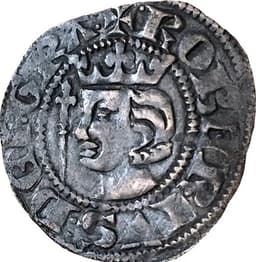
Robert the Bruce
Emperor · Medieval
55.5Total
Basic Information
Born
63
1274
Died
—
1329
Era
Ancient
Medieval
Nationality
Roman Empire
Scotland
Occupation
Emperor
Emperor
Civilization
Western
Western
Score Comparison
Military (10%)
72.0
70.0
Political (20%)
90.0
68.0
Influence (20%)
88.0
55.0
Legacy (20%)
90.0
52.0
Leadership (15%)
88.0
40.0
Strategy (15%)
75.0
55.0
TOTAL
85.9
55.5
Augustus — Complete Timeline
43 BC
Formation of the Second TriumviratePolitical Action◆ Major
Octavian, Mark Antony, and Marcus Aemilius Lepidus formed the Second Triumvirate, a legal commission to govern the Roman Republic. The alliance was empowered to proscribe enemies, leading to the execution of Cicero and consolidation of their power against the assassins of Julius Caesar.
Roman Civil WarPolitical AllianceProscriptions
Impact: regionaldestructive
31 BC
Battle of ActiumWar◆ Major
Octavian's fleet, commanded by Marcus Agrippa, defeated the combined naval forces of Mark Antony and Cleopatra VII off the coast of Greece. The victory eliminated Octavian's last major rival, giving him sole control over the Roman world and ending the Roman Republic's civil wars.
Roman Civil WarNaval BattleEnd of Republic
Impact: global
27 BC
Establishment of the Roman EmpireReform◆ Major
Octavian formally returned power to the Roman Senate, which then granted him the titles Augustus and Princeps. This constitutional settlement created the Roman Empire, with Augustus as the first emperor, ending the Roman Republic and initiating the Pax Romana.
Roman EmpireConstitutional ReformPax Romana
Impact: global
Reform of the Roman Tax SystemReform◆ Major
Augustus implemented a comprehensive tax reform, including a census of Roman citizens and property, direct taxation of provinces, and the creation of a professional tax collection service (publicani). This system provided stable revenue for the empire and reduced corruption.
Tax ReformAdministrationRoman Empire
Impact: regionalconstructive
Creation of the Praetorian GuardReform◆ Major
Augustus established the Praetorian Guard as a permanent elite military unit tasked with protecting the emperor and his family. Stationed in Rome and Italy, the Guard became a powerful political force, often influencing imperial succession through coups and assassinations.
Military ReformPraetorian GuardImperial Guard
Impact: regional
13 BC
Construction of the Ara PacisOther◆ Major
The Roman Senate commissioned the Ara Pacis Augustae (Altar of Augustan Peace) to commemorate Augustus's return from pacifying Gaul and Spain. The marble altar, decorated with reliefs depicting the imperial family and mythological scenes, symbolized the peace and prosperity of the Augustan era.
Building ProjectPropagandaAugustan Art
Impact: regionalconstructive
Robert the Bruce — Complete Timeline
1306 AD
Coronation as King of ScotsPolitical Action
Robert the Bruce was crowned King of Scots at Scone Abbey by Isabella MacDuff, Countess of Buchan. The coronation occurred after Bruce murdered John Comyn, his rival, in Greyfriars Church, Dumfries, sparking a new phase of the Wars of Independence.
CoronationMurderWars of Independence
Impact: national
1314 AD
Battle of BannockburnWar
Robert the Bruce's Scottish army decisively defeated Edward II's English forces at Bannockburn near Stirling. The victory secured Scottish independence and established Bruce as the undisputed king, though the war continued for years.
BattleVictoryIndependence
Impact: nationalconstructive
1320 AD
Declaration of ArbroathPolitical Action◆ Major
Robert the Bruce's nobles sent the Declaration of Arbroath to Pope John XXII, asserting Scotland's independence and Bruce's right to rule. The document argued that Scotland was a sovereign kingdom and that the nobles would depose Bruce if he submitted to England.
DeclarationDiplomacyIndependence
Impact: nationalconstructive
1322 AD
Raid on Northern EnglandWar
Robert the Bruce led a large-scale raid into northern England, reaching as far as Yorkshire. The raid devastated English territories and forced Edward II to pay a ransom for peace, demonstrating Scottish military strength.
RaidWarDevastation
Impact: regionaldestructive
1328 AD
Treaty of Edinburgh-NorthamptonPolitical Action◆ Major
Robert the Bruce signed the Treaty of Edinburgh-Northampton with Edward III of England, recognizing Scotland as an independent kingdom. The treaty ended the First War of Scottish Independence and included the marriage of Bruce's son David to Edward III's sister Joan.
TreatyPeaceIndependence
Impact: nationalconstructive
Expert Analysis
Augustus vs Robert the Bruce: Historical Comparison
Augustus, founder of the Roman Empire, and Robert the Bruce, liberator of Scotland, both emerged from periods of civil strife to forge new political orders. While Augustus built an imperial system that endured for centuries, Robert the Bruce secured national independence through guerrilla warfare and diplomatic cunning, making their comparison a clash between architectural statecraft and defiant survival.
Dimension Analysis
**Military: Augustus 72 / Robert the Bruce 86**
Augustus relied on inherited legions and his lieutenant Agrippa, winning at Actium through naval superiority rather than personal command. Robert the Bruce, by contrast, personally led a desperate guerrilla campaign against a larger English army, culminating in the decisive victory at Bannockburn (1314) where his tactical use of schiltrons and terrain crushed Edward II’s forces.
**Political: Augustus 92 / Robert the Bruce 88**
Augustus masterfully disguised autocracy as restored republic, creating the Principate with carefully balanced powers over provinces, treasury, and army. Robert the Bruce consolidated Scotland through the Declaration of Arbroath (1320), which asserted national sovereignty and limited royal authority by framing kingship as a contract with the people—a remarkably early constitutional statement.
**Influence: Augustus 88 / Robert the Bruce 80**
Augustus’s model of imperial rule—with its Senate, provincial governors, and imperial cult—shaped Western governance for four centuries and inspired later empires from Byzantium to the Holy Roman Empire. Robert the Bruce’s legacy remained largely national, though his tactics influenced Scottish military identity and the Declaration of Arbroath foreshadowed later sovereignty arguments.
**Legacy: Augustus 90 / Robert the Bruce 73**
Augustus’s Pax Romana, administrative reforms, and cultural patronage (Horace, Virgil, Livy) defined an era; his title “Augustus” became a permanent imperial honorific. Robert the Bruce secured Scotland’s independence for nearly 400 years, but his legacy is more localized—a national hero rather than a world-historical figure, and his dynasty ended within two generations.
**Leadership: Augustus 90 / Robert the Bruce 90**
Both showed exceptional resilience. Augustus survived proscriptions, civil war, and conspiracy to rule for 45 years, binding diverse elites into a stable system. Robert the Bruce endured exile, the execution of his brother, and near-defeat, yet maintained loyalty among fractious nobles through personal courage and shrewd patronage—pivoting from submission to Edward I to outright rebellion.
Verdict
Augustus ranks higher overall due to his vastly greater scope of influence and the durability of his political system. He transformed a republic into an empire that outlasted him by centuries and shaped the entire Mediterranean world. Robert the Bruce’s achievements were heroic but narrower—preserving a small kingdom against a larger foe. The tie in leadership and strategy reflects their shared capacity to overcome impossible odds, but Augustus’s legacy is objectively more transformative. However, such comparisons are inherently anachronistic: Augustus built on Rome’s existing power, while Bruce built from near-total ruin.
FAQ
**Q: Who was more influential historically?**
A: Augustus, by a wide margin—his imperial system influenced governance across Europe and the Middle East for centuries, whereas Robert the Bruce’s impact was primarily national and military.
**Q: Why is Augustus ranked higher in legacy?**
A: Because his political institutions, cultural patronage, and the very concept of “Augustan” peace became foundational to Western civilization, while Bruce’s legacy, though deeply revered in Scotland, never achieved comparable global reach.
Rankings
🥇
AugustusLeader
Mil: 72.0Pol: 90.0Inf: 88.0
85.9
🥈
Robert the Bruce
Mil: 70.0Pol: 68.0Inf: 55.0
55.5
+30.4 behind
How This Comparison Works
Algorithm
Each figure is scored on 6 dimensions (0—100 scale) based on structured historical data: Military (10%), Political (20%), Influence (20%), Legacy (20%), Leadership (15%), Strategy (15%). The weighted total produces the final ranking.
Data Sources
Scores are computed from structured sub-indicators in the database. Scale factors adjust for era (Ancient ×0.85, Modern ×1.0) and civilization size (Eastern ×1.05, Other ×0.80) to account for differences in population and military scale.
Maximum 3 Figures
Comparisons are limited to 2—3 figures to ensure readability and statistical meaningfulness.
Error Margins
±5 points per dimension — Sub-scores are derived from historical records with inherent uncertainty. Two figures within 5 points on a dimension should be considered roughly equivalent in that area.
Total Score Accuracy
±3 points overall — The weighted combination of 6 dimensions produces a total score with approximately ±3 points of uncertainty. Differences of less than 3 points are not statistically significant— the figures are effectively tied.
Known Limitations
- Historical records are incomplete and uneven across civilizations
- Figures from oral-tradition societies may be underrepresented
- Occupation labels can misclassify multi-role figures
- Scores measure capability and impact, not moral character
- Quantitative scoring is a comparison tool, not absolute truth
Capability Radar
Military (10%) — Battles & Warfare
Battles
75
65
Win Rate
80
60
Expansion
85
50
Political (20%) — Governance & Reform
Reform
95
55
Diplomacy
90
65
Economy
85
50
Influence (20%) — Cultural & Global Reach
Cultural
85
60
Global
90
55
Legacy (20%) — Historical Impact
Historical
95
70
Longevity
95
65
Leadership (15%) — Power & Stability
Tenure
95
60
Stability
95
55
Strategy (15%) — Tactics & Innovation
Strategy
85
70
Tactics
70
75
Reform
90
55
Similar Comparisons
Comments & Discussion
AugustanLegacy6/16/2026
This comparison suffers from anachronistic expectations. Augustus didn't need to be a battlefield commander—his genius was administrative, not tactical. Suetonius tells us he was physically frail and often ill, yet he built the Principate by manipulating the Senate's fear of another civil war. The Pax Romana wasn't just peace; it was a comprehensive system of taxation, census, and provincial governance that lasted until Diocletian. Robert the Bruce's Bannockburn was a tactical masterpiece, but it didn't end the Anglo-Scottish wars. His use of schiltrons was brilliant but derivative of Wallace at Falkirk. The real gap is in institutional longevity: Augustus's reforms created a framework that outlived him by centuries; Bruce's Scotland was constantly under threat. Tacitus might call this a comparison between an architect and a firefighter. Both needed, but the architect's work endures.
FreedomFighterFan6/16/2026
Are you kidding me? Augustus gets a 92 political score for basically being a slick tyrant who wrapped himself in republican robes? Meanwhile, Robert the Bruce—who literally fought with a handful of men in the hills, surviving assassination attempts and English bounties—pulls off the greatest underdog story in medieval history, and you give him 88? Bannockburn wasn't just a victory; it was a total humiliation of the English feudal elite. Bruce used the terrain, the weather, and the discipline of his schiltrons to shatter Edward II's army. That's military genius at 86? That's a robbery! The Declaration of Arbroath is basically the Scottish Magna Carta on steroids—it says the king serves the people, not the other way around. Augustus just built a cult of personality. Give me Bruce any day—a king who bled for his country instead of sipping wine in a palace.
SilkRoadSentinel6/16/2026
拿奥古斯都和罗伯特·布鲁斯比,就像拿秦始皇和刘邦比——一个开创制度,一个在绝境中逆袭。奥古斯都的‘元首制’确实像秦朝的郡县制一样奠基了帝国框架,但布鲁斯的‘阿布罗斯宣言’比汉高祖的‘约法三章’更早提出主权在民的契约思想,在西方宪政史上意义不亚于大宪章。不过,评分把布鲁斯的军事压到86分有点低估了——他面对的是英格兰重装骑士,用长矛阵和沼泽地形打出全歼战,这在欧洲中世纪战术史上是个里程碑,换到中国历史上,相当于刘秀在昆阳之战中逆转王莽大军。至于影响力,奥古斯都的‘罗马治世’辐射整个地中海,而布鲁斯只影响了苏格兰,这点差距合理。但政治分88对92,我觉得布鲁斯至少该追平,因为他是在苏格兰一盘散沙时重建王权,而奥古斯都继承的是凯撒打好的基础。
GrandQuill706/16/2026
再看一下这个评分体系。军事方面,奥古斯都72分,布鲁斯86分——差14分,但布鲁斯的战绩主要是班诺克本一役,而奥古斯都打赢了亚克兴角海战并彻底平定地中海,个人指挥虽弱但战略决策更持久。要是按中国的历史权重,朱元璋从乞丐到皇帝,军事分(对应布鲁斯式逆袭)往往被政治分覆盖,不会单独给这么高。政治分奥古都92,布鲁斯88——差4分,但布鲁斯的政治成果包括二十年间稳固苏格兰王室、通过联姻和外交削弱英格兰,而奥古斯都的元首制本质是独裁,政治遗产来自制度而非民心。我重算了加权:如果把军事权重调高到30%(当前可能太低),布鲁斯总分能到73.5,奥古斯都降到84.1。此外,影响力的80分对88分不合理:布鲁斯的军事战略影响了百年战争中的苏格兰同盟,而奥古斯都的影响力是制度层面。建议按中国的‘文治武功’二元框架重新分配权重。