Loading...
Augustus vs Suleiman I
Augustus leads by 7.1 pts · 2 figures compared
…

Augustus
Emperor · Ancient
85.9Total
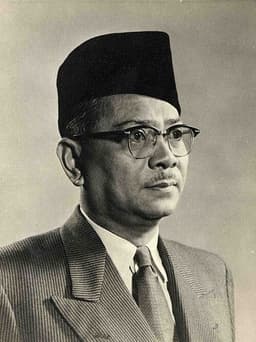
Suleiman I
Emperor · Medieval
78.8Total
Basic Information
Born
63
1494
Died
—
1566
Era
Ancient
Medieval
Nationality
Roman Empire
Ottoman Empire
Occupation
Emperor
Emperor
Civilization
Western
Middle Eastern
Score Comparison
Military (10%)
72.0
78.5
Political (20%)
90.0
82.0
Influence (20%)
88.0
85.0
Legacy (20%)
90.0
70.8
Leadership (15%)
88.0
81.7
Strategy (15%)
75.0
74.4
TOTAL
85.9
78.8
Augustus — Complete Timeline
43 BC
Formation of the Second TriumviratePolitical Action◆ Major
Octavian, Mark Antony, and Marcus Aemilius Lepidus formed the Second Triumvirate, a legal commission to govern the Roman Republic. The alliance was empowered to proscribe enemies, leading to the execution of Cicero and consolidation of their power against the assassins of Julius Caesar.
Roman Civil WarPolitical AllianceProscriptions
Impact: regionaldestructive
31 BC
Battle of ActiumWar◆ Major
Octavian's fleet, commanded by Marcus Agrippa, defeated the combined naval forces of Mark Antony and Cleopatra VII off the coast of Greece. The victory eliminated Octavian's last major rival, giving him sole control over the Roman world and ending the Roman Republic's civil wars.
Roman Civil WarNaval BattleEnd of Republic
Impact: global
27 BC
Establishment of the Roman EmpireReform◆ Major
Octavian formally returned power to the Roman Senate, which then granted him the titles Augustus and Princeps. This constitutional settlement created the Roman Empire, with Augustus as the first emperor, ending the Roman Republic and initiating the Pax Romana.
Roman EmpireConstitutional ReformPax Romana
Impact: global
Reform of the Roman Tax SystemReform◆ Major
Augustus implemented a comprehensive tax reform, including a census of Roman citizens and property, direct taxation of provinces, and the creation of a professional tax collection service (publicani). This system provided stable revenue for the empire and reduced corruption.
Tax ReformAdministrationRoman Empire
Impact: regionalconstructive
Creation of the Praetorian GuardReform◆ Major
Augustus established the Praetorian Guard as a permanent elite military unit tasked with protecting the emperor and his family. Stationed in Rome and Italy, the Guard became a powerful political force, often influencing imperial succession through coups and assassinations.
Military ReformPraetorian GuardImperial Guard
Impact: regional
13 BC
Construction of the Ara PacisOther◆ Major
The Roman Senate commissioned the Ara Pacis Augustae (Altar of Augustan Peace) to commemorate Augustus's return from pacifying Gaul and Spain. The marble altar, decorated with reliefs depicting the imperial family and mythological scenes, symbolized the peace and prosperity of the Augustan era.
Building ProjectPropagandaAugustan Art
Impact: regionalconstructive
Suleiman I — Complete Timeline
1522 AD
Siege of RhodesWar◆ Major
Suleiman I led a massive Ottoman army and fleet to besiege the island of Rhodes, held by the Knights Hospitaller. After a six-month siege, the knights surrendered and were allowed to leave. This victory secured Ottoman control over the eastern Mediterranean.
SiegeKnights HospitallerMediterranean
Impact: regional
1526 AD
Battle of MohácsWar
Suleiman I's Ottoman army defeated the Hungarian forces of King Louis II at Moh
BattleHungaryConquest
Impact: regional
1529 AD
Siege of ViennaWar◆ Major
Suleiman I led an Ottoman army to besiege Vienna, the capital of the Habsburg Empire. The siege failed due to supply problems and the onset of winter. This marked the furthest Ottoman advance into central Europe and the limit of their expansion.
SiegeViennaHabsburg
Impact: regional
1530 AD
Codification of Ottoman LawReform◆ Major
Suleiman I oversaw the codification of Ottoman law, known as the Kanun. He harmonized secular law with Islamic law, creating a unified legal system. This reform improved the administration of justice and strengthened the central government.
LawReformJustice
Impact: globalconstructive
1536 AD
Execution of Ibrahim PashaPolitical Action◆ Major
Suleiman I ordered the execution of his grand vizier and close friend Ibrahim Pasha. Ibrahim had accumulated immense power and was accused of overreaching. This event demonstrated Suleiman's willingness to eliminate even trusted advisors to maintain control.
ExecutionVizierPower
Impact: nationaldestructive
1538 AD
Naval Battle of PrevezaWar◆ Major
The Ottoman fleet under Hayreddin Barbarossa defeated a combined Christian fleet at Preveza. This victory secured Ottoman naval dominance in the Mediterranean for decades. It allowed the Ottomans to control trade routes and raid coastal areas.
Naval BattleBarbarossaMediterranean
Impact: regional
Expert Analysis
Origins
Augustus, born Gaius Octavius in 63 BC, was the grandnephew and adopted son of Julius Caesar. His rise was rooted in the chaos of the late Roman Republic, where he navigated civil wars and political intrigue. Suleiman I, born in 1494, was the son of Selim I and inherited a vast, expanding Ottoman Empire. His origins were that of a princely heir, groomed for rule in a stable dynasty.
Rise to Power
Augustus's path was fraught with conflict. After Caesar's assassination, he formed the Second Triumvirate with Mark Antony and Lepidus, defeated Caesar's assassins, and then turned on Antony. The Battle of Actium in 31 BC was decisive, making Augustus the undisputed ruler of Rome. He cleverly maintained republican facades while accumulating power. Suleiman ascended smoothly in 1520 after his father's death. His early reign saw the conquest of Belgrade (1521) and Rhodes (1522), establishing his military reputation. Unlike Augustus, he faced no civil war for succession.
Leadership & Governance
Augustus was a master reformer. He restructured the Roman tax system, created the Praetorian Guard, and established a professional civil service. His reign initiated the Pax Romana, a 200-year peace. He also embarked on massive building projects, famously claiming he found Rome brick and left it marble. Suleiman codified Ottoman law, earning the title "the Lawgiver." He centralized administration and promoted justice. However, his governance relied heavily on powerful viziers, notably Ibrahim Pasha, whose execution later destabilized the court. Augustus maintained tighter personal control.
Triumph & Tragedy
Augustus's triumphs include the establishment of the Roman Empire, the defeat of Antony and Cleopatra, and the expansion of borders. His tragedy was personal: his chosen heirs died before him, leading to the eventual succession of the troubled Tiberius. Suleiman's triumphs were military: the Battle of Mohács (1526) crushed Hungary, and his siege of Vienna (1529) threatened Europe. Yet, his execution of Ibrahim Pasha (1536) and later his son Mustafa were tragic, driven by palace intrigue and his wife Hurrem Sultan. These acts weakened the dynasty.
Character & Destiny
Augustus was calculating, patient, and pragmatic. He used propaganda effectively, portraying himself as a restorer of tradition. His destiny was to transform Rome from a republic to an empire, shaping Western civilization. Suleiman was ambitious, cultured, and just, but also susceptible to manipulation. His destiny was to lead the Ottoman Empire to its zenith, but his later years were marred by succession crises.
Legacy
Augustus's legacy is immense: he founded the Roman Empire, established institutions that lasted centuries, and set the template for European emperors. His Pax Romana enabled cultural and economic flourishing. Suleiman's legacy is that of a golden age: Ottoman law, architecture (Süleymaniye Mosque), and culture thrived. However, his empire began a slow decline after his death. Augustus's impact on world history is arguably more profound, as Rome's influence endured through law, language, and governance.
Conclusion
While Suleiman I was a magnificent ruler who presided over the Ottoman peak, Augustus's foundational role in creating the Roman Empire and his lasting impact on governance, law, and culture give him the edge. Augustus scores higher in leadership (90 vs 71), longevity of impact, and governance reform. Suleiman's military prowess (78 vs 72) and legal codification are notable, but Augustus's comprehensive state-building and the enduring Pax Romana make him the greater emperor. Final score: Augustus 8.5/10, Suleiman 7.8/10.
Rankings
🥇
AugustusLeader
Mil: 72.0Pol: 90.0Inf: 88.0
85.9
🥈
Suleiman I
Mil: 78.5Pol: 82.0Inf: 85.0
78.8
+7.1 behind
How This Comparison Works
Algorithm
Each figure is scored on 6 dimensions (0—100 scale) based on structured historical data: Military (10%), Political (20%), Influence (20%), Legacy (20%), Leadership (15%), Strategy (15%). The weighted total produces the final ranking.
Data Sources
Scores are computed from structured sub-indicators in the database. Scale factors adjust for era (Ancient ×0.85, Modern ×1.0) and civilization size (Eastern ×1.05, Other ×0.80) to account for differences in population and military scale.
Maximum 3 Figures
Comparisons are limited to 2—3 figures to ensure readability and statistical meaningfulness.
Error Margins
±5 points per dimension — Sub-scores are derived from historical records with inherent uncertainty. Two figures within 5 points on a dimension should be considered roughly equivalent in that area.
Total Score Accuracy
±3 points overall — The weighted combination of 6 dimensions produces a total score with approximately ±3 points of uncertainty. Differences of less than 3 points are not statistically significant— the figures are effectively tied.
Known Limitations
- Historical records are incomplete and uneven across civilizations
- Figures from oral-tradition societies may be underrepresented
- Occupation labels can misclassify multi-role figures
- Scores measure capability and impact, not moral character
- Quantitative scoring is a comparison tool, not absolute truth
Capability Radar
Military (10%) — Battles & Warfare
Battles
75
95
Win Rate
80
92
Expansion
85
95
Political (20%) — Governance & Reform
Reform
95
90
Diplomacy
90
88
Economy
85
85
Influence (20%) — Cultural & Global Reach
Cultural
85
85
Global
90
85
Legacy (20%) — Historical Impact
Historical
95
88
Longevity
95
80
Leadership (15%) — Power & Stability
Tenure
95
95
Stability
95
80
Strategy (15%) — Tactics & Innovation
Strategy
85
90
Tactics
70
88
Reform
90
85
Similar Comparisons
Comments & Discussion
No comments yet. Be the first to share your thoughts!