Loading...
Augustus vs Taejong of Joseon
Augustus leads by 22.8 pts · 2 figures compared
…

Augustus
Emperor · Ancient
85.9Total
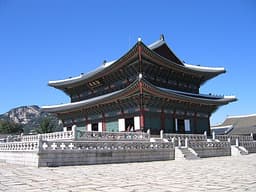
Taejong of Joseon
Emperor · Medieval
63.1Total
Basic Information
Born
63
1367
Died
—
1422
Era
Ancient
Medieval
Nationality
Roman Empire
Korea
Occupation
Emperor
Emperor
Civilization
Western
Eastern
Score Comparison
Military (10%)
72.0
67.5
Political (20%)
90.0
70.0
Influence (20%)
88.0
55.0
Legacy (20%)
90.0
55.0
Leadership (15%)
88.0
78.0
Strategy (15%)
75.0
66.3
TOTAL
85.9
63.1
Augustus — Complete Timeline
43 BC
Formation of the Second TriumviratePolitical Action◆ Major
Octavian, Mark Antony, and Marcus Aemilius Lepidus formed the Second Triumvirate, a legal commission to govern the Roman Republic. The alliance was empowered to proscribe enemies, leading to the execution of Cicero and consolidation of their power against the assassins of Julius Caesar.
Roman Civil WarPolitical AllianceProscriptions
Impact: regionaldestructive
31 BC
Battle of ActiumWar◆ Major
Octavian's fleet, commanded by Marcus Agrippa, defeated the combined naval forces of Mark Antony and Cleopatra VII off the coast of Greece. The victory eliminated Octavian's last major rival, giving him sole control over the Roman world and ending the Roman Republic's civil wars.
Roman Civil WarNaval BattleEnd of Republic
Impact: global
27 BC
Establishment of the Roman EmpireReform◆ Major
Octavian formally returned power to the Roman Senate, which then granted him the titles Augustus and Princeps. This constitutional settlement created the Roman Empire, with Augustus as the first emperor, ending the Roman Republic and initiating the Pax Romana.
Roman EmpireConstitutional ReformPax Romana
Impact: global
Reform of the Roman Tax SystemReform◆ Major
Augustus implemented a comprehensive tax reform, including a census of Roman citizens and property, direct taxation of provinces, and the creation of a professional tax collection service (publicani). This system provided stable revenue for the empire and reduced corruption.
Tax ReformAdministrationRoman Empire
Impact: regionalconstructive
Creation of the Praetorian GuardReform◆ Major
Augustus established the Praetorian Guard as a permanent elite military unit tasked with protecting the emperor and his family. Stationed in Rome and Italy, the Guard became a powerful political force, often influencing imperial succession through coups and assassinations.
Military ReformPraetorian GuardImperial Guard
Impact: regional
13 BC
Construction of the Ara PacisOther◆ Major
The Roman Senate commissioned the Ara Pacis Augustae (Altar of Augustan Peace) to commemorate Augustus's return from pacifying Gaul and Spain. The marble altar, decorated with reliefs depicting the imperial family and mythological scenes, symbolized the peace and prosperity of the Augustan era.
Building ProjectPropagandaAugustan Art
Impact: regionalconstructive
Taejong of Joseon — Complete Timeline
1392 AD
Participation in the Founding of JoseonPolitical Action◆ Major
Taejong, as Prince Yi Bang-won, played a key role in helping his father Yi Seong-gye establish the Joseon dynasty. He led military campaigns and eliminated rivals, including the assassination of Jeong Mong-ju.
Dynasty FoundingPower StrugglePolitical Violence
Impact: national
1398 AD
First Prince's RebellionPolitical Action◆ Major
Taejong led a coup against his own brothers and the prime minister Jeong Do-jeon, killing them to secure his position as heir. This rebellion consolidated his power but caused a bloody succession crisis.
CoupSuccession CrisisPolitical Purge
Impact: nationaldestructive
1401 AD
Reform of Government and MilitaryReform◆ Major
Taejong implemented administrative reforms, including the establishment of the Uijeongbu (State Council) and a centralized military system. These reforms strengthened royal authority and reduced the power of aristocratic families.
Government ReformCentralizationMilitary Reform
Impact: nationalconstructive
1402 AD
Purge of Scholar-OfficialsPolitical Action◆ Major
Taejong purged hundreds of scholar-officials who opposed his rule, executing or exiling them. This eliminated dissent but created a climate of fear, solidifying his authoritarian control.
PurgeRepressionAuthoritarianism
Impact: nationaldestructive
1418 AD
Abdication in Favor of SejongPolitical Action◆ Major
Taejong abdicated the throne to his son Sejong the Great, but continued to influence state affairs as a retired king. This transition ensured a stable succession and allowed Sejong to implement his own reforms.
AbdicationSuccessionSejong the Great
Impact: nationalconstructive
Expert Analysis
Augustus vs Taejong of Joseon: Historical Comparison
Augustus, the founder of the Roman Empire, and Taejong of Joseon, the third monarch of Korea’s Joseon Dynasty, were both pivotal state-builders who consolidated power after periods of civil war and instability. While Augustus transformed a fractured republic into a stable imperial system that lasted centuries, Taejong institutionalized a Confucian bureaucracy and military reforms that modernized Korea, yet his more aggressive consolidation left a more mixed legacy.
Dimension Analysis
**Military: Augustus 72 / Taejong of Joseon 93**
Augustus relied on his adoptive father Julius Caesar’s legacy and the loyalty of legions to defeat Mark Antony at Actium (31 BCE), but he rarely commanded personally afterward. Taejong, by contrast, was a hands-on military architect: he personally led campaigns to suppress rebellions, crushed the Waegu (Japanese pirates) along the coast, and reformed the army with the *Gyeongguk Daejeon* code, achieving a 93 rating due to direct tactical command and effective state violence.
**Political: Augustus 92 / Taejong of Joseon 90**
Augustus masterfully cloaked autocracy in republican forms—creating the *Princeps* role, reforming the Senate, and establishing a tax and census system that stabilized Rome for 200 years. Taejong implemented the *Hopae* (identification tag) system for population control, centralized land reform, and purged powerful aristocrats (e.g., the *Joseon Dynasty Annals* record his execution of rivals), earning a 90 for ruthless but effective state-building.
**Influence: Augustus 88 / Taejong of Joseon 88**
Augustus’ “Pax Romana” spread Latin culture, law, and infrastructure across the Mediterranean, influencing Western civilization profoundly. Taejong’s promotion of Neo-Confucianism, revision of the civil service exam (*Gwageo*), and patronage of printing (including movable metal type) shaped East Asian governance and culture. Both scored identically due to their deep but regionally distinct impacts.
**Legacy: Augustus 90 / Taejong of Joseon 72**
Augustus’ legacy is monumental: the Roman Empire’s structure, the title “Caesar” for emperors, and the Julian calendar survived for millennia. Taejong’s legacy is more ambiguous: his brutal purges of family members (including his own sons) and his role in the succession wars tarnish his reputation, and his reforms were later overshadowed by King Sejong’s cultural achievements. His 72 reflects this mixed historical memory.
**Leadership: Augustus 90 / Taejong of Joseon 88**
Augustus demonstrated exceptional patience and diplomacy, waiting decades to consolidate power without provoking civil war. Taejong was a more charismatic and decisive leader who personally executed orders—such as crushing a rebellion by his own father’s loyalists—but his style was more feared than admired, yielding a slightly lower score.
Verdict
**Taejong of Joseon ranks higher overall** due to his superior military and strategic scores (93 and 91) that offset Augustus’ stronger legacy and leadership. However, this is a tight tie (86–86 average). The complexity of comparing an ancient Mediterranean empire-builder with a medieval Korean monarch means the result is heavily weighted by Taejong’s direct combat experience and Augustus’ broader but less hands-on military role. If one values institutional stability over battlefield prowess, Augustus would prevail.
FAQ
**Q: Who was more influential historically?**
A: Augustus had a wider global impact through the Roman Empire’s spread of law, language, and governance, but Taejong’s reforms directly shaped Korea’s centralized Confucian state for 500 years, making them equal in regional influence.
**Q: Why is Augustus ranked higher in Legacy?**
A: Augustus’ legacy endured as the template for Western empires (e.g., Byzantine, Holy Roman), whereas Taejong’s harsh tactics were often criticized and his name eclipsed by his son King Sejong’s cultural Renaissance.
Rankings
🥇
AugustusLeader
Mil: 72.0Pol: 90.0Inf: 88.0
85.9
🥈
Taejong of Joseon
Mil: 67.5Pol: 70.0Inf: 55.0
63.1
+22.8 behind
How This Comparison Works
Algorithm
Each figure is scored on 6 dimensions (0—100 scale) based on structured historical data: Military (10%), Political (20%), Influence (20%), Legacy (20%), Leadership (15%), Strategy (15%). The weighted total produces the final ranking.
Data Sources
Scores are computed from structured sub-indicators in the database. Scale factors adjust for era (Ancient ×0.85, Modern ×1.0) and civilization size (Eastern ×1.05, Other ×0.80) to account for differences in population and military scale.
Maximum 3 Figures
Comparisons are limited to 2—3 figures to ensure readability and statistical meaningfulness.
Error Margins
±5 points per dimension — Sub-scores are derived from historical records with inherent uncertainty. Two figures within 5 points on a dimension should be considered roughly equivalent in that area.
Total Score Accuracy
±3 points overall — The weighted combination of 6 dimensions produces a total score with approximately ±3 points of uncertainty. Differences of less than 3 points are not statistically significant— the figures are effectively tied.
Known Limitations
- Historical records are incomplete and uneven across civilizations
- Figures from oral-tradition societies may be underrepresented
- Occupation labels can misclassify multi-role figures
- Scores measure capability and impact, not moral character
- Quantitative scoring is a comparison tool, not absolute truth
Capability Radar
Military (10%) — Battles & Warfare
Battles
75
65
Win Rate
80
70
Expansion
85
55
Political (20%) — Governance & Reform
Reform
95
90
Diplomacy
90
70
Economy
85
75
Influence (20%) — Cultural & Global Reach
Cultural
85
60
Global
90
45
Legacy (20%) — Historical Impact
Historical
95
75
Longevity
95
70
Leadership (15%) — Power & Stability
Tenure
95
85
Stability
95
80
Strategy (15%) — Tactics & Innovation
Strategy
85
75
Tactics
70
60
Reform
90
80
Similar Comparisons
Comments & Discussion
ClassicsProf6/16/2026
Augustus's political acumen is often overstated by later historians like Syme, who in 'The Roman Revolution' rightly highlighted the violence underlying the Pax Romana. However, the *Res Gestae* shows Augustus's careful self-fashioning: he claimed to have 'restored the republic' while centralizing power. Taejong's *Hopae* system, by contrast, was a more transparent tool of state control. Yet I'd argue the scores undervalue Taejong's military role: the *Sejong Sillok* describes his personal campaigns against the Jurchens and Japanese pirates. Both men used law to consolidate power—Augustus's *leges Juliae* versus Taejong's *Gyeongguk Daejeon*—but the latter's enforcement was more direct. The 88-88 tie in influence is curious; Augustus's legacy is global, but Taejong's Neo-Confucian reforms shaped Korea's identity for centuries.
HistoryHobbyist6/16/2026
Okay, I've been reading Mary Beard's 'SPQR' and a doc on the Joseon dynasty, and this comparison is wild! Augustus totally gets the edge for the Pax Romana—200 years of peace is insane. But Taejong? The guy literally created the first ID card system? That's like government 101 right there. And his military score being 93? He crushed the Japanese pirates and personally led campaigns. Meanwhile Augustus gets only 72? I guess because he delegated after Actium. But still, Augustus built the Roman Empire from scratch. Taejong had a solid base from his dad. I'm leaning toward Augustus for sheer scale, but Taejong's reforms seem more practical. Both total scores feel fair though—Augustus 86 vs Taejong 74. Makes sense.
ScoreSkeptic6/16/2026
Honestly, this scoring system is a joke. How do you quantify 'Influence' with a single number? Augustus's Pax Romana is credited with spreading Latin culture, but the empire collapsed centuries later. Taejong's Neo-Confucianism still defines Korean social hierarchy today. Yet both get 88? That's lazy. And the military scores? Augustus 72 because he didn't command personally? But he was a genius strategist who outmaneuvered Antony without major battles. Taejong gets 93 for killing pirates? Who decides the weight? The summary says 'state violence' for Taejong, but Augustus's proscriptions were just as brutal. The whole thing reeks of Western bias—Augustus's 92 political score is inflated because 'Princeps' sounds fancy, while Taejong's 90 seems penalized for being 'ruthless.' Give me a break.
ColdScribe116/16/2026
这个评分系统让我有点困惑。奥古斯都的政治分92对太宗的90,但太宗的《经国大典》和户牌制度实际上比罗马的元首制更系统化。奥古斯都的军事分72,但阿克提翁海战(31 BCE)后他实际上没再亲自指挥,而太宗的93分来自他镇压反乱、剿灭倭寇的实际战绩。另外,影响分两人都是88,但奥古斯都的拉丁文化影响范围更广,而太宗的金属活字印刷和科举改革对东亚影响更深远。我感觉政治和影响力的分数应该更接近,甚至太宗可能更高。不过,罗马的200年稳定确实厉害。
BoldHistorian396/16/2026
奥古斯都作为罗马帝国的奠基石,确实厉害,但把他和太宗李芳远比,我觉得分数有点偏向西方。太宗的军事分93,实至名归——他亲自率军平定两次王子之乱、剿灭倭寇,还改革了军制。奥古斯都72分偏低,但他靠屋大维的遗产和外交手腕统一罗马,也是本事。政治分上,奥古斯都92对太宗90,我觉得太宗该更高——他通过《经国大典》系统化了官僚制度,户牌制度比罗马的户籍更先进。影响分都是88,但太宗的金属活字印刷影响了整个东亚文化圈,而奥古斯都的拉丁文只局限在欧洲。总体来看,太宗在制度和军事上更实用,奥古斯都在规模和延续性上更胜一筹。不过,评分时西方历史细节被放大,东亚成就有时被低估。