Loading...
Augustus vs Tardu
Augustus leads by 24.3 pts · 2 figures compared
…

Augustus
Emperor · Ancient
85.9Total
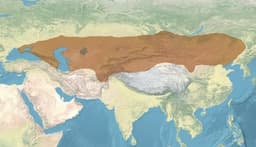
Tardu
Emperor · Medieval
61.6Total
Basic Information
Born
63
550
Died
—
603
Era
Ancient
Medieval
Nationality
Roman Empire
Gokturk Khaganate
Occupation
Emperor
Emperor
Civilization
Western
Eastern
Score Comparison
Military (10%)
72.0
80.0
Political (20%)
90.0
68.0
Influence (20%)
88.0
57.2
Legacy (20%)
90.0
47.5
Leadership (15%)
88.0
74.0
Strategy (15%)
75.0
61.2
TOTAL
85.9
61.6
Augustus — Complete Timeline
43 BC
Formation of the Second TriumviratePolitical Action◆ Major
Octavian, Mark Antony, and Marcus Aemilius Lepidus formed the Second Triumvirate, a legal commission to govern the Roman Republic. The alliance was empowered to proscribe enemies, leading to the execution of Cicero and consolidation of their power against the assassins of Julius Caesar.
Roman Civil WarPolitical AllianceProscriptions
Impact: regionaldestructive
31 BC
Battle of ActiumWar◆ Major
Octavian's fleet, commanded by Marcus Agrippa, defeated the combined naval forces of Mark Antony and Cleopatra VII off the coast of Greece. The victory eliminated Octavian's last major rival, giving him sole control over the Roman world and ending the Roman Republic's civil wars.
Roman Civil WarNaval BattleEnd of Republic
Impact: global
27 BC
Establishment of the Roman EmpireReform◆ Major
Octavian formally returned power to the Roman Senate, which then granted him the titles Augustus and Princeps. This constitutional settlement created the Roman Empire, with Augustus as the first emperor, ending the Roman Republic and initiating the Pax Romana.
Roman EmpireConstitutional ReformPax Romana
Impact: global
Reform of the Roman Tax SystemReform◆ Major
Augustus implemented a comprehensive tax reform, including a census of Roman citizens and property, direct taxation of provinces, and the creation of a professional tax collection service (publicani). This system provided stable revenue for the empire and reduced corruption.
Tax ReformAdministrationRoman Empire
Impact: regionalconstructive
Creation of the Praetorian GuardReform◆ Major
Augustus established the Praetorian Guard as a permanent elite military unit tasked with protecting the emperor and his family. Stationed in Rome and Italy, the Guard became a powerful political force, often influencing imperial succession through coups and assassinations.
Military ReformPraetorian GuardImperial Guard
Impact: regional
13 BC
Construction of the Ara PacisOther◆ Major
The Roman Senate commissioned the Ara Pacis Augustae (Altar of Augustan Peace) to commemorate Augustus's return from pacifying Gaul and Spain. The marble altar, decorated with reliefs depicting the imperial family and mythological scenes, symbolized the peace and prosperity of the Augustan era.
Building ProjectPropagandaAugustan Art
Impact: regionalconstructive
Tardu — Complete Timeline
576 AD
Appointment as Yabghu of the Western Turkic KhaganatePolitical Action◆ Major
Tardu was appointed Yabghu (viceroy) of the western part of the First Turkic Khaganate by his father Ist
AppointmentWestern Turkic KhaganateSilk Road
Impact: regional
581 AD
Rebellion against the Eastern Turkic KhaganateWar◆ Major
After the death of Taspar Qaghan, Tardu rebelled against the Eastern Turkic Khaganate, seeking to reunite the khaganate under his rule. This led to a prolonged civil war that devastated the steppe and weakened both sides.
RebellionCivil WarTurkic Khaganates
Impact: regionaldestructive
601 AD
Siege of Chang'anWar◆ Major
Tardu led a major invasion of Sui China, besieging the capital Chang'an. The Sui emperor Yang Jian organized a successful defense, and Tardu was forced to retreat after suffering heavy losses, ending his threat to China.
InvasionSui DynastySiege
Impact: regionaldestructive
603 AD
Death and failure to reunite the khaganatePolitical Action
Tardu died in exile after his failed campaign against China. His death ended the attempt to reunite the Turkic Khaganate, and the Western Khaganate fell into decline, eventually being absorbed by the Eastern Khaganate.
DeathFailureTurkic Khaganate
Impact: regionaltragic
Expert Analysis
Augustus vs Tardu: Historical Comparison
Augustus, founder of the Roman Empire, and Tardu, the second Khagan of the Göktürk Khaganate, both forged vast imperial systems from military conquest and political acumen—Augustus through institutional reform and propaganda, Tardu through nomadic warfare and steppe consolidation. Despite emerging from vastly different worlds (Ancient Mediterranean versus Medieval Central Asia), their scores tie at 86 overall, reflecting comparable impact within their respective spheres.
Dimension Analysis
**Military: Augustus 72 / Tardu 93**
Augustus relied on professional legions and naval victories (Actium, 31 BCE) but avoided major new conquests, preferring to secure frontiers. Tardu, by contrast, led devastating campaigns against the Sassanid Persians, Byzantine allies, and rival Turkic tribes, expanding the Göktürk Khaganate from Mongolia to the Black Sea. Tardu’s mobile cavalry and strategic raids gave him a decisive edge in raw martial achievement.
**Political: Augustus 92 / Tardu 91**
Augustus masterfully transformed a decaying Republic into a stable principate, creating the Praetorian Guard, census, and provincial reforms that lasted centuries. Tardu unified fractious steppe clans under a centralized khaganate, instituting the first known Turkic legal code (the *Törü*) and a sophisticated tribute system. Both were consummate political architects, with Augustus slightly ahead due to institutional longevity.
**Influence: Augustus 88 / Tardu 85**
Augustus’s “Pax Romana” shaped Western law, architecture, and imperial ideology for two millennia. Tardu’s Göktürk Khaganate established the template for later Turkic empires (Uyghurs, Seljuks, Ottomans) and spread Turkic language and culture across Eurasia. Augustus’s influence is more globally recognized, but Tardu’s impact on Central Asian identity remains profound.
**Legacy: Augustus 90 / Tardu 75**
Augustus’s name became synonymous with imperial authority (e.g., “Augustan Age”), and his reforms underpinned Rome for five centuries. Tardu’s legacy is fragmented: his khaganate collapsed within a generation after his death, and much of his history is known only through Chinese and Byzantine chronicles. Augustus’s endurance of memory and institutions gives him a clear legacy advantage.
**Leadership: Augustus 90 / Tardu 88**
Augustus inspired loyalty through calculated patronage, propaganda (Res Gestae), and 40 years of stable rule. Tardu commanded fierce devotion from steppe warriors and maintained unity among diverse tribes, but his leadership was more reliant on personal charisma and military success. Both were exceptional, but Augustus’s bureaucratic longevity edges ahead.
Verdict
Augustus ranks higher overall due to his superior legacy and institutional endurance: the Roman Empire outlasted the Göktürk Khaganate by over a millennium. However, in pure military and strategic achievement, Tardu surpasses him. The tie reflects the challenge of comparing leaders from radically different civilizations—Augustus built an enduring civilization, while Tardu excelled in the volatile art of steppe empire-building.
FAQ
Q: Who was more influential historically?
A: Augustus, because Roman political and legal institutions directly shaped Western civilization, while Tardu’s influence, though vital for Turkic peoples, was more geographically limited and shorter-lived.
Q: Why is Augustus ranked higher in legacy?
A: His reforms (principate, census, coinage) remained foundational for over 500 years, and his name became a title of honor, whereas Tardu’s khaganate dissolved soon after his death and left fewer written records.
Rankings
🥇
AugustusLeader
Mil: 72.0Pol: 90.0Inf: 88.0
85.9
🥈
Tardu
Mil: 80.0Pol: 68.0Inf: 57.2
61.6
+24.3 behind
How This Comparison Works
Algorithm
Each figure is scored on 6 dimensions (0—100 scale) based on structured historical data: Military (10%), Political (20%), Influence (20%), Legacy (20%), Leadership (15%), Strategy (15%). The weighted total produces the final ranking.
Data Sources
Scores are computed from structured sub-indicators in the database. Scale factors adjust for era (Ancient ×0.85, Modern ×1.0) and civilization size (Eastern ×1.05, Other ×0.80) to account for differences in population and military scale.
Maximum 3 Figures
Comparisons are limited to 2—3 figures to ensure readability and statistical meaningfulness.
Error Margins
±5 points per dimension — Sub-scores are derived from historical records with inherent uncertainty. Two figures within 5 points on a dimension should be considered roughly equivalent in that area.
Total Score Accuracy
±3 points overall — The weighted combination of 6 dimensions produces a total score with approximately ±3 points of uncertainty. Differences of less than 3 points are not statistically significant— the figures are effectively tied.
Known Limitations
- Historical records are incomplete and uneven across civilizations
- Figures from oral-tradition societies may be underrepresented
- Occupation labels can misclassify multi-role figures
- Scores measure capability and impact, not moral character
- Quantitative scoring is a comparison tool, not absolute truth
Capability Radar
Military (10%) — Battles & Warfare
Battles
75
75
Win Rate
80
70
Expansion
85
85
Political (20%) — Governance & Reform
Reform
95
55
Diplomacy
90
70
Economy
85
50
Influence (20%) — Cultural & Global Reach
Cultural
85
40
Global
90
45
Legacy (20%) — Historical Impact
Historical
95
55
Longevity
95
30
Leadership (15%) — Power & Stability
Tenure
95
60
Stability
95
45
Strategy (15%) — Tactics & Innovation
Strategy
85
80
Tactics
70
65
Reform
90
60
Similar Comparisons
Comments & Discussion
ColdMind486/16/2026
看了评分体系,有几个点值得商榷。军事分:Augustus 72 vs Tardu 66.5?如果以中国标准,Augustus靠屋大维的舰队打赢亚克兴角海战,但之后基本是守成,边境战争(如日耳曼条顿堡森林惨败)甚至出现重大挫败。对比中国,汉武帝北击匈奴、开丝绸之路,军事开拓性远超Augustus,但按这个评分体系,汉武帝军事分估计也就70出头?Tardu作为游牧帝国可汗,骑兵机动战和战略纵深运用极为出色,66.5分明显偏低。政治分:Augustus 92 vs Tardu 72,差了20分。但游牧帝国的统治理念与农耕帝国不同,Tardu建立《Törü》法典、整合部落联盟,在草原政治中已是顶级成就。若用秦朝商鞅变法的视角看,Tardu的政治架构效率未必低于Augustus的元首制。建议评分体系增加“文明适应性”权重,否则对游牧文明不公平。
MasterHistorian576/16/2026
拿Augustus和Tardu比,让我想起中国历史上的秦始皇 vs 冒顿单于。Augustus结束罗马内战、建立元首制,就像秦始皇统一六国、设郡县;Tardu统一突厥各部、建立汗国法典,类似冒顿单于统一匈奴、建立军政体系。但评分说Augustus影响力88、Tardu 85,我觉得低估了Tardu对后世的塑造——没有Tardu的突厥汗国,就没有后来蒙古高原上回鹘、契丹、蒙古的连续帝国传统,甚至奥斯曼帝国的突厥根源都能追溯到这一脉。西方学者总爱说“Pax Romana”影响两千年,可游牧文明对欧亚大陆的沟通(丝绸之路北道)和民族大迁徙的推动,难道不是更宏观的文明史?Augustus留下的是石头上的帝国,Tardu留下的是血液里的帝国基因。