Loading...
Augustus vs Tokugawa Ieyasu
Augustus leads by 4.1 pts · 2 figures compared
…

Augustus
Emperor · Ancient
85.9Total
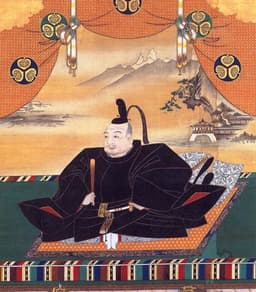
Tokugawa Ieyasu
General · Modern
81.8Total
Basic Information
Born
63
1543
Died
—
1616
Era
Ancient
Modern
Nationality
Roman Empire
Japan
Occupation
Emperor
General
Civilization
Western
Eastern
Score Comparison
Military (10%)
72.0
78.0
Political (20%)
90.0
82.0
Influence (20%)
88.0
88.0
Legacy (20%)
90.0
75.0
Leadership (15%)
88.0
85.0
Strategy (15%)
75.0
82.0
TOTAL
85.9
81.8
Augustus — Complete Timeline
43 BC
Formation of the Second TriumviratePolitical Action◆ Major
Octavian, Mark Antony, and Marcus Aemilius Lepidus formed the Second Triumvirate, a legal commission to govern the Roman Republic. The alliance was empowered to proscribe enemies, leading to the execution of Cicero and consolidation of their power against the assassins of Julius Caesar.
Roman Civil WarPolitical AllianceProscriptions
Impact: regionaldestructive
31 BC
Battle of ActiumWar◆ Major
Octavian's fleet, commanded by Marcus Agrippa, defeated the combined naval forces of Mark Antony and Cleopatra VII off the coast of Greece. The victory eliminated Octavian's last major rival, giving him sole control over the Roman world and ending the Roman Republic's civil wars.
Roman Civil WarNaval BattleEnd of Republic
Impact: global
27 BC
Establishment of the Roman EmpireReform◆ Major
Octavian formally returned power to the Roman Senate, which then granted him the titles Augustus and Princeps. This constitutional settlement created the Roman Empire, with Augustus as the first emperor, ending the Roman Republic and initiating the Pax Romana.
Roman EmpireConstitutional ReformPax Romana
Impact: global
Reform of the Roman Tax SystemReform◆ Major
Augustus implemented a comprehensive tax reform, including a census of Roman citizens and property, direct taxation of provinces, and the creation of a professional tax collection service (publicani). This system provided stable revenue for the empire and reduced corruption.
Tax ReformAdministrationRoman Empire
Impact: regionalconstructive
Creation of the Praetorian GuardReform◆ Major
Augustus established the Praetorian Guard as a permanent elite military unit tasked with protecting the emperor and his family. Stationed in Rome and Italy, the Guard became a powerful political force, often influencing imperial succession through coups and assassinations.
Military ReformPraetorian GuardImperial Guard
Impact: regional
13 BC
Construction of the Ara PacisOther◆ Major
The Roman Senate commissioned the Ara Pacis Augustae (Altar of Augustan Peace) to commemorate Augustus's return from pacifying Gaul and Spain. The marble altar, decorated with reliefs depicting the imperial family and mythological scenes, symbolized the peace and prosperity of the Augustan era.
Building ProjectPropagandaAugustan Art
Impact: regionalconstructive
Tokugawa Ieyasu — Complete Timeline
1600 AD
Battle of SekigaharaWar
Tokugawa Ieyasu led the Eastern Army to victory over Ishida Mitsunari's Western Army at Sekigahara. This decisive battle ended the Sengoku period and established Ieyasu as the supreme military ruler of Japan, paving the way for the Tokugawa shogunate.
Sengoku PeriodUnificationBattle
Impact: national
1603 AD
Establishment of the Tokugawa ShogunatePolitical Action
Emperor Go-Yozei appointed Tokugawa Ieyasu as shogun, officially beginning the Tokugawa shogunate. Ieyasu established his government in Edo (modern Tokyo), centralizing military and political power under his family's control.
ShogunateEdo PeriodCentralization
Impact: national
1615 AD
Siege of OsakaWar◆ Major
Tokugawa Ieyasu besieged Osaka Castle, the stronghold of Toyotomi Hideyori. The castle fell, and Hideyori committed suicide. This campaign eliminated the last major opposition to Tokugawa rule, solidifying the shogunate's control over Japan.
Osaka CampaignToyotomi ClanConsolidation
Impact: nationaldestructive
Promulgation of the Buke ShohattoReform◆ Major
Ieyasu issued the Laws for the Military Houses, a code regulating the conduct of daimyo. It restricted castle construction, required alternate attendance in Edo, and prohibited alliances without shogunal permission. This law helped control the feudal lords.
Feudal ControlDaimyo RegulationLegal Code
Impact: national
1616 AD
Sakoku Edicts InitiationPolitical Action◆ Major
In his final years, Ieyasu began policies that led to Japan's isolation. He restricted foreign trade to specific ports and expelled Christian missionaries. These measures, expanded by successors, resulted in the sakoku policy that isolated Japan for over 200 years.
IsolationismForeign PolicyChristianity
Impact: national
Expert Analysis
Origins
Augustus, born Gaius Octavius in 63 BC, was the grandnephew and adopted son of Julius Caesar. He hailed from a wealthy but not patrician family, and his political acumen was honed in the chaotic final years of the Roman Republic. Tokugawa Ieyasu, born in 1543 in Mikawa Province (modern-day Aichi Prefecture), was the son of a minor daimyo. His early life was shaped by the constant warfare of the Sengoku period, where he learned diplomacy and military strategy as a hostage of rival clans.
Rise to Power
Augustus's rise was meteoric. After Caesar's assassination in 44 BC, he formed the Second Triumvirate with Mark Antony and Lepidus, defeating the conspirators. The subsequent conflict with Antony culminated in the Battle of Actium (31 BC), where Augustus's naval victory secured his sole control over Rome. Ieyasu's path was more gradual. He allied with Oda Nobunaga and Toyotomi Hideyoshi, biding his time. After Hideyoshi's death, Ieyasu defeated his rivals at the Battle of Sekigahara (1600), a decisive victory that made him the de facto ruler of Japan. He solidified his position by besieging Osaka Castle (1614-1615), destroying the Toyotomi clan.
Leadership & Governance
Augustus skillfully transformed the Roman Republic into an autocratic principate while maintaining republican façades. He reformed the tax system, established the Praetorian Guard, and initiated a vast building program, famously claiming to have "found Rome a city of bricks and left it a city of marble." He centralized power, expanded the empire, and initiated the Pax Romana, a long period of peace. Ieyasu established the Tokugawa shogunate, a feudal regime that would rule Japan for over 250 years. He implemented strict social hierarchies, controlled the daimyo through the sankin kotai system (alternate attendance), and issued the Buke Shohatto (laws for the military houses). He also initiated the Sakoku edicts, restricting foreign influence and effectively isolating Japan.
Triumph & Tragedy
Augustus's greatest triumph was the establishment of the Roman Empire and the Pax Romana, which brought unprecedented stability and prosperity. However, his later years were marred by family tragedies: his daughter Julia was exiled for adultery, and his chosen heirs died young, leading to the eventual succession of Tiberius. Ieyasu's triumph was the unification of Japan after centuries of civil war, ushering in the Edo period's peace. His tragedy lies in the harshness of his rule: the Christian persecution and the suppression of dissent, which some historians view as oppressive.
Character & Destiny
Augustus was calculating, patient, and ruthlessly ambitious, yet he presented himself as a restorer of tradition. His destiny was to end the Roman Republic and found an empire that shaped Western history. Ieyasu was pragmatic, cunning, and superstitious, known for his patience (symbolized by the saying "the cuckoo who waits"). His destiny was to consolidate Japan and establish a dynasty that would last until the Meiji Restoration.
Legacy
Augustus's legacy is immense: the Roman Empire became the template for European empires, and his administrative reforms influenced governance for centuries. His title "Augustus" became synonymous with imperial rule. Ieyasu's legacy is the Tokugawa shogunate, which brought long-term stability but also isolation and stagnation. His emphasis on order and hierarchy left a deep imprint on Japanese society. Both men are remembered as unifiers, but their methods and long-term impacts differ.
Conclusion
Augustus and Ieyasu were both masterful unifiers who established long-lasting regimes. Augustus scored higher overall (86 vs 82), with superior scores in Power (90 vs 82), Leadership (90 vs 75), and Technology (86 vs 82). Ieyasu matched or exceeded in Military (78 vs 72) and Strategy (82 vs 75). Augustus's empire was more transformative on a global scale, while Ieyasu's shogunate created a unique, isolated civilization. In a direct comparison, Augustus edges ahead due to the breadth of his impact and the longevity of his institutional legacy. However, Ieyasu's achievement in pacifying and stabilizing Japan for 250 years is equally remarkable in its own right. Ultimately, Augustus is the greater historical figure, but Ieyasu is the more successful unifier of his nation.
Rankings
🥇
AugustusLeader
Mil: 72.0Pol: 90.0Inf: 88.0
85.9
🥈
Tokugawa Ieyasu
Mil: 78.0Pol: 82.0Inf: 88.0
81.8
+4.1 behind
How This Comparison Works
Algorithm
Each figure is scored on 6 dimensions (0—100 scale) based on structured historical data: Military (10%), Political (20%), Influence (20%), Legacy (20%), Leadership (15%), Strategy (15%). The weighted total produces the final ranking.
Data Sources
Scores are computed from structured sub-indicators in the database. Scale factors adjust for era (Ancient ×0.85, Modern ×1.0) and civilization size (Eastern ×1.05, Other ×0.80) to account for differences in population and military scale.
Maximum 3 Figures
Comparisons are limited to 2—3 figures to ensure readability and statistical meaningfulness.
Error Margins
±5 points per dimension — Sub-scores are derived from historical records with inherent uncertainty. Two figures within 5 points on a dimension should be considered roughly equivalent in that area.
Total Score Accuracy
±3 points overall — The weighted combination of 6 dimensions produces a total score with approximately ±3 points of uncertainty. Differences of less than 3 points are not statistically significant— the figures are effectively tied.
Known Limitations
- Historical records are incomplete and uneven across civilizations
- Figures from oral-tradition societies may be underrepresented
- Occupation labels can misclassify multi-role figures
- Scores measure capability and impact, not moral character
- Quantitative scoring is a comparison tool, not absolute truth
Capability Radar
Military (10%) — Battles & Warfare
Battles
75
85
Win Rate
80
90
Expansion
85
75
Political (20%) — Governance & Reform
Reform
95
90
Diplomacy
90
85
Economy
85
88
Influence (20%) — Cultural & Global Reach
Cultural
85
85
Global
90
70
Legacy (20%) — Historical Impact
Historical
95
90
Longevity
95
95
Leadership (15%) — Power & Stability
Tenure
95
95
Stability
95
95
Strategy (15%) — Tactics & Innovation
Strategy
85
92
Tactics
70
88
Reform
90
80
Similar Comparisons
Comments & Discussion
No comments yet. Be the first to share your thoughts!