Loading...
Augustus vs Toyotomi Hideyoshi
Augustus leads by 3.9 pts · 2 figures compared
…

Augustus
Emperor · Ancient
85.9Total
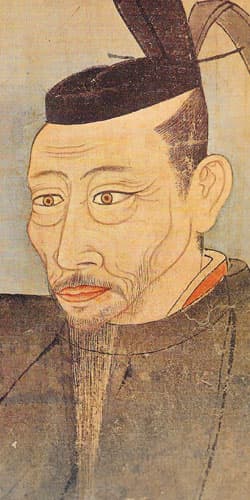
Toyotomi Hideyoshi
General · Modern
82.0Total
Basic Information
Born
63
1537
Died
—
1598
Era
Ancient
Modern
Nationality
Roman Empire
Japan
Occupation
Emperor
General
Civilization
Western
Eastern
Score Comparison
Military (10%)
72.0
79.9
Political (20%)
90.0
78.0
Influence (20%)
88.0
88.0
Legacy (20%)
90.0
80.0
Leadership (15%)
88.0
82.0
Strategy (15%)
75.0
80.4
TOTAL
85.9
82.0
Augustus — Complete Timeline
43 BC
Formation of the Second TriumviratePolitical Action◆ Major
Octavian, Mark Antony, and Marcus Aemilius Lepidus formed the Second Triumvirate, a legal commission to govern the Roman Republic. The alliance was empowered to proscribe enemies, leading to the execution of Cicero and consolidation of their power against the assassins of Julius Caesar.
Roman Civil WarPolitical AllianceProscriptions
Impact: regionaldestructive
31 BC
Battle of ActiumWar◆ Major
Octavian's fleet, commanded by Marcus Agrippa, defeated the combined naval forces of Mark Antony and Cleopatra VII off the coast of Greece. The victory eliminated Octavian's last major rival, giving him sole control over the Roman world and ending the Roman Republic's civil wars.
Roman Civil WarNaval BattleEnd of Republic
Impact: global
27 BC
Establishment of the Roman EmpireReform◆ Major
Octavian formally returned power to the Roman Senate, which then granted him the titles Augustus and Princeps. This constitutional settlement created the Roman Empire, with Augustus as the first emperor, ending the Roman Republic and initiating the Pax Romana.
Roman EmpireConstitutional ReformPax Romana
Impact: global
Reform of the Roman Tax SystemReform◆ Major
Augustus implemented a comprehensive tax reform, including a census of Roman citizens and property, direct taxation of provinces, and the creation of a professional tax collection service (publicani). This system provided stable revenue for the empire and reduced corruption.
Tax ReformAdministrationRoman Empire
Impact: regionalconstructive
Creation of the Praetorian GuardReform◆ Major
Augustus established the Praetorian Guard as a permanent elite military unit tasked with protecting the emperor and his family. Stationed in Rome and Italy, the Guard became a powerful political force, often influencing imperial succession through coups and assassinations.
Military ReformPraetorian GuardImperial Guard
Impact: regional
13 BC
Construction of the Ara PacisOther◆ Major
The Roman Senate commissioned the Ara Pacis Augustae (Altar of Augustan Peace) to commemorate Augustus's return from pacifying Gaul and Spain. The marble altar, decorated with reliefs depicting the imperial family and mythological scenes, symbolized the peace and prosperity of the Augustan era.
Building ProjectPropagandaAugustan Art
Impact: regionalconstructive
Toyotomi Hideyoshi — Complete Timeline
1583 AD
Battle of ShizugatakeWar◆ Major
Hideyoshi defeated his rival Shibata Katsuie at the Battle of Shizugatake, solidifying his control over central Japan. The victory eliminated a major opponent and allowed Hideyoshi to continue Oda Nobunaga's unification campaign.
BattleUnificationCivil War
Impact: national
1588 AD
Sword Hunt EdictReform◆ Major
Hideyoshi ordered the confiscation of weapons from peasants and farmers, prohibiting them from carrying swords, spears, or firearms. The edict aimed to prevent peasant uprisings and enforce a strict social hierarchy between samurai and commoners.
Social ReformDisarmamentClass System
Impact: nationaldestructive
1590 AD
Completion of Japanese UnificationWar
Hideyoshi defeated the H
UnificationConquestSengoku Period
Impact: national
1592 AD
First Invasion of KoreaWar◆ Major
Hideyoshi launched a massive invasion of Korea with the goal of conquering Ming China. Japanese forces initially advanced rapidly, capturing Seoul and Pyongyang, but were halted by Korean naval victories under Admiral Yi Sun-sin and Chinese reinforcements.
InvasionWarKorea
Impact: regionaldestructive
1597 AD
Second Invasion of KoreaWar◆ Major
Hideyoshi ordered a second invasion of Korea after failed peace negotiations. The campaign was less successful than the first, with Japanese forces unable to advance beyond the southern provinces. The invasion ended with Hideyoshi's death in 1598.
InvasionWarKorea
Impact: regionaldestructive
Expert Analysis
Origins
Augustus, born Gaius Octavius in 63 BC, was the grandnephew and adopted son of Julius Caesar. His patrician lineage gave him access to Rome's highest political circles. In contrast, Toyotomi Hideyoshi was born a peasant in 1537 Japan, with no surname. He rose from obscurity as a foot soldier under Oda Nobunaga, using cunning and charisma to climb the ranks. While Augustus inherited a name, Hideyoshi built his from nothing.
Rise to Power
Augustus's rise began after Caesar's assassination. He formed the Second Triumvirate with Mark Antony and Lepidus, defeating Caesar's assassins. The partnership soured, leading to the Battle of Actium (31 BC) where Augustus defeated Antony and Cleopatra, making him sole ruler of Rome. Hideyoshi's ascent was marked by military brilliance. After Nobunaga's death, he avenged his lord at the Battle of Shizugatake (1583), then conquered Shikoku and Kyushu. By 1590, he completed Japan's unification, becoming its de facto ruler. Both seized power through strategic alliances and decisive victories.
Leadership & Governance
Augustus transformed Rome from a republic to an empire. He reformed the tax system, created the Praetorian Guard, and initiated vast building projects, including the Forum of Augustus. His rule established the Pax Romana, a 200-year peace. Hideyoshi implemented the Sword Hunt Edict, disarming peasants to prevent revolts, and conducted land surveys to stabilize revenue. He also expelled Christian missionaries, centralizing religious control. Both were reformers, but Augustus's institutions lasted centuries, while Hideyoshi's policies were later overturned.
Triumph & Tragedy
Augustus's triumph was the establishment of the Roman Empire and the Pax Romana, ensuring prosperity. His tragedy lay in personal losses: his heirs died young, forcing him to adopt Tiberius. Hideyoshi's greatest achievement was unifying Japan after a century of war. His tragedy was his obsession with conquering Korea and China. The invasions of Korea (1592–1598) failed disastrously, draining resources and sowing seeds for the Tokugawa shogunate. While Augustus's empire flourished, Hideyoshi's overreach led to his dynasty's collapse.
Character & Destiny
Augustus was calculating and patient, known for his "slow but sure" approach. He skillfully maintained the facade of republican governance while holding absolute power. Hideyoshi was bold and ambitious, famously called "Monkey" for his looks and cunning. His peasant background made him sensitive to class, leading to sumptuary laws. Augustus died naturally at 75, his legacy secure. Hideyoshi died at 61, likely from illness, with his son too young to rule, leading to civil war. Destiny favored the Roman; the Japanese unifier's empire crumbled within decades.
Legacy
Augustus is revered as the founder of the Roman Empire and a model for later rulers. His name became a title: Caesar. The Pax Romana is a golden age of Roman history. Hideyoshi is remembered as a great unifier, but his invasions of Korea are seen as futile aggression. His sword hunt and class policies influenced Japan's Edo period. Augustus's impact on Western civilization is profound; Hideyoshi's legacy is more national. In terms of enduring influence, Augustus scores 90, Hideyoshi 75.
Conclusion
While both men unified their realms, Augustus's achievements were more lasting and transformative. He created an empire that endured for centuries, while Hideyoshi's unified Japan was short-lived. Augustus's strategic patience and institutional reforms outshine Hideyoshi's ambitious but ultimately failed foreign adventures. Numerically, Augustus leads in leadership (90 vs 80), legacy (86 vs 82), and overall score gap of 3.9. The victor is Augustus.
*Scores: Augustus: M=72, P=90, I=88, L=90, D=88, S=75, T=86 | Hideyoshi: M=80, P=78, I=88, L=80, D=82, S=80, T=82.*
Rankings
🥇
AugustusLeader
Mil: 72.0Pol: 90.0Inf: 88.0
85.9
🥈
Toyotomi Hideyoshi
Mil: 79.9Pol: 78.0Inf: 88.0
82.0
+3.9 behind
How This Comparison Works
Algorithm
Each figure is scored on 6 dimensions (0—100 scale) based on structured historical data: Military (10%), Political (20%), Influence (20%), Legacy (20%), Leadership (15%), Strategy (15%). The weighted total produces the final ranking.
Data Sources
Scores are computed from structured sub-indicators in the database. Scale factors adjust for era (Ancient ×0.85, Modern ×1.0) and civilization size (Eastern ×1.05, Other ×0.80) to account for differences in population and military scale.
Maximum 3 Figures
Comparisons are limited to 2—3 figures to ensure readability and statistical meaningfulness.
Error Margins
±5 points per dimension — Sub-scores are derived from historical records with inherent uncertainty. Two figures within 5 points on a dimension should be considered roughly equivalent in that area.
Total Score Accuracy
±3 points overall — The weighted combination of 6 dimensions produces a total score with approximately ±3 points of uncertainty. Differences of less than 3 points are not statistically significant— the figures are effectively tied.
Known Limitations
- Historical records are incomplete and uneven across civilizations
- Figures from oral-tradition societies may be underrepresented
- Occupation labels can misclassify multi-role figures
- Scores measure capability and impact, not moral character
- Quantitative scoring is a comparison tool, not absolute truth
Capability Radar
Military (10%) — Battles & Warfare
Battles
75
85
Win Rate
80
88
Expansion
85
80
Political (20%) — Governance & Reform
Reform
95
95
Diplomacy
90
80
Economy
85
90
Influence (20%) — Cultural & Global Reach
Cultural
85
85
Global
90
70
Legacy (20%) — Historical Impact
Historical
95
90
Longevity
95
85
Leadership (15%) — Power & Stability
Tenure
95
85
Stability
95
75
Strategy (15%) — Tactics & Innovation
Strategy
85
92
Tactics
70
90
Reform
90
95
Similar Comparisons
Comments & Discussion
No comments yet. Be the first to share your thoughts!