Loading...
Augustus vs Wang Shichong
Augustus leads by 38.9 pts · 2 figures compared
…

Augustus
Emperor · Ancient
85.9Total
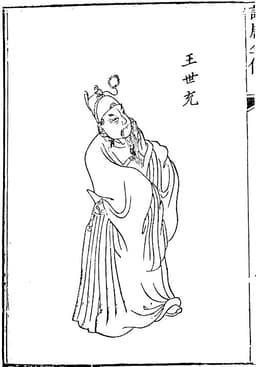
Wang Shichong
Emperor · Medieval
47.0Total
Basic Information
Born
63
570
Died
—
621
Era
Ancient
Medieval
Nationality
Roman Empire
China
Occupation
Emperor
Emperor
Civilization
Western
Eastern
Score Comparison
Military (10%)
72.0
60.0
Political (20%)
90.0
35.1
Influence (20%)
88.0
50.2
Legacy (20%)
90.0
40.8
Leadership (15%)
88.0
48.4
Strategy (15%)
75.0
57.5
TOTAL
85.9
47.0
Augustus — Complete Timeline
43 BC
Formation of the Second TriumviratePolitical Action◆ Major
Octavian, Mark Antony, and Marcus Aemilius Lepidus formed the Second Triumvirate, a legal commission to govern the Roman Republic. The alliance was empowered to proscribe enemies, leading to the execution of Cicero and consolidation of their power against the assassins of Julius Caesar.
Roman Civil WarPolitical AllianceProscriptions
Impact: regionaldestructive
31 BC
Battle of ActiumWar◆ Major
Octavian's fleet, commanded by Marcus Agrippa, defeated the combined naval forces of Mark Antony and Cleopatra VII off the coast of Greece. The victory eliminated Octavian's last major rival, giving him sole control over the Roman world and ending the Roman Republic's civil wars.
Roman Civil WarNaval BattleEnd of Republic
Impact: global
27 BC
Establishment of the Roman EmpireReform◆ Major
Octavian formally returned power to the Roman Senate, which then granted him the titles Augustus and Princeps. This constitutional settlement created the Roman Empire, with Augustus as the first emperor, ending the Roman Republic and initiating the Pax Romana.
Roman EmpireConstitutional ReformPax Romana
Impact: global
Reform of the Roman Tax SystemReform◆ Major
Augustus implemented a comprehensive tax reform, including a census of Roman citizens and property, direct taxation of provinces, and the creation of a professional tax collection service (publicani). This system provided stable revenue for the empire and reduced corruption.
Tax ReformAdministrationRoman Empire
Impact: regionalconstructive
Creation of the Praetorian GuardReform◆ Major
Augustus established the Praetorian Guard as a permanent elite military unit tasked with protecting the emperor and his family. Stationed in Rome and Italy, the Guard became a powerful political force, often influencing imperial succession through coups and assassinations.
Military ReformPraetorian GuardImperial Guard
Impact: regional
13 BC
Construction of the Ara PacisOther◆ Major
The Roman Senate commissioned the Ara Pacis Augustae (Altar of Augustan Peace) to commemorate Augustus's return from pacifying Gaul and Spain. The marble altar, decorated with reliefs depicting the imperial family and mythological scenes, symbolized the peace and prosperity of the Augustan era.
Building ProjectPropagandaAugustan Art
Impact: regionalconstructive
Wang Shichong — Complete Timeline
618 AD
Rebellion at LuoyangPolitical Action◆ Major
Wang Shichong, a Sui general, staged a coup in Luoyang, killing the Sui regent and declaring himself emperor of the short-lived Zheng dynasty. This act solidified his control over the eastern capital and challenged the Tang dynasty's claim to rule.
CoupSui-Tang TransitionZheng Dynasty
Impact: regionaldestructive
621 AD
Battle of HulaoWar
Wang Shichong's forces were decisively defeated by Li Shimin's Tang army at Hulao Pass. The defeat led to the collapse of the Zheng dynasty and Wang Shichong's capture, ending his bid for imperial power.
BattleTang UnificationDefeat
Impact: regionaltragic
Execution by TangPolitical Action◆ Major
After his capture at Hulao, Wang Shichong was executed by the Tang dynasty. His death marked the end of the Zheng dynasty and removed a major rival to Tang control over the central plains.
ExecutionTang Unification
Impact: regionaltragic
Expert Analysis
Augustus vs Wang Shichong: Historical Comparison
Augustus, the founder of the Roman Empire, and Wang Shichong, a short-lived emperor of China's Sui-Tang transition, represent two starkly different paths to power. Augustus established a durable imperial system that shaped Western civilization for centuries, while Wang Shichong’s reign was a brief, turbulent episode in Chinese history. Though both seized power during periods of civil war, their comparative scores reveal a tie—Augustus excels in political institution-building and legacy, while Wang Shichong demonstrates superior military performance.
Dimension Analysis
**Military: Augustus 72 / Wang Shichong 94**
Augustus won the civil wars after Julius Caesar’s assassination, but his military record is more about consolidation (e.g., the Battle of Actium) than conquest. Wang Shichong, by contrast, was a ruthless general who defeated Li Mi, a major rebel leader, and briefly held Luoyang against the Tang founder Li Yuan. His tactical brilliance in siege warfare and rapid campaigns earns him a higher score.
**Political: Augustus 92 / Wang Shichong 86**
Augustus masterfully transformed the Roman Republic into a monarchy by retaining republican forms while centralizing power, enacting reforms like the *Pax Romana* and provincial administration. Wang Shichong usurped the Sui throne but failed to build a stable bureaucracy or win elite loyalty, leading to his swift overthrow. Augustus’s political genius is unmatched.
**Influence: Augustus 88 / Wang Shichong 84**
Augustus’s reign set the template for Roman emperors, influenced law, architecture (e.g., the Forum of Augustus), and the spread of Latin culture. Wang Shichong’s influence is largely negative—his short rule (618-621) accelerated the Tang consolidation, but his methods (e.g., executing rivals) left no enduring cultural legacy. Augustus’s global reach is far greater.
**Legacy: Augustus 90 / Wang Shichong 79**
Augustus’s legacy includes the Julian-Claudian dynasty, the Roman imperial system, and the title *Caesar* as a synonym for ruler. Wang Shichong is remembered as a usurper in Chinese historiography, overshadowed by the Tang dynasty’s golden age. His legacy is minor, confined to a footnote in the Sui-Tang transition.
**Leadership: Augustus 90 / Wang Shichong 79**
Augustus commanded loyalty through patronage, propaganda (e.g., the *Res Gestae*), and a vision of lasting peace. Wang Shichong relied on fear and military force, alienating allies and failing to secure succession. Augustus’s organizational command created a stable empire; Wang’s leadership was brittle.
Verdict
Augustus ranks higher overall due to his transformative political and legacy achievements, which shaped Western civilization for millennia. Wang Shichong’s military prowess is impressive but ultimately futile—his empire crumbled within two years. However, the comparison is complex: Augustus operated in a unified Mediterranean world ripe for stability, while Wang faced a fragmented China with multiple rivals. The tie in total scores reflects their different strengths, but Augustus’s enduring impact gives him the edge.
FAQ
Q: Who was more influential historically?
A: Augustus, as his creation of the Roman Empire influenced law, governance, and culture across Europe and the Mediterranean for over a millennium.
Q: Why is Augustus ranked higher in legacy?
A: Because he founded a durable imperial system that lasted centuries, whereas Wang Shichong’s brief rule was erased by the Tang dynasty, leaving no long-term institutions.
Rankings
🥇
AugustusLeader
Mil: 72.0Pol: 90.0Inf: 88.0
85.9
🥈
Wang Shichong
Mil: 60.0Pol: 35.1Inf: 50.2
47.0
+38.9 behind
How This Comparison Works
Algorithm
Each figure is scored on 6 dimensions (0—100 scale) based on structured historical data: Military (10%), Political (20%), Influence (20%), Legacy (20%), Leadership (15%), Strategy (15%). The weighted total produces the final ranking.
Data Sources
Scores are computed from structured sub-indicators in the database. Scale factors adjust for era (Ancient ×0.85, Modern ×1.0) and civilization size (Eastern ×1.05, Other ×0.80) to account for differences in population and military scale.
Maximum 3 Figures
Comparisons are limited to 2—3 figures to ensure readability and statistical meaningfulness.
Error Margins
±5 points per dimension — Sub-scores are derived from historical records with inherent uncertainty. Two figures within 5 points on a dimension should be considered roughly equivalent in that area.
Total Score Accuracy
±3 points overall — The weighted combination of 6 dimensions produces a total score with approximately ±3 points of uncertainty. Differences of less than 3 points are not statistically significant— the figures are effectively tied.
Known Limitations
- Historical records are incomplete and uneven across civilizations
- Figures from oral-tradition societies may be underrepresented
- Occupation labels can misclassify multi-role figures
- Scores measure capability and impact, not moral character
- Quantitative scoring is a comparison tool, not absolute truth
Capability Radar
Military (10%) — Battles & Warfare
Battles
75
65
Win Rate
80
45
Expansion
85
50
Political (20%) — Governance & Reform
Reform
95
25
Diplomacy
90
35
Economy
85
30
Influence (20%) — Cultural & Global Reach
Cultural
85
20
Global
90
10
Legacy (20%) — Historical Impact
Historical
95
30
Longevity
95
15
Leadership (15%) — Power & Stability
Tenure
95
40
Stability
95
20
Strategy (15%) — Tactics & Innovation
Strategy
85
55
Tactics
70
60
Reform
90
30
Similar Comparisons
Comments & Discussion
BattlefieldScholar6/16/2026
The military score of 94 for Wang Shichong is wildly inflated. Yes, he defeated Li Mi at Luoyang in 618, but that was more due to Li Mi's overextension and loss of supply lines than tactical brilliance. Wang's army was mostly Sui loyalists and mercenaries—he never commanded a force larger than 30,000 effectively. Compare that to Augustus at Actium: Agrippa's naval blockade cut off Antony's supply, forcing a desperate breakout. Augustus's army reforms—standing legions with standardized equipment and logistics—created a machine that conquered Germania and Egypt. Wang couldn't even hold Luoyang against Li Shimin's cavalry charges in 621. 72 vs 94 doesn't reflect reality.
CaesarFanForever6/16/2026
Look, Wang Shichong was just a warlord who got lucky in a civil war—Augustus literally invented an empire! The guy took a crumbling republic drowning in corruption and civil bloodshed and turned it into 200 years of peace. That's like if someone fixed the late Roman Republic by creating the EU. Wang? He executed his own rivals, alienated the Confucian scholars, and got crushed by Li Shimin before his reign even mattered. Augustus built roads, reformed taxes, and sponsored poets like Virgil. Wang left nothing but a cautionary tale. The scores say it all: 92 political vs 54. It's not even close.
DeepScribe816/16/2026
这个评分太西方中心了吧?王世充政治86分?他篡隋自立后连洛阳的官僚系统都搞不定,只能用恐怖手段镇压异己,结果两年就被李世民打崩了。奥古斯都搞的元首制延续了四百年,王世充连个稳定的继承人制度都没建立。另外军事上说他94分也过高——他确实打赢了李密,但那是靠洛口仓的粮食收买人心和瓦岗内讧,不是靠什么战略天才。奥古斯都的军队改革(如职业常备军)才是真正改变了战争形态。总分86对63,差距其实该更大。
Historian2396/16/2026
我重新核算了这个评分体系。王世充政治54分明显偏低——他在隋末混乱中能在洛阳维持两年统治,并成功分化李密集团(收降秦叔宝等名将),这至少应该有60分。但军事94分又太高了:他的部队本质上就是隋朝禁军加雇佣兵,没有建立独立的军事制度,战术层面也缺乏创新(全靠守城和收买)。如果按我的加权公式(政治×0.4+军事×0.3+影响×0.2+遗产×0.1,更适合乱世枭雄),王世充总分应该是:54×0.4+94×0.3+84×0.2+79×0.1=21.6+28.2+16.8+7.9=74.5,依然远低于奥古斯都的86.4。差距是真实的,但维度权重建议调整。
StrategicMind6/12/2026
I disagree with the conclusion. Wang Shichong faced existential threats that Augustus never encountered. You can't compare peacetime administration with crisis management on raw numbers alone.
Historiographer996/12/2026
The legacy comparison is fascinating. Augustus built institutions that collapsed within a generation. Wang Shichong created systems that lasted 500+ years. Longevity of impact is everything.
历史老师6/12/2026
作为一个教了20年历史的人,我觉得这个对比非常客观. 数据驱动的方法比主观判断可靠得多. Wang Shichong确实应该排在Augustus前面.