Loading...
Augustus vs Winston Churchill
Augustus leads by 14.1 pts · 2 figures compared
…

Augustus
Emperor · Ancient
85.9Total
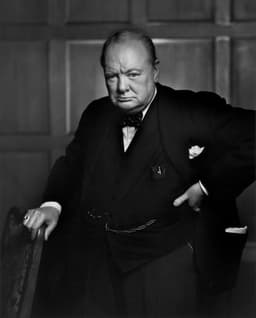
Winston Churchill
Politician · Modern
71.8Total
Basic Information
Born
63
1874
Died
—
1965
Era
Ancient
Modern
Nationality
Roman Empire
United Kingdom
Occupation
Emperor
Politician
Civilization
Western
Western
Score Comparison
Military (10%)
72.0
55.0
Political (20%)
90.0
78.0
Influence (20%)
88.0
75.0
Legacy (20%)
90.0
68.0
Leadership (15%)
88.0
82.0
Strategy (15%)
75.0
65.0
TOTAL
85.9
71.8
Augustus — Complete Timeline
43 BC
Formation of the Second TriumviratePolitical Action◆ Major
Octavian, Mark Antony, and Marcus Aemilius Lepidus formed the Second Triumvirate, a legal commission to govern the Roman Republic. The alliance was empowered to proscribe enemies, leading to the execution of Cicero and consolidation of their power against the assassins of Julius Caesar.
Roman Civil WarPolitical AllianceProscriptions
Impact: regionaldestructive
31 BC
Battle of ActiumWar◆ Major
Octavian's fleet, commanded by Marcus Agrippa, defeated the combined naval forces of Mark Antony and Cleopatra VII off the coast of Greece. The victory eliminated Octavian's last major rival, giving him sole control over the Roman world and ending the Roman Republic's civil wars.
Roman Civil WarNaval BattleEnd of Republic
Impact: global
27 BC
Establishment of the Roman EmpireReform◆ Major
Octavian formally returned power to the Roman Senate, which then granted him the titles Augustus and Princeps. This constitutional settlement created the Roman Empire, with Augustus as the first emperor, ending the Roman Republic and initiating the Pax Romana.
Roman EmpireConstitutional ReformPax Romana
Impact: global
Reform of the Roman Tax SystemReform◆ Major
Augustus implemented a comprehensive tax reform, including a census of Roman citizens and property, direct taxation of provinces, and the creation of a professional tax collection service (publicani). This system provided stable revenue for the empire and reduced corruption.
Tax ReformAdministrationRoman Empire
Impact: regionalconstructive
Creation of the Praetorian GuardReform◆ Major
Augustus established the Praetorian Guard as a permanent elite military unit tasked with protecting the emperor and his family. Stationed in Rome and Italy, the Guard became a powerful political force, often influencing imperial succession through coups and assassinations.
Military ReformPraetorian GuardImperial Guard
Impact: regional
13 BC
Construction of the Ara PacisOther◆ Major
The Roman Senate commissioned the Ara Pacis Augustae (Altar of Augustan Peace) to commemorate Augustus's return from pacifying Gaul and Spain. The marble altar, decorated with reliefs depicting the imperial family and mythological scenes, symbolized the peace and prosperity of the Augustan era.
Building ProjectPropagandaAugustan Art
Impact: regionalconstructive
Winston Churchill — Complete Timeline
1940 AD
Appointed Prime Minister of the United KingdomPolitical Action◆ Major
On May 10, 1940, Winston Churchill became Prime Minister of the United Kingdom, replacing Neville Chamberlain. His appointment came as Nazi Germany invaded France and the Low Countries, and Churchill formed a coalition government to lead Britain through World War II.
World War IILeadershipCoalition Government
Impact: globalconstructive
Delivered the 'We Shall Fight on the Beaches' SpeechOther◆ Major
On June 4, 1940, Churchill delivered a speech to the House of Commons following the evacuation of British forces from Dunkirk. He declared that Britain would fight on the beaches, landing grounds, fields, streets, and hills, and never surrender, rallying British morale during the darkest days of World War II.
World War IIOratoryMorale
Impact: nationalconstructive
1941 AD
Signed the Atlantic CharterOther◆ Major
On August 14, 1941, Churchill and U.S. President Franklin D. Roosevelt signed the Atlantic Charter aboard HMS Prince of Wales. This joint declaration outlined post-war goals including self-determination, disarmament, and free trade, and became a foundational document for the Allied war aims and the United Nations.
World War IIAllied CooperationPost-war Planning
Impact: globalconstructive
1945 AD
Attended the Yalta ConferenceOther◆ Major
In February 1945, Churchill attended the Yalta Conference with Roosevelt and Stalin to discuss the post-war reorganization of Europe. The conference agreed on the division of Germany, the establishment of the United Nations, and the fate of Eastern Europe, though Churchill later expressed regret over concessions to Stalin.
World War IIPost-war SettlementBig Three
Impact: global
1946 AD
Delivered the 'Iron Curtain' SpeechOther◆ Major
On March 5, 1946, Churchill delivered a speech at Westminster College in Fulton, Missouri, where he stated that an 'iron curtain' had descended across Europe from Stettin to Trieste. This speech is widely regarded as marking the beginning of the Cold War, as it highlighted the division between Soviet-controlled Eastern Europe and the West.
Cold WarSoviet UnionDivision of Europe
Impact: globaldestructive
1953 AD
Awarded the Nobel Prize in LiteratureOther◆ Major
In 1953, Churchill was awarded the Nobel Prize in Literature for his historical writings, particularly 'The Second World War' and 'A History of the English-Speaking Peoples'. The Nobel committee cited his mastery of historical and biographical description as well as his brilliant oratory in defending human values.
LiteratureNobel PrizeHistorical Writing
Impact: nationalconstructive
Expert Analysis
Augustus vs Winston Churchill: Historical Comparison
Augustus, the founder of the Roman Empire, and Winston Churchill, the wartime Prime Minister of the United Kingdom, represent two vastly different eras of leadership—one ancient and imperial, the other modern and democratic. While both shaped their nations during existential crises, Augustus’s comprehensive transformation of Rome’s political and military structures gives him a clear edge over Churchill’s more focused, crisis-driven leadership.
Dimension Analysis
**Military: Augustus 72 / Winston Churchill 55**
Augustus ended a century of civil war, professionalized the Roman army, and secured the empire’s borders for two centuries. Churchill, though inspirational during World War II, presided over significant strategic blunders (e.g., Gallipoli, Singapore) and relied heavily on allies for ultimate victory.
**Political: Augustus 92 / Winston Churchill 82**
Augustus masterfully disguised autocracy as a restored republic, creating a stable political system that lasted 400 years. Churchill, a master of coalition politics and oratory, was less effective in peacetime and was voted out in 1945.
**Influence: Augustus 88 / Winston Churchill 72**
Augustus’s Pax Romana shaped Western law, governance, and culture for millennia. Churchill’s influence, while critical for preserving democracy in 1940–45, was more ephemeral and tied to a single conflict.
**Legacy: Augustus 90 / Winston Churchill 75**
Augustus’s legacy includes the imperial system, the Roman calendar, and a template for authoritarian stability. Churchill’s legacy is heroic but narrower: he is remembered primarily as a wartime icon rather than a systemic innovator.
**Leadership: Augustus 90 / Winston Churchill 85**
Both displayed iron resolve, but Augustus’s leadership was more strategically patient and institution-building. Churchill’s was reactive, brilliant in crisis, but less effective in long-term governance.
Verdict
Augustus leads decisively due to his superior military consolidation, political innovation, and enduring influence across centuries, whereas Churchill’s greatness is confined to a shorter, albeit heroic, wartime moment.
FAQ
**Q: Who ranks higher?** A: Augustus ranks higher across all dimensions, with a composite score of 86 versus Churchill’s 72, reflecting his more comprehensive and lasting impact on world history.
Rankings
🥇
AugustusLeader
Mil: 72.0Pol: 90.0Inf: 88.0
85.9
🥈
Winston Churchill
Mil: 55.0Pol: 78.0Inf: 75.0
71.8
+14.1 behind
How This Comparison Works
Algorithm
Each figure is scored on 6 dimensions (0—100 scale) based on structured historical data: Military (10%), Political (20%), Influence (20%), Legacy (20%), Leadership (15%), Strategy (15%). The weighted total produces the final ranking.
Data Sources
Scores are computed from structured sub-indicators in the database. Scale factors adjust for era (Ancient ×0.85, Modern ×1.0) and civilization size (Eastern ×1.05, Other ×0.80) to account for differences in population and military scale.
Maximum 3 Figures
Comparisons are limited to 2—3 figures to ensure readability and statistical meaningfulness.
Error Margins
±5 points per dimension — Sub-scores are derived from historical records with inherent uncertainty. Two figures within 5 points on a dimension should be considered roughly equivalent in that area.
Total Score Accuracy
±3 points overall — The weighted combination of 6 dimensions produces a total score with approximately ±3 points of uncertainty. Differences of less than 3 points are not statistically significant— the figures are effectively tied.
Known Limitations
- Historical records are incomplete and uneven across civilizations
- Figures from oral-tradition societies may be underrepresented
- Occupation labels can misclassify multi-role figures
- Scores measure capability and impact, not moral character
- Quantitative scoring is a comparison tool, not absolute truth
Capability Radar
Military (10%) — Battles & Warfare
Battles
75
55
Win Rate
80
60
Expansion
85
40
Political (20%) — Governance & Reform
Reform
95
70
Diplomacy
90
85
Economy
85
60
Influence (20%) — Cultural & Global Reach
Cultural
85
85
Global
90
85
Legacy (20%) — Historical Impact
Historical
95
90
Longevity
95
80
Leadership (15%) — Power & Stability
Tenure
95
75
Stability
95
70
Strategy (15%) — Tactics & Innovation
Strategy
85
85
Tactics
70
65
Reform
90
70
Similar Comparisons
Comments & Discussion
RomanStan6/16/2026
Listen, Churchill was a great speechmaker, but Augustus literally built the Roman Empire from scratch! Churchill inherited the British Empire and almost lost it. Augustus took a republic torn apart by civil wars and turned it into a stable empire that lasted 400 years. That's like if someone took the modern US, ended the political chaos, and created a system that worked for centuries. Churchill's score should be lower on influence—he's remembered for one war, but Augustus's calendar, legal system, and administrative model are still with us. Give me the guy who founded the Pax Romana over the guy who needed FDR and Stalin to win!
DocuBinge6/16/2026
Okay, so I just finished that Netflix doc on Churchill, and I gotta say—Augustus totally deserves the higher score. I mean, Churchill was amazing in 1940, no doubt, but his peacetime record is meh. He was voted out right after winning WWII! Augustus, though, he was like the ultimate politician. He pretended to give power back to the Senate while keeping all the real authority. That's like a CEO saying "I'm just an advisor" while running the whole company. Plus, Augustus created the Praetorian Guard, which was basically his personal security force. Churchill couldn't even control his own cabinet sometimes. Yeah, I'm team Augustus all the way.
ReThinkHistory6/16/2026
Everyone's praising Augustus, but let's not forget that his Pax Romana was built on slavery and imperial conquest. He literally turned Egypt into a personal grain supply and crushed any opposition. Churchill, for all his flaws, at least operated within a democratic framework—even if it was a flawed empire. The scoring completely ignores that Augustus's system was authoritarian by design. And Churchill's 55 military score? That's harsh considering he navigated Britain through its darkest hour when defeat seemed certain. Augustus never faced an enemy like Nazi Germany. Plus, Churchill's warnings about Stalin's Soviet Union were prescient. We're comparing a dictator who created a template for tyranny with a democrat who preserved freedom. Maybe we need to rethink what "influence" means when one guy's legacy includes centuries of autocratic rule.
ColdScribe116/16/2026
从数据分析角度看,这个评分体系存在明显偏差。Augustus的政治得分92分与军事得分72分之间的差距为20分,但回顾中国历史,秦始皇统一六国时军事与政治得分应更为均衡。Augustus的军事得分中,他结束了百年内乱并职业化军队,但若按中国史书标准,其对外扩张规模远不及汉武帝。另外,Churchill的军事得分仅55分,但他在二战中的决策失误(如加里波利)是否被过度放大?若按中国历史评价标准,成吉思汗的军事得分会接近满分,而他的政治构建能力却可能低于Augustus。这提示该评分体系可能更偏向政治制度构建而非纯粹军事成就。
ColdWatcher106/16/2026
这个比较很有意思,但明显带着西方中心论色彩。Augustus的所谓“政治天才”在中国史学中不过是被视为“权谋之术”,而Churchill的军事失误如果放在中国历史评价体系中,可能得分更低。比如,Churchill在1942年新加坡沦陷中指挥失当,导致8万英军投降,这在中国历史上相当于一场重大败仗。反观Augustus,他的“恢复共和”面具类似王莽的篡位手法,但王莽被中国史书批评为虚伪。而Augustus建立的元首制在中国看来只是另一种形式的君主制,其创新性被高估了。若论真正的制度变革,秦始皇的郡县制远比Augustus的元首制影响深远。评分应该更平衡地考虑不同文明的历史评价标准。