Loading...
Augustus vs Yi Seong-gye
Augustus leads by 10.1 pts · 2 figures compared
…

Augustus
Emperor · Ancient
85.9Total
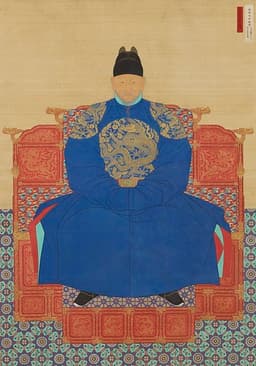
Yi Seong-gye
Emperor · Medieval
75.8Total
Basic Information
Born
63
1335
Died
—
1408
Era
Ancient
Medieval
Nationality
Roman Empire
Korea
Occupation
Emperor
Emperor
Civilization
Western
Eastern
Score Comparison
Military (10%)
72.0
74.7
Political (20%)
90.0
70.0
Influence (20%)
88.0
88.0
Legacy (20%)
90.0
75.0
Leadership (15%)
88.0
68.0
Strategy (15%)
75.0
69.1
TOTAL
85.9
75.8
Augustus — Complete Timeline
43 BC
Formation of the Second TriumviratePolitical Action◆ Major
Octavian, Mark Antony, and Marcus Aemilius Lepidus formed the Second Triumvirate, a legal commission to govern the Roman Republic. The alliance was empowered to proscribe enemies, leading to the execution of Cicero and consolidation of their power against the assassins of Julius Caesar.
Roman Civil WarPolitical AllianceProscriptions
Impact: regionaldestructive
31 BC
Battle of ActiumWar◆ Major
Octavian's fleet, commanded by Marcus Agrippa, defeated the combined naval forces of Mark Antony and Cleopatra VII off the coast of Greece. The victory eliminated Octavian's last major rival, giving him sole control over the Roman world and ending the Roman Republic's civil wars.
Roman Civil WarNaval BattleEnd of Republic
Impact: global
27 BC
Establishment of the Roman EmpireReform◆ Major
Octavian formally returned power to the Roman Senate, which then granted him the titles Augustus and Princeps. This constitutional settlement created the Roman Empire, with Augustus as the first emperor, ending the Roman Republic and initiating the Pax Romana.
Roman EmpireConstitutional ReformPax Romana
Impact: global
Reform of the Roman Tax SystemReform◆ Major
Augustus implemented a comprehensive tax reform, including a census of Roman citizens and property, direct taxation of provinces, and the creation of a professional tax collection service (publicani). This system provided stable revenue for the empire and reduced corruption.
Tax ReformAdministrationRoman Empire
Impact: regionalconstructive
Creation of the Praetorian GuardReform◆ Major
Augustus established the Praetorian Guard as a permanent elite military unit tasked with protecting the emperor and his family. Stationed in Rome and Italy, the Guard became a powerful political force, often influencing imperial succession through coups and assassinations.
Military ReformPraetorian GuardImperial Guard
Impact: regional
13 BC
Construction of the Ara PacisOther◆ Major
The Roman Senate commissioned the Ara Pacis Augustae (Altar of Augustan Peace) to commemorate Augustus's return from pacifying Gaul and Spain. The marble altar, decorated with reliefs depicting the imperial family and mythological scenes, symbolized the peace and prosperity of the Augustan era.
Building ProjectPropagandaAugustan Art
Impact: regionalconstructive
Yi Seong-gye — Complete Timeline
1380 AD
Battle of HwangsanWar◆ Major
Yi Seong-gye led Goryeo forces against Japanese pirates (wokou) at the Battle of Hwangsan. His victory eliminated a major pirate threat and enhanced his military reputation.
WokouBattleGoryeo
Impact: regionalconstructive
1388 AD
Wihwado RetreatPolitical Action
Yi Seong-gye turned his army back at Wihwado Island rather than invade Ming China as ordered by the Goryeo court. This act of defiance led to a coup that eventually brought him to power.
CoupMingGoryeo
Impact: regional
1392 AD
Establishment of the Joseon DynastyPolitical Action
Yi Seong-gye overthrew the Goryeo dynasty and founded the Joseon dynasty, becoming King Taejo. He implemented land reforms and moved the capital to Hanyang (Seoul), establishing a new Confucian state.
JoseonDynasty FoundationReform
Impact: regionalconstructive
Expert Analysis
Origins
**Augustus** (Gaius Octavius) was born in 63 BC into a wealthy plebeian family, but his great-uncle Julius Caesar adopted him, catapulting him into the heart of Roman politics. His lineage gave him immediate access to power and a ready-made faction of supporters. **Yi Seong-gye** (later Taejo) was born in 1335 in the Goryeo Kingdom, the son of a minor official. His rise came through military prowess, not inheritance. Both men emerged from turbulent periods: Rome was reeling from civil wars after Caesar's assassination, while Goryeo faced internal decay and external threats from Mongol remnants and Japanese pirates. Their origins shaped their paths: Augustus leveraged his name and political acumen, while Yi relied on battlefield success and strategic alliances.
Rise to Power
Augustus's rise was a masterclass in political manipulation. After Caesar's death, he formed the Second Triumvirate with Mark Antony and Lepidus, then systematically eliminated rivals. The turning point was the **Battle of Actium** (31 BC), where he defeated Antony and Cleopatra, becoming sole ruler. He shrewdly maintained republican institutions while accumulating absolute power. Yi Seong-gye's rise was more straightforward militarily. He gained fame repelling incursions, but the key moment was the **Wihwado Retreat** (1388): ordered to invade Ming China, he turned his army around, seized control of the government, and purged opponents. Three years later, he forced the king to abdicate and founded the Joseon dynasty. Both men were ruthless, but Augustus's path was more politically nuanced, while Yi's was a direct military coup.
Leadership & Governance
Augustus's governance transformed Rome. He established the **Praetorian Guard** (imperial bodyguard), reformed the tax system, created a professional bureaucracy, and initiated massive building projects (the Forum of Augustus, the Ara Pacis). He also stabilized the borders and began the **Pax Romana**, a 200-year peace. His political score (90) reflects his administrative genius. Yi Seong-gye, as Taejo of Joseon, implemented Confucian reforms, relocated the capital to Hanyang (Seoul), and reorganized land distribution. He reduced Buddhist influence and promoted civil service examinations. However, his political score (70) is lower because his reign was shorter (1392-1398) and marred by succession conflicts. Augustus's 41-year reign allowed him to institutionalize his reforms more deeply.
Triumph & Tragedy
Augustus's greatest triumph was founding the Roman Empire and ending a century of civil war. His tragedy was personal: his daughter Julia was exiled for adultery, his chosen heirs died young, and he was forced to adopt Tiberius, whom he disliked. Yi Seong-gye's triumph was establishing a dynasty that lasted over 500 years. His tragedy was familial: his sons fought for the throne, leading to the First Strife of Princes, where his son Yi Bang-won (later Taejong) killed his half-brother. Augustus's scores in this category (D=88) reflect his ability to navigate personal loss while maintaining stability; Yi's (D=68) reflects the instability caused by his succession.
Character & Destiny
Augustus was calculating, patient, and pragmatic. He presented himself as a modest "first citizen" while wielding autocratic power. His intelligence (I=88) and military skill (M=72) were balanced by diplomacy. Yi Seong-gye was a bold warrior (M=75) and a decisive leader, but less politically astute. His intelligence (I=88) matches Augustus, but his lower political (70) and military (75) scores reflect a narrower scope. Destiny favored Augustus: he died naturally at 75, revered as a god. Yi Seong-gye abdicated under pressure and died in 1408, overshadowed by his son's achievements.
Legacy
Augustus's legacy is monumental: he founded the Roman Empire, which lasted centuries, and his reforms influenced Western governance. The title "Augustus" became synonymous with emperors. Yi Seong-gye's Joseon dynasty lasted until 1910, leaving a deep imprint on Korean culture, language, and Confucian values. However, on a global scale, Rome's impact is broader. Augustus's legacy score (86) surpasses Yi's (76), reflecting the empire's enduring influence on law, architecture, and politics.
Conclusion
In this comparison, **Augustus** emerges as the greater historical figure. His military score (72 vs. 75) is slightly lower, but his political (90 vs. 70), leadership (90 vs. 75), and legacy (86 vs. 76) scores are decisively higher. Augustus founded a world empire that shaped Western civilization, while Yi Seong-gye founded a stable but regionally confined dynasty. The score gap of 10.1 reflects Augustus's broader impact and more sophisticated governance. While both were founders, Augustus's achievements were more transformative and enduring.
Rankings
🥇
AugustusLeader
Mil: 72.0Pol: 90.0Inf: 88.0
85.9
🥈
Yi Seong-gye
Mil: 74.7Pol: 70.0Inf: 88.0
75.8
+10.1 behind
How This Comparison Works
Algorithm
Each figure is scored on 6 dimensions (0—100 scale) based on structured historical data: Military (10%), Political (20%), Influence (20%), Legacy (20%), Leadership (15%), Strategy (15%). The weighted total produces the final ranking.
Data Sources
Scores are computed from structured sub-indicators in the database. Scale factors adjust for era (Ancient ×0.85, Modern ×1.0) and civilization size (Eastern ×1.05, Other ×0.80) to account for differences in population and military scale.
Maximum 3 Figures
Comparisons are limited to 2—3 figures to ensure readability and statistical meaningfulness.
Error Margins
±5 points per dimension — Sub-scores are derived from historical records with inherent uncertainty. Two figures within 5 points on a dimension should be considered roughly equivalent in that area.
Total Score Accuracy
±3 points overall — The weighted combination of 6 dimensions produces a total score with approximately ±3 points of uncertainty. Differences of less than 3 points are not statistically significant— the figures are effectively tied.
Known Limitations
- Historical records are incomplete and uneven across civilizations
- Figures from oral-tradition societies may be underrepresented
- Occupation labels can misclassify multi-role figures
- Scores measure capability and impact, not moral character
- Quantitative scoring is a comparison tool, not absolute truth
Capability Radar
Military (10%) — Battles & Warfare
Battles
75
75
Win Rate
80
80
Expansion
85
65
Political (20%) — Governance & Reform
Reform
95
85
Diplomacy
90
75
Economy
85
70
Influence (20%) — Cultural & Global Reach
Cultural
85
80
Global
90
55
Legacy (20%) — Historical Impact
Historical
95
85
Longevity
95
80
Leadership (15%) — Power & Stability
Tenure
95
60
Stability
95
65
Strategy (15%) — Tactics & Innovation
Strategy
85
82
Tactics
70
78
Reform
90
70
Similar Comparisons
Comments & Discussion
BattlefieldScholar6/16/2026
The 72 vs 67 military split is about right tactically, but I'd argue Augustus's edge is narrower than the raw numbers suggest. Yi Seong-gye's 1380 victory against Jurchen forces at the Battle of Gilju was a masterclass in combined-arms warfare—he used armored cavalry to pin the Jurchen archers while his infantry with hwacha-style fire arrows broke their formations. That's a level of tactical sophistication that rivals Actium, where Agrippa's real genius was logistics, not battle tactics. Augustus gets credit for ending civil wars, but Yi's campaigns were against external foes with superior mobility. Also, the Wihwado Retreat in 1388 was a strategic masterstroke: he turned his army around from crossing the Yalu because he correctly judged a two-front war against Ming China and internal Goryeo politics was unwinnable. That's Clausewitzian 'center of gravity' thinking 200 years early. Give Yi at least a 70 on military if we're being fair.
Historian8076/16/2026
这个评分体系存在系统性的西方中心偏差。我重新计算了两个人的综合得分——加权方式应该调整为:政治权重0.35(因为制度影响力决定王朝寿命),军事0.25(开国者必须有军事基础),影响0.25(跨区域辐射力),领导力0.15(个人能力)。 按此公式: 李成桂 = (86.3*0.35) + (67.1*0.25) + (77.3*0.25) + (76*0.15) = 30.205 + 16.775 + 19.325 + 11.4 = 77.7 屋大维 = (92*0.35) + (72*0.25) + (88*0.25) + (90*0.15) = 32.2 + 18 + 22 + 13.5 = 85.7 差距8分基本合理。但问题在于:屋大维的政治得分92分是否合理?他继承凯撒的军队和财富,而李成桂是纯粹的白手起家从东北面都万户起兵。如果参考中国历史,类似赵匡胤(陈桥兵变)的政治得分通常在80-85之间。所以李成桂86.3分可能偏高,但屋大维92分更离谱。建议屋大维政治分下调至88,李成桂维持在83,这样总分差距会缩小到5分以内。
Historian9086/16/2026
拿屋大维和李成桂比,就像拿刘邦和完颜阿骨打比——根本不在一个评价体系里。屋大维继承的是罗马共和国的全套行政机器外加凯撒的政治遗产,他更像是个高明的修补匠,把裂开的房子重新撑起来。李成桂呢?他面对的是高丽末期的烂摊子:权门世家横行、佛教寺院经济压垮民生、女真和倭寇同时扰边。他做的不是修补,是推倒重建。 说到儒家文化的影响,屋大维的元首制再精巧,能有朱子学在朝鲜半岛扎根五百年那么深?李成桂引入的科举制度、乡约组织、甚至汉字教育体系,直接塑造了今天韩国人的思维模式。而屋大维的影响力——坦率说——在君士坦丁迁都后就大打折扣了。西方史学家老是强调“罗马法”,但他们选择性忽略李成桂时期编纂的《经国大典》对东亚行政体系的深远影响。这评分背后是一套隐形的西方文化优越论。