Loading...
Aurelian vs Emperor Wu of Han
Emperor Wu of Han leads by 8.3 pts · 2 figures compared
…

Aurelian
Emperor · Ancient
63.0Total
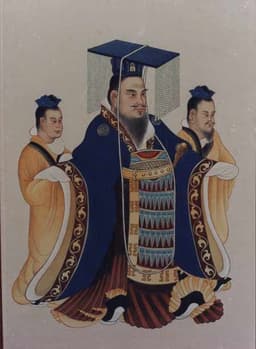
Emperor Wu of Han
Emperor · Ancient
71.3Total
Basic Information
Born
214
-156
Died
275
-87
Era
Ancient
Ancient
Nationality
Roman Empire
China
Occupation
Emperor
Emperor
Civilization
Western
Eastern
Score Comparison
Military (10%)
78.0
78.5
Political (20%)
72.0
72.0
Influence (20%)
56.7
65.0
Legacy (20%)
55.0
70.0
Leadership (15%)
62.0
80.0
Strategy (15%)
72.0
69.1
TOTAL
63.0
71.3
Aurelian — Complete Timeline
271 AD
Defeat of the Juthungi and AlamanniWar◆ Major
Aurelian defeated the Juthungi and Alamanni tribes who had invaded Italy, driving them back across the Danube. He also abandoned the province of Dacia, resettling its population south of the Danube to create a more defensible frontier.
Barbarian InvasionDefenseDacia
Impact: regional
Construction of the Aurelian WallsOther◆ Major
Aurelian ordered the construction of a massive defensive wall around Rome, the Aurelian Walls, to protect the city from barbarian invasions. The walls were 19 kilometers long and remained in use for centuries.
FortificationRomeDefense
Impact: nationalconstructive
274 AD
Reunification of the Roman EmpireWar
Aurelian defeated the Gallic Empire under Tetricus I at the Battle of Ch
ReunificationGallic EmpirePalmyrene Empire
Impact: globalconstructive
Monetary ReformReform
Aurelian reformed the Roman currency, introducing a new silver coin (the antoninianus) with a higher silver content to combat inflation. He also attempted to stabilize prices and improve the economy, though with limited long-term success.
CurrencyReformEconomy
Impact: nationalconstructive
275 AD
Assassination of AurelianPolitical Action◆ Major
Aurelian was assassinated by his own officers while on campaign against the Sassanid Empire, due to a conspiracy involving a secretary who feared punishment. His death cut short his plans for further reforms and campaigns.
AssassinationConspiracyEnd of Reign
Impact: globaltragic
Emperor Wu of Han — Complete Timeline
138 BC
Establishment of the Silk RoadPolitical Action
Emperor Wu dispatched Zhang Qian on a diplomatic mission to the Western Regions, initiating direct contact between China and Central Asian states. This led to the establishment of the Silk Road trade network, facilitating cultural and economic exchange.
Silk RoadDiplomacyTrade
Impact: globalconstructive
136 BC
Promotion of Confucianism as State DoctrineCultural
Emperor Wu established the Imperial Academy and made Confucian texts the basis for civil service examinations. This elevated Confucianism to the official state ideology, shaping Chinese governance and education for two millennia.
ConfucianismEducationBureaucracy
Impact: globalconstructive
133 BC
Campaigns against the XiongnuWar◆ Major
Emperor Wu launched a series of large-scale military campaigns against the Xiongnu confederation, pushing them north of the Gobi Desert. These wars secured the Hexi Corridor and opened the way for trade with Central Asia.
XiongnuExpansionSilk Road
Impact: regional
117 BC
Salt and Iron MonopoliesReform◆ Major
Emperor Wu nationalized the salt and iron industries, placing them under state control to generate revenue for his military campaigns. This policy increased central government power and became a model for later dynasties.
Economic ReformMonopolyRevenue
Impact: national
111 BC
Annexation of the Nanyue KingdomWar◆ Major
Emperor Wu's forces conquered the Nanyue kingdom in modern-day southern China and northern Vietnam. This expanded Han territory to the South China Sea and incorporated the region into the empire.
ExpansionNanyueVietnam
Impact: regional
Expert Analysis
Origins
Aurelian, born around 214 AD in Dacia or Moesia, rose from humble origins as a soldier. His early career was in the Roman army, where he distinguished himself under Emperor Gallienus. He was likely of Illyrian descent, a region known for producing capable military leaders during the Crisis of the Third Century. His background gave him firsthand experience of the empire's fragmentation and barbarian threats.
Emperor Wu of Han, born Liu Che in 156 BCE, was the seventh emperor of the Han dynasty. He was the son of Emperor Jing and Empress Wang Zhi. Unlike Aurelian, Wu was born into royalty and received an education in Confucian classics, history, and statecraft. His early exposure to court politics and military strategy shaped his ambitious vision for expansion.
Rise to Power
Aurelian's rise was meteoric during a period of chaos. He served as a cavalry commander under Gallienus and later under Claudius Gothicus. After Claudius's death in 270, Aurelian was proclaimed emperor by his troops. He immediately faced multiple threats: the Juthungi and Alamanni invaded Italy, and the Gallic and Palmyrene empires had seceded. His key turning point was the defeat of the Juthungi at the Battle of Placentia in 271, followed by victories against the Alamanni. He then turned east, defeating Zenobia at Emesa in 272 and recapturing Palmyra. In 274, he defeated Tetricus I at Châlons, reunifying the Roman Empire. His military score of 78.0 reflects his effectiveness in reconquest.
Emperor Wu ascended the throne at age 15 in 141 BCE, initially under the regency of his grandmother, Grand Empress Dowager Dou. After her death in 135 BCE, he began his aggressive policies. His rise to power was marked by centralizing authority and sidelining traditional noble families. He appointed like-minded Confucian scholars and military commanders, such as Wei Qing and Huo Qubing. His key turning point was the decision to launch offensive campaigns against the Xiongnu in 129 BCE, breaking from the previous policy of appeasement. His political score of 72.0 shows his ability to consolidate power.
Leadership & Governance
Aurelian's leadership was direct and military-focused. He restored discipline in the army and reformed the currency to combat inflation, introducing a new antoninianus with higher silver content. He also constructed the Aurelian Walls around Rome, a 19-kilometer fortification that protected the city for centuries. He abandoned the province of Dacia, a pragmatic move to shorten the frontier. His governance was efficient but authoritarian; he executed corrupt officials and suppressed dissent harshly. His leadership score of 62.0 reflects his effectiveness but also his short reign (5 years).
Emperor Wu's governance was transformative. He established the Imperial Academy (Taixue) and made Confucianism the state doctrine, requiring civil servants to study Confucian texts. He nationalized salt, iron, and liquor industries to fund his wars, creating state monopolies that lasted centuries. He also reformed the bureaucracy, expanding the central government's reach. His leadership score of 80.0 is higher due to his long reign (54 years) and institutional changes. However, his policies led to economic strain and social unrest, including a salt and iron debate in 81 BCE.
Triumph & Tragedy
Aurelian's greatest triumph was reunifying the Roman Empire in just five years, earning the title 'Restitutor Orbis' (Restorer of the World). His military campaigns were decisive, and he defeated formidable enemies like Zenobia. His construction of the Aurelian Walls was a strategic success. His tragedy was his assassination in 275 by his own officers, just as he was planning a campaign against the Sassanids. This cut short his reforms and left the empire vulnerable. His legacy score of 55.0 reflects his short reign and lack of lasting institutions.
Emperor Wu's triumphs include massive territorial expansion: he pushed the Xiongnu north of the Gobi, annexed Nanyue (modern Vietnam), and established the Silk Road, which connected China to Central Asia. His promotion of Confucianism shaped Chinese governance for two millennia. His tragedies were the enormous human and economic costs: his campaigns caused hundreds of thousands of casualties, and his monopolies led to corruption and inflation. Late in his reign, he faced a succession crisis and ordered the execution of his own heir, Crown Prince Ju, in 91 BCE. His legacy score of 70.0 reflects his enduring impact.
Character & Destiny
Aurelian was disciplined, ruthless, and pragmatic. He was known for his strict military justice, once executing a soldier for adultery. His character drove him to restore order, but his harshness created enemies. His destiny was cut short by conspiracy; his secretary, fearing punishment for a minor offense, forged a list of officers to be executed, prompting them to assassinate Aurelian. This irony underscores how his severity backfired.
Emperor Wu was ambitious, visionary, but also paranoid and autocratic. He sought immortality, sending expeditions for magical elixirs. His character led him to centralize power and trust only a few advisors. His destiny saw him achieve great expansion but also personal tragedy. He died in 87 BCE, leaving a powerful but strained empire. Historians note his 'martial emperor' legacy, but also criticize his overreach.
Legacy
Aurelian's legacy is that of a restorer. His reunification set the stage for the Tetrarchy and later reforms. The Aurelian Walls remained Rome's primary defense until the 19th century. His monetary reforms temporarily stabilized the economy. However, his short reign limited his impact. He is remembered as a capable soldier-emperor, but not as a founder of lasting systems. His influence score of 56.7 reflects his limited long-term effect.
Emperor Wu's legacy is immense. The Silk Road remained a major trade route for centuries. Confucianism became the bedrock of Chinese governance until 1911. The state monopolies influenced Chinese economic policy. His territorial expansions defined modern China's borders. His influence score of 65.0 and legacy score of 70.0 are higher. He is considered one of China's greatest emperors, alongside Qin Shihuang and Tang Taizong.
Conclusion
While Aurelian was a brilliant military commander who saved Rome from collapse, Emperor Wu of Han had a far greater and more enduring impact. Wu's institutional reforms, territorial expansion, and promotion of Confucianism shaped Chinese civilization for over two millennia. Aurelian's achievements were critical but temporary: his walls were eventually breached, his currency reform failed to halt inflation, and his reunification lasted only a few decades before the empire fragmented again. In contrast, Wu's policies created systems that outlasted his dynasty. The overall scores reflect this: Emperor Wu's total score of 71.3 versus Aurelian's 63.0. Therefore, Emperor Wu of Han is the more significant historical figure.
Rankings
🥇
Emperor Wu of HanLeader
Mil: 78.5Pol: 72.0Inf: 65.0
71.3
🥈
Aurelian
Mil: 78.0Pol: 72.0Inf: 56.7
63.0
+8.3 behind
How This Comparison Works
Algorithm
Each figure is scored on 6 dimensions (0—100 scale) based on structured historical data: Military (10%), Political (20%), Influence (20%), Legacy (20%), Leadership (15%), Strategy (15%). The weighted total produces the final ranking.
Data Sources
Scores are computed from structured sub-indicators in the database. Scale factors adjust for era (Ancient ×0.85, Modern ×1.0) and civilization size (Eastern ×1.05, Other ×0.80) to account for differences in population and military scale.
Maximum 3 Figures
Comparisons are limited to 2—3 figures to ensure readability and statistical meaningfulness.
Error Margins
±5 points per dimension — Sub-scores are derived from historical records with inherent uncertainty. Two figures within 5 points on a dimension should be considered roughly equivalent in that area.
Total Score Accuracy
±3 points overall — The weighted combination of 6 dimensions produces a total score with approximately ±3 points of uncertainty. Differences of less than 3 points are not statistically significant— the figures are effectively tied.
Known Limitations
- Historical records are incomplete and uneven across civilizations
- Figures from oral-tradition societies may be underrepresented
- Occupation labels can misclassify multi-role figures
- Scores measure capability and impact, not moral character
- Quantitative scoring is a comparison tool, not absolute truth
Capability Radar
Military (10%) — Battles & Warfare
Battles
85
85
Win Rate
90
80
Expansion
75
90
Political (20%) — Governance & Reform
Reform
80
80
Diplomacy
70
85
Economy
75
75
Influence (20%) — Cultural & Global Reach
Cultural
60
90
Global
65
85
Legacy (20%) — Historical Impact
Historical
80
95
Longevity
70
95
Leadership (15%) — Power & Stability
Tenure
60
85
Stability
65
70
Strategy (15%) — Tactics & Innovation
Strategy
90
85
Tactics
85
75
Reform
80
70
Similar Comparisons
Comments & Discussion
No comments yet. Be the first to share your thoughts!