Loading...
B. J. Habibie vs Silvio Berlusconi
Silvio Berlusconi leads by 5.7 pts · 2 figures compared
…

B. J. Habibie
Politician · Modern
53.0Total
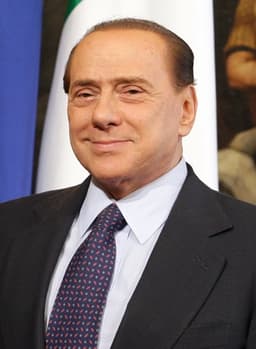
Silvio Berlusconi
Politician · Modern
58.7Total
Basic Information
Born
1936
1936
Died
—
—
Era
Modern
Modern
Nationality
Indonesia
Italy
Occupation
Politician
Politician
Civilization
Eastern
Western
Score Comparison
Military (10%)
15.7
50.0
Political (20%)
72.0
55.0
Influence (20%)
61.0
68.0
Legacy (20%)
49.2
52.0
Leadership (15%)
67.0
68.0
Strategy (15%)
30.0
52.2
TOTAL
53.0
58.7
B. J. Habibie — Complete Timeline
1978 AD
Minister of Research and TechnologyPolitical Action
B. J. Habibie was appointed Minister of Research and Technology by President Suharto. He promoted industrial development, particularly in aerospace and shipbuilding, through state-owned enterprises.
MinisterTechnologyIndustrialization
Impact: nationalconstructive
1998 AD
Vice President of IndonesiaPolitical Action◆ Major
B. J. Habibie was appointed Vice President of Indonesia by Suharto. He served for only two months before Suharto resigned amid the Asian financial crisis and widespread protests.
Vice PresidentSuhartoAsian financial crisis
Impact: national
Presidency and democratic reformsPolitical Action◆ Major
B. J. Habibie became President of Indonesia after Suharto's resignation. He initiated democratic reforms, including freeing political prisoners, allowing press freedom, and holding the first free elections in 1999.
PresidentDemocratic reformsFree elections
Impact: nationalprogressive
1999 AD
East Timor referendumPolitical Action◆ Major
B. J. Habibie allowed a UN-supervised referendum in East Timor, where voters chose independence from Indonesia. The decision was controversial but ended decades of conflict and occupation.
East TimorReferendumIndependence
Impact: regionalconstructive
Silvio Berlusconi — Complete Timeline
1978 AD
Founding of FininvestPolitical Action◆ Major
Berlusconi founded Fininvest, a holding company that acquired local television stations and later built Italy's largest private media empire. This gave him control over three national TV networks by the 1980s, shaping Italian media and politics.
Media EmpireBusiness
Impact: national
1994 AD
First Election as Prime MinisterPolitical Action◆ Major
Berlusconi won the 1994 general election as leader of the Forza Italia party, becoming Prime Minister of Italy on May 10. His coalition government collapsed after seven months due to internal conflicts and corruption investigations.
ElectionGovernment
Impact: national
2010 AD
Bunga Bunga ScandalPolitical Action◆ Major
Berlusconi faced allegations of paying for sex with an underage Moroccan dancer, Karima El Mahroug, and abusing his office to cover it up. The scandal led to multiple trials, damaging his political reputation and resulting in a conviction for tax fraud.
ScandalLegal
Impact: nationaldestructive
2011 AD
Resignation During Eurozone CrisisPolitical Action◆ Major
Berlusconi resigned as Prime Minister on November 16, 2011, amid the Eurozone debt crisis and market pressure. His government's inability to implement austerity measures led to his replacement by technocrat Mario Monti.
Economic CrisisResignation
Impact: national
2013 AD
Conviction for Tax FraudPolitical Action◆ Major
Berlusconi was convicted of tax fraud by Italy's Supreme Court on August 1, 2013, for inflating film rights prices in his Mediaset company. He was sentenced to four years in prison, commuted to community service, and banned from public office.
CorruptionLegal
Impact: nationaldestructive
Expert Analysis
Origins
B. J. Habibie was born on June 25, 1936, in Parepare, Dutch East Indies (now Indonesia). His father, an agriculturalist, died when Habibie was 14. He studied aerospace engineering in Germany, earning a doctorate from RWTH Aachen University. Habibie's technical expertise led him to work for Messerschmitt-Bölkow-Blohm, where he became a vice president. His background was entirely technocratic, with no political experience before entering Suharto's cabinet.
Silvio Berlusconi was born on September 29, 1936, in Milan, Italy, to a bank employee father and a housewife mother. He studied law at the University of Milan, graduating in 1961. Berlusconi began his career in construction, building a housing complex called Milano 2. He then entered media, founding the television network Telemilano in 1978, which became the base of his Mediaset empire. His early business success was rooted in real estate and broadcasting.
Rise to Power
Habibie rose through Suharto's patronage. He served as Minister of Research and Technology from 1978 to 1998, promoting aerospace and shipbuilding. In March 1998, Suharto appointed him Vice President. When Suharto resigned on May 21, 1998, amid the Asian financial crisis and mass protests, Habibie succeeded him as president. His rise was abrupt, relying entirely on Suharto's favor.
Berlusconi built his own platform. He founded Fininvest in 1975, which grew into a media conglomerate. In 1993, he entered politics, founding Forza Italia. His media outlets gave him unparalleled visibility. He won the 1994 general election and became Prime Minister on May 10, 1994. His rise combined business acumen and media control.
Leadership & Governance
Habibie governed Indonesia for 17 months (May 1998 to October 1999). He initiated democratic reforms: freed political prisoners, allowed freedom of the press, and held free elections. He also permitted a UN-supervised referendum in East Timor on August 30, 1999, leading to its independence. His governance was transitional, focusing on dismantling Suharto's authoritarian system. However, he lacked a strong political base and faced economic turmoil.
Berlusconi served as Prime Minister three times: 1994-1995, 2001-2006, and 2008-2011. He passed laws favorable to his business interests, such as reducing penalties for false accounting. He maintained a populist style and cultivated a cult of personality. His governance was marked by conflicts of interest, as he owned most of Italy's private TV stations. He also faced multiple legal cases, including tax fraud and bribery.
Triumph & Tragedy
Habibie's triumph was overseeing Indonesia's peaceful transition to democracy. He held the first free election in 44 years in June 1999. His decision on East Timor, though controversial, ended a 24-year occupation and brought international approval. His tragedy was that his reforms were incomplete: the economy remained weak, and he failed to secure a second term. He was not nominated by his party for re-election and retired to Germany.
Berlusconi's triumph was building a media empire and dominating Italian politics for two decades. He introduced reforms like abolishing inheritance tax for a time. His tragedy includes multiple convictions: he was sentenced to four years in prison for tax fraud (later reduced) and was involved in the "Bunga Bunga" scandal. He resigned in 2011 during the Eurozone crisis, his reputation tarnished.
Character & Destiny
Habibie was an intellectual, more comfortable with engineering than politics. He was decisive on East Timor but lacked political cunning. His character led him to prioritize reform over self-preservation, resulting in a short presidency. Historians rate his leadership at 67.0, reflecting his principled but brief tenure.
Berlusconi was a showman and dealmaker. He used his media power to shape public opinion and survive scandals. His character was resilient but ethically flexible. He scored 68.0 in leadership, showing his ability to maintain power despite controversies. His destiny was to be both a political survivor and a convicted criminal.
Legacy
Habibie is remembered as the father of Indonesian reformasi (reform). His decision on East Timor is seen as brave, though criticized by nationalists. His score of 49.2 in legacy reflects his short term but significant impact. Indonesia's democracy, though imperfect, owes its start to his reforms.
Berlusconi's legacy is mixed. He changed Italian media and politics, but also left a culture of populism and legal troubles. His score of 52.0 in legacy is slightly higher, but his influence (68.0) is notable. He is a cautionary tale about the intersection of business and politics.
Conclusion
Despite Berlusconi's higher total score (58.7 vs. 53.0), Habibie's impact was more transformative. Habibie's democratic reforms were foundational for Indonesia, a nation of 270 million. Berlusconi's influence was largely personal and ephemeral; Italy's political system remained fragile. Habibie's score of 72.0 in politics reflects his role in systemic change, while Berlusconi's 55.0 shows his self-serving use of power. In terms of lasting, positive change, Habibie surpasses Berlusconi.
Rankings
🥇
Silvio BerlusconiLeader
Mil: 50.0Pol: 55.0Inf: 68.0
58.7
🥈
B. J. Habibie
Mil: 15.7Pol: 72.0Inf: 61.0
53.0
+5.7 behind
How This Comparison Works
Algorithm
Each figure is scored on 6 dimensions (0—100 scale) based on structured historical data: Military (10%), Political (20%), Influence (20%), Legacy (20%), Leadership (15%), Strategy (15%). The weighted total produces the final ranking.
Data Sources
Scores are computed from structured sub-indicators in the database. Scale factors adjust for era (Ancient ×0.85, Modern ×1.0) and civilization size (Eastern ×1.05, Other ×0.80) to account for differences in population and military scale.
Maximum 3 Figures
Comparisons are limited to 2—3 figures to ensure readability and statistical meaningfulness.
Error Margins
±5 points per dimension — Sub-scores are derived from historical records with inherent uncertainty. Two figures within 5 points on a dimension should be considered roughly equivalent in that area.
Total Score Accuracy
±3 points overall — The weighted combination of 6 dimensions produces a total score with approximately ±3 points of uncertainty. Differences of less than 3 points are not statistically significant— the figures are effectively tied.
Known Limitations
- Historical records are incomplete and uneven across civilizations
- Figures from oral-tradition societies may be underrepresented
- Occupation labels can misclassify multi-role figures
- Scores measure capability and impact, not moral character
- Quantitative scoring is a comparison tool, not absolute truth
Capability Radar
Military (10%) — Battles & Warfare
Battles
13
29
Win Rate
19
31
Expansion
17
33
Political (20%) — Governance & Reform
Reform
75
55
Diplomacy
60
60
Economy
40
70
Influence (20%) — Cultural & Global Reach
Cultural
45
65
Global
50
65
Legacy (20%) — Historical Impact
Historical
55
60
Longevity
40
40
Leadership (15%) — Power & Stability
Tenure
20
75
Stability
30
30
Strategy (15%) — Tactics & Innovation
Strategy
23
39
Tactics
26
41
Reform
30
42
Similar Comparisons
Comments & Discussion
No comments yet. Be the first to share your thoughts!