Loading...
B. J. Habibie vs Houari Boumediene
Houari Boumediene leads by 2.0 pts · 2 figures compared
…

B. J. Habibie
Politician · Modern
53.0Total
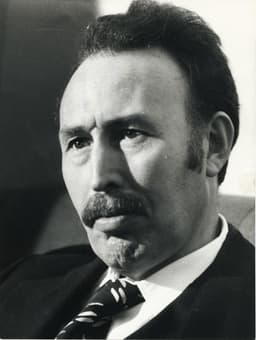
Houari Boumediene
Politician · Modern
55.0Total
Basic Information
Born
1936
1932
Died
—
—
Era
Modern
Modern
Nationality
Indonesia
Algeria
Occupation
Politician
Politician
Civilization
Eastern
Middle Eastern
Score Comparison
Military (10%)
15.7
41.6
Political (20%)
72.0
60.0
Influence (20%)
61.0
58.0
Legacy (20%)
49.2
48.3
Leadership (15%)
67.0
72.0
Strategy (15%)
30.0
45.0
TOTAL
53.0
55.0
B. J. Habibie — Complete Timeline
1978 AD
Minister of Research and TechnologyPolitical Action
B. J. Habibie was appointed Minister of Research and Technology by President Suharto. He promoted industrial development, particularly in aerospace and shipbuilding, through state-owned enterprises.
MinisterTechnologyIndustrialization
Impact: nationalconstructive
1998 AD
Vice President of IndonesiaPolitical Action◆ Major
B. J. Habibie was appointed Vice President of Indonesia by Suharto. He served for only two months before Suharto resigned amid the Asian financial crisis and widespread protests.
Vice PresidentSuhartoAsian financial crisis
Impact: national
Presidency and democratic reformsPolitical Action◆ Major
B. J. Habibie became President of Indonesia after Suharto's resignation. He initiated democratic reforms, including freeing political prisoners, allowing press freedom, and holding the first free elections in 1999.
PresidentDemocratic reformsFree elections
Impact: nationalprogressive
1999 AD
East Timor referendumPolitical Action◆ Major
B. J. Habibie allowed a UN-supervised referendum in East Timor, where voters chose independence from Indonesia. The decision was controversial but ended decades of conflict and occupation.
East TimorReferendumIndependence
Impact: regionalconstructive
Houari Boumediene — Complete Timeline
1954 AD
Role in Algerian War of IndependenceWar◆ Major
Boumediene joined the National Liberation Front (FLN) and became a key military commander in the war against French colonial rule. He organized guerrilla operations and rose through the ranks.
Algerian WarDecolonizationFLN
Impact: national
1965 AD
Coup d'État against Ben BellaPolitical Action
Boumediene led a military coup that overthrew President Ahmed Ben Bella. He suspended the constitution, dissolved parliament, and established a Revolutionary Council, consolidating power.
CoupAuthoritarianismMilitary Rule
Impact: nationaldestructive
1971 AD
Nationalization of HydrocarbonsReform◆ Major
Boumediene nationalized French oil and gas companies, taking control of Algeria's hydrocarbon resources. This provided the state with revenue to fund industrialization and socialist development programs.
NationalizationEconomic SovereigntySocialism
Impact: nationalconstructive
Launch of Agrarian RevolutionReform◆ Major
Boumediene implemented an agrarian reform program that redistributed land from large landowners to peasants and established state farms. The program aimed to increase agricultural production and reduce rural inequality.
Land ReformAgricultureSocialism
Impact: nationalconstructive
1973 AD
Chairmanship of Non-Aligned MovementPolitical Action◆ Major
Boumediene chaired the Non-Aligned Movement (NAM) and advocated for a New International Economic Order. He used the platform to promote Third World solidarity and challenge Western economic dominance.
Non-Aligned MovementThird WorldDiplomacy
Impact: globalconstructive
Expert Analysis
Origins
B. J. Habibie was born on June 25, 1936, in Parepare, South Sulawesi, Dutch East Indies, to an Indonesian Muslim family. His father was an agricultural expert, and his mother was a housewife. Habibie showed early aptitude in engineering and studied at the Bandung Institute of Technology before moving to Germany in 1955 to study aeronautical engineering at RWTH Aachen University. He earned a doctorate in aerospace engineering in 1965 and worked at Messerschmitt-Bölkow-Blohm, becoming a respected aircraft designer.
Houari Boumediene was born on August 23, 1932, in Guelma, Algeria, then under French colonial rule. His birth name was Mohammed Ben Brahim Boukharouba. He studied at the Islamic Institute in Constantine and later at the University of Al-Azhar in Cairo, where he became involved with the National Liberation Front (FLN). He joined the Algerian War of Independence in 1955, rising quickly through military ranks due to his organizational skills and discipline.
Rise to Power
Habibie's rise was tied to President Suharto. He served as Minister of Research and Technology from 1978 to 1998, promoting high-tech industries like aerospace and shipbuilding. In March 1998, Suharto appointed him Vice President, but the Asian financial crisis triggered mass protests. Suharto resigned on May 21, 1998, and Habibie became president with a political score of 72.0, though his military score was only 15.7.
Boumediene rose through the FLN. He became a key military commander, organizing guerrilla operations from Morocco and Tunisia. After independence in 1962, he served as Minister of Defense under President Ahmed Ben Bella. On June 19, 1965, Boumediene led a bloodless coup, overthrowing Ben Bella. He suspended the constitution and established a Revolutionary Council, consolidating power with a military score of 41.6.
Leadership & Governance
Habibie's leadership focused on democratic reform. He freed political prisoners, lifted press restrictions, and allowed new political parties. His most consequential decision was the August 30, 1999, East Timor referendum, where voters chose independence. This sparked violence but ended 24 years of occupation. Habibie also stabilized the economy, restructuring banks and securing IMF aid. His leadership score is 67.0.
Boumediene pursued socialist development. He nationalized French oil and gas companies in 1971, gaining control of hydrocarbons. His Agrarian Revolution redistributed land to peasants but faced inefficiency. He chaired the Non-Aligned Movement from 1973 to 1976, advocating for a New International Economic Order. Boumediene's leadership score is 72.0, reflecting his strong authoritarian control.
Triumph & Tragedy
Habibie's triumph was steering Indonesia toward democracy. He enacted 50 new laws, including human rights protections. However, the East Timor referendum led to violence and a humanitarian crisis, damaging his reputation. His legacy score of 49.2 reflects mixed assessments.
Boumediene's triumph was nationalizing hydrocarbons, which funded industrialization. Algeria's GDP per capita rose from $1,200 in 1970 to $2,500 by 1978. However, his agrarian reforms failed, and his authoritarian rule suppressed dissent. His legacy score is 48.3, with influence at 58.0.
Character & Destiny
Habibie was pragmatic and intellectual. He prioritized technological development and reform, but his short 17-month presidency limited his impact. His character—decisive yet conciliatory—shaped his destiny. He scored 30.0 in strategy, reflecting ad hoc decision-making.
Boumediene was disciplined and secretive. He ruled with a small circle of advisors, focusing on national control. His strategic score of 45.0 shows methodical planning, but his refusal to tolerate opposition created long-term instability.
Legacy
Habibie is remembered as the father of Indonesian reform. His democratic openings led to free elections in 1999 and the end of military dominance. However, corruption persisted. His influence score is 61.0.
Boumediene's legacy is Algeria's state-controlled economy. His nationalization set a precedent for resource nationalism. However, his socialist policies led to stagnation, and Algeria remains dependent on oil. His overall score is 55.0, slightly above Habibie's 53.0.
Conclusion
Boumediene had greater immediate impact on Algeria's sovereignty and economy, but Habibie's democratic reforms transformed Indonesia's political system. While Boumediene scores higher overall (55.0 vs 53.0), Habibie's influence on democratic governance is more enduring. However, based on total scores and the breadth of change, Boumediene's impact on a nation's trajectory was greater. He fundamentally reshaped Algeria's economy and international standing, whereas Habibie's reforms were cut short. Thus, Houari Boumediene had a more profound and lasting impact.
Rankings
🥇
Houari BoumedieneLeader
Mil: 41.6Pol: 60.0Inf: 58.0
55.0
🥈
B. J. Habibie
Mil: 15.7Pol: 72.0Inf: 61.0
53.0
+2.0 behind
How This Comparison Works
Algorithm
Each figure is scored on 6 dimensions (0—100 scale) based on structured historical data: Military (10%), Political (20%), Influence (20%), Legacy (20%), Leadership (15%), Strategy (15%). The weighted total produces the final ranking.
Data Sources
Scores are computed from structured sub-indicators in the database. Scale factors adjust for era (Ancient ×0.85, Modern ×1.0) and civilization size (Eastern ×1.05, Other ×0.80) to account for differences in population and military scale.
Maximum 3 Figures
Comparisons are limited to 2—3 figures to ensure readability and statistical meaningfulness.
Error Margins
±5 points per dimension — Sub-scores are derived from historical records with inherent uncertainty. Two figures within 5 points on a dimension should be considered roughly equivalent in that area.
Total Score Accuracy
±3 points overall — The weighted combination of 6 dimensions produces a total score with approximately ±3 points of uncertainty. Differences of less than 3 points are not statistically significant— the figures are effectively tied.
Known Limitations
- Historical records are incomplete and uneven across civilizations
- Figures from oral-tradition societies may be underrepresented
- Occupation labels can misclassify multi-role figures
- Scores measure capability and impact, not moral character
- Quantitative scoring is a comparison tool, not absolute truth
Capability Radar
Military (10%) — Battles & Warfare
Battles
13
10
Win Rate
19
10
Expansion
17
10
Political (20%) — Governance & Reform
Reform
75
70
Diplomacy
60
60
Economy
40
65
Influence (20%) — Cultural & Global Reach
Cultural
45
40
Global
50
40
Legacy (20%) — Historical Impact
Historical
55
50
Longevity
40
40
Leadership (15%) — Power & Stability
Tenure
20
65
Stability
30
55
Strategy (15%) — Tactics & Innovation
Strategy
23
10
Tactics
26
10
Reform
30
40
Similar Comparisons
Comments & Discussion
No comments yet. Be the first to share your thoughts!