Loading...
This comparison has not been analyzed yet.
One-time AI generation (~1 minute). Scores and timeline are already available below.
B. J. Vorster vs Deng Xiaoping
Deng Xiaoping leads by 10.5 pts · 2 figures compared
…

B. J. Vorster
Politician · Modern
55.5Total
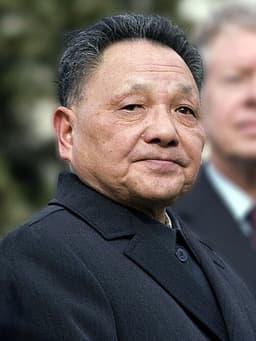
Deng Xiaoping
Politician · Modern
66.0Total
Basic Information
Born
1915
1904
Died
1983
1997
Era
Modern
Modern
Nationality
South Africa
China
Occupation
Politician
Politician
Civilization
Other
Eastern
Score Comparison
Military (10%)
39.9
30.0
Political (20%)
68.0
90.0
Influence (20%)
60.0
68.0
Legacy (20%)
56.0
65.0
Leadership (15%)
53.2
78.0
Strategy (15%)
43.3
45.0
TOTAL
55.5
66.0
B. J. Vorster — Complete Timeline
1961 AD
Appointed Minister of JusticePolitical Action◆ Major
Vorster was appointed Minister of Justice in Hendrik Verwoerd's government. He oversaw the expansion of security legislation, including the Terrorism Act, which allowed for detention without trial and suppression of anti-apartheid opposition.
ApartheidSecurity LegislationRepression
Impact: nationaldestructive
1966 AD
Became Prime Minister of South AfricaPolitical Action◆ Major
Vorster succeeded Verwoerd as Prime Minister after Verwoerd's assassination. He continued apartheid policies but also pursued a 'outward' foreign policy, seeking d
ApartheidPrime MinisterForeign Policy
Impact: nationaldestructive
1976 AD
Soweto Uprising ResponsePolitical Action◆ Major
Vorster's government responded to the Soweto student protests against Afrikaans language instruction with police violence, killing hundreds. The uprising intensified international condemnation and internal resistance to apartheid.
Soweto UprisingApartheidRepression
Impact: nationaldestructive
1978 AD
Resigned as Prime MinisterPolitical Action◆ Major
Vorster resigned as Prime Minister amid the 'Muldergate' scandal involving misuse of public funds for propaganda. He was succeeded by P.W. Botha, marking the end of his political career.
ScandalResignationApartheid
Impact: nationaltragic
Deng Xiaoping — Complete Timeline
1978 AD
Third Plenum of the 11th Central CommitteePolitical Action
Deng Xiaoping consolidated power and announced the policy of Reform and Opening-Up. This meeting marked the end of Maoist class struggle as the national priority and shifted focus to economic modernization, initiating market-oriented reforms.
Economic ReformOpening-UpChina Modernization
Impact: globalconstructive
1980 AD
Establishment of Special Economic ZonesReform◆ Major
Deng Xiaoping approved the creation of Special Economic Zones in Shenzhen, Zhuhai, Shantou, and Xiamen. These zones offered tax incentives and market freedoms to attract foreign investment and technology, serving as experimental laboratories for capitalist practices within a socialist framework.
Economic ZonesForeign InvestmentMarket Reforms
Impact: nationalconstructive
1984 AD
Sino-British Joint Declaration on Hong KongPolitical Action◆ Major
Deng Xiaoping negotiated with British Prime Minister Margaret Thatcher to agree on the return of Hong Kong to Chinese sovereignty in 1997. The declaration established the 'One Country, Two Systems' principle, allowing Hong Kong to maintain its capitalist system for 50 years.
Hong KongDiplomacyOne Country Two Systems
Impact: globalconstructive
1989 AD
Tiananmen Square Protests CrackdownPolitical Action
Deng Xiaoping authorized the military to suppress pro-democracy protests in Tiananmen Square. The crackdown resulted in hundreds of civilian deaths and injuries, leading to international condemnation and a tightening of political control while economic reforms continued.
TiananmenSuppressionHuman Rights
Impact: globaldestructive
1992 AD
Southern Tour (Nanxun)Political Action◆ Major
Deng Xiaoping traveled to southern China to reaffirm the course of economic reform after conservative backlash. His speeches in Shenzhen and other cities revitalized market-oriented policies, accelerating foreign investment and pushing China toward a socialist market economy.
Economic ReformNanxunMarket Economy
Impact: nationalconstructive
This comparison has not been analyzed yet.
One-time AI generation (~1 minute). Scores and timeline are already available below.
Rankings
🥇
Deng XiaopingLeader
Mil: 30.0Pol: 90.0Inf: 68.0
66.0
🥈
B. J. Vorster
Mil: 39.9Pol: 68.0Inf: 60.0
55.5
+10.5 behind
How This Comparison Works
Algorithm
Each figure is scored on 6 dimensions (0—100 scale) based on structured historical data: Military (10%), Political (20%), Influence (20%), Legacy (20%), Leadership (15%), Strategy (15%). The weighted total produces the final ranking.
Data Sources
Scores are computed from structured sub-indicators in the database. Scale factors adjust for era (Ancient ×0.85, Modern ×1.0) and civilization size (Eastern ×1.05, Other ×0.80) to account for differences in population and military scale.
Maximum 3 Figures
Comparisons are limited to 2—3 figures to ensure readability and statistical meaningfulness.
Error Margins
±5 points per dimension — Sub-scores are derived from historical records with inherent uncertainty. Two figures within 5 points on a dimension should be considered roughly equivalent in that area.
Total Score Accuracy
±3 points overall — The weighted combination of 6 dimensions produces a total score with approximately ±3 points of uncertainty. Differences of less than 3 points are not statistically significant— the figures are effectively tied.
Known Limitations
- Historical records are incomplete and uneven across civilizations
- Figures from oral-tradition societies may be underrepresented
- Occupation labels can misclassify multi-role figures
- Scores measure capability and impact, not moral character
- Quantitative scoring is a comparison tool, not absolute truth
Capability Radar
Military (10%) — Battles & Warfare
Battles
22
36
Win Rate
23
37
Expansion
28
41
Political (20%) — Governance & Reform
Reform
40
95
Diplomacy
50
80
Economy
55
95
Influence (20%) — Cultural & Global Reach
Cultural
30
70
Global
60
90
Legacy (20%) — Historical Impact
Historical
60
90
Longevity
50
85
Leadership (15%) — Power & Stability
Tenure
70
85
Stability
30
75
Strategy (15%) — Tactics & Innovation
Strategy
33
47
Tactics
31
48
Reform
34
49
Similar Comparisons
Comments & Discussion
No comments yet. Be the first to share your thoughts!