Loading...
Deng Xiaoping vs George Washington
George Washington leads by 10.8 pts · 2 figures compared
…
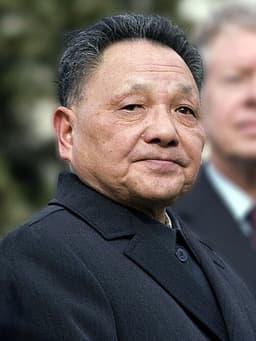
Deng Xiaoping
Politician · Modern
66.0Total
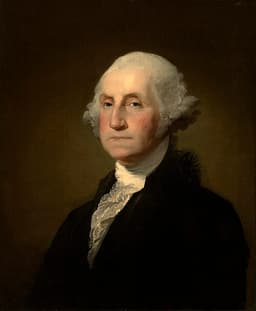
George Washington
Politician · Modern
76.8Total
Basic Information
Born
1904
1732
Died
1997
1799
Era
Modern
Modern
Nationality
China
United States
Occupation
Politician
Politician
Civilization
Eastern
Western
Score Comparison
Military (10%)
30.0
75.0
Political (20%)
90.0
82.0
Influence (20%)
68.0
75.0
Legacy (20%)
65.0
80.0
Leadership (15%)
78.0
85.0
Strategy (15%)
45.0
55.0
TOTAL
66.0
76.8
Deng Xiaoping — Complete Timeline
1978 AD
Third Plenum of the 11th Central CommitteePolitical Action
Deng Xiaoping consolidated power and announced the policy of Reform and Opening-Up. This meeting marked the end of Maoist class struggle as the national priority and shifted focus to economic modernization, initiating market-oriented reforms.
Economic ReformOpening-UpChina Modernization
Impact: globalconstructive
1980 AD
Establishment of Special Economic ZonesReform◆ Major
Deng Xiaoping approved the creation of Special Economic Zones in Shenzhen, Zhuhai, Shantou, and Xiamen. These zones offered tax incentives and market freedoms to attract foreign investment and technology, serving as experimental laboratories for capitalist practices within a socialist framework.
Economic ZonesForeign InvestmentMarket Reforms
Impact: nationalconstructive
1984 AD
Sino-British Joint Declaration on Hong KongPolitical Action◆ Major
Deng Xiaoping negotiated with British Prime Minister Margaret Thatcher to agree on the return of Hong Kong to Chinese sovereignty in 1997. The declaration established the 'One Country, Two Systems' principle, allowing Hong Kong to maintain its capitalist system for 50 years.
Hong KongDiplomacyOne Country Two Systems
Impact: globalconstructive
1989 AD
Tiananmen Square Protests CrackdownPolitical Action
Deng Xiaoping authorized the military to suppress pro-democracy protests in Tiananmen Square. The crackdown resulted in hundreds of civilian deaths and injuries, leading to international condemnation and a tightening of political control while economic reforms continued.
TiananmenSuppressionHuman Rights
Impact: globaldestructive
1992 AD
Southern Tour (Nanxun)Political Action◆ Major
Deng Xiaoping traveled to southern China to reaffirm the course of economic reform after conservative backlash. His speeches in Shenzhen and other cities revitalized market-oriented policies, accelerating foreign investment and pushing China toward a socialist market economy.
Economic ReformNanxunMarket Economy
Impact: nationalconstructive
George Washington — Complete Timeline
1775 AD
Appointed Commander-in-Chief of the Continental ArmyOther◆ Major
The Second Continental Congress appointed Washington as commander-in-chief of the Continental Army on June 15, 1775. He accepted the position without pay, taking command of the forces besieging Boston at the start of the American Revolutionary War.
American RevolutionMilitary Leadership
Impact: national
1776 AD
Crossed the Delaware RiverOther◆ Major
On the night of December 25-26, 1776, Washington led 2,400 troops across the ice-choked Delaware River. The surprise attack on Hessian forces at Trenton resulted in a decisive American victory, capturing nearly 1,000 prisoners and reviving Patriot morale after a series of defeats.
American RevolutionBattleTurning Point
Impact: nationalconstructive
1787 AD
Presided over the Constitutional ConventionPolitical Action◆ Major
Washington served as president of the Constitutional Convention in Philadelphia from May to September 1787. His presence lent legitimacy to the proceedings, and he formally signed the final draft of the U.S. Constitution, though he contributed little to the debates.
ConstitutionFounding Father
Impact: national
1789 AD
Inaugurated as First President of the United StatesPolitical Action◆ Major
Washington was unanimously elected by the Electoral College and inaugurated on April 30, 1789, at Federal Hall in New York City. He established numerous executive branch precedents, including the cabinet system, the inaugural address, and the title 'Mr. President'.
PresidencyFounding Father
Impact: national
1793 AD
Issued the Proclamation of NeutralityOther◆ Major
Washington issued the Proclamation of Neutrality on April 22, 1793, declaring the United States neutral in the conflict between France and Great Britain. This decision established the precedent of American isolationism and avoided entanglement in European wars.
Foreign PolicyNeutrality
Impact: national
1796 AD
Delivered the Farewell AddressOther◆ Major
Washington published his Farewell Address on September 19, 1796, announcing his decision not to seek a third term. The address warned against political factionalism, permanent foreign alliances, and the influence of the military in government, shaping American political culture.
PresidencyLegacy
Impact: national
Expert Analysis
George Washington vs Deng Xiaoping
# The Architect and the Builder
On a winter morning in 1789, George Washington stood before a crowd in New York City, his hand resting on a Bible, about to become something the world had never seen: a president. Nearly two centuries later, in the summer of 1978, Deng Xiaoping sat in a modest Beijing office, drafting a speech that would transform a nation of nearly a billion people. Both men faced impossible choices. Washington had to invent a government from scratch. Deng had to dismantle one without breaking the country apart. Why did one become the father of a democratic republic, and the other the architect of authoritarian capitalism? The answers lie not just in their characters, but in the worlds that made them.
Origins
George Washington was born into Virginia's planter aristocracy in 1732, a world of tobacco fields, enslaved labor, and British rule. His father died when he was eleven, leaving him with little formal education but a fierce ambition to rise. He taught himself surveying, read military manuals by candlelight, and learned the hard calculus of command on the bloody frontier of the French and Indian War. By his twenties, Washington understood that survival depended on discipline, not ideals.
Deng Xiaoping emerged from a very different soil. Born in 1904 in Sichuan province, he grew up in a China crumbling under foreign domination and dynastic decay. His father sent him to study in France at age sixteen, where he worked in a rubber factory and met young Chinese revolutionaries. In Paris, Deng learned that the West's power came from industry, not morality. He joined the Communist Party not out of ideological fervor, but because it offered a path to rebuild a broken nation. Where Washington inherited a stable colonial order, Deng inherited chaos.
Rise to Power
Washington's path to leadership was forged in defeat. As commander of the Continental Army, he lost more battles than he won. But he held his army together through Valley Forge's frozen hell, preventing the rebellion from collapsing. His genius was not tactical brilliance but strategic endurance. When the war ended, he stunned the world by resigning his commission, refusing to become a military dictator. That single act made him indispensable.
Deng rose through the ranks of the Chinese Communist Party, surviving the Long March, the Cultural Revolution, and two purges that stripped him of power. He was denounced, exiled to a tractor factory, and forced to publicly confess his "crimes." Yet he waited. In 1978, after Mao's death and the chaos of the Gang of Four, Deng emerged as the "paramount leader" — a title that had no constitutional basis but absolute practical authority. Unlike Washington, who gained power through unanimous election, Deng seized it through patient maneuvering within a closed system.
Leadership & Governance
Washington governed by restraint. He vetoed only two bills as president, built a cabinet of rivals like Hamilton and Jefferson, and stepped down after two terms despite popular pressure to stay. His greatest achievement was proving that power could be transferred peacefully. He understood that in a fragile republic, the leader's example mattered more than any law.
Deng governed by transformation. He did not write a constitution or debate philosophy; he opened China to foreign investment, created Special Economic Zones in Shenzhen and other cities in 1980, and told his people, "It doesn't matter whether a cat is black or white, as long as it catches mice." Where Washington built institutions, Deng dismantled ideology. He ended collective farming, allowed private enterprise, and lifted hundreds of millions from poverty — all while maintaining one-party rule. His 1992 Southern Tour reasserted reform after conservative backlash, showing that his authority came from results, not elections.
Triumph & Tragedy
Washington's triumph was the peaceful founding of a nation. His tragedy was personal: he owned slaves, and despite private doubts, never freed them in his lifetime. The contradiction between liberty and bondage haunted his legacy, a wound his republic would spend centuries trying to heal.
Deng's triumph was economic: China's GDP grew at an average of 9 percent annually during his reforms. His tragedy was the Tiananmen Square crackdown in 1989. When students demanded democracy, Deng authorized military force, resulting in hundreds of deaths. He believed stability was the precondition for prosperity, and he was willing to sacrifice everything — including his international reputation — to preserve it. That decision defined his legacy as much as the skyscrapers of Shanghai.
Character & Destiny
Washington was a man of dignity and distance. He rarely laughed, kept his emotions hidden, and projected an almost theatrical gravitas. He believed that leadership required sacrifice of the self to the office. His destiny was to be the symbol of a nation that did not yet exist.
Deng was pragmatic and blunt. He smoked cigarettes during meetings, told jokes, and once said, "I don't care if it's a socialist cat or a capitalist cat, as long as it catches mice." He had no interest in being a symbol; he wanted results. His destiny was to be the engineer of a nation that already existed but was starving. Where Washington worried about posterity, Deng worried about dinner.
Legacy
Today, Washington's face is on the dollar bill, his name on the capital city, his farewell address still read in classrooms. He is remembered as the man who could have been king but chose to be a citizen.
Deng's legacy is written in the skyline of Shenzhen, the ports of Shanghai, and the smartphones in Chinese pockets. He is remembered as the man who broke the chains of poverty without breaking the chains of the state. His reforms created the world's second-largest economy, but also a system of surveillance and control that his successors have tightened.
Conclusion
Standing back, the two men seem opposites: one a democrat, one a dictator; one a founder, one a reformer. Yet both faced the same fundamental question: how do you build a stable, prosperous nation from chaos? Washington answered by limiting power. Deng answered by concentrating it. Their different answers reflect not just their characters, but the eras they inhabited. Washington lived in an age of revolution where liberty was the cry. Deng lived in an age of devastation where survival was the priority. Perhaps the deepest lesson is that leadership is never abstract — it is always a response to a specific moment. And the moment, as much as the man, writes the final judgment.
Rankings
🥇
George WashingtonLeader
Mil: 75.0Pol: 82.0Inf: 75.0
76.8
🥈
Deng Xiaoping
Mil: 30.0Pol: 90.0Inf: 68.0
66.0
+10.8 behind
How This Comparison Works
Algorithm
Each figure is scored on 6 dimensions (0—100 scale) based on structured historical data: Military (10%), Political (20%), Influence (20%), Legacy (20%), Leadership (15%), Strategy (15%). The weighted total produces the final ranking.
Data Sources
Scores are computed from structured sub-indicators in the database. Scale factors adjust for era (Ancient ×0.85, Modern ×1.0) and civilization size (Eastern ×1.05, Other ×0.80) to account for differences in population and military scale.
Maximum 3 Figures
Comparisons are limited to 2—3 figures to ensure readability and statistical meaningfulness.
Error Margins
±5 points per dimension — Sub-scores are derived from historical records with inherent uncertainty. Two figures within 5 points on a dimension should be considered roughly equivalent in that area.
Total Score Accuracy
±3 points overall — The weighted combination of 6 dimensions produces a total score with approximately ±3 points of uncertainty. Differences of less than 3 points are not statistically significant— the figures are effectively tied.
Known Limitations
- Historical records are incomplete and uneven across civilizations
- Figures from oral-tradition societies may be underrepresented
- Occupation labels can misclassify multi-role figures
- Scores measure capability and impact, not moral character
- Quantitative scoring is a comparison tool, not absolute truth
Capability Radar
Military (10%) — Battles & Warfare
Battles
36
75
Win Rate
37
70
Expansion
41
60
Political (20%) — Governance & Reform
Reform
95
90
Diplomacy
80
85
Economy
95
65
Influence (20%) — Cultural & Global Reach
Cultural
70
85
Global
90
85
Legacy (20%) — Historical Impact
Historical
90
95
Longevity
85
90
Leadership (15%) — Power & Stability
Tenure
85
70
Stability
75
85
Strategy (15%) — Tactics & Innovation
Strategy
47
80
Tactics
48
65
Reform
49
85
Similar Comparisons
Comments & Discussion
No comments yet. Be the first to share your thoughts!