Loading...
Babangida Ibrahim vs Julius Caesar
Julius Caesar leads by 36.8 pts · 2 figures compared
…
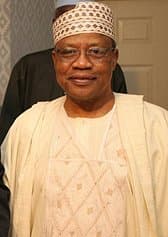
Babangida Ibrahim
General · Modern
46.0Total

Julius Caesar
General · Ancient
82.8Total
Basic Information
Born
1941
-100
Died
—
-44
Era
Modern
Ancient
Nationality
Nigeria
Roman Republic
Occupation
General
General
Civilization
Other
Western
Score Comparison
Military (10%)
25.9
88.0
Political (20%)
39.4
78.0
Influence (20%)
51.8
85.0
Legacy (20%)
42.5
82.0
Leadership (15%)
65.7
80.0
Strategy (15%)
41.0
85.0
TOTAL
46.0
82.8
Babangida Ibrahim — Complete Timeline
1985 AD
Seized Power in CoupPolitical Action◆ Major
Babangida seized power in a bloodless coup in 1985, overthrowing Muhammadu Buhari. He cited Buhari's authoritarian rule and economic mismanagement as reasons for the takeover, promising a return to civilian rule.
NigeriaCoupMilitary
Impact: national
1986 AD
Implemented Structural Adjustment ProgramReform◆ Major
Babangida implemented a Structural Adjustment Program (SAP) in 1986, backed by the IMF and World Bank. The program included currency devaluation, trade liberalization, and privatization, but led to economic hardship and protests.
NigeriaEconomic ReformIMF
Impact: nationaldestructive
1993 AD
Annulled 1993 Presidential ElectionPolitical Action
Babangida annulled the 1993 presidential election, widely considered the freest in Nigeria's history, after preliminary results showed Moshood Abiola winning. The annulment sparked political crisis, protests, and international condemnation.
NigeriaElectionCrisis
Impact: nationaldestructive
Resigned as PresidentPolitical Action◆ Major
Babangida resigned as President in 1993 under pressure from protests and international criticism following the election annulment. He handed power to an interim government led by Ernest Shonekan, which was soon overthrown by Sani Abacha.
NigeriaResignationTransition
Impact: national
Julius Caesar — Complete Timeline
58 BC
Gallic WarsWar◆ Major
Caesar, as proconsul of Gaul, launched a series of campaigns that conquered all of Gaul (modern France, Belgium, and parts of Switzerland). He fought numerous battles, including against the Helvetii, the Belgae, and the Gallic chieftain Vercingetorix. The wars brought immense wealth and a loyal army to Caesar.
Gallic WarsConquestRoman Expansion
Impact: regional
49 BC
Crossing the RubiconPolitical Action◆ Major
Caesar led Legio XIII across the Rubicon River into Italy, defying the Roman Senate's order to disband his army. This act triggered a civil war against Pompey and the Optimates, ultimately leading to Caesar's dictatorship and the end of the Roman Republic.
Roman Civil WarEnd of RepublicPower Struggle
Impact: global
48 BC
Battle of PharsalusWar◆ Major
Caesar's outnumbered army defeated the larger forces of Pompey the Great at Pharsalus in Greece. Caesar's tactical use of a reserve line to counter Pompey's cavalry charge proved decisive. Pompey fled to Egypt, where he was assassinated, leaving Caesar as the undisputed master of the Roman world.
Roman Civil WarBattleDecisive Victory
Impact: regional
44 BC
Appointment as Dictator for LifePolitical Action◆ Major
The Roman Senate appointed Caesar dictator perpetuo (dictator for life), granting him unprecedented personal power. This move concentrated military, legislative, and judicial authority in one person, effectively ending the Roman Republic's traditional system of checks and balances and alarming many senators.
DictatorshipEnd of RepublicPower Consolidation
Impact: regionaldestructive
Assassination on the Ides of MarchPolitical Action◆ Major
A group of Roman senators, led by Marcus Junius Brutus and Gaius Cassius Longinus, stabbed Caesar to death at a meeting of the Senate in the Theatre of Pompey. The assassination was intended to restore the Republic, but instead triggered another civil war that led to the rise of the Roman Empire.
AssassinationRoman PoliticsEnd of Republic
Impact: globaldestructive
Expert Analysis
babangida-ibrahim-vs-julius-caesar
# The Ides of March and the Long Shadow of a Stolen Vote
On a morning in March 44 BCE, Julius Caesar walked into the Senate chamber in Rome, unaware that sixty senators had hidden daggers beneath their togas. Within minutes, he lay bleeding on the marble floor, his body pierced twenty-three times. Nearly two thousand years later, on a humid August night in 1993, General Ibrahim Babangida sat in the presidential villa in Abuja, watching the returns from what Nigerians would later call their country's freest election. He did not bleed. Instead, he simply annulled the result, and the democracy died quietly, by decree. Both men were generals. Both seized power. But one changed the course of Western civilization, while the other became a footnote in a continent's unfinished story. What separates a Caesar from a Babangida? The answer lies not merely in ambition, but in the soil of history itself.
Origins
Julius Caesar was born into the patrician Julian clan in 100 BCE, a family that claimed descent from the goddess Venus. Yet his Rome was a dying republic, choked by corruption, paralyzed by class war between the patrician optimates and the populist populares. Caesar's father died when he was sixteen, leaving him to navigate a world where power belonged to those who could buy it. He learned early that survival meant playing a long game—borrowing fortunes, forging alliances, and never forgetting an enemy.
Ibrahim Babangida was born in 1941 in the village of Wushishi, in what was then British Nigeria. His father was a minor civil servant, his mother a trader. The Nigeria of his youth was a colony on the verge of independence, a patchwork of rival ethnic groups—Hausa, Igbo, Yoruba—held together by the thin thread of British administration. Where Caesar inherited a crumbling republic, Babangida inherited a fragile nation that had never truly been a nation at all. The difference in their starting points was not just one of time, but of structure: Caesar had an empire to build; Babangida had a country to hold together.
Rise to Power
Caesar's ascent was a masterpiece of patience and audacity. He climbed the Roman political ladder—quaestor, aedile, praetor—each step funded by borrowed money and sealed by strategic marriages. His first great break came in 60 BCE when he formed the First Triumvirate with Pompey and Crassus, two men more powerful than himself. Then came Gaul. Between 58 and 50 BCE, Caesar conquered what is now France and Belgium, winning battles against a million enemies while writing commentaries that made him a legend in his own lifetime. He understood that in Rome, military glory was the only currency that could buy political immortality.
Babangida's rise was quieter, more bureaucratic. He trained at the Nigerian Military Training College and later at the Royal Military Academy Sandhurst in Britain. In 1985, he seized power in a bloodless coup, overthrowing General Muhammadu Buhari, whose austerity measures had made him deeply unpopular. Babangida's coup was not a conquest but a palace reshuffle. Where Caesar crossed the Rubicon with a legion, Babangida simply walked into a radio station and announced he was now in charge. The difference reveals everything: Caesar's rise was a war; Babangida's was a transaction.
Leadership & Governance
As dictator of Rome, Caesar transformed the state. He reformed the calendar, introduced land reforms for veterans, extended citizenship to Gauls, and centralized tax collection. He was a military genius—his siege of Alesia remains a textbook example of encirclement—but he was also a politician who understood that power required consent. He pardoned former enemies, appointed senators from outside the old aristocracy, and built public works that made him beloved by the common people. When he was assassinated, it was not because he was a tyrant, but because he was too good at being one.
Babangida tried a different path. In 1986, he implemented a Structural Adjustment Program backed by the IMF and World Bank, devaluing the currency and cutting subsidies. The policy was meant to modernize Nigeria's economy; instead, it deepened poverty and enriched a small elite. He also attempted a political transition program, promising to return Nigeria to civilian rule. But in 1993, when the presidential election produced a winner he did not control—Moshood Abiola, a wealthy Yoruba businessman—Babangida annulled the result. The decision was not military strategy; it was political cowardice dressed as necessity. He had no Alesia, no Rubicon. He had only a microphone and a decree.
Triumph & Tragedy
Caesar's greatest moment came in 48 BCE at the Battle of Pharsalus, where he defeated Pompey's larger army through sheer tactical brilliance. He wept, according to Plutarch, when he saw the bodies of his fellow Romans. His greatest failure was his own success: he centralized power so effectively that he made himself the target of every senator who feared losing influence. His tragedy was that he could not see that the republic he saved was the republic he had to destroy.
Babangida's triumph was, paradoxically, his resignation. In August 1993, under pressure from strikes, protests, and international condemnation, he stepped down. It was a rare moment of self-restraint in African military politics. But his tragedy was deeper: by annulling the 1993 election, he set a precedent that would haunt Nigeria for decades. The country's democracy, still fragile today, was wounded at birth. Babangida did not kill Nigeria; he simply left it with a limp.
Character & Destiny
Caesar was a gambler who calculated every risk. He had himself kidnapped by pirates, then laughed at their ransom demand—and later crucified them. He crossed the Rubicon not because he was reckless, but because he knew that hesitation would mean death. His character was a blend of arrogance and charm, ruthlessness and mercy. He forgave his enemies, but only after they had been defeated.
Babangida was a survivor, not a conqueror. He was known as "Maradona" for his ability to dribble through political crises. He held power for eight years—longer than many Nigerian leaders—but left no lasting institution, no reformed economy, no national identity. He played the game of politics as chess, but he never understood that the board itself was burning.
Legacy
Caesar's legacy is the Roman Empire. His adopted son Octavian became Augustus, the first emperor. His name became a title—Kaiser, Tsar, Caesar. He gave the West its calendar, its military vocabulary, and its model of the leader as both warrior and statesman. Even his death became a lesson: Shakespeare's "Beware the Ides of March" still echoes in every classroom.
Babangida's legacy is the annulled election. It is a what-if that haunts Nigerian history. He is remembered not as a builder, but as a gatekeeper who opened the door and then slammed it shut. In the rankings of history, he scores 58.5 to Caesar's 83.3—a gap that is not merely statistical but moral. Caesar transformed the world; Babangida merely postponed its transformation.
Conclusion
The difference between a Caesar and a Babangida is not ambition—both had that. It is not intelligence—both were clever. It is the ability to see beyond one's own time. Caesar understood that to rule Rome, he had to remake Rome. Babangida understood only that to rule Nigeria, he had to manage Nigeria. One built an empire; the other built a prison. And when the prison door finally opened, no one was sure whether the country had escaped or simply wandered into a larger cell. The Ides of March gave us a martyr. The annulled election gave us a ghost.
Rankings
🥇
Julius CaesarLeader
Mil: 88.0Pol: 78.0Inf: 85.0
82.8
🥈
Babangida Ibrahim
Mil: 25.9Pol: 39.4Inf: 51.8
46.0
+36.8 behind
How This Comparison Works
Algorithm
Each figure is scored on 6 dimensions (0—100 scale) based on structured historical data: Military (10%), Political (20%), Influence (20%), Legacy (20%), Leadership (15%), Strategy (15%). The weighted total produces the final ranking.
Data Sources
Scores are computed from structured sub-indicators in the database. Scale factors adjust for era (Ancient ×0.85, Modern ×1.0) and civilization size (Eastern ×1.05, Other ×0.80) to account for differences in population and military scale.
Maximum 3 Figures
Comparisons are limited to 2—3 figures to ensure readability and statistical meaningfulness.
Error Margins
±5 points per dimension — Sub-scores are derived from historical records with inherent uncertainty. Two figures within 5 points on a dimension should be considered roughly equivalent in that area.
Total Score Accuracy
±3 points overall — The weighted combination of 6 dimensions produces a total score with approximately ±3 points of uncertainty. Differences of less than 3 points are not statistically significant— the figures are effectively tied.
Known Limitations
- Historical records are incomplete and uneven across civilizations
- Figures from oral-tradition societies may be underrepresented
- Occupation labels can misclassify multi-role figures
- Scores measure capability and impact, not moral character
- Quantitative scoring is a comparison tool, not absolute truth
Capability Radar
Military (10%) — Battles & Warfare
Battles
10
95
Win Rate
10
92
Expansion
10
97
Political (20%) — Governance & Reform
Reform
30
90
Diplomacy
25
85
Economy
20
82
Influence (20%) — Cultural & Global Reach
Cultural
20
88
Global
20
94
Legacy (20%) — Historical Impact
Historical
30
95
Longevity
15
96
Leadership (15%) — Power & Stability
Tenure
55
75
Stability
10
60
Strategy (15%) — Tactics & Innovation
Strategy
15
94
Tactics
15
96
Reform
20
88
Similar Comparisons
Comments & Discussion
No comments yet. Be the first to share your thoughts!