Loading...
Babur vs Qalawun
Babur leads by 12.7 pts · 2 figures compared
…

Babur
Emperor · Medieval
78.1Total
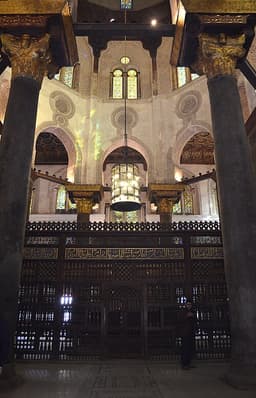
Qalawun
Emperor · Medieval
65.4Total
Basic Information
Born
1483
1222
Died
1530
1290
Era
Medieval
Medieval
Nationality
Mughal Empire
Egypt
Occupation
Emperor
Emperor
Civilization
Indian
Middle Eastern
Score Comparison
Military (10%)
74.0
82.0
Political (20%)
72.0
72.0
Influence (20%)
88.0
58.3
Legacy (20%)
80.0
58.0
Leadership (15%)
74.0
72.0
Strategy (15%)
67.6
65.4
TOTAL
78.1
65.4
Babur — Complete Timeline
1526 AD
Battle of Panipat (1526)War
Babur led his army of about 12,000 men against the Delhi Sultanate army of Ibrahim Lodi, which numbered around 100,000. Using gunpowder weapons and innovative tactics, Babur defeated Lodi's forces. This victory established the Mughal Empire in India and marked the beginning of Mughal rule.
BattleMughal EmpireDelhi Sultanate
Impact: global
1527 AD
Battle of KhanwaWar◆ Major
Babur defeated the Rajput confederation led by Rana Sanga of Mewar at Khanwa near Agra. The Rajput army was larger and included cavalry and war elephants. Babur's use of artillery and defensive tactics secured the victory. This battle consolidated Mughal control over northern India.
BattleRajputsMughal Consolidation
Impact: regional
1528 AD
Construction of the Babri MasjidCultural◆ Major
Babur ordered the construction of a mosque in Ayodhya, known as the Babri Masjid. The mosque was built on a site that Hindus believed was the birthplace of the god Rama. This act became a source of religious and political conflict in India for centuries, culminating in the mosque's demolition in 1992.
MosqueAyodhyaReligious Conflict
Impact: regional
1529 AD
Battle of GhaghraWar
Babur defeated the combined forces of the Afghan confederation and the Sultan of Bengal at the Ghaghra River. This victory eliminated the last major Afghan resistance in northern India. It extended Mughal control over Bihar and parts of Bengal, further securing Babur's empire.
BattleAfghansBengal
Impact: regional
Qalawun — Complete Timeline
1279 AD
Accession as Sultan (1279)Political Action◆ Major
Qalawun seized the sultanate after deposing his predecessor Al-Said Barakah, son of Baybars. He was a former Mamluk commander under Baybars. His accession marked the beginning of the Qalawunid dynasty, which ruled Egypt for over a century.
SuccessionMamluk SultanateDynasty
Impact: regional
1281 AD
Battle of Homs (1281)War◆ Major
Qalawun defeated a Mongol invasion led by Abaqa Khan of the Ilkhanate at the Second Battle of Homs. The Mamluk victory prevented Mongol incursions into Syria. This battle solidified Mamluk control over the region and deterred future Mongol attacks.
Mongol WarsBattleMamluk Victory
Impact: regionalconstructive
1285 AD
Capture of Margat and Latakia (1285-1287)War◆ Major
Qalawun captured the Crusader fortress of Margat (1285) and the port of Latakia (1287). These conquests further reduced Crusader territory in Syria. The fall of Margat was a significant blow to the Knights Hospitaller.
Crusader WarsConquestMamluk Expansion
Impact: regionaldestructive
1289 AD
Treaty of Tripoli (1289)Political Action◆ Major
Qalawun signed a truce with the Crusader County of Tripoli. However, he soon violated the treaty and captured Tripoli in 1289. The fall of Tripoli eliminated one of the last major Crusader states and paved the way for the capture of Acre.
Crusader WarsTreatyConquest
Impact: regionaldestructive
1290 AD
Death of Qalawun (1290)Other◆ Major
Qalawun died in Cairo while preparing a campaign to capture Acre. He was succeeded by his son Al-Ashraf Khalil, who completed the conquest of Acre. Qalawun's reign established the Qalawunid dynasty and strengthened the Mamluk state.
DeathSuccessionMamluk Sultanate
Impact: regional
Expert Analysis
Origins
Babur, born Zahir-ud-din Muhammad on February 14, 1483, in Andijan, Fergana Valley (modern Uzbekistan), was a descendant of Timur on his father's side and Genghis Khan on his mother's. He inherited the throne of Fergana at age 11 after his father's death, but faced immediate challenges from his uncles and rival chieftains. His early years were marked by instability and exile, shaping his resilience and ambition.
Qalawun, born around 1222 in the Kipchak Steppe (modern Ukraine/Russia), was a Mamluk of Turkic origin. Sold into slavery, he rose through the ranks of the Bahri Mamluks under Sultan Baybars. His early life is obscure, but his military training and loyalty to Baybars positioned him for power. He became a trusted commander, participating in campaigns against Crusaders and Mongols.
Rise to Power
Babur's rise was a series of military campaigns. After losing Fergana, he captured Kabul in 1504, establishing a base. His major turning point came with the invitation from Indian nobles to invade the Delhi Sultanate. On April 20, 1526, at the Battle of Panipat, Babur's army of about 12,000 men defeated Ibrahim Lodi's force of around 100,000, using gunpowder weapons and innovative tactics. This victory marked the founding of the Mughal Empire. He then faced the Rajput confederation under Rana Sanga at the Battle of Khanwa in 1527, where his 50,000-strong army defeated a larger Rajput force, consolidating his control over North India.
Qalawun's rise was more deliberate. After serving as a commander under Baybars, he deposed Baybars' son, Al-Said Barakah, in 1279 and seized the sultanate. His accession was not immediate; he had to navigate palace intrigues and rival Mamluk factions. He consolidated power by appointing loyalists and building alliances with other Mamluks. His military reputation was already established from campaigns against the Crusaders and Mongols, which smoothed his path to power.
Leadership & Governance
Babur's leadership was characterized by personal bravery and strategic innovation. He wrote detailed memoirs (Baburnama), showing his keen observation and self-reflection. He introduced gunpowder artillery to India, which gave him a decisive edge in battles. He also implemented a centralized administration, but his reign was short (1526-1530). He divided his empire among his sons, a practice that led to succession disputes. In governance, he relied on existing administrative structures but emphasized loyalty and merit.
Qalawun's leadership was more institutional. He maintained the Mamluk military system, relying on slave soldiers and a strict hierarchy. He focused on strengthening the state's defenses against external threats: the Mongols and Crusaders. He built hospitals, including the famous Qalawun Hospital in Cairo, and patronized architecture. His governance was pragmatic: he signed treaties when advantageous and broke them when necessary, as with the Treaty of Tripoli. He also reformed the currency and trade routes, boosting the economy.
Triumph & Tragedy
Babur's greatest triumph was the establishment of the Mughal Empire, which would last over 300 years. His victories at Panipat and Khanwa were decisive. His tragedy was his early death at age 47, likely from natural causes, leaving a fragile empire that his son Humayun nearly lost. He also oversaw the construction of the Babri Masjid in Ayodhya, a site that became a centuries-long religious and political conflict.
Qalawun's triumph was the defense of the Mamluk Sultanate. His victory at the Second Battle of Homs in 1281 stopped Mongol expansion into Syria. He captured Crusader fortresses like Margat (1285) and Latakia (1287), and conquered Tripoli in 1289, effectively ending the Crusader presence in Syria. His tragedy was his death in 1290 while preparing to capture Acre, the last major Crusader stronghold. His son Khalil completed the conquest, but Qalawun's dynasty faced internal strife later.
Character & Destiny
Babur was a restless adventurer, constantly seeking new conquests. His memoirs reveal a man of culture and introspection, but also of ambition. His character—combining Timurid warrior ethos with Persian sensibility—shaped his destiny: he founded an empire but died too soon to consolidate it. His score of 67.6 in strategy reflects his tactical brilliance but also his lack of long-term institutional planning.
Qalawun was a calculating and ruthless ruler. He deposed his predecessor and eliminated rivals. His character was shaped by the Mamluk system, which valued military prowess and loyalty. His destiny was to be a defender of his realm, not an empire-builder. His strategy score of 65.4 reflects his effective but cautious approach. He died before his final campaign, but his legacy was secured by his son.
Legacy
Babur's legacy is immense: he founded the Mughal Empire, which shaped Indian culture, architecture, and politics for centuries. The Mughals introduced Persian art, centralized governance, and left monuments like the Taj Mahal. His memoirs provide a unique historical source. However, his direct impact was limited by his short reign. In the comparison scores, Babur scores 88.0 in influence and 80.0 in legacy, reflecting the empire's long-term impact.
Qalawun's legacy is more regional. He established a dynasty that ruled Egypt and Syria for over a century. His military victories protected the Islamic world from Mongols and Crusaders. His hospital in Cairo operated for centuries. But his influence score is 58.3, lower than Babur's, because his dynasty did not expand beyond the region or leave a cultural imprint comparable to the Mughals. His legacy score of 58.0 reflects his role as a consolidator rather than a founder.
Conclusion
Babur had a greater impact overall, as reflected in his total score of 78.1 versus Qalawun's 65.4, a gap of 12.7 points. While Qalawun was a more effective military commander (82.0 vs 74.0) and a capable administrator, Babur's founding of the Mughal Empire created a civilization that influenced hundreds of millions for centuries. Qalawun's achievements were significant but contained within a narrower geography and time frame. Babur's legacy in terms of influence and enduring cultural impact far surpasses Qalawun's. Therefore, Babur is the more consequential figure in world history.
Rankings
🥇
BaburLeader
Mil: 74.0Pol: 72.0Inf: 88.0
78.1
🥈
Qalawun
Mil: 82.0Pol: 72.0Inf: 58.3
65.4
+12.7 behind
How This Comparison Works
Algorithm
Each figure is scored on 6 dimensions (0—100 scale) based on structured historical data: Military (10%), Political (20%), Influence (20%), Legacy (20%), Leadership (15%), Strategy (15%). The weighted total produces the final ranking.
Data Sources
Scores are computed from structured sub-indicators in the database. Scale factors adjust for era (Ancient ×0.85, Modern ×1.0) and civilization size (Eastern ×1.05, Other ×0.80) to account for differences in population and military scale.
Maximum 3 Figures
Comparisons are limited to 2—3 figures to ensure readability and statistical meaningfulness.
Error Margins
±5 points per dimension — Sub-scores are derived from historical records with inherent uncertainty. Two figures within 5 points on a dimension should be considered roughly equivalent in that area.
Total Score Accuracy
±3 points overall — The weighted combination of 6 dimensions produces a total score with approximately ±3 points of uncertainty. Differences of less than 3 points are not statistically significant— the figures are effectively tied.
Known Limitations
- Historical records are incomplete and uneven across civilizations
- Figures from oral-tradition societies may be underrepresented
- Occupation labels can misclassify multi-role figures
- Scores measure capability and impact, not moral character
- Quantitative scoring is a comparison tool, not absolute truth
Capability Radar
Military (10%) — Battles & Warfare
Battles
75
75
Win Rate
85
80
Expansion
85
70
Political (20%) — Governance & Reform
Reform
55
60
Diplomacy
70
75
Economy
50
65
Influence (20%) — Cultural & Global Reach
Cultural
70
55
Global
75
55
Legacy (20%) — Historical Impact
Historical
85
65
Longevity
80
60
Leadership (15%) — Power & Stability
Tenure
40
70
Stability
45
70
Strategy (15%) — Tactics & Innovation
Strategy
82
75
Tactics
80
70
Reform
60
65
Similar Comparisons
Comments & Discussion
No comments yet. Be the first to share your thoughts!