Loading...
Edward III vs Qalawun
Qalawun leads by 3.1 pts · 2 figures compared
…
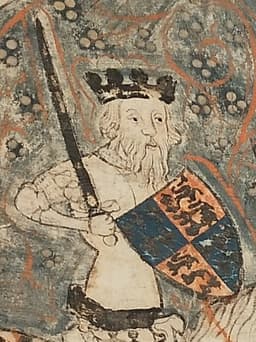
Edward III
Emperor · Medieval
62.3Total

Qalawun
Emperor · Medieval
65.4Total
Basic Information
Born
1312
1222
Died
1377
1290
Era
Medieval
Medieval
Nationality
England
Egypt
Occupation
Emperor
Emperor
Civilization
Western
Middle Eastern
Score Comparison
Military (10%)
72.0
82.0
Political (20%)
59.3
72.0
Influence (20%)
68.0
58.3
Legacy (20%)
40.0
58.0
Leadership (15%)
80.0
72.0
Strategy (15%)
72.0
65.4
TOTAL
62.3
65.4
Edward III — Complete Timeline
1337 AD
Claimed the French ThronePolitical Action
Edward III formally claimed the French crown through his mother Isabella, daughter of Philip IV of France, rejecting the Salic law that barred female succession. This claim initiated the Hundred Years' War between England and France.
Hundred Years' WarSuccession CrisisDynastic Claim
Impact: regional
1346 AD
Battle of CrécyWar◆ Major
Edward III's English army defeated a larger French force at Cr
Hundred Years' WarBattleLongbow
Impact: regional
1347 AD
Siege of CalaisWar◆ Major
Edward III besieged the French port of Calais for nearly a year, forcing its surrender. The city became an English enclave for over two centuries, serving as a strategic base for English operations in France.
Hundred Years' WarSiegeCalais
Impact: regional
1356 AD
Battle of PoitiersWar◆ Major
Edward III's son, Edward the Black Prince, led English forces to victory at Poitiers, capturing King John II of France. This triumph followed Cr
Hundred Years' WarBattleCapture of King John
Impact: regional
1360 AD
Treaty of BrétignyPolitical Action◆ Major
Edward III signed the Treaty of Br
TreatyHundred Years' WarTerritorial Gains
Impact: regional
Qalawun — Complete Timeline
1279 AD
Accession as Sultan (1279)Political Action◆ Major
Qalawun seized the sultanate after deposing his predecessor Al-Said Barakah, son of Baybars. He was a former Mamluk commander under Baybars. His accession marked the beginning of the Qalawunid dynasty, which ruled Egypt for over a century.
SuccessionMamluk SultanateDynasty
Impact: regional
1281 AD
Battle of Homs (1281)War◆ Major
Qalawun defeated a Mongol invasion led by Abaqa Khan of the Ilkhanate at the Second Battle of Homs. The Mamluk victory prevented Mongol incursions into Syria. This battle solidified Mamluk control over the region and deterred future Mongol attacks.
Mongol WarsBattleMamluk Victory
Impact: regionalconstructive
1285 AD
Capture of Margat and Latakia (1285-1287)War◆ Major
Qalawun captured the Crusader fortress of Margat (1285) and the port of Latakia (1287). These conquests further reduced Crusader territory in Syria. The fall of Margat was a significant blow to the Knights Hospitaller.
Crusader WarsConquestMamluk Expansion
Impact: regionaldestructive
1289 AD
Treaty of Tripoli (1289)Political Action◆ Major
Qalawun signed a truce with the Crusader County of Tripoli. However, he soon violated the treaty and captured Tripoli in 1289. The fall of Tripoli eliminated one of the last major Crusader states and paved the way for the capture of Acre.
Crusader WarsTreatyConquest
Impact: regionaldestructive
1290 AD
Death of Qalawun (1290)Other◆ Major
Qalawun died in Cairo while preparing a campaign to capture Acre. He was succeeded by his son Al-Ashraf Khalil, who completed the conquest of Acre. Qalawun's reign established the Qalawunid dynasty and strengthened the Mamluk state.
DeathSuccessionMamluk Sultanate
Impact: regional
Expert Analysis
Origins
Edward III was born on November 13, 1312, at Windsor Castle, the son of King Edward II of England and Isabella of France. His father's weak rule and eventual deposition in 1327 by Isabella and her lover Roger Mortimer shaped Edward's early years. Edward was crowned at age 14 after his father's forced abdication, but real power rested with Mortimer until Edward staged a coup in 1330, executing Mortimer and assuming full control. His French mother gave him a direct claim to the French throne through her father Philip IV, a claim that would ignite the Hundred Years' War.
Qalawun was born around 1222, likely in the Kipchak steppes (modern-day Ukraine/Russia). As a young Turkic slave, he was sold into the Mamluk Sultanate, rising through the ranks as a military commander under Sultan Baybars. His early life as a mamluk (military slave) provided rigorous training in cavalry warfare and politics. He converted to Islam and became a trusted general, participating in Baybars' campaigns against the Crusaders and Mongols. Unlike Edward, Qalawun had no royal lineage; his path to power was forged entirely through military merit and political maneuvering.
Rise to Power
Edward III's rise began with his personal seizure of power in 1330. At age 18, he led a surprise attack on Nottingham Castle, arresting Mortimer and forcing his mother into retirement. He then turned to foreign conquest. In 1337, he formally claimed the French throne through his mother, rejecting Salic law, and declared war on Philip VI of France. The early years of the war were indecisive, but Edward's naval victory at Sluys (1340) gave England control of the English Channel. His major breakthrough came at Crécy (1346), where his disciplined army, using longbowmen, crushed a larger French force. This victory allowed him to besiege and capture Calais in 1347, securing a key foothold in France.
Qalawun's rise was more gradual. He served Baybars loyally, commanding troops in Syria and against the Mongols. When Baybars died in 1277, his son Al-Said Barakah became sultan, but Qalawun and other Mamluks grew dissatisfied. In 1279, Qalawun deposed Barakah in a palace coup, claiming the sultanate. He consolidated power by eliminating rivals and securing the loyalty of the Mamluk elite. His early reign focused on stabilizing the sultanate and preparing for war against the Mongols, who remained the greatest threat to Mamluk rule.
Leadership & Governance
Edward III was a hands-on military leader, often leading his troops in person. He cultivated a chivalric image, founding the Order of the Garter in 1348 to bind his nobles to his cause. His governance relied on Parliament to fund wars, and he skillfully managed the nobility through patronage and war spoils. Domestically, he oversaw economic growth, but his heavy taxation for war efforts caused social strain, especially after the Black Death (1348-1350). His military strategy emphasized the use of the longbow and defensive tactics, as seen at Crécy and Poitiers. Politically, he scored 59.3, reflecting his adeptness at managing war finance but also his occasional overreach, such as the disastrous Rheims campaign (1359-1360) that failed to capture the French coronation city.
Qalawun was a more systematic administrator. He reformed the Mamluk military, ensuring a steady supply of new mamluks from the steppes. He built hospitals, including the famous Qalawun Hospital in Cairo, and improved trade routes. His rule was marked by pragmatic diplomacy: he signed truces with Crusader states to buy time, then violated them when advantageous. His capture of Margat (1285), Latakia (1287), and Tripoli (1289) systematically reduced Crusader holdings. He also repelled the Mongols at Homs in 1281, securing Mamluk dominance in Syria. His political score of 72.0 reflects his effective state-building and ability to maintain stability despite internal Mamluk factionalism.
Triumph & Tragedy
Edward III's greatest triumph was the Treaty of Brétigny (1360), which granted England vast territories in Aquitaine and a large ransom for the captured French king John II. This treaty marked the peak of English power in France. His tragedy came later: the treaty unraveled due to French resistance and English overextension. The war resumed in 1369, and by Edward's death in 1377, England had lost most of its gains. His legacy of war also bankrupted the crown and led to social unrest, culminating in the Peasants' Revolt (1381) under his grandson Richard II.
Qalawun's triumph was the near-complete elimination of Crusader states. He captured Margat, Latakia, and Tripoli, leaving only Acre as a major Crusader stronghold. His victory at Homs (1281) ended Mongol threats for a generation. However, his tragedy was his death in 1290 while preparing to besiege Acre; his son Khalil completed the conquest in 1291. Qalawun's dynasty, the Qalawunid sultans, ruled for over a century, but his reliance on Mamluk factions led to periodic instability. His hospital and architectural projects endured, but his military successes were partly undone by internal succession struggles.
Character & Destiny
Edward III was energetic, ambitious, and chivalric, but also pragmatic. He understood the value of propaganda, using his claim to France to unite his nobles. His decision to start the Hundred Years' War was driven by personal ambition and the need to distract from domestic tensions. His character shaped his destiny: his early successes made him overconfident, leading to the failed Rheims campaign. He also suffered from a decline in later years, possibly due to a stroke, leaving governance to his son John of Gaunt. Historians note his effective use of Parliament but also his failure to secure lasting peace.
Qalawun was calculating, ruthless, and patient. He was a master of timing, waiting for the right moment to strike against Crusaders and Mongols. His character was shaped by his Mamluk training, which valued loyalty but also pragmatism. He often broke treaties when it suited him, showing a cold realism. His destiny was to found a dynasty, but his death before Acre left the final conquest to his son. He was less charismatic than Edward but more effective in building lasting institutions. His political acumen is reflected in his score of 72.0, higher than Edward's 59.3.
Legacy
Edward III's legacy is deeply tied to the Hundred Years' War, which reshaped English national identity and military tactics. The longbow became iconic, and his victories at Crécy and Poitiers are studied in military history. The Order of the Garter remains a prestigious honor. However, his war also contributed to England's later financial woes and the Wars of the Roses. He scored 40.0 in legacy, reflecting the mixed long-term impact: his territorial gains were lost, but his influence on English governance and military tradition endured.
Qalawun's legacy is more tangible. He founded a dynasty that ruled Egypt and Syria for over a century. His hospital in Cairo operated for centuries, and his architectural works remain landmarks. His defeat of the Mongols at Homs secured Mamluk rule and protected the Islamic world from further invasions. His systematic destruction of Crusader states ended the Crusader era in the Levant. He scored 58.0 in legacy, higher than Edward, because his achievements were more durable: the Mamluk Sultanate remained a major power until the Ottoman conquest in 1517.
Conclusion
While Edward III was a transformative figure for England, starting a war that defined medieval Anglo-French relations, his overall impact is limited by the eventual failure of his ambitions. Qalawun, with a total score of 65.4 against Edward's 62.3, achieved more lasting results. He decisively defeated the Mongols, eliminated Crusader states, and built a stable dynasty. His military score of 82.0 reflects his consistent success, while Edward's 72.0 is lowered by later reversals. Qalawun's political and legacy scores also surpass Edward's. Therefore, Qalawun had a greater impact on history, shaping the medieval Middle East and protecting it from external threats, whereas Edward's legacy is more symbolic and contested.
Rankings
🥇
QalawunLeader
Mil: 82.0Pol: 72.0Inf: 58.3
65.4
🥈
Edward III
Mil: 72.0Pol: 59.3Inf: 68.0
62.3
+3.1 behind
How This Comparison Works
Algorithm
Each figure is scored on 6 dimensions (0—100 scale) based on structured historical data: Military (10%), Political (20%), Influence (20%), Legacy (20%), Leadership (15%), Strategy (15%). The weighted total produces the final ranking.
Data Sources
Scores are computed from structured sub-indicators in the database. Scale factors adjust for era (Ancient ×0.85, Modern ×1.0) and civilization size (Eastern ×1.05, Other ×0.80) to account for differences in population and military scale.
Maximum 3 Figures
Comparisons are limited to 2—3 figures to ensure readability and statistical meaningfulness.
Error Margins
±5 points per dimension — Sub-scores are derived from historical records with inherent uncertainty. Two figures within 5 points on a dimension should be considered roughly equivalent in that area.
Total Score Accuracy
±3 points overall — The weighted combination of 6 dimensions produces a total score with approximately ±3 points of uncertainty. Differences of less than 3 points are not statistically significant— the figures are effectively tied.
Known Limitations
- Historical records are incomplete and uneven across civilizations
- Figures from oral-tradition societies may be underrepresented
- Occupation labels can misclassify multi-role figures
- Scores measure capability and impact, not moral character
- Quantitative scoring is a comparison tool, not absolute truth
Capability Radar
Military (10%) — Battles & Warfare
Battles
85
75
Win Rate
80
80
Expansion
85
70
Political (20%) — Governance & Reform
Reform
70
60
Diplomacy
75
75
Economy
80
65
Influence (20%) — Cultural & Global Reach
Cultural
65
55
Global
70
55
Legacy (20%) — Historical Impact
Historical
80
65
Longevity
75
60
Leadership (15%) — Power & Stability
Tenure
85
70
Stability
70
70
Strategy (15%) — Tactics & Innovation
Strategy
90
75
Tactics
85
70
Reform
75
65
Similar Comparisons
Comments & Discussion
No comments yet. Be the first to share your thoughts!