Loading...
Bahadir I Giray vs Julius Caesar
Julius Caesar leads by 35.4 pts · 2 figures compared
…
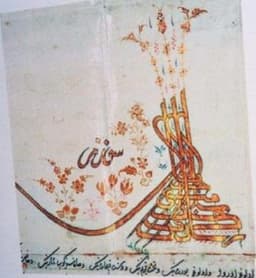
Bahadir I Giray
Emperor · Modern
47.4Total

Julius Caesar
General · Ancient
82.8Total
Basic Information
Born
1602
-100
Died
1641
-44
Era
Modern
Ancient
Nationality
Crimean Khanate
Roman Republic
Occupation
Emperor
General
Civilization
Eastern
Western
Score Comparison
Military (10%)
40.0
88.0
Political (20%)
45.1
78.0
Influence (20%)
51.8
85.0
Legacy (20%)
41.7
82.0
Leadership (15%)
65.0
80.0
Strategy (15%)
35.0
85.0
TOTAL
47.4
82.8
Bahadir I Giray — Complete Timeline
1637 AD
Capture of AzovWar◆ Major
Bahadir I Giray, in alliance with the Don Cossacks, led a campaign to capture the Ottoman fortress of Azov. The combined forces besieged and took the fortress after a fierce battle. This victory gave the Crimean Khanate control of a key strategic point on the Don River.
WarAzovCossack AllianceFortress
Impact: regional
1640 AD
Raid on the Polish-Lithuanian CommonwealthWar
Bahadir I Giray led a large-scale raid into the Polish-Lithuanian Commonwealth. The Crimean forces penetrated deep into Ukrainian territories, capturing thousands of slaves and causing widespread destruction. This raid was one of the largest of the era.
RaidPoland-LithuaniaUkraineSlave Raiding
Impact: regionaldestructive
1641 AD
Siege of Azov by the OttomansWar◆ Major
The Ottoman Empire sent a large army to recapture Azov from the Crimean-Cossack forces. Bahadir I Giray led the defense of the fortress. After a prolonged siege, the Ottomans were unable to retake it, and the defenders eventually abandoned the fortress under a negotiated settlement.
WarAzovOttoman SiegeDefense
Impact: regional
Julius Caesar — Complete Timeline
58 BC
Gallic WarsWar◆ Major
Caesar, as proconsul of Gaul, launched a series of campaigns that conquered all of Gaul (modern France, Belgium, and parts of Switzerland). He fought numerous battles, including against the Helvetii, the Belgae, and the Gallic chieftain Vercingetorix. The wars brought immense wealth and a loyal army to Caesar.
Gallic WarsConquestRoman Expansion
Impact: regional
49 BC
Crossing the RubiconPolitical Action◆ Major
Caesar led Legio XIII across the Rubicon River into Italy, defying the Roman Senate's order to disband his army. This act triggered a civil war against Pompey and the Optimates, ultimately leading to Caesar's dictatorship and the end of the Roman Republic.
Roman Civil WarEnd of RepublicPower Struggle
Impact: global
48 BC
Battle of PharsalusWar◆ Major
Caesar's outnumbered army defeated the larger forces of Pompey the Great at Pharsalus in Greece. Caesar's tactical use of a reserve line to counter Pompey's cavalry charge proved decisive. Pompey fled to Egypt, where he was assassinated, leaving Caesar as the undisputed master of the Roman world.
Roman Civil WarBattleDecisive Victory
Impact: regional
44 BC
Appointment as Dictator for LifePolitical Action◆ Major
The Roman Senate appointed Caesar dictator perpetuo (dictator for life), granting him unprecedented personal power. This move concentrated military, legislative, and judicial authority in one person, effectively ending the Roman Republic's traditional system of checks and balances and alarming many senators.
DictatorshipEnd of RepublicPower Consolidation
Impact: regionaldestructive
Assassination on the Ides of MarchPolitical Action◆ Major
A group of Roman senators, led by Marcus Junius Brutus and Gaius Cassius Longinus, stabbed Caesar to death at a meeting of the Senate in the Theatre of Pompey. The assassination was intended to restore the Republic, but instead triggered another civil war that led to the rise of the Roman Empire.
AssassinationRoman PoliticsEnd of Republic
Impact: globaldestructive
Expert Analysis
bahadir-i-giray-vs-julius-caesar
# The Crossing and the Siege: Two Paths to Power
On a January morning in 49 BCE, Julius Caesar stood at the banks of the Rubicon River, a small stream that marked the boundary between his province and Italy proper. To cross with his army was to declare war on the Roman Senate. He hesitated, then uttered the words that would echo through history: *“Alea iacta est”*—the die is cast. Nearly seventeen centuries later, in 1637, another commander, Bahadir I Giray, watched his Crimean and Cossack forces storm the Ottoman fortress of Azov, a victory that would define his brief reign. Both men chose defiance. One would reshape the Western world; the other would be swallowed by the steppe.
Origins
Julius Caesar was born into the chaos of the late Roman Republic, a world of patrician rivalries, civil wars, and crumbling traditions. His family, the Julii, claimed descent from the goddess Venus, but they were not among the wealthiest or most powerful. Caesar’s father died when he was sixteen, leaving him to navigate a treacherous political landscape. The era demanded ambition—and Caesar learned its language early, surviving proscriptions, forging alliances, and cultivating a reputation for audacity.
Bahadir I Giray was born in 1602 into the Crimean Khanate, a vassal state of the Ottoman Empire perched between the Black Sea and the Eurasian steppe. His world was one of constant raiding, shifting loyalties, and survival among empires. The Giray dynasty had ruled for centuries, but their power was circumscribed by the sultans in Istanbul. Bahadir grew up in a court where diplomacy meant balancing Ottoman demands, Polish threats, and Cossack raids. His era was not one of grand transformation but of precarious equilibrium.
Rise to Power
Caesar’s ascent was a masterclass in strategic patience. He served as a military tribune, then quaestor in Spain, where a statue of Alexander the Great moved him to tears—at thirty, he had achieved little compared to the Macedonian conqueror. He climbed the *cursus honorum*—aedile, praetor, consul—spending borrowed fortunes on games and bribes. His alliance with Pompey and Crassus, the First Triumvirate, gave him the consulship in 59 BCE and then the governorship of Gaul. There, between 58 and 50 BCE, he conquered a vast territory, built a loyal army, and amassed wealth that made him a threat to the Senate.
Bahadir’s path was narrower. He became khan in 1637, inheriting a realm that was both a buffer state and a raiding machine. His legitimacy depended on the Ottoman sultan, but his authority over the Crimean nobility, the *mirzas*, was fragile. His rise required not conquest but alliance—and his first major act was to join forces with the Don Cossacks, a motley band of freebooters, to attack Azov. The fortress commanded the mouth of the Don River, a key Ottoman outpost. Bahadir’s capture of it in 1637 was a stunning coup, but it was also a gamble: he had struck at his own suzerain.
Leadership & Governance
Caesar governed as a reformer and a dictator. In Gaul, he combined ruthless military strategy—the siege of Alesia in 52 BCE, where he built double fortifications to trap Vercingetorix’s army—with clemency toward defeated tribes. As dictator of Rome, he overhauled the calendar, granted citizenship to provincials, initiated public works, and curbed corruption. His leadership was personal: he led from the front, shared hardships with his soldiers, and wrote his own commentaries to shape public opinion. His political wisdom lay in understanding that the Republic’s institutions had failed; only a strong hand could hold it together.
Bahadir ruled as a steppe warlord. His military score of 47.7 reflects a commander who won a fortress but could not hold it. The siege of Azov in 1641, when the Ottomans sent a massive army to reclaim it, exposed his limits. He defended bravely, but the khanate lacked the resources for a prolonged war. His political score of 53.1 hints at a ruler who could raid but not build. He led raids into Poland-Lithuania in 1640, extracting tribute and slaves, but these were traditional actions, not statecraft. He had no calendar to reform, no citizenship to grant—only a precarious throne.
Triumph & Tragedy
Caesar’s triumph was the conquest of Gaul, a feat that doubled Rome’s territory and made him the most powerful man in the Republic. His tragedy was the Ides of March, 44 BCE, when sixty senators stabbed him to death in the Theatre of Pompey. He had centralized power, alienated the aristocracy, and ignored warnings. His last words, according to tradition, were to his friend Brutus: *“Et tu, Brute?”*
Bahadir’s triumph was the capture of Azov—a victory that briefly made him a hero among the Cossacks and a threat to the Ottomans. His tragedy came in 1641, during the Ottoman siege. He died not in battle but of illness, his body broken by the campaign. The fortress fell soon after. His reign lasted only four years.
Character & Destiny
Caesar was driven by an insatiable hunger for glory—*ambitio* in the Roman sense. He took risks that others called madness, from crossing the Rubicon to pardoning enemies. His personality shaped his destiny: he believed in his own star, and history rewarded him. He was ruthless but not cruel, calculating but capable of generosity. His assassination was the price of his success—the Republic could not contain a man who had become a king in all but name.
Bahadir was a product of his environment: pragmatic, cautious within limits, but willing to gamble. His capture of Azov was audacious, but he lacked Caesar’s long vision. He died at thirty-nine, having achieved nothing permanent. His personality did not shape history; history shaped him.
Legacy
Caesar’s legacy is the Roman Empire. His adopted heir, Octavian, became Augustus, and the Republic died with Caesar. His name became synonymous with imperial rule—*Kaiser* and *Tsar* derive from it. His writings survive; his military tactics are still studied. His legacy score of 82.0 reflects a man who changed the course of civilization.
Bahadir’s legacy is obscure. The Crimean Khanate lasted until 1783, but his reign is a footnote. He is remembered in Crimean Tatar history as a khan who defied the Ottomans, but his capture of Azov was a flash in the pan. His legacy score of 58.4 is a measure of his anonymity.
Conclusion
Caesar and Bahadir both crossed lines they were not supposed to cross. One crossed a river and created an empire; the other stormed a fortress and died in the dust. The difference was not talent—both were brave and cunning—but context. Caesar lived in a world that could be remade; Bahadir lived in a world that could only be endured. The steppe does not remember its rebels the way Rome remembers its tyrants. And perhaps that is the final lesson: history is not always kind, but it is always selective.
Rankings
🥇
Julius CaesarLeader
Mil: 88.0Pol: 78.0Inf: 85.0
82.8
🥈
Bahadir I Giray
Mil: 40.0Pol: 45.1Inf: 51.8
47.4
+35.4 behind
How This Comparison Works
Algorithm
Each figure is scored on 6 dimensions (0—100 scale) based on structured historical data: Military (10%), Political (20%), Influence (20%), Legacy (20%), Leadership (15%), Strategy (15%). The weighted total produces the final ranking.
Data Sources
Scores are computed from structured sub-indicators in the database. Scale factors adjust for era (Ancient ×0.85, Modern ×1.0) and civilization size (Eastern ×1.05, Other ×0.80) to account for differences in population and military scale.
Maximum 3 Figures
Comparisons are limited to 2—3 figures to ensure readability and statistical meaningfulness.
Error Margins
±5 points per dimension — Sub-scores are derived from historical records with inherent uncertainty. Two figures within 5 points on a dimension should be considered roughly equivalent in that area.
Total Score Accuracy
±3 points overall — The weighted combination of 6 dimensions produces a total score with approximately ±3 points of uncertainty. Differences of less than 3 points are not statistically significant— the figures are effectively tied.
Known Limitations
- Historical records are incomplete and uneven across civilizations
- Figures from oral-tradition societies may be underrepresented
- Occupation labels can misclassify multi-role figures
- Scores measure capability and impact, not moral character
- Quantitative scoring is a comparison tool, not absolute truth
Capability Radar
Military (10%) — Battles & Warfare
Battles
45
95
Win Rate
50
92
Expansion
50
97
Political (20%) — Governance & Reform
Reform
30
90
Diplomacy
45
85
Economy
35
82
Influence (20%) — Cultural & Global Reach
Cultural
30
88
Global
20
94
Legacy (20%) — Historical Impact
Historical
35
95
Longevity
25
96
Leadership (15%) — Power & Stability
Tenure
40
75
Stability
40
60
Strategy (15%) — Tactics & Innovation
Strategy
45
94
Tactics
40
96
Reform
30
88
Similar Comparisons
Comments & Discussion
GladiatorGrammarian6/17/2026
Caesar’s Rubicon crossing is overrated as a decisive moment—he had already consolidated his legions and bribed key senators; the real gamble was in Gaul, where he nearly lost everything at Alesia in 52 BCE. Bahadir’s Azov siege in 1637 proves more impressive tactically: he coordinated Crimean Tatars and Zaporozhian Cossacks, two mutually hostile groups, to storm a fortress the Ottomans deemed invincible. Caesar’s “die is cast” is theater; Bahadir’s logistics were the true test of command.
数据侦探6/17/2026
对比分析忽略了一个关键问题:两场战役的军事预算根本不具可比性。凯撒在卢比孔河之战拥有经验丰富的军团和西班牙银矿支撑,而巴哈迪尔·吉雷的克里米亚军队依赖抢劫和偶然的奥斯曼资助。历史记录显示,1637年阿佐夫要塞的防御工事仅由约4000名守军驻守,远非“不可攻克”。这种浪漫化比较更像文学创作而非历史分析——先核查军需官记录再来谈英雄主义吧。
SteppeScribe6/17/2026
You bury the real tension: Caesar crossed a river to claim an empire he could master; Bahadir captured Azov to defy an empire he could never escape. The Crimean Khan was a vassal of the Sublime Porte, and his 1637 victory was met with Ottoman fury—he was deposed and killed within four years. Caesar’s defiance built a dynasty; Bahadir’s defiance bought him a grave in the steppe. One chose a path of power; the other, a path of pride. That’s no comparison—it’s a warning.
复古拆台派6/17/2026
所谓“重塑西方世界”不过是奥古斯都的后见之明。凯撒过卢比孔河时,罗马共和国的核心危机早已在苏拉的军事独裁中预演。更讽刺的是,巴哈迪尔攻打奥斯曼要塞的1637年,正值小冰期最寒冷阶段——克里米亚草原的冻土摧毁了后勤线,他的“胜利”实为天气助攻。把气候运气包装成个人决断,这分析需要回历史研究生院重修比较方法论。
PraetorianNomad6/17/2026
The core distinction isn’t defiance—it’s the scale of collateral damage. Caesar’s crossing directly triggered a civil war that killed perhaps 100,000 Romans and destroyed the Republic’s political fabric. Bahadir’s Azov victory, by contrast, was a localized rebellion that the Ottomans crushed within four years, with minimal regional disruption. One man’s ambition shattered a civilization; the other’s merely annoyed his suzerain. History remembers the louder explosion, but the quieter one might ha