Loading...
Bahram V vs Galerius
Bahram V leads by 4.5 pts · 2 figures compared
…

Bahram V
Emperor · Ancient
60.2Total
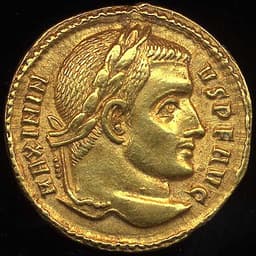
Galerius
Emperor · Ancient
55.7Total
Basic Information
Born
400
250
Died
438
311
Era
Ancient
Ancient
Nationality
Sassanid Empire
Roman Empire
Occupation
Emperor
Emperor
Civilization
Middle Eastern
Western
Score Comparison
Military (10%)
67.5
63.3
Political (20%)
68.0
62.7
Influence (20%)
55.0
55.7
Legacy (20%)
52.0
48.3
Leadership (15%)
72.0
48.8
Strategy (15%)
57.5
66.3
TOTAL
60.2
55.7
Bahram V — Complete Timeline
420 AD
War with the HephthalitesWar◆ Major
Bahram V led the Sassanid army against the Hephthalite Empire (White Huns) in the east. He secured a victory that stabilized the eastern frontier and reinforced Sassanid control over the region.
Sassanid-Hephthalite WarEastern Frontier
Impact: regional
421 AD
Conflict with the Roman EmpireWar
Bahram V fought a war with the Eastern Roman Empire over the treatment of Christians in Persia. The conflict ended in a stalemate, with both sides agreeing to a peace treaty that maintained the status quo.
Roman-Persian WarReligious Tensions
Impact: regional
425 AD
Hunting and Literary PatronageCultural
Bahram V became a central figure in Persian literature and folklore, celebrated for his hunting prowess and romantic adventures. His reign was later idealized in the Shahnameh and other works, shaping Persian cultural identity.
Persian LiteratureShahnamehCultural Legacy
Impact: regionalconstructive
Galerius — Complete Timeline
297 AD
Persian CampaignWar◆ Major
Galerius led a Roman army against the Sassanid Empire, suffering an initial defeat near Carrhae. He later regrouped and won a decisive victory, capturing the Persian king Narseh's family and forcing a favorable peace treaty.
Sassanid WarMilitary Campaign
Impact: regional
303 AD
Great Persecution of ChristiansPolitical Action◆ Major
Galerius was a primary instigator of Diocletian's Great Persecution, which sought to suppress Christianity through destruction of churches, confiscation of property, and execution of clergy. The persecution lasted until 311.
ChristianityPersecutionTetrarchy
Impact: nationaldestructive
311 AD
Edict of TolerationReform
Galerius, on his deathbed, issued an edict ending the persecution of Christians in the Roman Empire. The edict granted Christians the right to practice their religion and rebuild their churches, marking a major shift in imperial policy.
ChristianityReligious PolicyTetrarchy
Impact: globalprogressive
Expert Analysis
Origins
Bahram V (also known as Bahram Gur) was born in 406 AD into the Sassanid royal family, the son of Yazdegerd I. He grew up under the tutelage of the Arab king al-Mundhir I, learning horsemanship, archery, and hunting. His upbringing in the Lakhmid court shaped his legendary hunting skills and literary persona. Galerius was born around 250 AD in Dacia Ripensis (modern Serbia), the son of a farmer. He rose through the Roman military ranks, serving under Emperor Aurelian and later Diocletian. His humble origins contrasted with his later imperial status.
Rise to Power
Bahram V ascended the throne in 420 AD after the assassination of his father. With support from the Arab allies, he defeated his rival Khosrow and secured the crown. His early reign focused on stabilizing the eastern frontier against the Hephthalites. Galerius was appointed Caesar by Diocletian in 293 AD, tasked with defending the Danube frontier. He later became Augustus of the East in 305 AD after Diocletian's abdication. His rise was marked by military campaigns and political maneuvering within the Tetrarchy.
Leadership & Governance
Bahram V ruled as a traditional Persian monarch, emphasizing central authority and cultural patronage. He conducted hunting expeditions, built palaces, and supported Zoroastrian orthodoxy. His governance was marked by a mix of military vigilance and cultural investment. Galerius governed as a tetrarch, enforcing Diocletian's reforms and intensifying persecution of Christians from 303 AD. His leadership style was harsh and militaristic, but pragmatism led him to issue the Edict of Toleration in 311 AD, ending persecution on his deathbed.
Triumph & Tragedy
Bahram V's greatest triumph was his victory over the Hephthalites, securing the eastern frontier and stabilizing the empire. He also fought the Romans to a stalemate, maintaining Persian influence. His tragedies include the loss of some territories and internal court intrigues. Galerius's triumph was his decisive victory over the Sassanids in 298 AD, capturing the capital Ctesiphon and gaining significant territory. His tragedy was the failure of the Great Persecution, which strengthened Christianity rather than eliminating it. His edict of toleration was a deathbed reversal.
Character & Destiny
Bahram V is remembered as a charismatic, adventurous king, whose love for hunting and poetry left a lasting cultural imprint. His character traits—courage, indulgence, and cultural patronage—shaped a reign that was stable but not transformative. Galerius was a stern, ambitious soldier, whose initial cruelty gave way to pragmatic acceptance of Christianity. His character reflected the tensions of the Tetrarchy: ruthless in persecution but capable of change. Destiny made him the emperor who inadvertently accelerated Christianity's legalization.
Legacy
Bahram V's legacy endures in Persian literature and folklore, where he is a symbol of kingly virtue and romance. His military achievements were significant but overshadowed by his cultural impact. Galerius's legacy is paradoxical: he is remembered as a persecutor and as the issuer of the first edict of toleration, which paved the way for Constantine's Edict of Milan. His military gains strengthened Rome's eastern borders but were later lost.
Conclusion
While Bahram V scores higher overall (60.2 vs 55.7), Galerius's impact on world history is arguably greater due to the Edict of Toleration, which fundamentally altered the course of Christianity and Western civilization. Bahram V's cultural influence was profound within Persia, but Galerius's actions had global, long-term consequences. Therefore, Galerius had a greater historical impact despite lower scores.
Rankings
🥇
Bahram VLeader
Mil: 67.5Pol: 68.0Inf: 55.0
60.2
🥈
Galerius
Mil: 63.3Pol: 62.7Inf: 55.7
55.7
+4.5 behind
How This Comparison Works
Algorithm
Each figure is scored on 6 dimensions (0—100 scale) based on structured historical data: Military (10%), Political (20%), Influence (20%), Legacy (20%), Leadership (15%), Strategy (15%). The weighted total produces the final ranking.
Data Sources
Scores are computed from structured sub-indicators in the database. Scale factors adjust for era (Ancient ×0.85, Modern ×1.0) and civilization size (Eastern ×1.05, Other ×0.80) to account for differences in population and military scale.
Maximum 3 Figures
Comparisons are limited to 2—3 figures to ensure readability and statistical meaningfulness.
Error Margins
±5 points per dimension — Sub-scores are derived from historical records with inherent uncertainty. Two figures within 5 points on a dimension should be considered roughly equivalent in that area.
Total Score Accuracy
±3 points overall — The weighted combination of 6 dimensions produces a total score with approximately ±3 points of uncertainty. Differences of less than 3 points are not statistically significant— the figures are effectively tied.
Known Limitations
- Historical records are incomplete and uneven across civilizations
- Figures from oral-tradition societies may be underrepresented
- Occupation labels can misclassify multi-role figures
- Scores measure capability and impact, not moral character
- Quantitative scoring is a comparison tool, not absolute truth
Capability Radar
Military (10%) — Battles & Warfare
Battles
60
65
Win Rate
65
70
Expansion
55
55
Political (20%) — Governance & Reform
Reform
60
65
Diplomacy
65
55
Economy
55
50
Influence (20%) — Cultural & Global Reach
Cultural
75
40
Global
55
55
Legacy (20%) — Historical Impact
Historical
70
60
Longevity
70
50
Leadership (15%) — Power & Stability
Tenure
70
60
Stability
60
45
Strategy (15%) — Tactics & Innovation
Strategy
50
65
Tactics
55
60
Reform
40
50
Similar Comparisons
Comments & Discussion
No comments yet. Be the first to share your thoughts!