Loading...
Bailey Olter vs Meles Zenawi
Meles Zenawi leads by 12.2 pts · 2 figures compared
…

Bailey Olter
Politician · Modern
45.4Total
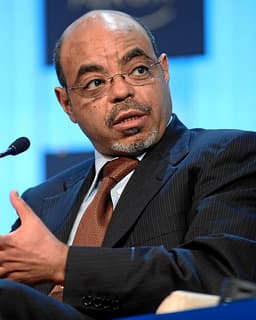
Meles Zenawi
Politician · Modern
57.6Total
Basic Information
Born
1932
1955
Died
—
—
Era
Modern
Modern
Nationality
Micronesia
Ethiopia
Occupation
Politician
Politician
Civilization
Other
Other
Score Comparison
Military (10%)
41.8
36.6
Political (20%)
40.8
65.0
Influence (20%)
47.1
59.0
Legacy (20%)
37.5
48.3
Leadership (15%)
65.7
79.8
Strategy (15%)
41.3
53.5
TOTAL
45.4
57.6
Bailey Olter — Complete Timeline
1991 AD
Elected President of the Federated States of MicronesiaPolitical Action◆ Major
Bailey Olter was elected as the third President of the Federated States of Micronesia in 1991, succeeding John Haglelgam. His presidency focused on economic development and strengthening relations with the United States under the Compact of Free Association.
ElectionCompactDevelopment
Impact: nationalconstructive
1995 AD
Re-elected to a second termPolitical Action
Olter was re-elected as President in 1995, beginning his second term. However, his health declined shortly after, and he was unable to complete the term, leading to the transfer of power to his vice president.
Re-electionHealthTerm
Impact: national
1996 AD
Incapacitated by a strokeOther◆ Major
Olter suffered a severe stroke in 1996 that left him incapacitated and unable to perform his duties as President. His incapacity led to a constitutional crisis, as the FSM had no clear succession mechanism, and Vice President Jacob Nena eventually assumed the presidency.
StrokeHealth CrisisSuccession
Impact: nationaltragic
Meles Zenawi — Complete Timeline
1991 AD
EPRDF capture of Addis AbabaWar◆ Major
Meles Zenawi, as leader of the Tigrayan People's Liberation Front (TPLF) and the Ethiopian People's Revolutionary Democratic Front (EPRDF) coalition, led rebel forces to overthrow the Derg regime. This ended the Ethiopian Civil War and installed Meles as president of the transitional government.
Civil WarRegime ChangeRebel Victory
Impact: national
1998 AD
Eritrean-Ethiopian WarWar◆ Major
Meles, as prime minister, led Ethiopia in a two-year border war with Eritrea. The conflict resulted in tens of thousands of deaths and ended with a stalemate, followed by the Algiers Agreement in 2000 and the establishment of the UN peacekeeping mission UNMEE.
Border WarEritreaPeacekeeping
Impact: regionaldestructive
2000 AD
Ethiopian economic reform programReform◆ Major
Meles implemented a series of economic reforms focused on agricultural development, infrastructure investment, and state-led industrialization. These policies contributed to sustained GDP growth averaging over 10% annually from 2004 to 2014, though critics noted limited political freedoms.
Economic DevelopmentAgricultureInfrastructure
Impact: nationalconstructive
2005 AD
2005 Ethiopian general electionPolitical Action◆ Major
Meles's government held multi-party elections that were initially seen as promising but ended in controversy. Opposition parties claimed fraud, leading to protests and a violent crackdown that killed at least 193 people. The event damaged Ethiopia's democratic reputation.
ElectionPolitical ViolenceDemocracy
Impact: nationaldestructive
2012 AD
Death in officeOther◆ Major
Meles Zenawi died on August 20, 2012, in a Brussels hospital from an undisclosed illness. His death ended 21 years of rule and triggered a peaceful transition of power to Deputy Prime Minister Hailemariam Desalegn, though the TPLF retained control.
DeathTransitionSuccession
Impact: national
Expert Analysis
Origins
Bailey Olter was born in 1932 on the island of Mwoakilloa in what is now the Federated States of Micronesia (FSM). He was educated at local schools and later attended the University of Guam. Before entering politics, Olter served as a teacher and principal. His early career was shaped by the transition of Micronesia from a United Nations Trust Territory to an independent nation. He was elected to the Congress of Micronesia in 1965 and later served as a senator in the FSM Congress. His background was deeply rooted in the small-island context of the Pacific, where governance involved managing limited resources and maintaining close ties with the United States under the Compact of Free Association.
Meles Zenawi was born on May 8, 1955, in Adwa, Tigray Province, Ethiopia. He came from a modest family and excelled in his studies, attending the Haile Selassie I University (now Addis Ababa University). However, he left university in 1975 to join the Tigrayan People's Liberation Front (TPLF) fighting against the Marxist Derg regime. Meles rose through the ranks due to his intellectual rigor and political acumen. His formative years were marked by war and ideological struggle, shaping him into a disciplined revolutionary leader.
Rise to Power
Olter's political ascent was gradual. He served as Vice President of FSM from 1987 to 1991 under President John Haglelgam. In 1991, he was elected President by the FSM Congress, succeeding Haglelgam. His presidency focused on economic development, healthcare, and education, but he operated within the constraints of a small, aid-dependent nation. His re-election in 1995 was uncontroversial, reflecting his consensus-building style.
Meles Zenawi's rise was through armed struggle. In 1989, the TPLF and allied groups formed the Ethiopian People's Revolutionary Democratic Front (EPRDF). Meles became chairman of the EPRDF. In May 1991, EPRDF forces captured Addis Ababa, ending the Derg regime. Meles then became President of the Transitional Government of Ethiopia and later Prime Minister in 1995. His rise was swift and marked by military victory, giving him immense power to reshape Ethiopia.
Leadership & Governance
Olter's leadership style was collegial and democratic. He advanced policies to improve infrastructure and social services, but his effectiveness was limited by FSM's small population (about 100,000) and heavy reliance on US aid. For example, he negotiated the renewal of the Compact of Free Association in 1992, securing continued funding. However, his governance was disrupted by a stroke in 1996, leaving him incapacitated. The FSM constitution lacked clear provisions for presidential incapacity, leading to a constitutional crisis. He was succeeded by Vice President Jacob Nena.
Meles Zenawi exercised strong, centralized control. He implemented an ethnic federal system, dividing Ethiopia into regions based on ethnicity. He also pursued economic reforms known as the 'Agricultural Development-Led Industrialization' (ADLI) strategy, focusing on smallholder farming and infrastructure. Under his rule, Ethiopia achieved double-digit economic growth for several years. However, his government was criticized for authoritarian practices, including suppression of dissent and manipulation of elections. The 2005 election saw violent crackdowns on opposition supporters, resulting in over 190 deaths.
Triumph & Tragedy
Olter's triumph was his election as President and his role in stabilizing FSM's early independence. He successfully managed relations with the US and other Pacific nations. His tragedy was his sudden incapacitation, which exposed constitutional weaknesses and hampered his ability to complete his agenda. His total score of 45.4 reflects limited impact.
Meles's triumphs include ending a brutal dictatorship, fostering economic growth, and reducing poverty. Ethiopia's GDP per capita rose from $125 in 1991 to over $500 by 2012. He also played a key role in African Union mediation efforts. His tragedies include the Eritrean-Ethiopian War (1998-2000), which caused tens of thousands of deaths and ended in a stalemate. Additionally, his authoritarian legacy and disputed elections marred his record. His total score of 57.6 indicates moderate impact.
Character & Destiny
Olter was described as a gentle, consensus-driven leader. His character suited the small, communal society of Micronesia but left him unprepared for the sudden health crisis that ended his presidency. His destiny was to be a transitional figure in a nation still finding its footing.
Meles was known for his intellect, discipline, and ruthlessness. He was a strategic thinker who could be pragmatic or ideological as needed. His character drove Ethiopia's transformation but also led to human rights abuses. His early death at 57 cut short his rule, but he had already consolidated power and set a development trajectory.
Legacy
Olter's legacy is limited to FSM. He is remembered as a respected leader who served during a critical period, but his incapacitation and the constitutional crisis overshadow his achievements. The FSM's political system was later reformed to address presidential succession.
Meles's legacy is immense. He transformed Ethiopia from a famine-stricken, war-torn state into one of Africa's fastest-growing economies. His ethnic federalism reshaped the country's politics, though it also sowed seeds of conflict. Internationally, he is seen as a developmental state builder, but critics note his authoritarianism. His legacy continues to influence Ethiopian politics.
Conclusion
While Bailey Olter served his nation with dedication, his impact was constrained by scale and circumstance. Meles Zenawi, scoring 57.6 overall compared to Olter's 45.4, had far greater influence on his country and region. Meles's leadership in ending a dictatorship, engineering economic growth, and shaping Ethiopia's modern identity places him as the more significant historical figure. Olter's story is a cautionary tale, but Meles's is one of transformative—if flawed—statecraft. Therefore, Meles Zenawi had greater impact.
Rankings
🥇
Meles ZenawiLeader
Mil: 36.6Pol: 65.0Inf: 59.0
57.6
🥈
Bailey Olter
Mil: 41.8Pol: 40.8Inf: 47.1
45.4
+12.2 behind
How This Comparison Works
Algorithm
Each figure is scored on 6 dimensions (0—100 scale) based on structured historical data: Military (10%), Political (20%), Influence (20%), Legacy (20%), Leadership (15%), Strategy (15%). The weighted total produces the final ranking.
Data Sources
Scores are computed from structured sub-indicators in the database. Scale factors adjust for era (Ancient ×0.85, Modern ×1.0) and civilization size (Eastern ×1.05, Other ×0.80) to account for differences in population and military scale.
Maximum 3 Figures
Comparisons are limited to 2—3 figures to ensure readability and statistical meaningfulness.
Error Margins
±5 points per dimension — Sub-scores are derived from historical records with inherent uncertainty. Two figures within 5 points on a dimension should be considered roughly equivalent in that area.
Total Score Accuracy
±3 points overall — The weighted combination of 6 dimensions produces a total score with approximately ±3 points of uncertainty. Differences of less than 3 points are not statistically significant— the figures are effectively tied.
Known Limitations
- Historical records are incomplete and uneven across civilizations
- Figures from oral-tradition societies may be underrepresented
- Occupation labels can misclassify multi-role figures
- Scores measure capability and impact, not moral character
- Quantitative scoring is a comparison tool, not absolute truth
Capability Radar
Military (10%) — Battles & Warfare
Battles
23
5
Win Rate
24
5
Expansion
26
5
Political (20%) — Governance & Reform
Reform
30
70
Diplomacy
40
65
Economy
25
70
Influence (20%) — Cultural & Global Reach
Cultural
10
40
Global
10
45
Legacy (20%) — Historical Impact
Historical
15
50
Longevity
10
30
Leadership (15%) — Power & Stability
Tenure
45
75
Stability
20
55
Strategy (15%) — Tactics & Innovation
Strategy
28
10
Tactics
33
5
Reform
34
15
Similar Comparisons
Comments & Discussion
No comments yet. Be the first to share your thoughts!