Loading...
Bakaffa vs Julius Caesar
Julius Caesar leads by 31.1 pts · 2 figures compared
…
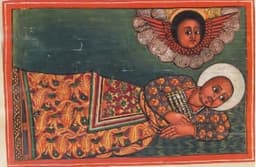
Bakaffa
Emperor · Modern
51.7Total

Julius Caesar
General · Ancient
82.8Total
Basic Information
Born
1695
-100
Died
1730
-44
Era
Modern
Ancient
Nationality
Ethiopia
Roman Republic
Occupation
Emperor
General
Civilization
Other
Western
Score Comparison
Military (10%)
50.0
88.0
Political (20%)
62.7
78.0
Influence (20%)
53.3
85.0
Legacy (20%)
44.2
82.0
Leadership (15%)
66.0
80.0
Strategy (15%)
30.3
85.0
TOTAL
51.7
82.8
Bakaffa — Complete Timeline
1722 AD
Marriage to MentewabPolitical Action◆ Major
Bakaffa married Mentewab, a woman of humble origins who became his most influential wife. Mentewab later served as regent for their son Iyasu II, wielding significant political power and shaping Ethiopian politics for decades after Bakaffa's death.
MarriageRegencyMentewab
Impact: national
1725 AD
Construction of the Qusquam ChurchCultural
Bakaffa commissioned the construction of the Qusquam Church in Gondar, dedicated to the Virgin Mary. The church became an important religious site and a symbol of the Gondarine architectural style.
ChurchArchitectureGondar
constructive
Julius Caesar — Complete Timeline
58 BC
Gallic WarsWar◆ Major
Caesar, as proconsul of Gaul, launched a series of campaigns that conquered all of Gaul (modern France, Belgium, and parts of Switzerland). He fought numerous battles, including against the Helvetii, the Belgae, and the Gallic chieftain Vercingetorix. The wars brought immense wealth and a loyal army to Caesar.
Gallic WarsConquestRoman Expansion
Impact: regional
49 BC
Crossing the RubiconPolitical Action◆ Major
Caesar led Legio XIII across the Rubicon River into Italy, defying the Roman Senate's order to disband his army. This act triggered a civil war against Pompey and the Optimates, ultimately leading to Caesar's dictatorship and the end of the Roman Republic.
Roman Civil WarEnd of RepublicPower Struggle
Impact: global
48 BC
Battle of PharsalusWar◆ Major
Caesar's outnumbered army defeated the larger forces of Pompey the Great at Pharsalus in Greece. Caesar's tactical use of a reserve line to counter Pompey's cavalry charge proved decisive. Pompey fled to Egypt, where he was assassinated, leaving Caesar as the undisputed master of the Roman world.
Roman Civil WarBattleDecisive Victory
Impact: regional
44 BC
Appointment as Dictator for LifePolitical Action◆ Major
The Roman Senate appointed Caesar dictator perpetuo (dictator for life), granting him unprecedented personal power. This move concentrated military, legislative, and judicial authority in one person, effectively ending the Roman Republic's traditional system of checks and balances and alarming many senators.
DictatorshipEnd of RepublicPower Consolidation
Impact: regionaldestructive
Assassination on the Ides of MarchPolitical Action◆ Major
A group of Roman senators, led by Marcus Junius Brutus and Gaius Cassius Longinus, stabbed Caesar to death at a meeting of the Senate in the Theatre of Pompey. The assassination was intended to restore the Republic, but instead triggered another civil war that led to the rise of the Roman Empire.
AssassinationRoman PoliticsEnd of Republic
Impact: globaldestructive
Expert Analysis
bakaffa-vs-julius-caesar
# The Dictator and the Quiet Emperor
On the Ides of March, 44 BCE, Julius Caesar fell beneath sixty daggers in the Senate chamber of Rome, his blood pooling on the marble floor. Half a world away and nearly eighteen centuries later, Bakaffa of Ethiopia died quietly in his palace at Gondar in 1730, his legacy entrusted to a wife who would rule for decades after him. One man conquered Gaul, crossed the Rubicon, and transformed the Western world; the other built a church, married a woman of humble birth, and slipped from history with barely a whisper. What makes one life a thunderclap and another a footnote?
Origins
Caesar was born into the patrician Julian clan in 100 BCE, a time when the Roman Republic was tearing itself apart. His family claimed descent from the goddess Venus, but their political influence had waned. From childhood, Caesar breathed the air of ambition—his uncle Marius had been a populist general, his enemies were the conservative optimates who had murdered Marius’s supporters. Rome was a city of marble and blood, where a man could rise by eloquence, military glory, and ruthless calculation.
Bakaffa came to power in a very different world. Ethiopia in the early eighteenth century was a Christian kingdom isolated in the highlands of East Africa, ruled from the fortress city of Gondar. The Solomonic dynasty claimed descent from King Solomon and the Queen of Sheba, but by Bakaffa’s time, the emperors were often puppets of powerful nobles. Bakaffa’s own path to the throne was shadowed by court intrigue and the memory of his father Iyasu I, who had been assassinated. He inherited a kingdom that valued piety and stability over conquest.
Rise to Power
Caesar’s rise was a masterpiece of strategic patience. He served as a military tribune, then quaestor in Spain, where he wept before a statue of Alexander the Great, lamenting that at the same age, the Macedonian had already conquered the world. He climbed the cursus honorum—aedile, praetor, consul—using borrowed money and spectacular public games to win the favor of the Roman mob. In 59 BCE, he formed the First Triumvirate with Pompey and Crassus, an alliance that gave him command of Gaul. There, over eight years, he fought more than fifty battles, subdued hundreds of tribes, and wrote his own commentaries to shape public opinion.
Bakaffa became emperor in 1721, not through military brilliance but through survival. His elder brothers had been killed or blinded in power struggles; he was the last viable heir. His reign was defined not by conquest but by consolidation. The most significant political act of his life came in 1722, when he married Mentewab, a woman of humble origins. In a court where noble families schemed for influence, Bakaffa chose a partner who owed everything to him—a decision that would shape Ethiopian history for decades.
Leadership & Governance
Caesar governed as a revolutionary. As dictator, he reformed the calendar, granted citizenship to provincials, initiated public works, and centralized power in his own hands. He pardoned former enemies—Brutus and Cassius among them—believing that mercy would secure loyalty. His military genius was undeniable: at Alesia, he besieged 80,000 Gauls while simultaneously repelling a relief army of 250,000, a feat of logistics and tactics that still astounds strategists. Yet his political wisdom faltered. He accepted the title “dictator for life,” wore the purple robe of the old kings, and put his face on coins. He forgot that Romans hated monarchy.
Bakaffa ruled as a traditional Ethiopian emperor, his power limited by the church and the nobility. He commissioned the Qusquam Church in Gondar in 1725, dedicated to the Virgin Mary—a project that reflected his piety and his desire to leave a physical mark on the capital. His leadership score of 74.9 suggests a competent but unremarkable ruler. He did not expand the empire or reform its institutions. Instead, he maintained stability in a fragile court, trusting Mentewab to manage the alliances that kept him safe.
Triumph & Tragedy
Caesar’s greatest triumph was the conquest of Gaul, which brought Rome a vast province and made him the richest man in the Republic. His crossing of the Rubicon in 49 BCE—a river he was forbidden to cross with his army—was the point of no return. “The die is cast,” he reportedly said, and within five years he had defeated Pompey, crushed the Senate’s forces, and made himself master of Rome. His tragedy was that he could not stop. He refused to restore the Republic, and on the Ides of March, 44 BCE, the senators he had pardoned stabbed him to death. His last moments, according to Suetonius, were a silent struggle until he saw Brutus among the assassins and, pulling his toga over his head, gave up.
Bakaffa’s triumph was quieter: he died in his bed, his dynasty intact, his wife prepared to rule as regent for their young son. His tragedy was that he is almost forgotten. No epic poem commemorates him, no empire bears his name. The Qusquam Church still stands in Gondar, but it is a modest structure, not a monument to world-changing ambition. Where Caesar’s death plunged Rome into civil war, Bakaffa’s passing was a peaceful transition—and therefore, historically invisible.
Character & Destiny
Caesar was driven by an insatiable need for glory. He took risks that would have destroyed lesser men—borrowing fortunes, marching on Rome, pardoning enemies—because he believed in his own star. His personality was magnetic, his ambition boundless, his cruelty calculated. He could weep for Alexander and order the massacre of a Gallic tribe in the same breath. His destiny was to destroy the Republic he loved and create the Empire that would outlast him.
Bakaffa was a survivor, not a visionary. He married a woman of low birth because he needed a loyal ally, not because he loved her—though the sources suggest genuine affection. He built a church because that was what Ethiopian emperors did. His character was cautious, his ambition limited to preserving what he had. His destiny was to be a link in a chain, not the chain-breaker.
Legacy
Caesar’s legacy is immeasurable. His name became a title—Kaiser, Tsar—and his reforms shaped Western governance for two millennia. The calendar he fixed is still in use. The Roman Empire he founded lasted 500 years in the West and 1,500 in the East. He is remembered as a genius, a tyrant, and a warning.
Bakaffa’s legacy is almost entirely personal: he enabled Mentewab’s regency, which lasted until 1755, and she in turn shaped Ethiopian politics for another generation. His influence score of 70.3 reflects a ruler who mattered in his time but not beyond it. The Qusquam Church still hosts worshipers, but few outside Ethiopia know his name.
Conclusion
Caesar and Bakaffa lived in different worlds, with different tools and different measures of success. Caesar changed history by breaking it; Bakaffa preserved history by holding it steady. One was a tempest that reshaped a continent, the other a quiet hand on the tiller of a small kingdom. Which is more admirable? The question lingers. Perhaps Bakaffa, who died in peace, his wife by his side, his people unharmed, achieved something Caesar never could: a life that did not end in blood. Or perhaps Caesar, who dared everything and lost everything, reminds us that greatness and tragedy are the same coin. The Ides of March and the quiet palace at Gondar—both are human stories, and both deserve to be remembered.
Rankings
🥇
Julius CaesarLeader
Mil: 88.0Pol: 78.0Inf: 85.0
82.8
🥈
Bakaffa
Mil: 50.0Pol: 62.7Inf: 53.3
51.7
+31.1 behind
How This Comparison Works
Algorithm
Each figure is scored on 6 dimensions (0—100 scale) based on structured historical data: Military (10%), Political (20%), Influence (20%), Legacy (20%), Leadership (15%), Strategy (15%). The weighted total produces the final ranking.
Data Sources
Scores are computed from structured sub-indicators in the database. Scale factors adjust for era (Ancient ×0.85, Modern ×1.0) and civilization size (Eastern ×1.05, Other ×0.80) to account for differences in population and military scale.
Maximum 3 Figures
Comparisons are limited to 2—3 figures to ensure readability and statistical meaningfulness.
Error Margins
±5 points per dimension — Sub-scores are derived from historical records with inherent uncertainty. Two figures within 5 points on a dimension should be considered roughly equivalent in that area.
Total Score Accuracy
±3 points overall — The weighted combination of 6 dimensions produces a total score with approximately ±3 points of uncertainty. Differences of less than 3 points are not statistically significant— the figures are effectively tied.
Known Limitations
- Historical records are incomplete and uneven across civilizations
- Figures from oral-tradition societies may be underrepresented
- Occupation labels can misclassify multi-role figures
- Scores measure capability and impact, not moral character
- Quantitative scoring is a comparison tool, not absolute truth
Capability Radar
Military (10%) — Battles & Warfare
Battles
20
95
Win Rate
25
92
Expansion
15
97
Political (20%) — Governance & Reform
Reform
55
90
Diplomacy
50
85
Economy
50
82
Influence (20%) — Cultural & Global Reach
Cultural
30
88
Global
20
94
Legacy (20%) — Historical Impact
Historical
35
95
Longevity
30
96
Leadership (15%) — Power & Stability
Tenure
60
75
Stability
55
60
Strategy (15%) — Tactics & Innovation
Strategy
20
94
Tactics
20
96
Reform
15
88
Similar Comparisons
Comments & Discussion
No comments yet. Be the first to share your thoughts!