Loading...
This comparison has not been analyzed yet.
One-time AI generation (~1 minute). Scores and timeline are already available below.
Bakir Izetbegovic vs Fouad Mebazaa
Bakir Izetbegovic leads by 0.6 pts · 2 figures compared
…
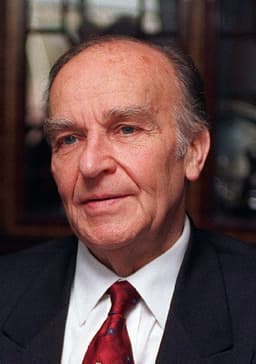
Bakir Izetbegovic
Politician · Modern
38.9Total
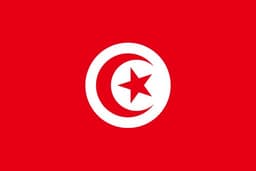
Fouad Mebazaa
Politician · Modern
38.3Total
Basic Information
Born
1956
1933
Died
—
—
Era
Modern
Modern
Nationality
Bosnia
Tunisia
Occupation
Politician
Politician
Civilization
Western
Middle Eastern
Score Comparison
Military (10%)
50.0
47.1
Political (20%)
26.4
29.3
Influence (20%)
47.1
45.5
Legacy (20%)
35.0
35.8
Leadership (15%)
34.6
31.2
Strategy (15%)
42.1
41.5
TOTAL
38.9
38.3
Bakir Izetbegovic — Complete Timeline
2010 AD
Election to the Presidency of Bosnia and HerzegovinaPolitical Action◆ Major
Bakir Izetbegovi
ElectionPresidencySDA
Impact: nationalconstructive
Advocacy for EU and NATO IntegrationPolitical Action◆ Major
During his presidency, Izetbegovi
EU IntegrationNATOReforms
Impact: regionalconstructive
2014 AD
Re-election to the PresidencyPolitical Action◆ Major
Izetbegović was re-elected as the Bosniak member of the Presidency in the 2014 general elections, securing a second term. His re-election reflected continued support for the SDA's platform of Bosniak unity and Euro-Atlantic integration.
Re-electionPresidencySDA
Impact: nationalconstructive
2015 AD
Controversial Statements on SrebrenicaPolitical Action◆ Major
Izetbegović made controversial statements regarding the Srebrenica genocide, including calling for the dissolution of the Republika Srpska entity. These remarks heightened ethnic tensions in Bosnia and were criticized by international officials for undermining the Dayton Peace Agreement.
SrebrenicaEthnic TensionsDayton
Impact: regionaldestructive
Fouad Mebazaa — Complete Timeline
2011 AD
Appointment as Acting PresidentPolitical Action◆ Major
After President Zine El Abidine Ben Ali fled Tunisia on January 14, 2011, Fouad Mebazaa, as Speaker of the Chamber of Deputies, became acting president under Article 57 of the constitution. He served until a new constituent assembly was elected.
Arab SpringInterim government
Impact: national
Oversight of the Transitional PeriodPolitical Action◆ Major
As acting president, Mebazaa oversaw the formation of a national unity government and the organization of elections for a Constituent Assembly in October 2011. He stepped down after the assembly convened, handing power to Moncef Marzouki.
TransitionElections
Impact: nationalconstructive
This comparison has not been analyzed yet.
One-time AI generation (~1 minute). Scores and timeline are already available below.
Rankings
🥇
Bakir IzetbegovicLeader
Mil: 50.0Pol: 26.4Inf: 47.1
38.9
🥈
Fouad Mebazaa
Mil: 47.1Pol: 29.3Inf: 45.5
38.3
+0.6 behind
How This Comparison Works
Algorithm
Each figure is scored on 6 dimensions (0—100 scale) based on structured historical data: Military (10%), Political (20%), Influence (20%), Legacy (20%), Leadership (15%), Strategy (15%). The weighted total produces the final ranking.
Data Sources
Scores are computed from structured sub-indicators in the database. Scale factors adjust for era (Ancient ×0.85, Modern ×1.0) and civilization size (Eastern ×1.05, Other ×0.80) to account for differences in population and military scale.
Maximum 3 Figures
Comparisons are limited to 2—3 figures to ensure readability and statistical meaningfulness.
Error Margins
±5 points per dimension — Sub-scores are derived from historical records with inherent uncertainty. Two figures within 5 points on a dimension should be considered roughly equivalent in that area.
Total Score Accuracy
±3 points overall — The weighted combination of 6 dimensions produces a total score with approximately ±3 points of uncertainty. Differences of less than 3 points are not statistically significant— the figures are effectively tied.
Known Limitations
- Historical records are incomplete and uneven across civilizations
- Figures from oral-tradition societies may be underrepresented
- Occupation labels can misclassify multi-role figures
- Scores measure capability and impact, not moral character
- Quantitative scoring is a comparison tool, not absolute truth
Capability Radar
Military (10%) — Battles & Warfare
Battles
26
24
Win Rate
32
24
Expansion
36
27
Political (20%) — Governance & Reform
Reform
10
5
Diplomacy
15
15
Economy
10
5
Influence (20%) — Cultural & Global Reach
Cultural
5
5
Global
5
5
Legacy (20%) — Historical Impact
Historical
5
10
Longevity
5
5
Leadership (15%) — Power & Stability
Tenure
10
10
Stability
10
5
Strategy (15%) — Tactics & Innovation
Strategy
35
32
Tactics
41
32
Reform
45
38
Similar Comparisons
Comments & Discussion
No comments yet. Be the first to share your thoughts!