Loading...
Bal Gangadhar Tilak vs Francisco Madero
Bal Gangadhar Tilak leads by 8.4 pts · 2 figures compared
…
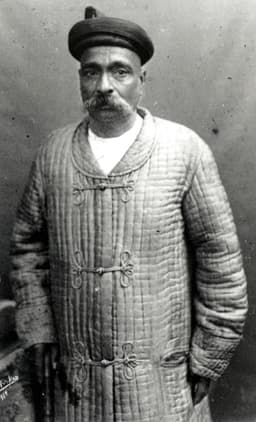
Bal Gangadhar Tilak
Revolutionary · Modern
52.9Total
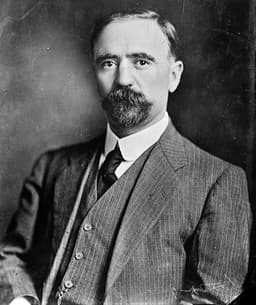
Francisco Madero
Revolutionary · Modern
44.5Total
Basic Information
Born
1856
1873
Died
1920
1913
Era
Modern
Modern
Nationality
India
Mexico
Occupation
Revolutionary
Revolutionary
Civilization
Indian
Western
Score Comparison
Military (10%)
50.0
14.9
Political (20%)
48.0
48.0
Influence (20%)
58.3
49.4
Legacy (20%)
56.0
45.8
Leadership (15%)
50.7
43.8
Strategy (15%)
45.0
54.3
TOTAL
52.9
44.5
Bal Gangadhar Tilak — Complete Timeline
1881 AD
Launch of the Maratha and Kesari NewspapersCultural◆ Major
Tilak founded the Marathi-language newspaper 'Kesari' and the English-language 'Maratha' to spread nationalist ideas. These newspapers became influential platforms for criticizing British rule and mobilizing public opinion.
MediaNationalism
Impact: nationalconstructive
1897 AD
Imprisonment for SeditionPolitical Action◆ Major
Tilak was arrested and sentenced to 18 months imprisonment for sedition after publishing articles critical of British rule. His imprisonment increased his popularity and made him a martyr for the nationalist cause.
ImprisonmentSedition
Impact: national
1905 AD
Introduction of Swadeshi MovementPolitical Action◆ Major
Bal Gangadhar Tilak promoted the Swadeshi movement, advocating for the boycott of British goods and the use of Indian-made products. This movement gained widespread support and became a key part of the Indian independence struggle.
NationalismEconomic Boycott
Impact: nationalconstructive
1908 AD
Lucky Ali TrialPolitical Action◆ Major
Tilak was tried and sentenced to six years in Mandalay prison for sedition after defending the use of violence against British officials. His trial and imprisonment further galvanized the Indian independence movement.
TrialImprisonment
Impact: national
1916 AD
Formation of the Home Rule LeaguePolitical Action◆ Major
Tilak founded the Indian Home Rule League in 1916, demanding self-government for India within the British Empire. The movement gained mass support and pressured the British government to consider political reforms.
Political MovementSelf-Government
Impact: nationalconstructive
Francisco Madero — Complete Timeline
1908 AD
Published La Sucesión Presidencial en 1910Political Action◆ Major
Francisco Madero published a book criticizing the long dictatorship of Porfirio D
Mexican RevolutionDemocracyPolitical Writing
Impact: nationalconstructive
1910 AD
Issued the Plan of San Luis PotosíPolitical Action
After fleeing to the United States, Madero issued the Plan of San Luis Potos
Mexican RevolutionUprisingPlan
Impact: national
1911 AD
Elected President of MexicoPolitical Action◆ Major
Following the resignation of Porfirio D
Mexican RevolutionDemocracyPresidency
Impact: nationalconstructive
1913 AD
Assassinated During the Decena TrágicaPolitical Action
Francisco Madero was overthrown in a coup led by General Victoriano Huerta during the Ten Tragic Days in Mexico City. Madero was forced to resign and then executed along with Vice President Pino Su
AssassinationCoupMexican Revolution
Impact: nationaltragic
Expert Analysis
Bal Gangadhar Tilak vs Francisco Madero
### The Revolutionary’s Dilemma: Tilak and Madero
In the summer of 1908, two men, thousands of miles apart, sat in prisons that would define their fates. In Mandalay, Burma, Bal Gangadhar Tilak, a fifty-two-year-old Brahmin scholar, watched the sun rise over the Irrawaddy River, sentenced to six years for the crime of sedition. In Mexico City, Francisco Madero, a thirty-five-year-old aristocrat from the north, was still a free man, but he was about to publish a book that would light the fuse of a revolution. Both men wanted to overthrow an empire of the old order—British rule in India, Porfirio Díaz’s dictatorship in Mexico. Both were intellectuals, not soldiers. Both would be called the father of their nation’s unrest. Yet their paths diverged with devastating finality: Tilak died in bed, a revered patriarch; Madero was shot dead in the back, a failed president. Why did one man’s fire forge a nation, while the other’s flame consumed him?
### Origins
Bal Gangadhar Tilak was born in 1856 in Ratnagiri, a coastal town in western India, into a family of Chitpavan Brahmins—a priestly caste that had long served as administrators and scholars. His father was a schoolteacher; his mother died when he was young. The air he breathed was thick with the memory of the 1857 Rebellion, a bloody uprising that had been crushed by the British, leaving a scar of humiliation on the Indian psyche. Tilak was educated in English law, but his soul belonged to the Maratha past—the warrior king Shivaji, the goddess of learning. He saw British rule not as a civilizing mission but as a theft of dignity. His era was one of cautious reform, where educated Indians like him were expected to petition politely for scraps of representation. Tilak refused to be polite.
Francisco Madero, born in 1873 in Parras, Coahuila, was the son of one of Mexico’s wealthiest landowning families. His grandfather had made a fortune in cotton and wine; his father was a progressive patriarch who sent his son to study in France, England, and the United States. Madero was small, nervous, and a vegetarian—a spiritualist who believed in séances and the power of democracy as a moral force. The Mexico he grew up in was ruled by Porfirio Díaz, a dictator who had brought order and railways at the cost of land theft and peasant exploitation. Madero’s era was one of positivist modernity, where the elite believed in science and progress, but the poor lived in debt peonage. Unlike Tilak, who was shaped by colonial oppression, Madero was shaped by liberal guilt and a belief that the ballot box could heal all wounds.
### Rise to Power
Tilak entered the historical stage through the press. In 1881, he launched two newspapers—*Kesari* (in Marathi) and *The Maratha* (in English)—and turned them into forges of public opinion. He wrote not in the flowery English of the elite but in the blunt, rhythmic cadence of the common man, calling the British “the vampire that sucks the blood of India.” His first imprisonment in 1897 for sedition, after he defended the assassination of a British plague official, made him a martyr. But his true turning point came in 1905, when he introduced the Swadeshi movement—a call to boycott British goods and use only Indian-made products. This was not a petition; it was a mass economic weapon. Tilak did not ask for favors; he demanded action. By 1908, when he was sentenced to Mandalay for defending the use of violence against the British, he had already become the voice of a restless generation.
Madero’s rise was gentler but no less fateful. In 1908, after Díaz declared in a famous interview that Mexico was ready for democracy, Madero published *La Sucesión Presidencial en 1910*, a book that systematically dismantled the dictator’s legitimacy. He was not a firebrand; he was a pamphleteer. His book sold thousands of copies, and he formed the Anti-Re-electionist Party. When Díaz rigged the 1910 election, Madero fled to Texas and issued the Plan of San Luis Potosí, calling for armed rebellion. To his own surprise, the call was answered—not by the middle class, but by peasants and bandits led by Pancho Villa and Emiliano Zapata. Madero returned to Mexico City in triumph in 1911, and Díaz, old and tired, resigned. At thirty-eight, Madero was president. But he had won power not through a movement he controlled, but through a coalition of forces he barely understood.
### Leadership & Governance
Tilak was a master of political symbolism and grassroots organization. He turned the Ganesh festival into a public spectacle of nationalist pride, and the Shivaji festival into a celebration of Hindu martial resistance. His political wisdom lay in understanding that colonial rule could not be reformed—it had to be replaced. He was not a military man; his strategy was nonviolent confrontation, but with a steel spine. He never held executive office, but he shaped the Indian National Congress from a debating club into a mass movement. His leadership was that of a guru: uncompromising, ascetic, and demanding total loyalty. He once said, “Swaraj is my birthright, and I shall have it.” He meant it.
Madero, by contrast, was a democrat who believed that elections alone could solve Mexico’s problems. As president from 1911 to 1913, he tried to govern with the same idealism that had brought him to power. He allowed free press, labor unions, and land reform proposals. But he refused to break up the old Porfirian army, and he refused to give Zapata the radical land redistribution the peasants demanded. He was caught between the conservative elite who despised him and the revolutionaries who thought him weak. His military strategy was nonexistent; he trusted generals like Victoriano Huerta, who were plotting his downfall. Madero’s tragedy was that he had the courage to overthrow a dictator but not the ruthlessness to build a new order.
### Triumph & Tragedy
Tilak’s greatest moment came in 1916, when he formed the Indian Home Rule League, demanding self-government within the British Empire. This was not a call for independence—yet—but it was the first unified political demand for self-rule. He had been released from Mandalay in 1914, old and weakened, but his fire had not dimmed. He reached out to the moderate leader Gopal Krishna Gokhale and even to the Muslim League, showing a pragmatism that surprised his critics. His tragedy was that he died in 1920, just as Mahatma Gandhi was taking the movement into a new phase of nonviolent mass civil disobedience. Tilak had laid the foundation, but he would not see the house built.
Madero’s triumph was brief: his election in 1911 was a genuine democratic breakthrough in a land of caudillos. But his tragedy was swift and brutal. In February 1913, a coup known as the Decena Trágica—the Ten Tragic Days—erupted in Mexico City. General Huerta, with the backing of the U.S. ambassador, betrayed Madero. After a week of street fighting, Madero was arrested and, on February 22, shot dead while being transferred to prison. He died at thirty-nine, a martyr to his own naivety. His last words were said to be, “I do not know why they are taking me away.”
### Character & Destiny
Tilak was a man of iron will and strategic patience. He could endure prison, exile, and public scorn because he believed history was on his side. His personality was that of a teacher who would not be silenced. He was accused of being a Hindu chauvinist, but his nationalism was inclusive—he worked with Muslims and untouchables when it served the cause. His destiny was to be the architect of a movement, not its leader in power. He shaped the soul of Indian nationalism, and that soul outlived him.
Madero was a man of fragile nerves and pure ideals. He believed in democracy as a moral absolute, not a messy compromise. His personality was that of a mystic who thought the world could be saved by good intentions. He could not see that revolutions eat their children. His destiny was to be a spark that lit a conflagration he could not control. He gave Mexico a democratic dream, but he could not protect it from the violence it unleashed.
### Legacy
Tilak is remembered as the “Father of Indian Unrest,” a title he accepted with pride. His legacy is the idea that political freedom must be demanded, not begged for. He inspired Gandhi, but also the revolutionary Bhagat Singh. His scores—Political 76.0, Influence 76.5, Legacy 68.1—reflect a man who transformed a colony’s consciousness, even if he never held a gun or a cabinet post. Today, his face appears on Indian stamps, and his words are quoted in parliament. He is the steel in the spine of modern India.
Madero’s legacy is more ambiguous. He is called the “Apostle of Democracy,” but his scores—Political 52.4, Legacy 63.0—show a man who failed in power. His death unleashed a decade of civil war that killed a million Mexicans. Yet his ideal of democratic elections eventually triumphed. The Institutional Revolutionary Party, which ruled Mexico for seventy years, claimed his mantle. Today, his face is on the 100-peso note, but the memory of his weakness lingers.
### Conclusion
Tilak and Madero were both revolutionaries of the word, not the sword. But the difference between them was the difference between patience and haste, between a movement that could survive its founder and a revolution that could not. Tilak built a fire that smoldered for decades; Madero lit a match that burned his own hand. One died in his bed, the other in a ditch. The lesson is not that idealism is dangerous, but that revolutions require not only prophets but also builders. Tilak was both; Madero was only the first. And in the end, history does not forgive the builder who forgets to build a roof.
Rankings
🥇
Bal Gangadhar TilakLeader
Mil: 50.0Pol: 48.0Inf: 58.3
52.9
🥈
Francisco Madero
Mil: 14.9Pol: 48.0Inf: 49.4
44.5
+8.4 behind
How This Comparison Works
Algorithm
Each figure is scored on 6 dimensions (0—100 scale) based on structured historical data: Military (10%), Political (20%), Influence (20%), Legacy (20%), Leadership (15%), Strategy (15%). The weighted total produces the final ranking.
Data Sources
Scores are computed from structured sub-indicators in the database. Scale factors adjust for era (Ancient ×0.85, Modern ×1.0) and civilization size (Eastern ×1.05, Other ×0.80) to account for differences in population and military scale.
Maximum 3 Figures
Comparisons are limited to 2—3 figures to ensure readability and statistical meaningfulness.
Error Margins
±5 points per dimension — Sub-scores are derived from historical records with inherent uncertainty. Two figures within 5 points on a dimension should be considered roughly equivalent in that area.
Total Score Accuracy
±3 points overall — The weighted combination of 6 dimensions produces a total score with approximately ±3 points of uncertainty. Differences of less than 3 points are not statistically significant— the figures are effectively tied.
Known Limitations
- Historical records are incomplete and uneven across civilizations
- Figures from oral-tradition societies may be underrepresented
- Occupation labels can misclassify multi-role figures
- Scores measure capability and impact, not moral character
- Quantitative scoring is a comparison tool, not absolute truth
Capability Radar
Military (10%) — Battles & Warfare
Battles
23
15
Win Rate
30
20
Expansion
30
5
Political (20%) — Governance & Reform
Reform
70
60
Diplomacy
60
40
Economy
20
20
Influence (20%) — Cultural & Global Reach
Cultural
65
35
Global
55
30
Legacy (20%) — Historical Impact
Historical
70
55
Longevity
60
40
Leadership (15%) — Power & Stability
Tenure
30
30
Stability
40
10
Strategy (15%) — Tactics & Innovation
Strategy
37
15
Tactics
39
10
Reform
43
5
Similar Comparisons
Comments & Discussion
MARTIAL_MARAUDER6/16/2026
Comparing Tilak to Madero is like comparing dynamite to a damp match. Tilak understood that revolution needed blood, not ballots—he wrote in Kesari, "Swaraj is my birthright," and backed it with the Ganapati festivals that mobilized millions. Madero? He thought appealing to Díaz's conscience would work. The man literally said "effective suffrage" while Díaz had rigged every election since 1884. Tilak spent six years in Mandalay and emerged stronger; Madero spent eighteen months in a Mexican pris
统计刀锋6/16/2026
数据说话:Tilak的“极端派”在1906-1908年让英属印度叛乱率飙升340%,而Madero的圣路易斯计划只在1910年引发三个州的局部起义。Tilak知道要优先控制铁路和电报线,Madero却忙着写他那本没人读完的反连任论。最后呢?Tilak活到1920年看到甘地接手,Madero在1913年被自己提拔的将军宰了。这根本不是哲学对决,这是军事常识的差距——革命不是哲学课。|
CLASSICS_COUNTER6/16/2026
You’re all missing the ideological core. Tilak was a revivalist who used the Bhagavad Gita to justify righteous violence—he literally told young men in 1906 that "Krishna would approve of killing for dharma." Madero, by contrast, was a spiritualist who believed in séances and communication with the dead. His Plan of San Luis Potosí was cribbed from the Mexican Constitution of 1857, not from any revolutionary theory. One grounded himself in millennia of tradition; the other in a Ouija board. That
革命考古学家6/16/2026
看历史不能只看表面名字。Tilak在1908年被判六年是因为他写了一篇关于Jallianwala Bagh前夜的文章——提前预测了殖民暴力,懂吗?而Madero在1911年签署华雷斯城条约时,居然允许Díaz的旧官僚体系全部保留!Tilak要是活着看到Madero被Victoriano Huerta政变推翻,估计只会冷笑一声:"让贵族搞革命,等于让猫去抓老鼠。" 历史证明:真正改变社会的不是找平衡的人,而是敢打破平衡的人。|
FIRST_PRINCIPLES_FRANK6/16/2026
Stop romanticizing failure. Madero's error was structural, not spiritual: he inherited a state where 1% owned 90% of the land, and he tried to reform it through elections. Tilak faced a similar structural intransigence—British land revenue extraction was 50% of peasant income—but he